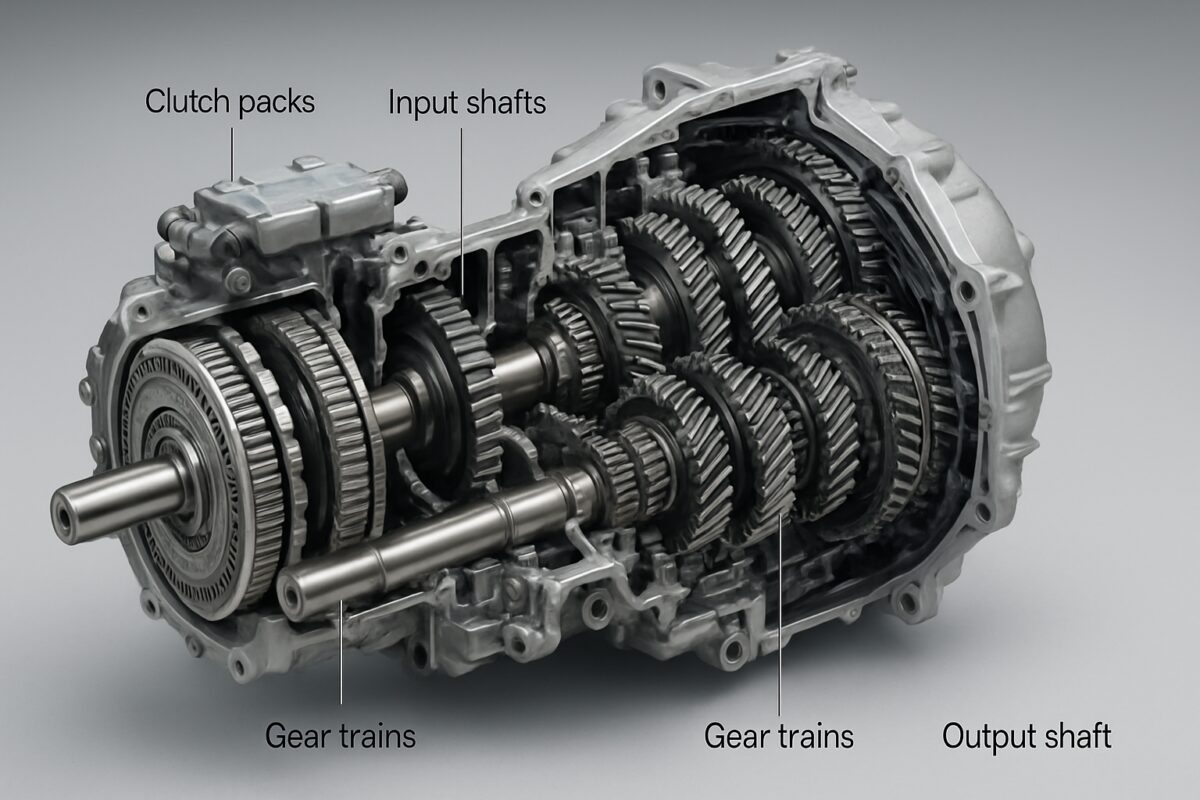
Double Clutch Transmission (DCT) technology combines the best aspects of manual and automatic gearboxes, offering lightning-fast gear changes without power interruption. This innovative dual-clutch system uses two separate clutches for odd and even gears, allowing pre-selection of the next gear whilst the current one remains engaged. DCT systems provide superior fuel efficiency compared to traditional automatics, deliver sporty driving dynamics, and eliminate the torque converter found in conventional automatics.
Modern DCT technology has transformed how we experience driving performance. The system’s ability to shift gears in milliseconds makes it a favourite amongst performance car manufacturers and everyday drivers alike.
How dual-clutch transmission technology works
The DCT system employs two separate clutch kits operating on different input shafts. One clutch handles odd-numbered gears (1st, 3rd, 5th, 7th), whilst the other manages even-numbered gears (2nd, 4th, 6th) plus reverse.
When you’re driving in third gear, the DCT system has already pre-selected fourth gear on the secondary shaft. During the gear change, one clutch disengages whilst the other engages simultaneously. This process happens so quickly that power delivery remains uninterrupted.
The transmission’s control units monitor driving conditions constantly. They analyse throttle position, vehicle speed, and driver inputs to determine the optimal gear change timing.
Key advantages of DCT systems
Double clutch transmissions offer numerous benefits that make them increasingly popular amongst UK drivers. These advantages span performance, efficiency, and driving comfort.
Performance benefits
DCT systems deliver exceptional performance characteristics that traditional automatics cannot match. The lightning-fast gear changes preserve momentum during acceleration, making overtaking safer and more efficient.
• **Ultra-fast shifting**: Gear changes occur in 50-150 milliseconds
• **No power interruption**: Seamless power delivery during shifts
• **Enhanced acceleration**: Quicker 0-60mph times compared to conventional automatics
• **Precise control**: Better throttle response and engine braking
• **Sport mode capability**: Aggressive shift patterns for spirited driving
The performance advantage becomes particularly noticeable during spirited driving. Track day enthusiasts and performance car owners appreciate the instant response and precise control that DCT systems provide.
Fuel efficiency advantages
DCT transmissions typically deliver better fuel economy than traditional torque converter automatics. The direct mechanical connection between engine and wheels reduces parasitic losses.
• **Improved mpg figures**: 5-10% better fuel economy than conventional automatics
• **Direct power transfer**: No torque converter slip losses
• **Optimal gear selection**: Computer-controlled shifting for maximum efficiency
• **Engine stop-start integration**: Seamless operation with fuel-saving systems
• **Coasting functionality**: Some DCT systems allow engine disconnection during deceleration
Fleet operators and company car drivers particularly value these efficiency gains. The reduced running costs make DCT-equipped vehicles attractive for business use.
Common disadvantages and limitations
Despite their advantages, DCT systems have notable drawbacks that potential buyers should consider. These limitations affect both daily driving comfort and long-term ownership costs.
Driving experience concerns
DCT systems can feel jerky at low speeds, particularly during parking manoeuvres or stop-start traffic. The aggressive clutch engagement differs significantly from smooth torque converter operation.
1. **Low-speed jerkiness**: Harsh engagement during crawling speeds
2. **Learning curve requirement**: Drivers must adapt to DCT characteristics
3. **Hill-start behaviour**: Some systems struggle on steep inclines
4. **Creep function limitations**: Less refined than traditional automatics
5. **Manual mode complexity**: Requires understanding of gear selection timing
6. **Noise characteristics**: Audible clutch engagement sounds
City drivers often find DCT systems less refined than conventional automatics. The constant stop-start traffic conditions highlight the transmission’s less smooth low-speed operation.
Cost and maintenance factors
DCT systems require specialised automatic transmission fluid and more frequent servicing than manual transmissions. The complex nature of these systems means higher repair costs when problems occur.
Replacement parts for DCT systems cost significantly more than manual transmission components. The dual-clutch mechanism requires precise calibration and specialised diagnostic equipment for proper servicing.
Frequent DCT problems and solutions
Understanding common DCT issues helps owners identify problems early and seek appropriate repairs. Our Autopartspro specialists have identified several recurring problems across different manufacturers.
Clutch wear and replacement issues
DCT clutches experience different wear patterns compared to traditional manual clutches. The constant engagement and disengagement cycles create unique stress patterns.
| **Problem** | **Symptoms** | **Typical Mileage** | **Repair Cost Range** |
|————-|————–|——————–|———————–|
| Clutch pack wear | Slipping, harsh engagement | 60,000-100,000 miles | £1,500-£3,000 |
| Actuator failure | Gear selection problems | 80,000-120,000 miles | £800-£1,500 |
| Fluid contamination | Erratic shifting | Service interval dependent | £200-£400 |
| Control module fault | Warning lights, limp mode | Variable | £500-£1,200 |
Regular fluid changes using manufacturer-specified lubricants help prevent premature clutch wear. Our specialists recommend following service intervals strictly to maintain DCT reliability.
Electronic control problems
Modern DCT systems rely heavily on electronic sensors and actuators. These components can fail, causing various transmission problems.
Temperature sensors play a crucial role in DCT operation. When these fail, the system may enter protective mode, limiting performance to prevent damage.
> **Professional Tip**: Always use genuine DCT fluid during services. Generic transmission fluids lack the specific friction characteristics required for proper clutch operation and can cause premature wear or shifting problems.
DCT maintenance requirements
Proper maintenance keeps DCT systems operating smoothly throughout their service life. These transmissions require more attention than manual gearboxes but less than traditional automatics.
Service intervals and procedures
Most manufacturers specify DCT fluid changes every 40,000-60,000 miles. However, severe driving conditions may require more frequent servicing.
1. **Initial service**: 20,000 miles for bedding-in period
2. **Regular intervals**: Every 40,000-60,000 miles thereafter
3. **Severe conditions**: Every 30,000 miles for track use or heavy towing
4. **Filter replacement**: Typically coincides with fluid changes
5. **Software updates**: Check for transmission control module updates
6. **Clutch adjustment**: Learn procedures may be required
During servicing, technicians should inspect the transmission filter and clean the transmission pan. Metal particles in the fluid indicate excessive wear requiring investigation.
Warning signs requiring attention
Early recognition of DCT problems prevents minor issues from becoming expensive repairs. Drivers should monitor their transmission’s behaviour regularly.
Strange noises during gear changes often indicate clutch or actuator problems. A whining sound during acceleration may suggest internal wear or insufficient lubrication.
Delayed engagement when selecting drive or reverse typically indicates hydraulic pressure problems. These issues require immediate professional attention to prevent further damage.
Manufacturer-specific DCT variations
Different manufacturers implement DCT technology with unique characteristics and reliability records. Understanding these variations helps buyers make informed decisions.
Popular DCT systems comparison
Each manufacturer’s approach to DCT technology reflects their engineering priorities and target market requirements.
| **Manufacturer** | **System Name** | **Reliability Rating** | **Common Issues** |
|——————|—————–|————————|——————-|
| Volkswagen Group | DSG | Good | Mechatronic unit failure |
| Ford | PowerShift | Fair | Clutch pack wear |
| BMW | DCT | Good | Software glitches |
| Mercedes | 7G-DCT | Excellent | Minimal reported issues |
| Hyundai/Kia | 7DCT | Fair | Shuddering problems |
Volkswagen’s DSG system pioneered mainstream DCT adoption but experienced early reliability issues. Later generations show significant improvements in durability and refinement.
Ford’s PowerShift system faced numerous problems in early applications, leading to extended warranties and recall campaigns. These issues highlight the importance of proper development and testing.
Choosing between DCT and alternatives
Selecting the right transmission type depends on individual driving needs, budget constraints, and personal preferences. Each system offers distinct advantages for different use cases.
Performance-oriented drivers often prefer DCT systems for their quick shifts and sporty character. The engaging driving experience and precise control appeal to enthusiasts.
Comfort-focused drivers might find traditional automatics more suitable for relaxed driving. The smooth, refined operation suits luxury car applications better.
DCT technology represents a significant advancement in automotive engineering, offering unique benefits for the right applications. Regular maintenance using quality components from AutopartsPro ensures these sophisticated systems deliver reliable performance throughout their service life. Whether you’re experiencing DCT problems or planning preventive maintenance, understanding these systems helps you make informed decisions about repairs and replacements. The future of DCT technology continues evolving, with manufacturers addressing early reliability concerns whilst enhancing performance and efficiency characteristics.
Frequently Asked Questions (FAQ)
How long do DCT clutches typically last?
DCT clutches generally last 60,000-100,000 miles with proper maintenance and normal driving conditions. Aggressive driving or frequent towing reduces lifespan significantly.
Can I drive a DCT like a normal automatic?
Yes, DCT systems operate in full automatic mode, but they feel different from torque converter automatics, especially at low speeds.
Is DCT more reliable than CVT transmission?
DCT systems generally offer better long-term reliability than CVT transmissions, though both require proper maintenance for optimal performance and longevity.
Why does my DCT shudder during low-speed driving?
DCT shuddering typically indicates clutch wear, contaminated fluid, or software calibration issues. Professional diagnosis determines the exact cause and solution.
Are DCT repairs more expensive than manual transmission fixes?
Yes, DCT repairs cost significantly more due to complex components, specialised tools, and higher parts prices compared to manual transmissions.

 Loading...