A clogged diesel fuel filter blocks contaminants from reaching your engine, but when it becomes too dirty, it restricts fuel flow, causing poor performance, hard starting, and potential engine damage. Symptoms include power loss, rough idling, and difficulty starting. Replace your fuel filter every 20,000-40,000 miles or when these warning signs appear to maintain optimal engine performance.
Tools & parts required
Proper preparation ensures a smooth replacement process and prevents costly mistakes. Having the right equipment beforehand saves time and reduces the risk of damaging fuel system components.
Parts needed
- Vehicle-specific diesel fuel filter (check chassis number compatibility)
- Replacement O-rings and seals
- Fuel hose clamps
- Thread sealant (if required)
Tools required
- Fuel line disconnect tool
- Socket set with extension bars
- Torque wrench
- Drain pan or catch tray
- Safety gloves and eye protection
- Clean rags
Professional tip: Always verify the fuel filter part number matches your engine type and model year. Using an incorrect filter can cause fuel pressure issues and potential engine damage.
Safety precautions
Working with diesel fuel requires careful attention to safety protocols. Diesel vapours are flammable and the fuel itself can be harmful to skin contact.
Work in a well-ventilated area away from heat sources or open flames. Disconnect the battery negative terminal to prevent electrical sparks. Wear safety gloves and eye protection throughout the process. Keep a fire extinguisher nearby and avoid smoking or using mobile phones near the work area.
Allow the engine to cool completely before beginning work. Diesel fuel under pressure can cause serious injury if it contacts skin or eyes.
Step-by-step instructions
Step 1: Depressurise the fuel system
Modern diesel engines maintain high fuel pressure even when switched off. Locate the fuel pump relay in the fuse box and remove it. Start the engine and let it run until it stalls, consuming remaining fuel in the lines.
Turn the ignition off and wait five minutes for any residual pressure to dissipate. This prevents fuel spray when disconnecting lines.
Step 2: Locate the fuel filter
Most diesel fuel filters sit between the fuel tank and engine, often mounted on the chassis rail or engine bay. Some vehicles have two filters – a primary filter near the tank and a secondary filter closer to the engine.
Clean around the filter housing with a brush to prevent dirt entering the fuel system during removal. Take photos of the connections before disconnecting anything.
Step 3: Remove the old filter
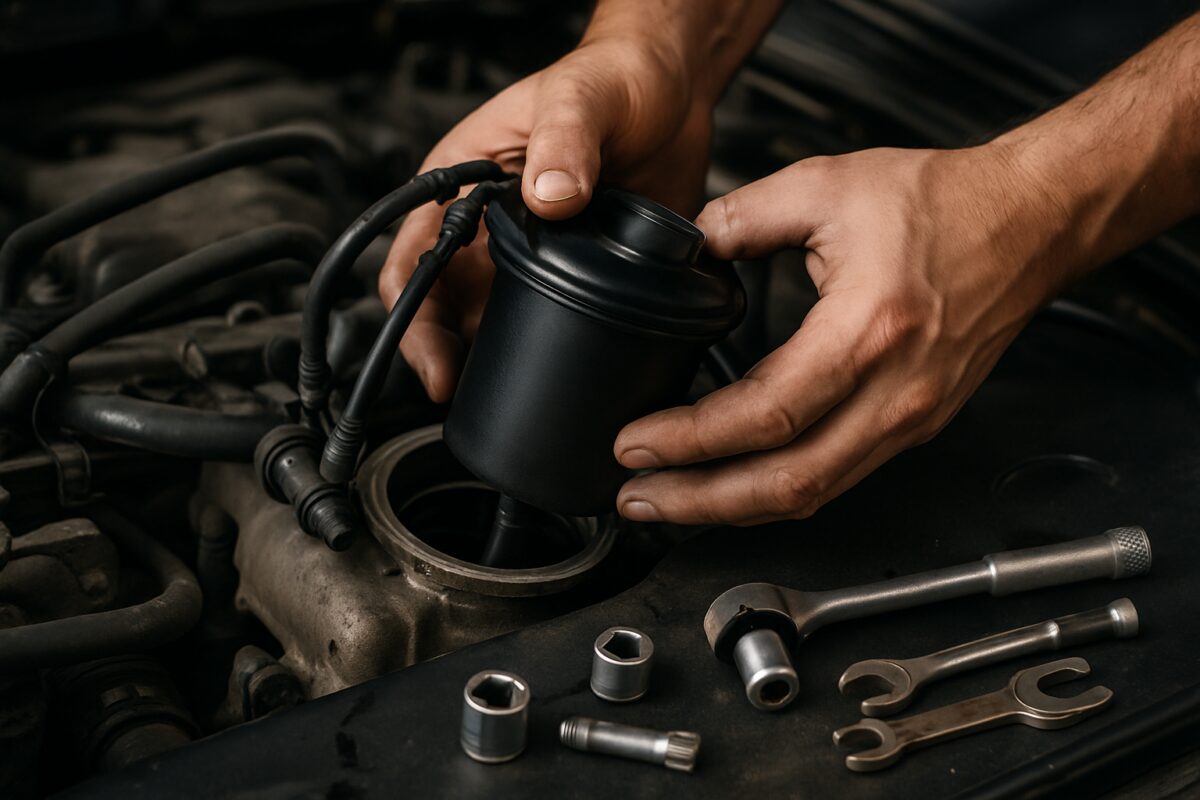
Position your drain pan underneath the filter housing. Use the fuel line disconnect tool to carefully separate fuel lines from the filter. Some systems use quick-release fittings whilst others require spanners.
Remove the filter housing bolts with your socket set. Fuel will spill out, so work slowly and catch it all in your pan. Lift out the old filter element, noting its orientation.
Step 4: Install the new filter
Clean the filter housing thoroughly with a lint-free cloth. Install new O-rings, coating them lightly with clean diesel fuel. Insert the new filter element in the same orientation as the old one.
Tighten the housing bolts to manufacturer specifications using your torque wrench. Over-tightening can crack the housing, whilst under-tightening causes leaks.
Step 5: Prime and test
Reconnect fuel lines securely and replace the fuel pump relay. Many diesel systems have a manual primer pump – operate this several times to fill the new filter and purge air from the system.
Reconnect the battery and turn the ignition on without starting. Listen for the fuel pump running. Start the engine – it may take longer than usual and run roughly initially as air clears from the system.
Common mistakes to avoid
Installing the filter element backwards is surprisingly common and can cause immediate fuel flow problems. The flow direction arrow on the filter housing indicates correct orientation.
Reusing old seals and O-rings leads to leaks and potential fire hazards. Always fit new seals with each filter change. Over-tightening connections damages threads and can cause expensive repairs.
Failing to prime the system properly leaves air bubbles that cause rough running and potential fuel pump damage. Take time to bleed the system thoroughly.
Expert advice: Our mechanics at AutoPartsPro recommend keeping the old filter to compare contamination levels. Heavy contamination might indicate problems with the fuel tank or supply system requiring further investigation.
When should you replace it?
Most diesel fuel filters require replacement every 20,000-40,000 miles, depending on driving conditions and fuel quality. Severe conditions like dusty environments or poor-quality diesel shorten this interval significantly.
Watch for these warning signs indicating immediate replacement:
- Hard starting, especially when cold
- Engine hesitation under acceleration
- Reduced power output
- Rough idling or stalling
- Increased fuel consumption
- White smoke from exhaust
Don’t wait for complete filter blockage – this can damage expensive fuel system components like high-pressure injectors and the fuel pump.
Related maintenance you can do at the same time
Combining filter replacement with other maintenance tasks maximises efficiency and ensures your diesel runs smoothly. Consider replacing the air filter simultaneously, as both components work together to keep contaminants from your engine.
Check and replace glow plugs if starting has become difficult. Inspect the oil filter condition and change engine oil if due.
This is an ideal time to check fuel lines and connections for wear or leaks. Replace any damaged hoses or clamps whilst the system is already depressurised.
Frequently asked questions
How often should I change my diesel fuel filter?
Replace diesel fuel filters every 20,000-40,000 miles or annually, whichever comes first. Harsh conditions may require more frequent changes.
Can I drive with a clogged fuel filter?
Driving with a severely clogged filter risks expensive fuel system damage and potential breakdown. Replace immediately when symptoms appear.
What happens if I install the filter backwards?
Installing backwards blocks fuel flow completely, preventing the engine from starting. Always check the directional arrow before installation.
Why is my engine still rough after changing the filter?
Air bubbles in the fuel system cause rough running. Prime the system thoroughly and run the engine to purge remaining air.
Can I clean and reuse a diesel fuel filter?
Diesel fuel filters cannot be cleaned effectively and should always be replaced. Attempting to clean them damages the filter media.
Regular diesel fuel filter maintenance prevents costly repairs and ensures reliable engine performance. Using quality replacement parts and following proper procedures maintains your vehicle’s fuel system integrity. When selecting a replacement filter, always match the exact specifications to your vehicle’s requirements for optimal filtration and fuel flow.

 Loading...