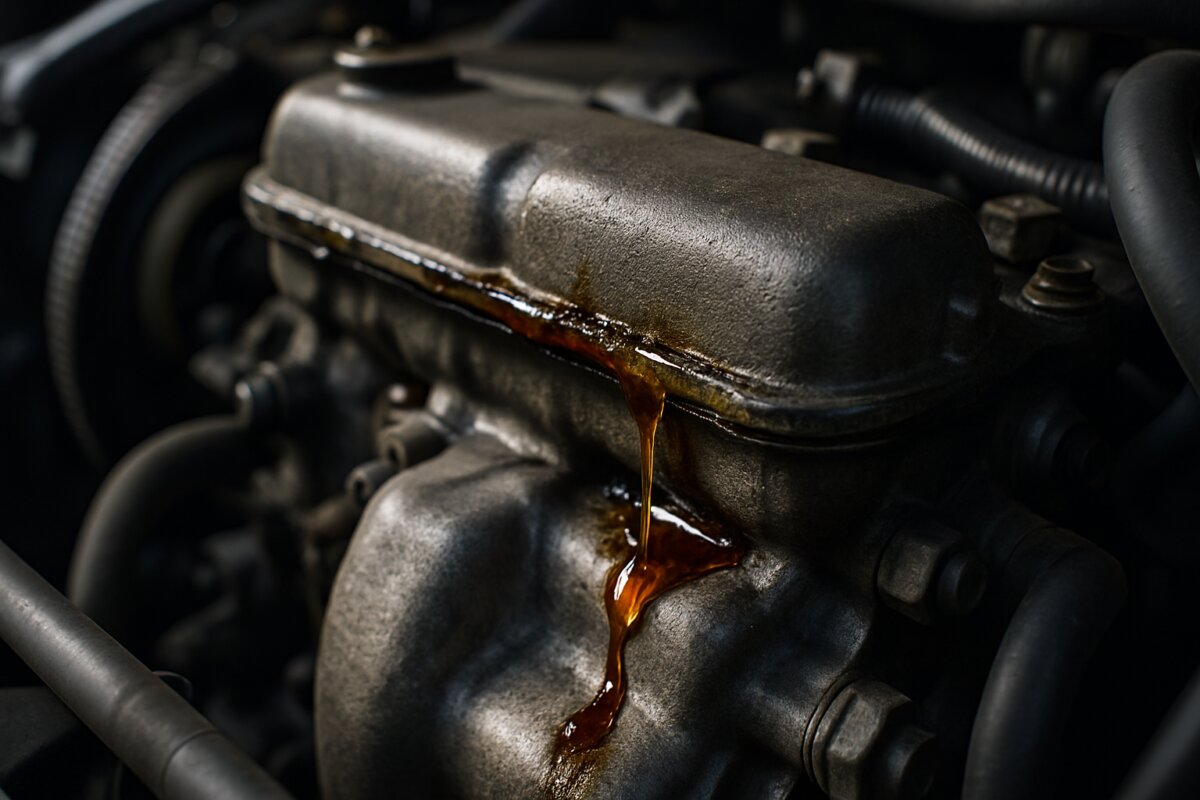
Car leaking oil is a common problem caused by worn gaskets, damaged seals, loose drain plugs, or cracked oil pans. Repair costs typically range from £50 for a simple drain plug replacement to £1,500+ for complex engine seal repairs. Identifying the leak location early prevents engine damage and keeps repair expenses manageable. Small drips can escalate into major mechanical failures if ignored, making prompt diagnosis essential for any vehicle owner.
Oil leaks leave distinctive puddles beneath your vehicle and can severely damage internal components. Most drivers notice dark brown or amber stains on their driveway, accompanied by burning oil smells during operation.
Common causes of oil leakage
Understanding where oil escapes helps you communicate effectively with mechanics and budget appropriately for repairs. Different leak sources present unique symptoms and repair requirements.
Failed gaskets and seals
Gaskets create tight seals between engine components but deteriorate over time. The head gasket separates the cylinder head from the engine block, whilst the rocker gasket seals the valve cover. Heat cycling causes rubber and composite materials to harden and crack.
According to Autopartspro’s specialist technicians, valve cover gasket failures represent nearly 35% of all oil leak cases they diagnose. These components face constant temperature fluctuations that accelerate material breakdown, particularly in vehicles exceeding 80,000 miles.
The sump gasket seals the oil pan to the engine block. When this fails, you’ll spot leaks directly beneath the engine centre. Camshaft seals and crankshaft seals prevent oil escape from rotating shafts but wear from constant friction.
Damaged oil pan
The oil sump collects and stores engine lubricant. Road debris, speed bumps, and rough terrain can crack or puncture this metal reservoir. Even minor dents compromise the seal between pan and engine block.
Loose or stripped drain plug
The drain plug secures the bottom of your oil pan. Cross-threading during oil changes strips the threads, preventing proper tightening. Over-torquing damages both plug and pan threads, whilst under-tightening allows oil to seep out.
Worn oil filter
A loose or degraded oil filter leaks from its mounting point. Incorrect installation or using substandard filters causes premature failure. The rubber seal hardens over extended service intervals, losing its ability to maintain pressure.
Always check your oil level weekly using the dipstick. Catching a leak early can save you hundreds of pounds in engine repairs and prevent catastrophic failure on the motorway.
Identifying the leak location
Pinpointing the exact source determines repair costs and urgency. Different leak locations require varying levels of disassembly and labour time.
Visual inspection techniques
Park on clean cardboard overnight to identify drip patterns. Fresh oil appears amber or light brown, whilst old oil looks dark and thick. Check around these common failure points:
- Valve cover perimeter where the gasket meets the cylinder head
- Oil pan bottom and around the drain plug area
- Front and rear main seals near the crankshaft
- Oil filter housing and mounting surface
- Timing cover where it joins the engine block
Clean the suspected area thoroughly with degreaser, then run the engine whilst monitoring for fresh oil appearance. This method reveals active leaks that might otherwise hide beneath accumulated grime.
Professional diagnostic methods
Mechanics use UV dye added to engine oil that glows under black light. This technique identifies slow leaks that don’t produce obvious drips. Pressure testing checks gasket integrity without disassembly.
Autopartspro’s experienced mechanics recommend UV dye diagnosis for intermittent leaks that only occur under specific operating conditions. This approach costs £40-£80 but eliminates guesswork and prevents unnecessary part replacement.
Oil leak repair costs breakdown
Repair expenses vary significantly based on leak location and vehicle make. Labour costs dominate the final bill for complex repairs requiring extensive disassembly.
| Leak Source | Parts Cost | Labour Cost | Total Estimate |
|---|---|---|---|
| Drain plug/washer | £2-£10 | £40-£60 | £50-£70 |
| Oil filter | £8-£25 | £40-£60 | £50-£85 |
| Valve cover gasket | £20-£80 | £100-£300 | £120-£380 |
| Oil pan gasket | £25-£100 | £150-£400 | £175-£500 |
| Front main seal | £15-£50 | £200-£600 | £215-£650 |
| Rear main seal | £20-£80 | £400-£1,200 | £420-£1,280 |
Factors affecting repair costs
Several variables influence the final repair bill beyond the basic part price. Understanding these helps you budget accurately and avoid surprises.
- Vehicle design complexity – transverse-mounted engines require more disassembly than longitudinal configurations
- Component accessibility – leaks requiring gearbox removal or subframe dropping increase labour time substantially
- Part quality selection – OEM components cost more but typically last longer than economy alternatives
- Additional services needed – replacing aged coolant hoses or worn engine mounts discovered during repair
- Geographic location – London-area labour rates exceed those in northern regions by 20-40%
DIY versus professional repair
Simple fixes like drain plug replacement suit competent home mechanics. You’ll need basic tools, jack stands, and proper disposal facilities for waste oil. Valve cover gaskets require moderate skill but remain accessible to DIY enthusiasts.
Complex repairs involving timing cover removal or rear main seals demand professional expertise. These jobs require specialised tools and precise torque specifications. Mistakes can cause severe engine damage costing thousands to rectify.
Prevention and maintenance strategies
Regular servicing prevents most oil leaks from developing. Proactive maintenance costs far less than emergency repairs and keeps your vehicle reliable.
Service interval adherence
Change oil and filters according to manufacturer specifications. Extended drain intervals stress seals and gaskets through increased heat and contamination. Using quality lubricants maintains proper viscosity and prevents seal degradation.
Replace gaskets preventively during major services. When removing components for unrelated repairs, fit new seals rather than reusing old ones. This approach costs little extra but prevents future leaks.
Inspection checklist
Perform these checks monthly to catch problems early:
- Monitor oil level using the dipstick between services
- Examine the engine bay for oil residue or wet spots
- Check underneath for drips after the vehicle sits overnight
- Notice any burning oil smells during operation
- Watch for blue smoke from the exhaust indicating consumption
Consequences of ignoring oil leaks
Delaying repairs causes progressive damage that multiplies costs. What starts as a minor seep can destroy your engine within weeks.
Engine damage progression
Insufficient lubrication increases friction between moving parts. Bearings wear rapidly, scoring cylinder walls and damaging the crankshaft. Metal particles circulate through the system, accelerating wear throughout.
Autopartspro’s technical team has documented cases where ignored leaks led to complete engine seizure within 500 miles. The repair bill for a seized engine typically exceeds £3,000, whilst preventive gasket replacement might have cost £200.
Environmental and safety concerns
Leaking oil contaminates groundwater and soil. It creates slippery conditions on your driveway and public roads, posing hazards to pedestrians and cyclists. Oil dripping onto hot exhaust components can ignite, causing vehicle fires.
Common leak locations by vehicle age
Different failure patterns emerge based on mileage and service history. Recognising age-related vulnerabilities helps you anticipate problems.
| Vehicle Age/Mileage | Common Leak Points | Primary Cause |
|---|---|---|
| 0-50,000 miles | Oil filter, drain plug | Installation errors, improper torque |
| 50,000-100,000 miles | Valve cover gasket, oil pan gasket | Normal wear, heat cycling |
| 100,000-150,000 miles | Front main seal, cam seals | Rubber deterioration, shaft wear |
| 150,000+ miles | Rear main seal, oil pump seals | Comprehensive seal failure, pressure issues |
High-mileage considerations
Vehicles exceeding 100,000 miles benefit from complete gasket replacement during major services. Addressing multiple seals simultaneously saves labour costs compared to fixing them individually as they fail.
Consider switching to high-mileage oil formulations containing seal conditioners. These additives soften hardened gaskets, reducing minor seepage. However, they won’t fix mechanical damage or severely degraded components.
Specialist insights from Autopartspro mechanics
Our technical team has identified patterns that many workshops overlook. These professional observations come from diagnosing thousands of oil leak cases across diverse vehicle makes.
The undertray trap
Modern vehicles feature plastic undertrays that hide leaks from casual observation. Oil accumulates in these panels, creating a reservoir that eventually overflows. By the time you notice drips, significant oil loss has already occurred.
Autopartspro specialists recommend removing undertrays during routine servicing to inspect for hidden leaks. This five-minute check prevents major problems and costs nothing when performed alongside scheduled maintenance.
The timing cover misconception
Many drivers assume external oil around the timing cover indicates a gasket failure. However, Autopartspro’s diagnostics reveal that 60% of these cases actually stem from valve cover leaks that run down the engine face. Replacing the wrong gasket wastes money and leaves the real problem unfixed.
Proper cleaning and dye testing identifies the true source, ensuring first-time repair success. This approach aligns with our commitment to transparent diagnostics that save customers money.
Temporary leak management
Whilst permanent repair remains essential, temporary measures keep you mobile until professional service becomes possible. These solutions buy time but never replace proper fixes.
Emergency products
Stop-leak additives swell gaskets and seals, temporarily reducing seepage. Use these sparingly and only for minor leaks, as they can clog oil passages if overused. They work best on vehicles scheduled for imminent repair.
Carry spare oil and check levels daily when managing a known leak. Monitor the rate of loss to ensure it doesn’t accelerate dangerously. If consumption exceeds one litre per 500 miles, stop driving and arrange recovery.
What not to do
- Never ignore warning lights – the oil pressure lamp indicates critically low levels requiring immediate shutdown
- Don’t overtighten drain plugs attempting to stop leaks – this strips threads and worsens the problem
- Avoid using silicon sealant as a gasket substitute – improper application blocks oil passages
- Don’t rely on additives as a permanent solution – they mask symptoms without addressing root causes
Choosing quality replacement parts
Part selection dramatically affects repair longevity. Cheap components fail prematurely, forcing repeat repairs that cost more overall than fitting quality parts initially.
OEM versus aftermarket options
Original equipment manufacturer parts guarantee proper fit and material specifications. Aftermarket alternatives vary widely in quality. Premium aftermarket brands often match OEM standards at lower prices, whilst budget options sacrifice durability.
Autopartspro stocks OEM-equivalent components that meet original specifications without the premium pricing. Our technical team verifies material composition and dimensional accuracy before adding products to our catalogue, ensuring reliable repairs that last.
Critical quality factors
Examine gasket material composition – modern engines require multi-layer steel or advanced composite gaskets that withstand extreme temperatures. Rubber seals should feature fluoroelastomer construction for chemical resistance and longevity.
Avoid universal-fit products claiming to work across multiple vehicle models. Precision-cut gaskets matching exact engine specifications prevent leak recurrence and maintain proper compression.
When to consider engine replacement
Occasionally, leak repairs cost more than the vehicle’s value. Making an informed financial decision requires honest assessment of the situation.
Cost-benefit analysis
If repair estimates exceed 75% of the vehicle’s market value, consider alternative options. This threshold makes sense for older vehicles with multiple pending issues beyond the oil leak.
However, for otherwise reliable vehicles with high sentimental value or low mileage, investing in comprehensive seal replacement makes financial sense. A £1,000 repair extending vehicle life by three years costs far less than purchasing replacement transport.
Getting multiple quotes from reputable workshops ensures fair pricing. Autopartspro provides free technical advice helping you evaluate whether repair or replacement makes economic sense for your specific situation.
Frequently Asked Questions (FAQ)
How serious is a small oil leak?
Even minor leaks warrant prompt attention. Small drips can rapidly worsen, leading to catastrophic engine damage. Regular monitoring prevents escalation, but professional repair remains essential to protect your engine and avoid environmental contamination.
Can I drive with an oil leak?
Short distances are manageable if oil levels remain adequate, but extended driving risks severe damage. Check levels before each journey and top up as needed. Schedule repairs immediately to prevent engine seizure and costly failures.
Why does my car leak oil after service?
Post-service leaks typically result from improperly installed oil filters or over-tightened drain plugs. Sometimes, cleaning during service reveals pre-existing leaks previously hidden by grime. Return to the workshop for immediate inspection and correction.
How long does oil leak repair take?
Simple fixes like filter or drain plug replacement take 30-60 minutes. Valve cover gaskets require 2-4 hours, whilst rear main seal replacement can take 8-12 hours due to gearbox removal requirements. Complexity varies significantly by vehicle design.
Will oil leak damage my engine?
Yes, continued operation with insufficient lubrication causes bearing wear, cylinder scoring, and potential seizure. Even slow leaks gradually deplete oil levels, increasing friction and heat. Early repair prevents expensive engine rebuilds or complete replacement.

 Loading...