Car battery warranties typically cover manufacturing defects and premature failure for 12 to 60 months, depending on the brand and type. Most warranties offer full replacement during the initial period, followed by pro-rata coverage based on remaining warranty time. To check coverage, locate the warranty sticker on your battery, note the manufacture date, and contact the manufacturer or retailer with your proof of purchase and vehicle details.
Understanding battery warranty types
p>Battery warranties come in two main formats: free replacement and pro-rata. The free replacement period covers the first portion of the warranty where you’ll receive a complete replacement at no charge if the battery fails. This typically ranges from six months to three years, depending on the manufacturer and battery quality.
After the free replacement period expires, pro-rata coverage kicks in. This means you’ll pay a percentage of the replacement cost based on how much warranty time remains. For instance, if you have a 60-month warranty with a 24-month free replacement period and your battery fails at month 40, you might pay around 33% of the new battery cost.
Premium batteries often include longer warranty periods and extended free replacement windows. The warranty terms directly reflect the manufacturer’s confidence in their product’s longevity and performance under various conditions.
What battery warranties typically cover
Standard battery warranties protect against manufacturing defects, including faulty cells, internal short circuits, and premature capacity loss. These defects prevent the battery from holding a proper charge or delivering adequate cranking amperage to start your engine.
Coverage includes structural failures such as case cracks not caused by external damage, terminal corrosion from internal chemical leakage, and separator breakdown within the battery cells. Most warranties also cover premature sulphation when the battery has been properly maintained.
However, warranties exclude damage from accidents, improper installation, physical abuse, or neglect. Freezing damage due to low charge states, overcharging from faulty alternator regulators, and using the wrong battery specification for your vehicle will void most warranties.
According to AutoPartsPro’s technical specialists, the most common warranty claim rejection involves batteries that have been deeply discharged multiple times. Many drivers don’t realise that leaving interior lights on or having parasitic electrical drains can damage batteries in ways that aren’t covered.
Documentation you’ll need for warranty claims
The original purchase receipt is essential for any warranty claim. This receipt must show the purchase date, retailer information, battery model number, and price paid. Without proper documentation, manufacturers typically deny claims regardless of the battery’s condition.
You’ll also need the battery itself with readable date codes and warranty stickers intact. Most batteries have a date stamp showing month and year of manufacture, typically found on a sticker or embossed into the case. This date code helps determine warranty eligibility.
Some manufacturers require the failed battery to be returned for testing before authorising replacement. They’ll check internal resistance, specific gravity of the electrolyte, and load test performance to verify the failure is covered under warranty terms.
Keep records of any electrical system repairs, particularly those involving your generator or charging system. These documents can prove you’ve maintained the electrical system properly, which strengthens warranty claims.
How to check your battery warranty status
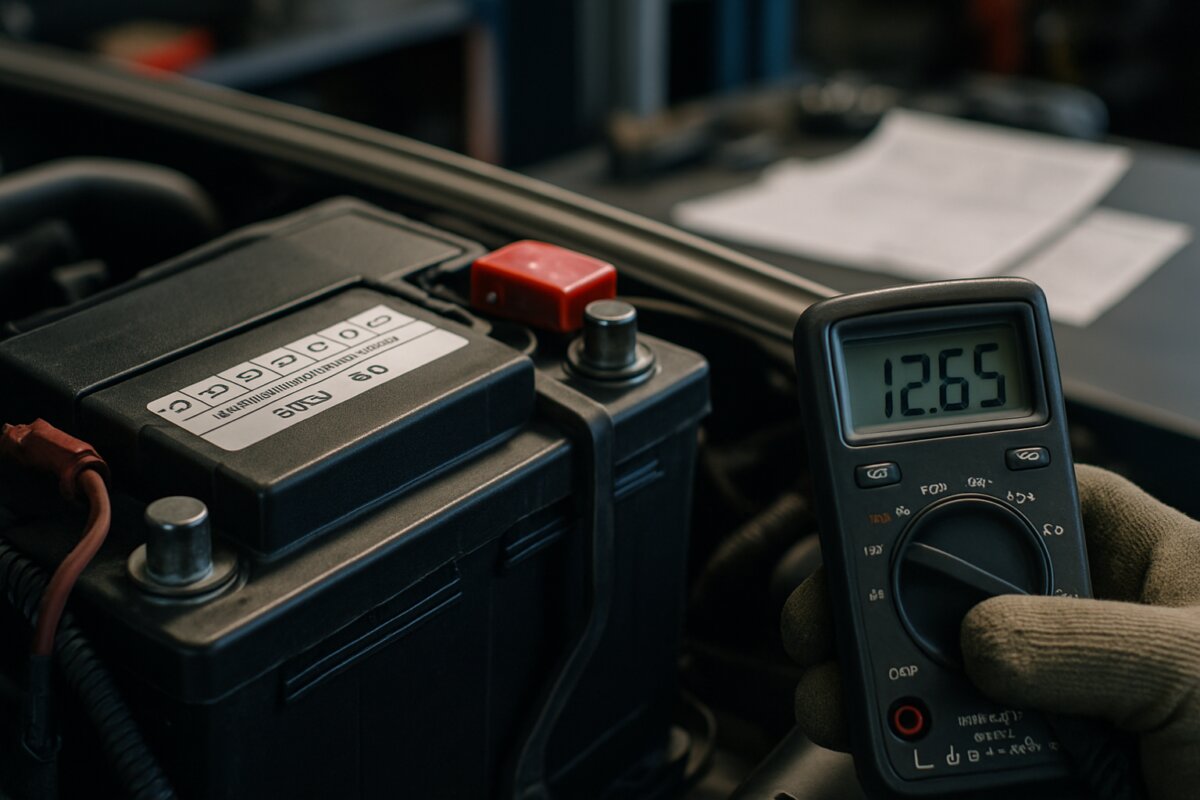
Start by locating the warranty information sticker on your battery’s top or side surface. This sticker displays the warranty length, typically expressed as a series of numbers like “24/60” meaning 24 months free replacement and 60 months total coverage.
Find the manufacture date code, usually a letter and number combination. The letter represents the month (A=January, B=February, etc., skipping I) and the number indicates the year. For example, “C3” means March 2023.
Calculate how many months have passed since the manufacture date to determine where you stand in the warranty period. Most retailers consider the manufacture date as the warranty start date unless you can prove a later purchase date with a receipt.
Contact the manufacturer directly through their customer service number or website. Provide the battery model number, date code, and purchase information. They’ll confirm your coverage status and explain the claim process.
Many battery warranties require registration within 30 days of purchase to activate full coverage. Check your manufacturer’s website immediately after buying a new battery to ensure you don’t miss this critical step.
Testing requirements for warranty validation
Before submitting a warranty claim, you’ll need a professional battery test. Most manufacturers require a printed test result from an electronic battery analyser showing the battery’s cold cranking amps, voltage, and internal resistance.
The test must demonstrate that the battery fails to meet its rated specifications. A battery rated at 600 CCA that tests below 480 CCA (typically 80% of rating) would qualify as failed under most warranty terms.
Testing should occur at ambient temperatures above 0°C, as cold temperatures temporarily reduce battery performance. Some manufacturers reject claims based on tests performed in extreme cold without allowing the battery to warm to room temperature first.
Your vehicle’s charging system must also be tested to prove proper voltage regulation. A faulty starter motor or failing alternator can damage batteries in ways that void warranty coverage. Most retailers will check the charging system voltage and amperage before processing warranty claims.
Common warranty exclusions to know
Physical damage tops the list of warranty exclusions. This includes cracked cases from over-tightening hold-down brackets, terminal damage from improper jump-starting, or impact damage from accidents. Even small cracks can void entire warranties.
Using the battery in applications beyond its design parameters voids coverage. Installing a standard automotive battery in a deep-cycle application like a caravan or using it with high-demand accessories without proper electrical system upgrades typically isn’t covered.
Low electrolyte levels in conventional batteries often indicate owner neglect. If the battery cells are exposed and plates are visible, manufacturers will deny claims. This is why many drivers now prefer sealed, maintenance-free batteries.
Overcharging damage shows as bulged battery sides, excessive heat damage, or dried-out cells. This usually results from voltage regulator failure, which should be addressed by replacing or repairing your vehicle’s control units that manage charging system output.
AutoPartsPro’s warranty specialists emphasise that parasitic electrical drains are increasingly common with modern vehicles. Components like faulty central locking systems or malfunctioning sensors can slowly discharge batteries overnight, leading to damage that manufacturers won’t cover under warranty.
Pro-rata warranty calculations explained
Pro-rata coverage means you pay a proportional cost based on how much warranty time you’ve used. The calculation divides months used by total warranty months, then multiplies by the current retail price.
For example, if you have a 60-month warranty battery that cost £120 new and fails at month 45, you’ve used 75% of the warranty. You’d pay 75% of the current retail price (which might be £130 now), equalling £97.50 for the replacement.
The free replacement period changes this calculation significantly. If the same battery had a 24-month free replacement period and failed at month 45, the pro-rata calculation only applies to the time beyond month 24. You’d pay for 21 months out of 36 remaining months (58%), or about £75.
Some manufacturers base calculations on the original purchase price rather than current retail prices, which benefits consumers when battery prices have increased. Always verify which price the manufacturer uses before agreeing to pro-rata replacement terms.
Keep your original receipt in your vehicle documentation folder along with service records. Taking a photo and storing it in cloud storage provides backup proof of purchase that can save you hundreds of pounds on warranty claims.
How to maintain warranty validity
Regular charging system checks ensure your battery receives proper voltage. Have your mechanic test the alternator output annually, verifying it produces between 13.8 and 14.4 volts at idle with all accessories off.
Keep battery terminals clean and tight. Corrosion increases resistance, which can cause the alternator to overcharge the battery trying to compensate. Clean terminals with a wire brush and apply terminal protection spray every six months.
For conventional batteries, check electrolyte levels monthly and top up with distilled water when needed. Never add tap water, as minerals can contaminate the electrolyte and cause premature failure that won’t be covered under warranty.
If you drive infrequently, use a quality battery maintainer to prevent deep discharge. Modern vehicles have numerous electronic control units that draw power even when parked. Three weeks of sitting can discharge a battery below safe levels.
Address electrical faults promptly. A failing ignition coil or malfunctioning fuel pump relay can create electrical demands that stress your battery. Fixing these issues protects your battery investment and maintains warranty coverage.
Where to make warranty claims
Return to the original retailer first, as they often handle warranty claims directly without involving the manufacturer. Bring your receipt, the failed battery, and test results showing the battery’s poor performance.
If the original retailer has closed or you’ve moved, contact the battery manufacturer directly. Most have customer service departments that coordinate warranty claims through authorised service centres near your location.
Motor factors and automotive retailers usually participate in warranty programmes for major battery brands. They can test your battery and process claims even if you didn’t purchase from them originally, though you’ll still need your proof of purchase.
Some premium battery brands offer nationwide warranty coverage through any authorised dealer. This flexibility proves valuable if you’ve relocated or the original purchase point is no longer convenient to access.
Extended warranty considerations
Extended battery warranties typically add 12 to 24 months beyond standard coverage. Evaluate whether the additional cost justifies the extension based on your driving patterns and vehicle’s electrical demands.
Vehicles with start-stop technology, multiple control units, or extensive accessories benefit more from extended coverage. These systems place greater strain on batteries, increasing failure likelihood during the extended period.
Premium batteries often include comprehensive warranties as standard, making separate extended warranties unnecessary. Compare the total cost of a premium battery with warranty against a standard battery plus extended warranty purchase.
Read extended warranty terms carefully, as some only extend the pro-rata period without additional free replacement time. This offers less value than warranties that extend both free replacement and total coverage periods.
Frequently asked questions
Does jump-starting my car void the battery warranty?
Jump-starting doesn’t automatically void warranty coverage if performed correctly using proper cables and procedures. However, damage from reverse polarity connection or using excessive voltage will void warranty protection as this constitutes misuse.
Can I transfer my battery warranty to a new owner?
Most battery warranties are non-transferable and remain with the original purchaser only. Some commercial battery warranties allow transfer with proper documentation, but standard automotive batteries typically cannot be transferred when selling your vehicle.
What happens if I install the battery myself?
Self-installation doesn’t void warranty coverage provided the battery is installed correctly. However, damage from improper installation, reversed polarity, or incorrect hold-down tension will void warranty protection regardless of who performed the installation work.
Are AGM batteries covered differently than standard batteries?
AGM batteries often carry longer warranty periods due to their enhanced construction and performance characteristics. Coverage terms remain similar, though AGM warranties typically include additional protection against vibration damage and deeper discharge scenarios than standard flooded batteries.
How long do I have to make a warranty claim?
You must submit warranty claims before the warranty period expires. Most manufacturers allow a grace period of 30 days after expiration if you can prove the battery failed before the warranty end date, but policies vary by manufacturer.
Understanding your battery warranty terms and maintaining proper documentation ensures you can take full advantage of coverage when needed. Regular electrical system maintenance, including checks of your charging components and starting system, protects your battery investment whilst preserving warranty validity. Always verify coverage details at purchase and keep all documentation accessible for the entire warranty period.

 Loading...