Clutch replacement cost in the UK typically ranges between £300 and £1,200, depending on your vehicle’s make, model, and whether you choose independent mechanics or main dealers. Most clutches need replacing between 60,000 and 100,000 miles, though driving habits significantly affect lifespan. Warning signs include slipping gears, difficulty changing gears, burning smells, and unusual noises when pressing the pedal. Labour accounts for 60-70% of total costs, as the gearbox must be removed to access the clutch assembly.
Understanding the clutch system and its components
Your vehicle’s clutch serves as the critical link between engine and transmission, allowing smooth power transfer whilst enabling gear changes. The system comprises several key components working together seamlessly.
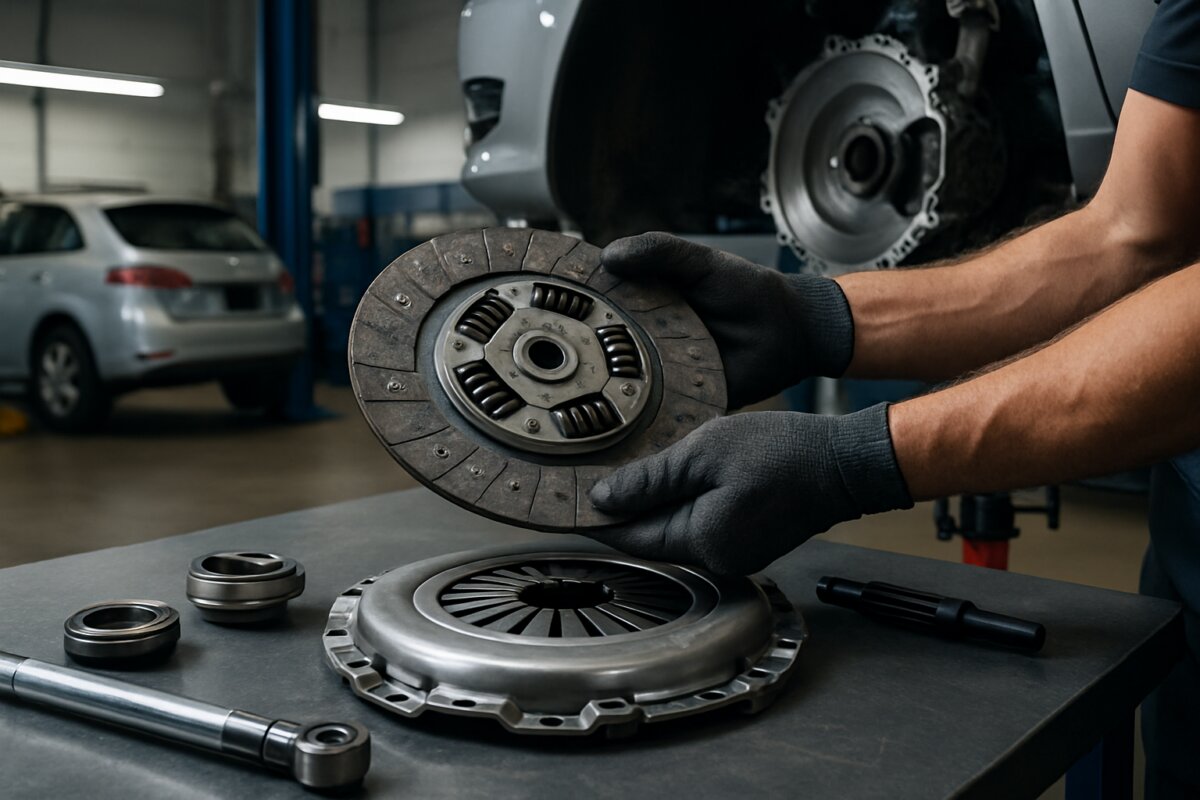
The main elements include the clutch plate (or friction disc), which connects to the gearbox input shaft, the clutch pressure plate that applies clamping force, and the clutch release bearing that disengages the clutch when you press the pedal.
The flywheel provides a smooth friction surface and stores rotational energy, whilst the clutch master cylinder and slave cylinder transmit hydraulic pressure in modern systems. Some vehicles use a clutch cable for mechanical actuation instead.
Warning signs your clutch needs replacement
Recognising early symptoms prevents being stranded and helps avoid additional damage to your gearbox or other transmission components. According to Autopartspro’s experienced technicians, most drivers ignore initial warning signs until problems become severe.
Slipping clutch behaviour
When your clutch slips, the engine revs increase without corresponding acceleration. This happens because worn friction material can’t grip the flywheel properly. You’ll notice this most during hard acceleration or whilst climbing hills.
Slipping becomes progressively worse and generates excessive heat, potentially warping the flywheel and requiring more expensive repairs. Never ignore this symptom.
Difficulty changing gears
Struggling to engage gears or hearing grinding noises indicates the clutch isn’t fully disengaging. This places enormous stress on your gearbox synchronisers and can cause gearbox failure.
The issue might stem from a failing release bearing, hydraulic problems, or a worn clutch disc that’s lost its spring cushioning.
Physical symptoms and sensations
- Burning smell resembling hot brakes, caused by excessive friction from a slipping clutch overheating
- Spongy or loose pedal feel, suggesting hydraulic system problems or cable stretch
- Vibration or juddering when pulling away, indicating worn friction material or contamination from oil leaks
- High biting point near the top of pedal travel, showing significant wear on the friction disc
- Strange noises (squealing, rumbling, or clicking) when pressing or releasing the pedal
How much does clutch replacement actually cost?
The financial investment for clutch replacement varies considerably based on multiple factors. Understanding these helps you budget appropriately and avoid surprises.
| Vehicle Type | Parts Cost | Labour Cost | Total Cost |
|---|---|---|---|
| Small hatchback (Fiesta, Corsa) | £150-£250 | £200-£350 | £350-£600 |
| Medium family car (Focus, Golf) | £200-£350 | £250-£450 | £450-£800 |
| Large saloon/estate | £250-£450 | £300-£550 | £550-£1,000 |
| 4WD/Performance vehicle | £400-£800 | £400-£700 | £800-£1,500 |
Factors affecting clutch replacement costs
Vehicle accessibility dramatically impacts labour charges. Front-wheel-drive cars typically require less work than rear-wheel-drive or four-wheel-drive vehicles, where subframes or propshafts may need removing.
Dual-mass flywheels, common in modern diesel engines and premium petrol models, add £300-£800 to parts costs. These complex components absorb vibrations but wear alongside the clutch.
Location matters significantly. London garages charge £80-£120 hourly whilst northern workshops average £50-£80. Main dealers command premium rates but use original equipment manufacturer parts.
Complete clutch kit versus individual components
Professional technicians at Autopartspro strongly recommend fitting a complete clutch kit rather than replacing individual parts. Here’s why this approach makes financial and practical sense.
Complete kits include the friction disc, pressure plate, release bearing, and alignment tool. Since labour dominates costs and all components wear simultaneously, replacing everything prevents repeat failures within months.
Fitting only the clutch plate but reusing the worn pressure plate leads to premature failure because the pressure plate springs weaken over time, reducing clamping force. The release bearing typically fails soon after if not replaced.
Professional tip: Always inspect the flywheel surface during clutch replacement. If it shows heat spots, scoring deeper than 0.3mm, or excessive wear, have it machined or replaced. Installing a new clutch on a damaged flywheel causes premature failure and wastes your money.
When should you replace your clutch?
Timing clutch replacement prevents inconvenient breakdowns and potential secondary damage. Several factors determine optimal replacement intervals.
Mileage guidelines and expectations
Average clutch lifespan spans 60,000 to 100,000 miles under normal driving conditions. However, this varies enormously based on driving style and operating environment.
Motorway driving extends clutch life because you’re rarely using it. City driving with constant stop-start traffic significantly reduces lifespan, sometimes to 40,000 miles or less.
Performance vehicles experience faster wear due to higher torque loads. Towing regularly or carrying heavy loads also accelerates deterioration, particularly in commercial vehicles and large SUVs.
Driving habits that affect clutch longevity
- Resting your foot on the pedal whilst driving creates constant pressure on the release bearing, causing premature wear and potential failure
- Riding the clutch on hills rather than using the handbrake generates excessive heat and burns the friction material rapidly
- Aggressive acceleration with high revs whilst partially engaged creates slip and extreme temperatures that destroy components quickly
- Using the clutch to hold the car on inclines instead of applying the brake causes continuous slippage and overheating
The clutch replacement process explained
Understanding what mechanics do during replacement helps you appreciate why labour costs seem high and what you’re paying for.
Step-by-step replacement procedure
The technician begins by disconnecting the battery and removing components blocking gearbox access. This might include the air filter housing, starter motor, and various electrical connectors.
Supporting the engine with a jack, they unbolt the gearbox mounts and carefully lower or remove the entire gearbox. This reveals the clutch assembly attached to the flywheel.
After inspecting the flywheel surface for damage, they remove the old pressure plate and friction disc, then fit the new components using an alignment tool to centre the disc properly.
The release bearing slides onto the input shaft, and the gearbox is carefully refitted, ensuring proper alignment. All mounting bolts receive correct torque specifications, and hydraulic systems are bled to remove air.
Time requirements for different vehicles
| Vehicle Configuration | Labour Hours | Complexity |
|---|---|---|
| Small FWD hatchback | 3-5 hours | Straightforward |
| Medium FWD saloon | 4-6 hours | Moderate |
| RWD sports car | 6-8 hours | Complex |
| 4WD SUV | 8-12 hours | Very complex |
Choosing between repair options
Where you have your clutch replaced significantly affects cost, quality, and warranty coverage. Each option presents distinct advantages and disadvantages.
Independent garages versus main dealers
Independent specialists offer substantial savings, typically 30-50% less than main dealers. Many employ factory-trained technicians who’ve worked at dealerships previously.
Main dealers use genuine manufacturer parts and follow official procedures exactly. This matters for warranty claims on newer vehicles and provides peace of mind, though at premium prices.
Fast-fit chains suit budget-conscious drivers but may use lower-quality parts. Always verify the parts brand and warranty terms before committing.
DIY clutch replacement considerations
Experienced home mechanics with proper equipment can save considerable money doing this job themselves. However, several critical factors require consideration.
You’ll need quality axle stands, a transmission jack, torque wrench, and clutch alignment tool. Working safely beneath a vehicle demands proper equipment and knowledge.
According to Autopartspro’s senior technicians, common DIY mistakes include failing to align the friction disc correctly, over-tightening pressure plate bolts causing distortion, and damaging the gearbox input shaft during refitting.
Preventing premature clutch failure
Proper driving techniques and maintenance dramatically extend clutch life, potentially doubling the replacement interval and saving hundreds of pounds.
Best practices for clutch longevity
- Keep your foot completely off the clutch pedal whilst driving, resting it on the dead pedal or floor instead
- Use handbrake on slopes rather than holding the car on the clutch, preventing unnecessary slippage and heat
- Change gear smoothly without rushing, allowing synchronisers to work properly and reducing shock loads
- Don’t rest your hand on the gear lever when not changing gears, as this pressures selector forks unnecessarily
- Match engine speed to road speed before downshifting to prevent clutch shock and wear
Maintenance checks and fluid changes
Hydraulic clutch systems require periodic fluid changes, typically every two to three years. Old fluid absorbs moisture, reducing boiling point and causing spongy pedal feel.
Check for leaks around the master and slave cylinders regularly. Fluid loss causes clutch engagement problems and potential complete failure.
Listen for unusual noises when pressing the clutch pedal. Early detection of release bearing wear allows replacement before it damages other components or fails completely.
Additional components to consider during replacement
Smart vehicle owners take advantage of gearbox removal to inspect and replace other components that share labour time, maximising value from the repair bill.
Dual-mass flywheel assessment
If your vehicle has a dual-mass flywheel, have it tested for excessive play. These typically last 80,000-120,000 miles but can fail prematurely.
Replacing the flywheel adds significant parts cost but minimal labour since the gearbox is already removed. Fitting a new clutch to a failing flywheel means repeating the entire job within months.
Transmission components and seals
The gearbox input shaft seal often leaks, contaminating the new clutch with oil. Replacement takes minutes whilst everything is apart but requires gearbox removal otherwise.
Inspect engine mounts and gearbox mounts for wear. Deteriorated mounts cause excessive movement, affecting gear change quality and accelerating clutch wear.
Check the CV joints and drive shaft boots for damage. Addressing these whilst the gearbox is out prevents another expensive job later.
Common clutch replacement mistakes to avoid
Even experienced mechanics occasionally make errors during clutch jobs. Understanding these helps you verify quality work and avoid comebacks.
Failing to clean the flywheel surface thoroughly leaves contaminants that cause judder and premature wear. Professional technicians use brake cleaner and ensure surfaces are spotless.
Incorrect torque on pressure plate bolts leads to distortion and uneven clamping force. Always follow manufacturer specifications and tighten in the correct sequence.
Contaminating the new friction disc with oil or grease from hands destroys its friction properties immediately. Handle components with clean hands or gloves.
Neglecting to bleed hydraulic systems properly leaves air in the lines, causing spongy pedal feel and incomplete disengagement that damages the gearbox.
Warranty and quality considerations
The quality of replacement parts varies enormously between manufacturers. Premium brands cost more initially but provide superior performance and longevity.Budget aftermarket clutches might last half the lifespan of original equipment quality parts, making them false economy. Autopartspro stocks only reputable brands that meet or exceed original specifications.
Verify warranty terms before authorising work. Reputable suppliers offer 12-24 months parts and labour warranty, protecting you against premature failure.
Keep all receipts and documentation. If you sell the vehicle, clutch replacement records add value and reassure buyers about the car’s mechanical condition.
Understanding clutch replacement costs helps you make informed decisions about this essential maintenance
Recognising warning signs early prevents expensive secondary damage to your gearbox and allows you to plan financially for the repair. Whilst clutch replacement represents a significant investment, choosing quality parts and experienced technicians ensures reliable performance for tens of thousands of miles.
Whether you select an independent specialist or main dealer, verify they’re using complete clutch kits rather than individual components. Take advantage of gearbox removal to address related items like the flywheel, input shaft seal, and mounts, maximising value from labour costs.
Adopting proper driving techniques dramatically extends clutch life, potentially delaying replacement by years and saving substantial money. Remember that how you drive matters more than what you drive when it comes to clutch longevity. Quality replacement parts from trusted suppliers like Autopartspro ensure your vehicle remains reliable and enjoyable to drive for many miles ahead.
Frequently Asked Questions (FAQ)
How long does a clutch replacement typically take?
Most clutch replacements take between 3-6 hours for front-wheel-drive vehicles. Rear-wheel-drive and four-wheel-drive vehicles require 6-12 hours due to increased complexity and additional components requiring removal.
Can I drive with a failing clutch until it completely breaks?
Driving with a failing clutch risks secondary damage to your flywheel, gearbox, and other transmission components, potentially doubling repair costs. It may also fail completely, leaving you stranded in dangerous situations.
Should I replace the flywheel when changing the clutch?
Inspect the flywheel during clutch replacement. If it shows heat damage, scoring, or excessive wear, replacement is essential. Dual-mass flywheels should be replaced if showing play or noise symptoms.
Why do some clutches only last 40,000 miles whilst others reach 150,000?
Driving style dominates clutch lifespan. Aggressive starts, riding the clutch, holding on hills, and frequent stop-start driving drastically reduce life. Smooth motorway driving extends it significantly beyond average expectations.
Are aftermarket clutches as good as original manufacturer parts?
Quality aftermarket clutches from reputable brands often match or exceed original equipment specifications. However, budget options using inferior materials fail prematurely. Always choose established manufacturers with proven reliability records.

 Loading...