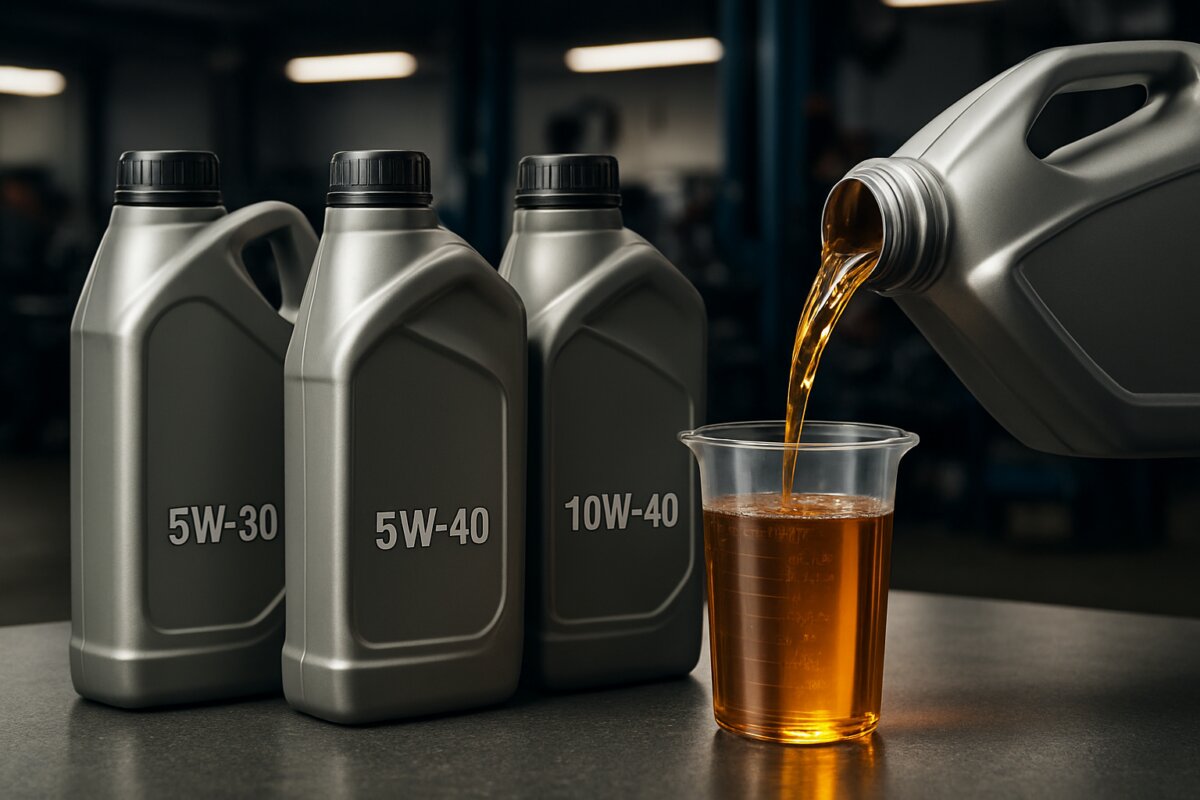
Yes, you can mix engine oils together in emergency situations. Different viscosity grades like 5W30, 5W40, and 10W40 are compatible and won’t cause immediate damage to your engine. However, mixing oils compromises the carefully engineered properties of each grade, potentially affecting lubrication efficiency, fuel economy, and wear protection. For optimal engine performance, stick to the manufacturer’s specified oil grade and avoid mixing whenever possible.
What happens when you mix different oil viscosities?
When you combine oils with different viscosity ratings, you create a blend with properties somewhere between the two original grades. The resulting oil won’t match either specification precisely. For instance, mixing equal parts of 5W30 and 10W40 gives you something approximating a 7.5W35 grade that doesn’t actually exist.
The viscosity modifiers in modern engine oil are designed to work within specific parameters. When you blend different formulations, these additives interact in ways the manufacturers never tested. Your engine management system expects consistent oil viscosity to maintain proper oil pressure and flow rates.
Autopartspro’s technical specialists note that whilst occasional mixing won’t destroy your engine overnight, repeated blending can accelerate wear on critical components. The oil pump, timing chain tensioner, and variable valve timing systems are particularly sensitive to viscosity variations.
Understanding oil viscosity grades
The numbers on your oil bottle aren’t random. The Society of Automotive Engineers (SAE) created this grading system to standardise oil thickness measurements. The first number before the ‘W’ (which stands for winter) indicates how the oil flows at cold temperatures. Lower numbers mean better cold-start protection.
The second number represents viscosity at operating temperature (100°C). A 5W30 oil flows like a 5-weight oil when cold but maintains 30-weight thickness when hot. This multi-grade formulation protects your engine across a wide temperature range.
Here’s how common grades compare:
| Oil Grade | Cold Performance | Hot Performance | Best For |
|---|---|---|---|
| 5W30 | Excellent | Moderate | Modern petrol engines, fuel economy |
| 5W40 | Excellent | Good | Performance engines, wider temperature range |
| 10W40 | Good | Good | Older engines, warmer climates |
| 0W20 | Outstanding | Light | Hybrid vehicles, extreme cold |
When mixing oils is acceptable
Emergency situations justify mixing different oil grades. If your oil level drops dangerously low and you’re miles from a service station, adding whatever oil you can find beats running with insufficient lubrication. Metal-on-metal contact from low oil levels causes far more damage than using a non-optimal viscosity.
Top-ups between services occasionally require mixing if you don’t have the exact grade to hand. Adding half a litre of 5W40 to an engine running 5W30 dilutes the original specification only slightly. The closer the viscosity grades, the less impact on overall performance.
Always check your oil level before long journeys. Carrying a spare litre of your vehicle’s specified grade in the boot prevents emergency mixing situations and ensures you’re never caught short.
Short-term mixing is acceptable, but plan to drain and refill with the correct specification at your next service. Your oil filter should also be changed when you return to the proper grade.
Risks of mixing synthetic and mineral oils
The bigger concern isn’t viscosity grades but oil formulation types. Mineral, semi-synthetic, and fully synthetic oils use different base stocks and additive packages. Fully synthetic oils contain ester-based compounds and advanced friction modifiers that mineral oils lack.
Modern synthetic oils are generally compatible with mineral oils, but mixing them wastes the premium properties you’re paying for. The synthetic oil’s extended drain intervals, superior high-temperature stability, and enhanced wear protection get compromised when diluted with conventional oil.
Autopartspro’s workshop team emphasises that whilst you won’t see immediate problems from mixing synthetic and mineral oils, the resulting blend performs closer to the lower-quality oil’s specification. You’re essentially downgrading your lubrication whilst paying synthetic prices.
Some specialist oils shouldn’t be mixed at all. Diesel-specific oils with higher detergent levels, motorcycle oils with clutch-compatible friction modifiers, and classic car formulations with ZDDP additives all serve specific purposes that mixing can undermine.
Impact on engine warranty and performance
Your manufacturer specifies oil grades for documented reasons. Engineers test engines with particular viscosities to ensure proper lubrication, fuel economy, and emissions compliance. Deviating from these specifications can void warranty coverage if engine damage occurs.
Modern engines with variable valve timing, turbochargers, and direct injection demand precise oil specifications. These systems rely on exact oil pressure and flow characteristics. A turbocharger spinning at 150,000 rpm needs consistent lubrication viscosity to prevent bearing failure.
Fuel economy suffers when you use thicker oil than specified. A 10W40 oil in an engine designed for 5W30 increases internal friction, making the engine work harder. You’ll notice reduced miles per gallon and slightly less responsive acceleration.
Thinner oils in engines requiring thicker grades create different problems. Insufficient film strength allows metal contact between moving parts. High-performance engines and those with significant mileage often need the extra protection that thicker oils provide.
Best practices for oil selection and changes
Always consult your vehicle’s handbook before selecting oil. Manufacturers list approved specifications, not just viscosity grades but also industry standards like ACEA or API ratings. These certifications ensure the oil meets performance benchmarks for your engine type.
When changing oil, wait until the engine has cooled but remains warm. This allows contaminants to stay suspended for better drainage whilst preventing burns. Always replace the sump gasket and drain plug washer to prevent leaks.
Use a proper oil drain pan to catch old oil. Check the drained fluid for metal particles, which indicate internal wear, or milky appearance, which suggests coolant contamination requiring investigation of the head gasket condition.
Mark your oil containers with the purchase date. Engine oil degrades over time even in sealed bottles. Oil older than five years may have separated additives that compromise protection regardless of the viscosity grade.
Different grades for different conditions
Climate affects oil choice significantly. Northern European winters benefit from 0W or 5W grades that flow freely at sub-zero temperatures. Southern regions with consistently warm weather can use 10W or 15W grades without cold-start concerns.
High-mileage engines often benefit from slightly thicker oils. As piston rings and cylinder bores wear, clearances increase. Moving from 5W30 to 5W40 can reduce oil consumption and maintain better compression in engines exceeding 100,000 miles.
Driving style matters too. Motorway cruising generates different thermal loads than stop-start city driving. Track day enthusiasts should consider oils with higher temperature stability, whilst delivery vehicles need oils optimised for frequent cold starts and extended idling.
Some engines have variable recommendations based on ambient temperature ranges. Your handbook might specify 5W30 for temperatures above -25°C but recommend 0W30 for extreme cold. Following these guidelines ensures reliable starting and immediate lubrication.
Signs your oil grade might be wrong
Several symptoms indicate unsuitable oil viscosity. Excessive oil consumption suggests the grade is too thin for your engine’s wear state. Check the oil dipstick weekly if you suspect consumption issues.
Noisy valve train operation, particularly hydraulic tappet noise on cold starts, can result from oil that’s too thick to flow quickly through narrow passages. Modern engine tappets require thin oils for rapid pressure build-up.
The oil pressure switch may trigger warning lights if viscosity is incorrect. Too-thin oil won’t maintain adequate pressure at operating temperature. Excessively thick oil might show high pressure when cold, stressing the oil pump.
Increased fuel consumption without other obvious causes sometimes stems from using thicker oil than specified. The additional drag on internal components forces the engine to burn more fuel to maintain performance levels.
What about diesel engines?
Diesel engines generate more combustion byproducts than petrol engines. The oil must handle higher soot levels, acidic compounds, and thermal stress. Diesel-specific oils contain extra detergents and dispersants to manage these contaminants.
Modern diesels with particulate filters require low-SAPS oils (low Sulphated Ash, Phosphorus, and Sulphur). These formulations prevent filter blockage but won’t harm petrol engines if mixed temporarily. However, using petrol oil in a diesel requiring low-SAPS specification can damage expensive emissions equipment.
Turbocharged diesels place extreme demands on oil. The oil cooler works harder to manage temperatures, and the turbo’s oil feed requires stable viscosity across wide temperature ranges. Mixing oils undermines these carefully balanced characteristics.
Storage and handling of different oil types
Keep different oil grades clearly labelled and stored separately. Confusion between containers leads to accidental mixing. Store oil in a cool, dry location away from direct sunlight, which can degrade additives over time.
Partially used containers should be sealed tightly. Exposure to air allows moisture absorption, particularly problematic in humid environments. Contaminated oil won’t protect your engine properly regardless of the correct viscosity grade.
Never store oil in unmarked containers or transfer between bottles. You’ll forget which grade you’re looking at, and cross-contamination becomes inevitable. Original packaging includes important specification information and batch codes.
Dispose of used oil responsibly at designated collection points. Mixing different grades of waste oil for disposal is acceptable, but never combine oil with other fluids like coolant, brake fluid, or solvents, which complicates recycling.
Frequently asked questions
Will mixing 5W30 and 5W40 damage my engine?
No, mixing these closely related grades won’t cause immediate damage. The resulting blend will have properties between the two specifications. For optimal performance, use the manufacturer’s recommended grade at your next oil change.
Can I use 10W40 instead of 5W30 in winter?
This isn’t recommended for cold climates. The 10W grade flows more slowly at low temperatures, potentially delaying lubrication during cold starts. Stick with 5W or 0W grades for reliable winter operation and engine protection.
How much mixing is too much?
Adding up to 25% of a different grade during a top-up won’t significantly impact performance. Beyond this proportion, you’re substantially altering the oil’s characteristics. Plan to drain and refill with correct specification oil soon.
Does oil brand matter when mixing?
Different brands of the same grade are generally compatible, as they meet industry standards. However, premium brands use proprietary additive packages that may not work optimally together. Stick to one brand when possible.
Can I mix conventional and high-mileage oil?
Yes, high-mileage oils are compatible with conventional formulations of the same viscosity. High-mileage oils simply contain extra seal conditioners and detergents. Mixing won’t harm your engine but dilutes the high-mileage oil’s specific benefits.
Getting your oil specification right matters more than many drivers realise. Whilst emergency mixing won’t immediately harm your engine, consistent use of the manufacturer’s recommended grade ensures proper lubrication, maintains warranty coverage, and maximises engine longevity. Keep the correct engine oil specification in your vehicle and you’ll avoid the compromise that comes from mixing different grades altogether.

 Loading...