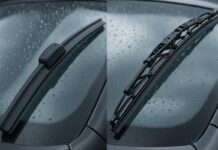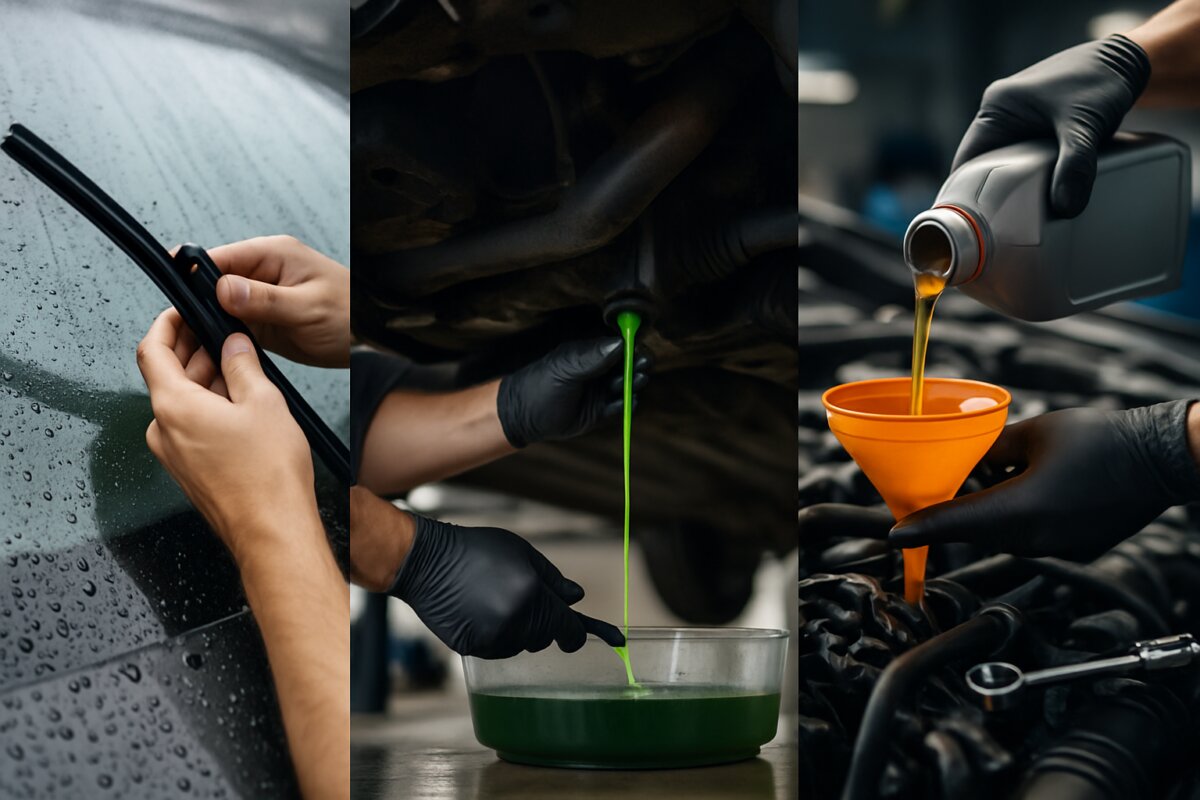
Changing windscreen wipers involves lifting the wiper arm, pressing the release tab, sliding off the old blade, and clicking the new one into place. Flushing a radiator requires draining old coolant, running flush solution through the system, and refilling with fresh antifreeze mix. Adding oil means locating the filler cap, using a funnel, pouring the correct grade oil, and checking the dipstick level. Each task takes 10-30 minutes with basic tools and proper parts.
Tools and parts you’ll need
Having the right equipment makes these maintenance tasks straightforward and prevents damage to your vehicle.
For windscreen wipers:
- Replacement wiper blades (driver and passenger side specific)
- Cleaning cloth
- Glass cleaner
For radiator flushing:
- Radiator flush solution
- Fresh coolant (correct specification for your vehicle)
- Distilled water
- Drain pan (minimum 10-litre capacity)
- Funnel
- Socket set or spanner
- Garden hose
- Safety gloves and goggles
For oil top-up:
- Engine oil (correct viscosity grade)
- Funnel
- Clean rag
- Gloves
Always verify your vehicle’s specific requirements in the owner’s manual. Using incorrect coolant or oil specifications can cause engine damage and void warranties.
Safety precautions
Before starting any of these procedures, ensure your vehicle is parked on level ground with the handbrake applied. For radiator work, the engine must be completely cold—never open a hot cooling system as pressurised coolant can cause severe burns. Wear protective gloves and safety glasses when handling coolant, as it’s toxic and corrosive. Work in a well-ventilated area, especially when dealing with engine fluids. Keep children and pets away from coolant, as even small amounts are fatal if ingested.
How to change windscreen wipers
Step 1: Measure and purchase correct blades
Check your current wiper blade lengths. Driver and passenger sides often differ in size. Note the attachment type—hook, pin, or bayonet fitting. Purchase vehicle-specific replacement blades or universal fit wipers with appropriate adapters.
Step 2: Position the wiper arm
Lift the wiper arm away from the windscreen until it locks in the vertical position. Handle carefully to prevent the spring-loaded arm from snapping back and cracking the glass.
Step 3: Remove the old blade
Locate the small tab or button on the wiper blade assembly where it connects to the arm. Press this release mechanism whilst sliding the blade downward or pulling it away from the hook. Some designs require rotating the blade perpendicular to the arm before removal.
Step 4: Install the new blade
Align the new blade’s connector with the wiper arm hook. Slide it upward until you hear a distinct click. Tug gently to confirm it’s secured. Lower the arm slowly back to the windscreen.
Step 5: Test operation
Turn on your ignition and test the wipers at various speeds. Check for proper contact across the entire windscreen and listen for unusual noises indicating incorrect installation.
How to flush a radiator
Step 1: Drain the old coolant
With the engine cold, place your drain pan beneath the radiator. Locate the drain plug or petcock at the bottom of the radiator. Open it by turning anticlockwise, allowing old coolant to drain completely. Remove the radiator cap to speed drainage. Dispose of old coolant at a recycling centre—never pour it down drains.
Step 2: Flush the system
Close the drain plug and fill the radiator with radiator flush solution mixed with water according to product instructions. Replace the cap, start the engine, and let it run until it reaches operating temperature (typically 10-15 minutes). Turn on the heater to maximum to flush the heater core. Switch off the engine and allow it to cool.
Step 3: Drain the flush solution
Open the drain plug again and remove all flush solution. For stubborn deposits, repeat the flush process. Once drained, close the plug securely.
Step 4: Refill with fresh coolant
Mix coolant concentrate with distilled water at the ratio specified by your vehicle manufacturer (commonly 50:50). Using a funnel, pour the mixture into the radiator until full. Also fill the expansion tank to the maximum mark. Replace the radiator cap.
Step 5: Bleed air from the system
Start the engine with the heater on maximum. Watch the coolant level and top up as air pockets escape. Squeeze the upper radiator hose to help release trapped air. Once the cooling fan cycles on, check for leaks around the drain plug and hoses. Top up the expansion tank as needed.
Professional tip from Autopartspro mechanics: Always use coolant that meets your vehicle manufacturer’s specification. Modern engines often require specific formulations, and mixing incompatible types can create gel-like deposits that block narrow passages.
How to put oil in your car
Step 1: Check current oil level
Park on level ground and switch off the engine. Wait five minutes for oil to settle. Locate the dipstick (usually has a brightly coloured handle), pull it out, wipe it clean, reinsert it fully, then remove it again. Check where the oil level sits between the minimum and maximum marks.
Step 2: Determine oil type and quantity needed
Consult your owner’s manual for the correct oil viscosity grade (such as 5W-30 or 10W-40) and specification (API or ACEA rating). If the level is near minimum, you’ll typically need 500ml to 1 litre. Never overfill beyond the maximum mark.
Step 3: Locate the oil filler cap
Open the bonnet and identify the oil filler cap on top of the engine. It’s usually marked with an oil can symbol. Remove the cap by turning anticlockwise.
Step 4: Add oil gradually
Insert a clean funnel into the filler opening. Pour oil slowly, adding no more than 500ml at a time. Wait 30 seconds for oil to drain down into the sump.
Step 5: Recheck and verify level
Replace the filler cap. Wait another minute, then check the dipstick again. Add more oil if needed, but approach the maximum mark cautiously. Once satisfied, ensure the dipstick and filler cap are secured properly. Wipe any spills with a clean rag.
Expert insight from Autopartspro specialists: Check your oil when the engine is cold for the most accurate reading. Warm oil expands and can give false high readings, leading to underfilling which causes accelerated wear.
Common mistakes to avoid
When changing wipers, forcing blades onto incompatible arms damages both components. Always verify the fitting type matches your vehicle. For radiator maintenance, the most serious error is opening the system whilst hot, which can cause severe scalding. Another frequent mistake is using tap water instead of distilled water, introducing minerals that cause scale buildup and corrosion. Never mix different coolant types—pink, blue, and green formulations contain different additives that can react chemically.
With oil, overfilling is as damaging as underfilling. Excess oil creates pressure that can blow seals and force oil past piston rings into the combustion chamber. Similarly, using incorrect viscosity reduces protection. Modern engines with tight tolerances require precise oil specifications—using thicker oil than specified restricts flow to critical components.
When should you perform these maintenance tasks?
Replace windscreen wipers every 6-12 months or when you notice streaking, squeaking, or missed areas during operation. Harsh weather and frequent use accelerate wear. Flush your radiator every 2-3 years or according to your vehicle manufacturer’s schedule. Check coolant level monthly and inspect for discolouration or contamination. If coolant appears rusty or has particles floating in it, flush immediately.
Check engine oil level every fortnight and before long journeys. Top up when the level drops to the lower third of the dipstick range. Never let it reach the minimum mark. Between scheduled oil changes, most engines consume some oil—this is normal. However, if you’re adding more than 500ml between changes, investigate for leaks or internal wear issues.
Related maintenance you can do at the same time
When changing wipers, clean your windscreen thoroughly and inspect headlight lenses for clarity. Top up your screenwash reservoir with quality fluid. During a radiator flush, inspect all coolant hoses for cracks, bulges, or soft spots. Check the condition of drive belts and battery terminals. When adding oil, inspect for leaks around the engine, check air filter condition, and verify brake fluid level. These combined checks take minimal extra time but catch developing problems early.
Frequently asked questions
Can I use any coolant in my radiator?
No, modern vehicles require specific coolant formulations. Using incorrect coolant can damage seals, corrode aluminium components, and void warranties. Always use the type specified in your owner’s manual—typically OAT, HOAT, or IAT chemistry with particular colour and specification codes.
How do I know which oil grade my car needs?
The correct oil viscosity and specification are listed in your owner’s manual and often on a label under the bonnet. The first number (5W, 10W) indicates cold-start viscosity, whilst the second number (30, 40) represents operating temperature viscosity. Modern engines typically require fully synthetic oils meeting specific API or ACEA standards.
Why do my new wipers still streak?
New wipers can streak if the windscreen has wax, silicone, or oil contamination. Clean the glass thoroughly with glass cleaner or isopropyl alcohol. Also verify you’ve removed protective covers from new blades and that they’re correctly oriented—some blades have directional installation.
How long does a radiator flush take?
A complete radiator flush typically takes 60-90 minutes, including draining, flushing, refilling, and properly bleeding the system. Never rush this process—trapped air pockets cause overheating and damage.
Can I mix different brands of oil?
You can safely mix different brands if they meet the same specification and viscosity grade. However, avoid mixing synthetic and mineral oils when possible. In emergencies, mixing is acceptable, but plan a complete oil change soon after.
Regular maintenance like these three tasks keeps your vehicle running reliably and prevents expensive repairs. Fresh wipers ensure visibility during critical moments, proper coolant protects against both overheating and freezing, whilst correct oil levels prevent catastrophic engine damage. Performing these checks yourself not only saves money but helps you understand your vehicle better. With quality parts and attention to manufacturer specifications, you’ll maintain optimal performance and extend your vehicle’s lifespan considerably.

 Loading...