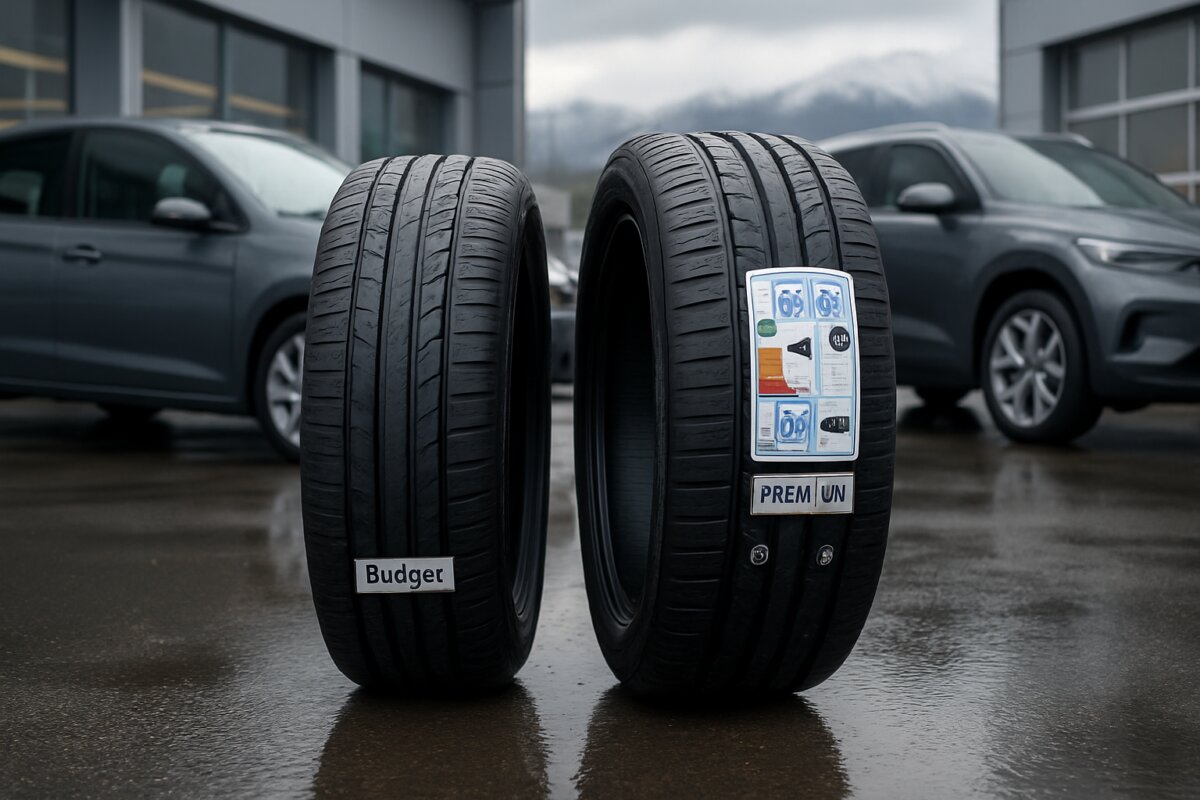
Ask five drivers “are budget tyres any good?” and you’ll hear everything from “they’re fine for town driving” to “never touch them.” The truth lives between those extremes. Tyres are the only contact your car has with the road, yet they’re also one of the most tempting places to save money. If you’re wondering whether budget tyres are safe, worth it, or really that bad, here’s a clear-eyed look at where they shine and where they compromise.
What “Budget” Really Means
Budget tyres occupy the lowest price tier beneath premium and mid-range brands. They still must pass legal standards and carry the same basic information as pricier options — size, speed and load ratings, and the EU label for wet grip, rolling resistance, and noise. What you generally give up isn’t legality but refinement: advanced compounds, rigorous quality control, and extensive testing across varied conditions.
Compound, Construction, and Consistency
Premium tyres use complex rubber blends with high-quality silica, precise tread designs, and carefully engineered sidewalls. That chemistry matters. It affects how quickly water clears from the contact patch, how a tyre resists heat on the motorway, and how predictably it responds when you swerve. Budget tyres can look similar, but the compound may harden quicker with age, tread blocks may squirm more in corners, and consistency from one tyre to the next may be looser. Those differences often show up in the wet, at the limit, and after several thousand miles.
Are Budget Tyres Safe?
In a word: yes, in the sense that new budget tyres meet safety regulations. But are budget tyres safe in all the ways that matter when things go wrong? That’s where nuance comes in. Independent tests routinely show that cheaper tyres can take several car lengths longer to stop in heavy rain than top-tier competitors. Aquaplaning resistance and wet cornering grip are typically where budgets fall behind. On dry roads at moderate speeds, you may notice little difference day to day. When you need maximum grip once in a blue moon, the gap can feel enormous.
Heat management is another factor. Long, fast drives load tyres with heat; better compounds and construction help keep temperatures in check. Under-inflation makes this worse for any tyre, but budget models can be less forgiving. If your driving regularly includes high-speed cruising, heavy loads, or towing, step up to a mid-range or premium choice.
Do Budget Tyres Make a Difference in Fuel and Noise?
Yes. Rolling resistance influences fuel economy, and the EU label gives a quick snapshot. A tyre graded better for rolling resistance can trim consumption by a small but meaningful margin across thousands of miles. Noise ratings also vary: some budget tyres hum or drone more on coarse asphalt, while premium patterns are tuned to reduce cabin noise. You’ll still find quiet, efficient options at lower prices — just check the label and reviews rather than shopping on price alone.
Are budget winter tyres any good?
In cold conditions, even a modest winter tyre usually beats a great summer tyre, because compound is king below 7°C. Look for the 3PMSF (three-peak mountain snowflake) symbol; without it, you’re not getting a true winter design. Budget winter tyres can deliver strong traction in fresh snow and slush if they have good siping and a compliant compound. Where cheaper winters often lag is on wet or icy roads at higher speeds, and in longevity if the rubber hardens over time. If you mostly drive in a temperate climate with occasional frost, consider an all-season from a reputable mid-range brand. If you face consistent snow and ice, a proven premium winter set pays off in confidence.
Are budget run flat tyres any good?
Run-flat tyres use reinforced sidewalls to support the car after a puncture, letting you drive to safety. That stiff construction can make ride quality harsher and amplify road noise. Budget run flats may exaggerate those drawbacks and can feel less composed on rough surfaces. If your car was designed for run flats, sticking with reputable OEM-approved or mid-range options is wise; balance the convenience of puncture mobility against comfort, grip, and price. For cars not designed for them, a quality tyre repair kit and roadside assistance can be a better value than a cheap run-flat conversion.
When Budget Tyres Are Worth It
If your mileage is low, speeds are modest, and most driving is urban, budget tyres from known manufacturers or established second-line brands can be a sensible choice. They’re also reasonable for older cars nearing end-of-life, or if you’re selling soon and need legal, fresh rubber. The key is to be picky: choose models with at least a mid-grade wet-grip label, match the exact size and load/speed rating, and avoid off-brand names with scant testing data. Rotate regularly, keep pressures spot-on, and replace tyres before they age out even if tread remains. (Check the DOT date code; tyres over five to six years old are candidates for replacement.)
When to Spend More
Prioritise premium or strong mid-range tyres if you frequently drive in heavy rain, cover long motorway distances, carry family or business passengers, or drive a heavier vehicle like an SUV or EV. These scenarios amplify the benefits of shorter wet braking, better aquaplaning resistance, cooler running, and predictable handling. If you value a quiet cabin, precise steering, and confident emergency manoeuvres, the upgrade is often worth it. As for the question “are budget tyres really that bad?” — not inherently, but the stakes of those rare “one big stop” moments argue for better rubber if your budget allows.
Conclusion: Buying Smart on a Budget
Do a quick short-list: search independent tyre tests, read user reviews for your car model, and compare EU labels for wet grip and rolling resistance. Verify the manufacturing date to avoid old stock. Choose a trusted fitter with modern balancing equipment, get a four-wheel alignment, and recheck pressures after a week. Avoid mixing wildly different tread patterns on the same axle, and consider seasonal sets if your climate swings from hot summers to icy winters. With a little diligence, you’ll find options that undercut premium prices without cutting essential safety margins.
So, are budget tyres worth it? They can be, provided you buy with your conditions in mind, lean on transparent test data, and value wet grip over flashy tread patterns. Think of tyres as risk management as much as a purchase; even a modest improvement in stopping or steering precision can be priceless the one day you need it. Spend where it counts, save where you can, and let your typical roads, weather, and speeds answer the only question that matters: what’s the right tyre for you?

 Loading...