The Volkswagen Tiguan stands as one of Britain’s most popular compact SUVs, blending practicality with performance across multiple generations. The engine choice significantly impacts your ownership experience, affecting everything from daily running costs to long-term reliability. Tiguan models offer diverse powertrains including efficient TSI petrol units, robust TDI diesels, and cutting-edge hybrid systems, with outputs ranging from 115hp to 245hp depending on specification.
Comparison table of all engines
| Engine | Power output | Torque | Fuel consumption | Reliability |
|---|---|---|---|---|
| 1.4 TSI (150hp) | 150hp | 250Nm | 38-42 mpg | Good |
| 2.0 TSI (190hp) | 190hp | 320Nm | 34-38 mpg | Very Good |
| 2.0 TDI (115hp) | 115hp | 250Nm | 52-56 mpg | Excellent |
| 2.0 TDI (150hp) | 150hp | 340Nm | 48-52 mpg | Excellent |
| 1.4 eHybrid | 245hp | 400Nm | 156-188 mpg | Good |
Engine #1 overview
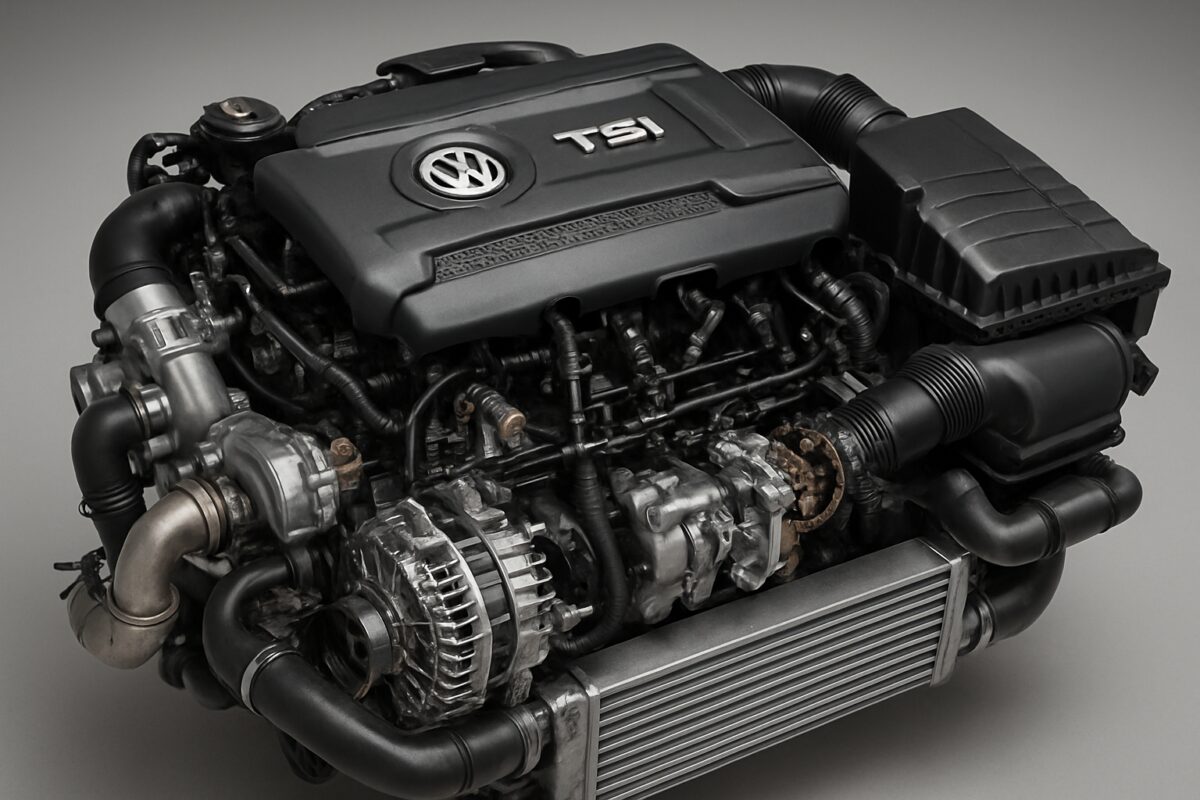
The 1.4 TSI engine represents Volkswagen’s modern approach to petrol power, utilising a four-cylinder turbocharged configuration with direct injection. This compact powerplant displaces 1395cc and employs variable valve timing alongside cylinder deactivation technology. The unit runs on standard unleaded petrol with high-pressure direct injection, delivering responsive performance whilst maintaining reasonable economy figures.
Pros
- Smooth and refined operation with minimal vibration
- Good balance between performance and fuel efficiency
- Proven reliability record across VW Group vehicles
- Lower road tax compared to larger displacement engines
- Readily available parts and service expertise
Cons
- Carbon build-up issues on intake valves over time
- Timing chain tensioner problems in early examples
- Higher servicing costs than naturally aspirated units
- Requires premium fuel for optimal performance
- Turbocharger replacement can be expensive
Engine #2 overview
The 2.0 TSI stands as the performance flagship of the Tiguan petrol range, featuring a larger four-cylinder turbocharged design. This 1984cc powerplant incorporates advanced technologies including variable valve timing, direct injection, and sophisticated engine management. The unit delivers substantial torque output whilst maintaining relatively civilised fuel consumption for its performance level.
Pros
- Excellent power delivery across the rev range
- Strong towing capability with 320Nm torque
- Mature technology with established service procedures
- Good aftermarket support for tuning modifications
- Robust construction handles higher mileages well
Cons
- Higher fuel consumption than smaller engines
- Premium unleaded requirement increases running costs
- Turbocharger and intercooler maintenance needs
- More complex cooling system with potential leak points
- Higher insurance premiums due to performance classification
Engine #3 overview
The 2.0 TDI diesel engine comes in multiple power outputs, utilising common rail direct injection technology. This four-cylinder turbodiesel displaces 1968cc and features advanced emission control systems including particulate filters and selective catalytic reduction. The unit runs on standard diesel fuel with sophisticated injection timing control for optimal efficiency and emissions compliance.
Pros
- Outstanding fuel economy figures exceeding 50mpg
- Exceptional torque delivery from low engine speeds
- Long-distance touring capability with large fuel range
- Proven reliability in high-mileage applications
- Lower CO2 emissions than equivalent petrol engines
Cons
- Expensive DPF and AdBlue system maintenance
- Cold weather starting can be problematic
- Higher servicing costs due to complex emissions equipment
- Not suitable for predominantly short urban journeys
- Potential for expensive injection system failures
Engine #4 overview
The 1.4 eHybrid combines a turbocharged petrol engine with an electric motor system, creating Volkswagen’s most advanced Tiguan powertrain. This plug-in hybrid setup pairs the 1.4 TSI with a 115hp electric motor, drawing power from a 13kWh lithium-ion battery pack. The system delivers impressive combined output whilst offering electric-only driving capability for short distances.
Pros
- Exceptional official fuel economy figures when charged regularly
- Zero-emission electric driving for urban commutes
- Government incentives and reduced benefit-in-kind tax
- Instant torque delivery from electric motor
- Future-proof technology with excellent resale potential
Cons
- Complex system with multiple potential failure points
- High replacement costs for battery and electric components
- Reduced boot space due to battery positioning
- Real-world economy depends heavily on charging habits
- Limited electric range of approximately 30 miles
“In our experience at AutoPartsPro, the 2.0 TDI engines prove most cost-effective for high-mileage drivers, whilst the 1.4 TSI suits mixed driving patterns perfectly. Always ensure regular oil filter changes regardless of engine choice.”
Maintenance cost
| Engine | Recommended Interval | Estimated Cost | Cost per 10000 miles |
|---|---|---|---|
| 1.4 TSI | 12 months/10,000 miles | £280-350 | £280-350 |
| 2.0 TSI | 12 months/10,000 miles | £320-420 | £320-420 |
| 2.0 TDI | 12 months/10,000 miles | £380-480 | £380-480 |
| 1.4 eHybrid | 12 months/10,000 miles | £420-520 | £420-520 |
Engine sound and character
Each Tiguan engine delivers distinct acoustic characteristics that reflect their engineering philosophy. The 1.4 TSI produces a refined four-cylinder note with subtle turbo whistle under acceleration, maintaining civilised cabin noise levels during cruising. Our mechanics note that proper exhaust manifold maintenance ensures optimal sound quality.
The 2.0 TSI generates a more purposeful soundtrack with deeper exhaust notes and pronounced turbo surge during spirited driving. This engine exhibits slightly more mechanical noise than its smaller sibling but remains well-refined for daily use.
Diesel variants produce the characteristic TDI clatter at idle, which settles to a subdued hum during highway cruising. Modern sound insulation largely masks diesel characteristics, though the distinctive compression ignition rhythm remains audible to keen listeners.
The eHybrid system operates almost silently in electric mode, transitioning seamlessly to petrol power when required. This creates an unusual but pleasant driving experience, particularly beneficial in urban environments where noise regulations matter.
“Regular engine oil changes using the correct specification are crucial for maintaining optimal engine sound and performance across all Tiguan variants. We’ve seen numerous examples where incorrect oil grades lead to premature wear and increased noise levels.”
Who each engine is best for
| Engine | Best for | Driving style | Annual mileage |
|---|---|---|---|
| 1.4 TSI | Daily commuters | Mixed urban/motorway | 8,000-15,000 miles |
| 2.0 TSI | Performance enthusiasts | Spirited driving/towing | 10,000-20,000 miles |
| 2.0 TDI | Long-distance drivers | Motorway cruising | 15,000+ miles |
| 1.4 eHybrid | Urban professionals | Short commutes/city driving | 5,000-12,000 miles |
What happens if your alternator fails?
Alternator failure leads to battery drain and eventual engine shutdown. Symptoms include dimming lights, dashboard warnings, and electrical system malfunctions. Replacement typically costs £400-600 including labour.
How often should you change spark plugs?
TSI engines require spark plug replacement every 40,000-60,000 miles depending on driving conditions. Diesel engines use glow plugs instead, requiring replacement every 80,000-100,000 miles typically.
When should the timing belt be replaced?
Most Tiguan engines use timing chains rather than belts. These require inspection every 80,000-100,000 miles but often last the engine’s lifetime with proper maintenance and quality engine oil.
What causes turbocharger problems?
Poor oil maintenance, contaminated fuel, and aggressive driving without proper warm-up cycles cause most turbocharger failures. Regular servicing with correct oil grades prevents premature wear and maintains boost pressure.
How do you maintain the DPF system?
Diesel particulate filters require regular motorway driving to regenerate properly. Urban-only driving can cause blockages requiring professional cleaning or replacement. Regular use of quality diesel fuel helps maintain system efficiency.

 Loading...