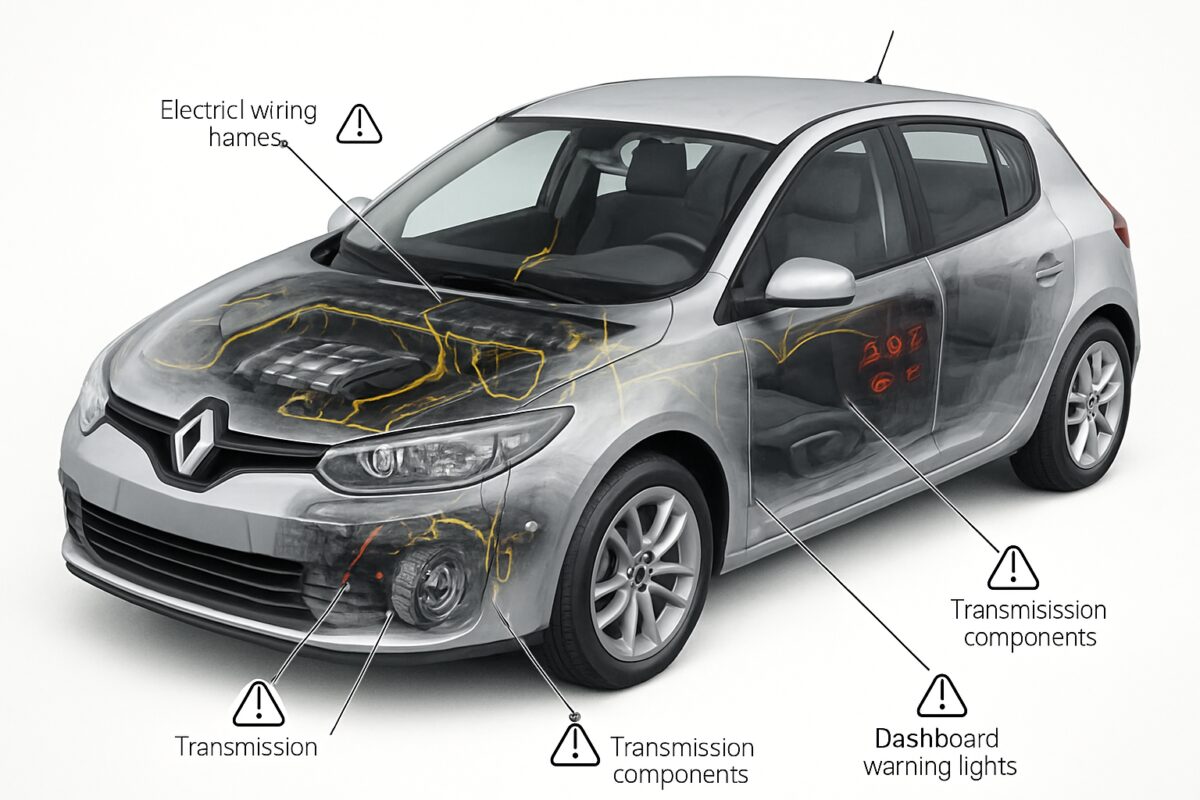
The Renault Megane has established itself as a popular family hatchback across the UK, but like any vehicle, it comes with its share of common problems and reliability concerns. Understanding these issues can help owners make informed decisions about maintenance, repairs, and whether to keep their vehicle or consider alternatives. This comprehensive guide explores the most frequent Renault Megane problems, warning signs to watch for, and practical solutions to keep your car running smoothly.
Electrical system failures
Electrical problems plague many Renault Megane models, particularly those produced between 2008 and 2016. The most common issues involve faulty wiring looms, which can cause intermittent faults across multiple systems.
Window mechanisms frequently fail due to worn motor brushes or damaged regulators. The central locking system often malfunctions, with drivers reporting doors that won’t lock or unlock properly. Dashboard warning lights may illuminate randomly, indicating false faults with the engine management system.
The battery drainage is another persistent issue. Many owners find their vehicles won’t start after being parked overnight, caused by parasitic drains from faulty control modules or interior lighting circuits that fail to switch off properly.
According to our AutoPartsPro specialists, replacing faulty electrical components with genuine OEM parts significantly reduces the likelihood of recurring problems compared to aftermarket alternatives.
Radio and infotainment systems are particularly vulnerable. The touchscreen may become unresponsive, Bluetooth connectivity drops frequently, and the radio may reset its settings randomly. These issues often stem from software glitches or failing internal components within the head unit.
Engine reliability issues
Several engine types in the Renault Megane range suffer from specific reliability problems that owners should be aware of. The 1.5 dCi diesel engine, whilst generally reliable, can develop issues with the turbocharger and fuel filter systems.
Timing belt failures represent a significant concern, particularly on petrol engines. When the timing belt snaps, it typically causes catastrophic engine damage because most Megane engines are interference designs. The recommended replacement interval is 72,000 miles or 5 years, whichever comes first.
The 1.6-litre petrol engine often experiences problems with the throttle body becoming dirty or faulty. This causes irregular idling, poor acceleration, and increased fuel consumption. Carbon build-up on intake valves is common in direct injection engines, leading to reduced performance over time.
Coolant system problems frequently occur due to failing water pumps or radiator issues. The expansion tank cap may fail, causing coolant loss and potential overheating. Regular monitoring of coolant levels is essential to prevent serious engine damage.
Transmission problems
Manual gearboxes in the Renault Megane can develop several characteristic faults. The clutch system often requires attention around 60,000-80,000 miles, with drivers reporting heavy pedal feel, slipping, or difficulty engaging gears.
Second gear synchromesh problems are particularly common, causing crunching noises when shifting. This issue typically develops gradually and may initially only occur when the gearbox oil is cold. Using the correct grade of gear oil and regular changes can help prevent premature wear.
The CVT automatic transmission fitted to some models has proven problematic. Owners report jerky operation, particularly during low-speed manoeuvres, and complete failure requiring expensive replacement. The transmission control module may also fail, causing erratic shifting patterns.
Dual-clutch transmissions, when fitted, can develop clutch pack wear leading to shuddering during engagement. The hydraulic system may leak, causing loss of pressure and eventual transmission failure. Regular servicing with the correct fluid specification is crucial for longevity.
Warning signs your car has a problem
Recognising early warning signs can prevent minor issues from becoming major repairs. Pay attention to these key indicators that suggest your Renault Megane needs attention:
- Dashboard warning lights that illuminate intermittently or stay on permanently
- Unusual noises from the engine bay, particularly clicking or squealing sounds
- Difficulty starting the engine, especially in cold weather conditions
- Irregular idling or engine stalling at traffic lights
- Excessive smoke from the exhaust, regardless of colour
- Clutch pedal that feels spongy or requires excessive force to operate
- Grinding or crunching noises when changing gear
- Electrical systems that work intermittently or not at all
- Coolant loss without visible leaks underneath the vehicle
- Reduced fuel economy compared to previous performance
- Steering wheel vibration during braking or acceleration
- Suspension noises over bumps or uneven road surfaces
- Air conditioning system that blows warm air or cycles on and off
- Windows that move slowly or stop operating altogether
- Central locking that fails to operate all doors simultaneously
How to fix the problems
| Problem | Typical Cost Range | Difficulty Level | Time Required |
|---|---|---|---|
| Electrical system diagnosis | £80-£150 | Professional | 2-4 hours |
| Window regulator replacement | £150-£300 | Intermediate | 3-5 hours |
| Timing belt replacement | £400-£600 | Professional | 6-8 hours |
| Clutch replacement | £800-£1200 | Professional | 8-12 hours |
| Throttle body cleaning | £80-£120 | Intermediate | 1-2 hours |
| Component | Service Interval | Typical Lifespan | Prevention Tips |
|---|---|---|---|
| Brake pads | Every 20,000 miles | 30,000-50,000 miles | Avoid harsh braking |
| Engine oil | Every 12,000 miles | N/A | Check level monthly |
| Coolant system | Every 4 years | 5-7 years | Monitor levels weekly |
| Spark plugs | Every 40,000 miles | 60,000 miles | Use correct grade fuel |
| Air filter | Every 20,000 miles | 20,000-25,000 miles | Check during services |
Our technical team recommends keeping detailed maintenance records and addressing warning signs immediately rather than waiting for complete component failure, which typically costs significantly more to repair.
When to see a mechanic
Certain symptoms require immediate professional attention to prevent further damage or safety risks. Schedule an appointment with a qualified technician if you experience persistent engine warning lights, as these often indicate serious issues with emission control systems or engine management.
Transmission problems warrant urgent attention. If you notice slipping gears, grinding noises, or complete loss of drive, stop driving immediately. Continuing to operate the vehicle can cause expensive internal damage requiring complete transmission replacement.
Electrical faults affecting safety systems like lights, indicators, or brake light switch need prompt resolution. These issues can lead to MOT failure and potentially dangerous driving conditions, particularly during adverse weather or night-time driving.
Coolant system problems require immediate investigation. If the temperature gauge shows overheating or you notice steam from the engine bay, pull over safely and switch off the engine. Continuing to drive with an overheated engine will cause irreversible damage requiring expensive repairs or complete engine replacement.
Frequently asked questions
How reliable are Renault Megane engines overall?
Megane engines show average reliability with proper maintenance, though electrical issues and timing belt failures remain common concerns affecting long-term dependability.
What’s the most expensive repair on a Renault Megane?
Transmission replacement typically costs £2000-£3500, making it the most expensive repair, followed closely by engine rebuild or replacement work.
Should I buy a high-mileage Renault Megane?
High-mileage examples can be worthwhile if properly maintained, but budget extra for timing belt, clutch, and suspension components likely requiring replacement.
How often should I service my Renault Megane?
Follow the manufacturer’s 12,000-mile or annual service schedule, whichever comes first, with intermediate checks every 6,000 miles for optimal reliability.
Are Renault Megane parts expensive to replace?
Parts costs vary significantly; genuine components are moderately priced whilst specialist items like transmission parts can be expensive and sometimes difficult to source.
Final recommendation
The Renault Megane remains a competent family car when properly maintained, but prospective buyers should be aware of its reliability limitations. Electrical gremlins and transmission issues represent the biggest concerns, particularly on older models. Regular servicing using quality parts and prompt attention to warning signs can significantly improve longevity.
For current owners, maintaining detailed service records and addressing problems early typically proves more cost-effective than waiting for complete failures. Consider setting aside £800-£1200 annually for maintenance and repairs on vehicles over five years old. Those considering purchase should budget for immediate timing belt replacement if service history is unclear.
The vehicle’s strengths include reasonable running costs when functioning properly, decent driving dynamics, and widespread parts availability. However, the electrical reliability issues and potential for expensive transmission problems mean careful consideration is required, particularly for higher-mileage examples or those lacking comprehensive service history.

 Loading...