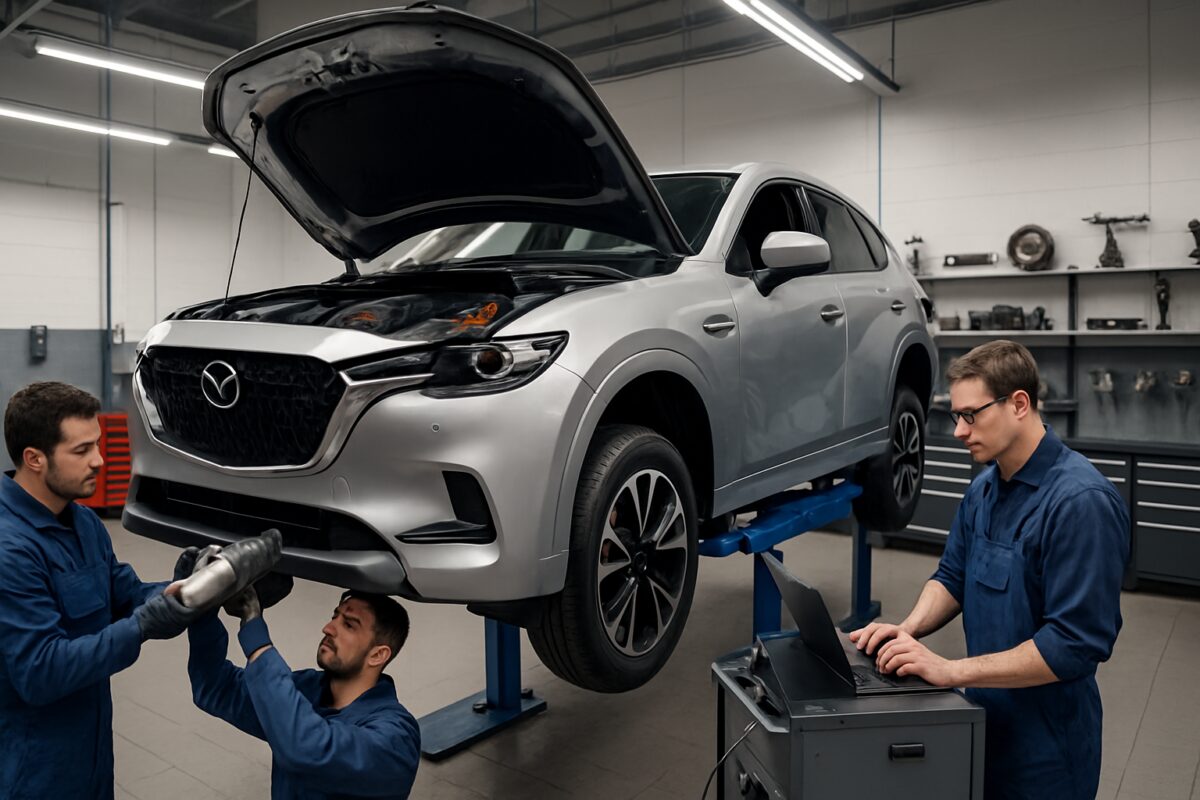
The Mazda CX-60 has gained attention as a premium SUV offering, but like any complex vehicle, it comes with its share of mechanical challenges. From electrical glitches to drivetrain concerns, understanding these issues helps owners maintain their vehicles properly and avoid costly surprises.
Diesel particulate filter problems
One of the most significant issues affecting the Mazda CX-60 involves the diesel particulate filter (DPF) system. Many owners report premature DPF clogging, particularly in vehicles used primarily for short urban journeys.
The DPF requires regular high-temperature regeneration cycles to burn off accumulated soot particles. When the system cannot complete these cycles due to insufficient driving conditions, the filter becomes blocked. This leads to reduced engine performance, increased fuel consumption, and eventual engine warning lights.
Short trips under 10 miles rarely allow the exhaust system to reach optimal temperatures for regeneration. Urban stop-start driving compounds this problem, as the DPF never gets hot enough to self-clean. Blocked particulate filter components can cost upwards of £2,000 to replace.
Professional mechanics at AutoPartsPro recommend taking the vehicle on regular motorway journeys of at least 20 minutes at sustained speeds above 50mph. This allows the exhaust system to reach temperatures necessary for proper DPF function.
Infotainment system malfunctions
The CX-60’s sophisticated infotainment system frequently experiences software glitches and connectivity issues. Owners commonly report screen freezing, Bluetooth pairing failures, and complete system crashes requiring restart.
These electronic problems often stem from software bugs in the Mazda Connect system. The touchscreen may become unresponsive during operation, making it impossible to adjust climate controls or navigation settings. Some units suffer from persistent connectivity problems with Android Auto and Apple CarPlay.
Temperature fluctuations can exacerbate these issues, with systems more likely to malfunction during extreme hot or cold weather. The control units governing the infotainment system may require software updates or complete replacement in severe cases.
Regular software updates from authorised Mazda dealers can resolve many of these issues. However, hardware failures typically require specialist diagnosis and component replacement.
Hybrid system complications
The CX-60’s plug-in hybrid variant presents unique challenges related to its complex powertrain integration. Owners report issues with the transition between electric and petrol power modes, causing jerky acceleration and reduced efficiency.
The hybrid battery system may experience capacity degradation sooner than expected, particularly in vehicles subjected to frequent rapid charging cycles. High-voltage system faults can trigger multiple warning lights and put the vehicle into limp mode.
Charging system problems affect both home and public charging capabilities. Some units fail to recognise charging connections properly, leading to incomplete charging cycles. The regenerative braking system occasionally becomes oversensitive, causing abrupt deceleration that catches drivers off guard.
These hybrid complications often require specialist diagnostic equipment and training. Standard workshops may struggle to diagnose complex hybrid system faults effectively.
Suspension and steering concerns
Several CX-60 owners have reported premature wear in suspension components, particularly the shock absorber assemblies and steering linkages. These problems typically manifest as unusual noises, vibrations, and handling inconsistencies.
The electronically controlled damping system may develop faults that affect ride quality and cornering stability. Adaptive suspension components are expensive to replace and require specific diagnostic procedures for proper calibration.
Steering rack issues have been noted in some vehicles, causing heavy or inconsistent steering feel. Power steering pump problems can lead to complete loss of assistance, making the vehicle difficult to manoeuvre at low speeds.
Regular inspection of suspension bushings and tie rod ends helps identify wear before it becomes dangerous. Professional alignment checks ensure even tyre wear and optimal handling characteristics.
Warning signs your car has a problem
Recognising early symptoms can prevent minor issues from becoming major repairs. Watch for these key indicators:
- Dashboard warning lights, particularly DPF and engine management indicators
- Unusual exhaust smoke colours or increased emissions smell
- Infotainment system freezing or connectivity failures
- Rough idle or inconsistent acceleration patterns
- Steering vibrations or unusual handling characteristics
These symptoms often appear gradually, making them easy to ignore initially. However, addressing problems early typically results in lower repair costs and improved vehicle reliability.
How to fix the problems
| Problem | DIY Solution | Professional Repair | Estimated Cost |
|---|---|---|---|
| DPF Clogging | Regular motorway drives | DPF cleaning/replacement | £150-£2,000 |
| Infotainment Glitches | System reset/software update | Unit replacement | £50-£1,500 |
| Hybrid System Faults | None recommended | Specialist diagnosis | £200-£3,000 |
| Suspension Wear | Visual inspection only | Component replacement | £300-£1,200 |
“Always use genuine Mazda parts for critical systems like DPF and hybrid components. Aftermarket alternatives may not meet the precise specifications required for optimal performance.” – AutoPartsPro Technical Specialist
Some issues require immediate professional attention, whilst others can be managed through preventive maintenance. Understanding the difference helps prioritise repairs based on safety and cost considerations.
When to see a mechanic
Certain symptoms demand immediate professional diagnosis to prevent serious damage or safety risks. Schedule workshop visits when experiencing persistent warning lights, unusual noises, or handling problems.
Hybrid system faults require specialist knowledge and diagnostic equipment that standard workshops may not possess. Choose technicians with specific Mazda hybrid training for these complex issues.
Regular servicing according to manufacturer schedules helps identify potential problems before they become failures. Professional inspections can spot wear patterns and developing faults that untrained eyes might miss.
“Don’t delay repairs on safety-critical systems like brakes, steering, or suspension. These components directly affect your ability to control the vehicle safely.” – AutoPartsPro Chief Mechanic
Emergency situations requiring immediate attention include complete loss of power steering, brake system warnings, or hybrid system faults that prevent normal operation.
Frequently asked questions (FAQ)
How often should I clean the DPF on my CX-60?
The DPF self-cleans during normal driving. Take 20-minute motorway trips weekly to maintain proper function and prevent clogging issues.
Can I update the infotainment software myself?
Some updates are available via USB, but complex software issues require dealer intervention for proper diagnosis and installation procedures.
What causes hybrid battery degradation in the CX-60?
Frequent rapid charging, extreme temperatures, and deep discharge cycles contribute to premature battery capacity loss over time.
Are CX-60 suspension problems covered under warranty?
Manufacturing defects are typically covered, but wear items and damage from poor road conditions may not qualify for warranty claims.
How much does CX-60 maintenance cost annually?
Expect £800-1,200 annually for routine maintenance, excluding major repairs or component replacements that may arise with these common problems.
Final recommendation
The Mazda CX-60 represents advanced automotive technology, but this complexity brings maintenance challenges that require informed ownership. Understanding these common problems helps owners make proactive decisions about repairs and maintenance scheduling.
Regular preventive maintenance proves more cost-effective than reactive repairs. Establish relationships with qualified technicians familiar with Mazda hybrid systems and invest in genuine replacement parts when repairs become necessary.
Despite these issues, many CX-60 owners enjoy their vehicles when properly maintained. Success depends on recognising problems early, addressing them promptly, and choosing qualified repair facilities. Consider extended warranty coverage for hybrid components, given their high replacement costs and complexity.

 Loading...