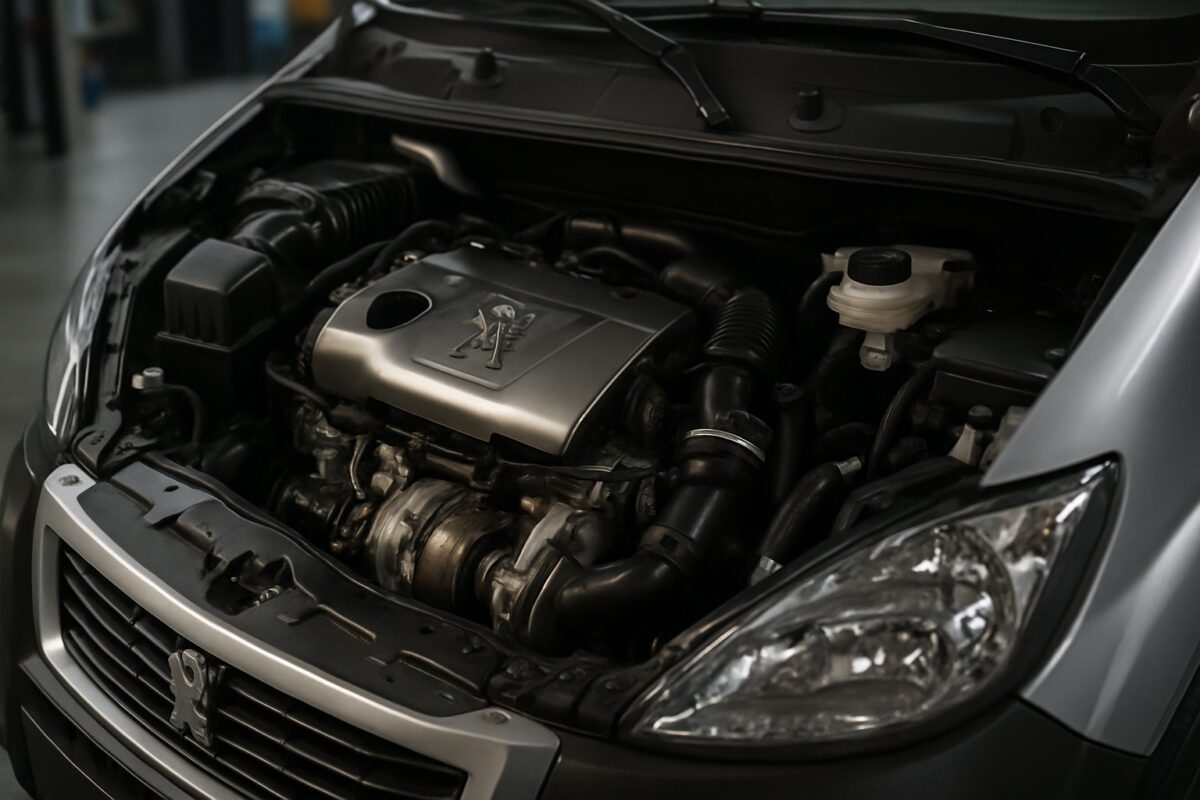
The Peugeot Boxer stands as one of Europe’s most dependable commercial vehicles, serving everything from delivery fleets to motorhome conversions across the UK. At the heart of this versatile van lies a carefully engineered range of diesel powerplants that define its capability and character. With outputs ranging from 110hp to 180hp and torque figures reaching 450Nm, these modern common-rail units deliver the perfect blend of efficiency and performance for commercial applications.
Comparison table of all engines
| Engine | Power output | Torque | Fuel consumption | Reliability |
|---|---|---|---|---|
| 2.2 HDi 110hp | 110hp | 250Nm | 35-40 mpg | Good |
| 2.2 HDi 130hp | 130hp | 320Nm | 32-38 mpg | Very Good |
| 2.2 HDi 150hp | 150hp | 370Nm | 30-36 mpg | Excellent |
| 3.0 HDi 180hp | 180hp | 450Nm | 28-33 mpg | Very Good |
Our mechanics at Autopartspro have extensive experience servicing Peugeot Boxer engines across all variants. These powerplants represent some of the most robust diesel technology available in the commercial vehicle segment, though each has distinct characteristics that suit different applications.
Engine #1 overview
The 2.2 HDi 110hp serves as the entry-level powerplant in the Boxer lineup, featuring a four-cylinder turbocharged diesel configuration with 2,198cc displacement. This common-rail direct injection unit operates on standard diesel fuel and incorporates modern emissions control technology including a diesel particulate filter.
Built around a cast-iron block with aluminium cylinder head construction, this engine delivers reliable performance whilst maintaining excellent fuel economy. The turbocharger provides adequate boost for urban delivery work, though acceleration feels somewhat leisurely when fully loaded.
Pros
- Outstanding fuel economy reaching 40mpg in optimal conditions
- Lower purchase price and running costs
- Proven reliability with minimal complex systems
- Adequate power for light commercial duties
- Simple maintenance requirements
Cons
- Limited torque output restricts heavy load capability
- Struggles with motorway performance when laden
- Can feel underpowered for larger Boxer variants
- Slower acceleration compared to higher-output engines
Engine #2 overview
The 2.2 HDi 130hp represents the sweet spot in the Boxer range, utilising the same 2.2-litre displacement but with enhanced turbocharger mapping and improved fuel injection parameters. This turbocharged diesel unit maintains the common-rail architecture whilst delivering significantly improved mid-range performance.
The additional 20hp and 70Nm of torque make a substantial difference in real-world driving conditions. Enhanced fuel injectors provide more precise delivery, whilst the revised turbocharger offers improved response throughout the rev range.
Pros
- Excellent balance of power and economy
- Improved torque delivery for better load hauling
- More responsive turbocharger system
- Suitable for most commercial applications
- Competitive running costs
Cons
- Slightly higher fuel consumption than 110hp variant
- More complex turbocharger system requiring regular maintenance
- Higher initial purchase price
- May still struggle with maximum payload scenarios
Engine #3 overview
The 2.2 HDi 150hp variant pushes the 2.2-litre architecture to its performance limits through advanced turbocharging and sophisticated engine management systems. This four-cylinder turbocharged diesel delivers impressive output whilst maintaining the fundamental reliability of the smaller units.
Variable geometry turbocharging provides excellent response across the entire rpm range, whilst high-pressure common-rail injection ensures optimal combustion efficiency. The turbocharger system incorporates advanced materials to handle the increased boost pressures reliably.
Pros
- Strong performance with excellent torque delivery
- Handles heavy loads without strain
- Good motorway cruising ability
- Advanced emissions control systems
- Responsive power delivery throughout rev range
Cons
- Higher fuel consumption, especially under load
- More complex systems requiring specialist maintenance
- Increased service costs due to advanced technology
- Potential for higher repair bills if turbocharger fails
Engine #4 overview
The 3.0 HDi 180hp represents the flagship powerplant, featuring a larger displacement six-cylinder configuration that delivers exceptional performance for heavy-duty applications. This turbocharged diesel unit provides substantial torque output of 450Nm, making it ideal for maximum payload scenarios and motorhome conversions.
The additional cylinders provide inherently smoother operation compared to four-cylinder variants, whilst the larger displacement delivers effortless power delivery. Advanced common-rail injection and variable geometry turbocharging ensure optimal performance across all operating conditions.
Pros
- Exceptional torque output for heavy-duty work
- Smooth six-cylinder operation
- Excellent motorway performance
- Handles maximum payloads effortlessly
- Premium feel and refinement
Cons
- Highest fuel consumption in the range
- More expensive to purchase and maintain
- Complex engine management systems
- Higher road tax due to emissions
- Requires more frequent oil filter changes
Maintenance cost
| Engine | Recommended interval | Estimated cost | Cost per 10,000 miles |
|---|---|---|---|
| 2.2 HDi 110hp | 12,000 miles | £180-250 | £150-210 |
| 2.2 HDi 130hp | 12,000 miles | £200-280 | £165-235 |
| 2.2 HDi 150hp | 10,000 miles | £220-320 | £220-320 |
| 3.0 HDi 180hp | 10,000 miles | £280-380 | £280-380 |
Regular maintenance proves crucial for all Boxer engines, particularly regarding diesel fuel filter replacement and DPF regeneration cycles. Our technicians recommend following manufacturer intervals precisely to avoid costly repairs down the line.
Professional tip: Always use manufacturer-approved engine oil specifications for Boxer engines. The wrong grade can cause premature wear to high-pressure injection components and turbocharger systems.
Engine sound and character
Each Boxer engine delivers distinct acoustic characteristics that reflect their underlying design philosophy. The 2.2-litre four-cylinder units produce a purposeful diesel rumble that’s refined enough for extended driving yet robust enough to inspire confidence under load.
The entry-level 110hp variant exhibits a slightly more agricultural note, particularly when cold, but settles into smooth operation once warmed. The 130hp and 150hp variants benefit from improved noise dampening and more sophisticated injection timing, resulting in quieter operation throughout the rev range.
The flagship 3.0-litre six-cylinder stands apart with its inherently smooth character. The additional cylinders eliminate much of the diesel clatter associated with smaller engines, delivering a more premium driving experience that motorhome owners particularly appreciate.
Expert advice: Regular air filter replacement significantly improves engine note and performance across all Boxer variants. A clogged filter creates unnecessary restriction and rougher idle characteristics.
Who each engine is best for
| Engine | Daily commuters | Performance enthusiasts | Long-distance drivers | Budget-conscious owners |
|---|---|---|---|---|
| 2.2 HDi 110hp | Good | Poor | Fair | Excellent |
| 2.2 HDi 130hp | Excellent | Fair | Good | Good |
| 2.2 HDi 150hp | Good | Good | Excellent | Fair |
| 3.0 HDi 180hp | Fair | Excellent | Excellent | Poor |
Frequently asked questions (FAQ)
Which Peugeot Boxer engine is most reliable?
The 2.2 HDi 150hp offers the best reliability balance, combining proven technology with adequate power whilst avoiding the complexity of the larger 3.0-litre unit.
How often should I service my Boxer engine?
Follow manufacturer intervals: 12,000 miles for 2.2-litre engines, 10,000 miles for 3.0-litre variants. Commercial use may require more frequent servicing intervals.
Can I increase power on my Boxer engine?
Professional remapping can safely increase output by 20-30hp, though warranty implications and insurance requirements must be considered before any modifications.
What fuel should I use in my Boxer?
Standard diesel suffices, though premium fuels with cleaning additives can help maintain injector cleanliness and system performance over extended periods.
How long do Boxer engines typically last?
Well-maintained units regularly exceed 200,000 miles. Commercial operators often achieve 300,000+ miles with proper servicing and quality replacement parts throughout their lifecycle.

 Loading...