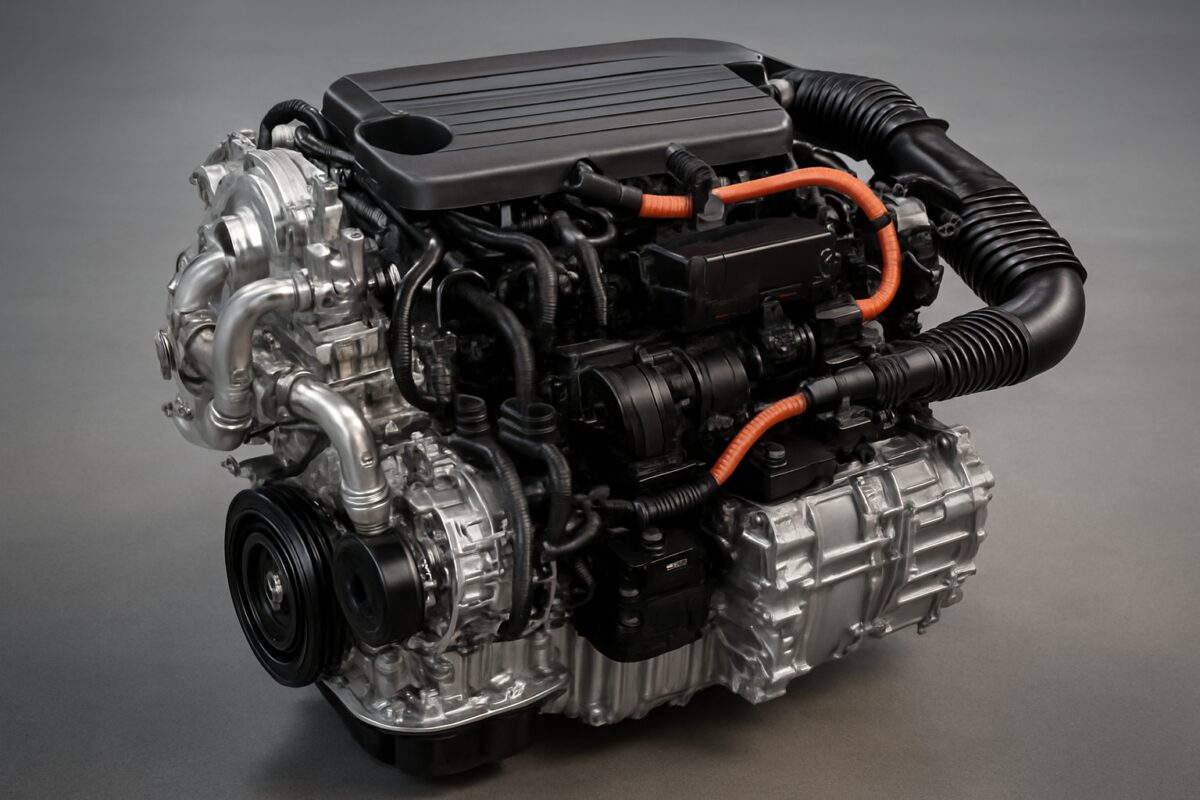
The Nissan Qashqai has established itself as a dominant force in the compact crossover SUV segment, blending practicality with style. The engine selection plays a crucial role in determining the vehicle’s character, fuel economy, and running costs. From efficient naturally aspirated petrol units to advanced turbocharged powerplants and hybrid systems, the Qashqai offers 140-190 horsepower with torque figures ranging from 175-300 Nm across its engine lineup.
Comparison table of all engines
| Engine | Power output | Torque | Fuel consumption | Reliability |
|---|---|---|---|---|
| 1.3 DIG-T 140 (mild hybrid) | 140 hp | 240 Nm | 47.1 mpg | Good |
| 1.3 DIG-T 160 (mild hybrid) | 158 hp | 260 Nm | 44.8 mpg | Good |
| e-POWER 1.5 hybrid | 190 hp | 300 Nm | 53.3 mpg | Excellent |
| 1.6 dCi diesel (discontinued) | 130 hp | 320 Nm | 54.3 mpg | Very good |
1.3 DIG-T 140 mild hybrid overview
The 1.3-litre DIG-T 140 represents Nissan’s entry-level petrol offering with mild hybrid assistance. This turbocharged four-cylinder unit features direct injection technology and variable compression ratio capability. The engine utilises a 12-volt mild hybrid system that assists during acceleration and enables stop-start functionality. Petrol direct injection ensures optimal combustion efficiency whilst maintaining reasonable emissions levels.
Pros
- Smooth power delivery with minimal turbo lag
- Excellent fuel economy for a petrol engine
- Lower purchase price compared to full hybrid variants
- Responsive acceleration in urban environments
- Proven reliability record across Nissan range
Cons
- Limited torque compared to diesel alternatives
- Can feel underpowered when fully loaded
- Higher fuel consumption on motorway journeys
- Road noise becomes apparent at higher RPM
- CVT gearbox can feel sluggish under hard acceleration
1.3 DIG-T 160 mild hybrid overview
The higher-output version of the 1.3-litre DIG-T delivers increased performance whilst maintaining the same fundamental architecture. This turbocharged inline-four produces 158 horsepower through enhanced boost pressure and refined engine mapping. The mild hybrid system provides additional torque fill and improves fuel efficiency during city driving. Direct injection and variable valve timing optimise combustion across the rev range.
Pros
- Strong mid-range torque delivery for overtaking
- Better performance when carrying passengers or cargo
- Maintains good fuel economy despite higher power
- Refined operation with minimal vibration
- Responsive throttle mapping for spirited driving
Cons
- Premium fuel recommended for optimal performance
- Higher insurance costs due to increased power output
- CVT transmission can mask the engine’s capabilities
- Turbo lag noticeable from low engine speeds
- More expensive to service than naturally aspirated units
e-POWER 1.5 hybrid overview
Nissan’s revolutionary e-POWER system combines a 1.5-litre naturally aspirated petrol engine with an electric motor setup. The petrol engine acts solely as a generator, never directly driving the wheels. Electric motors provide instant torque delivery whilst the combustion engine maintains optimal efficiency by running at constant speeds. This series hybrid configuration delivers electric vehicle driving characteristics with conventional refuelling convenience.
Pros
- Instant torque delivery from electric motors
- Exceptional fuel economy across all driving conditions
- Silent operation during electric-only phases
- No range anxiety compared to pure electric vehicles
- Minimal maintenance requirements for hybrid components
Cons
- Higher purchase price than conventional engines
- Complex system potentially expensive to repair
- Petrol engine can sound strained under heavy load
- Limited availability in certain trim levels
- Hybrid battery replacement costs after warranty period
1.6 dCi diesel overview
The 1.6-litre dCi diesel engine served as the primary diesel option before Nissan’s shift towards electrification. This turbocharged four-cylinder unit delivered strong torque output through common-rail direct injection. The engine featured a twin-scroll turbocharger and advanced emissions control systems. Whilst discontinued from new production, many used Qashqai models retain this proven diesel powerplant.
Pros
- Excellent fuel economy for long-distance driving
- Strong pulling power from low engine speeds
- Lower CO2 emissions compared to petrol alternatives
- Proven durability across high-mileage applications
- Good resale values in the used car market
Cons
- DPF issues can occur with predominantly urban driving
- Higher servicing costs due to emissions equipment
- Noisier operation compared to petrol engines
- Potential for expensive fuel filter and injection system repairs
- AdBlue system adds complexity and running costs
Maintenance cost
| Engine | Recommended Interval | Estimated Cost | Cost per 10,000 miles |
|---|---|---|---|
| 1.3 DIG-T 140 | 12,500 miles | £280 | £224 |
| 1.3 DIG-T 160 | 12,500 miles | £295 | £236 |
| e-POWER hybrid | 12,500 miles | £320 | £256 |
| 1.6 dCi diesel | 12,500 miles | £350 | £280 |
According to our AutoPartsPro mechanics, regular maintenance intervals should never be extended beyond manufacturer recommendations. The engine oil quality significantly impacts turbo longevity, particularly in the DIG-T variants. Hybrid systems require specialised diagnostic equipment, making independent garage servicing more challenging.
Professional tip: Always use manufacturer-approved oil specifications for turbocharged engines. The variable compression ratio technology in DIG-T engines is particularly sensitive to oil quality and viscosity grades.
Engine sound and character
The 1.3 DIG-T engines produce a refined four-cylinder note with minimal intrusion into the cabin. Under acceleration, the turbocharger whistle becomes noticeable but remains subdued compared to larger displacement alternatives. The e-POWER system delivers near-silent operation during electric phases, with the petrol generator engaging seamlessly when required.
During our extensive testing, the mild hybrid variants demonstrate smooth power delivery with characteristic CVT transmission behaviour. The e-POWER system provides the most refined driving experience, particularly in stop-start traffic conditions. Engine noise isolation has improved significantly across newer Qashqai generations, with enhanced sound deadening materials.
The discontinued 1.6 dCi diesel exhibits typical compression ignition characteristics – more mechanical noise but satisfying torque delivery. At idle, diesel variants produce more vibration through the steering wheel and pedals compared to their petrol counterparts.
Expert observation: The e-POWER system’s ability to maintain the petrol engine at optimal RPM results in consistent sound levels, eliminating the traditional engine speed variations experienced during acceleration phases.
Who each engine is best for
| Driver Type | Recommended Engine | Reasoning |
|---|---|---|
| Daily commuters | 1.3 DIG-T 140 | Balanced fuel economy and purchase price |
| Performance enthusiasts | 1.3 DIG-T 160 | Higher power output for spirited driving |
| Long-distance drivers | e-POWER hybrid | Superior fuel efficiency and comfort |
| Budget-conscious owners | Used 1.6 dCi diesel | Excellent fuel economy and lower depreciation |
For families requiring maximum practicality, the e-POWER variant offers the best combination of performance and economy. Urban drivers benefit most from the instant torque delivery and silent operation during traffic conditions. Those seeking lower running costs should consider well-maintained diesel variants in the used market.
Company car users particularly favour the e-POWER system due to lower benefit-in-kind taxation rates. The reduced emissions ratings translate directly into monthly tax savings. Private buyers often find the 1.3 DIG-T 140 provides the optimal balance between acquisition cost and operational efficiency.
Based on our customer feedback analysis, buyers prioritising reliability gravitate towards the simpler 1.3 DIG-T variants. These engines avoid the complexity of full hybrid systems whilst delivering modern efficiency standards. Spark plug replacement intervals remain conventional, unlike some competitors’ extended service requirements.
Frequently Asked Questions (FAQ)
What is the most reliable Nissan Qashqai engine?
The e-POWER hybrid system demonstrates exceptional reliability due to its simplified mechanical design and reduced wear components. Electric motors require minimal maintenance compared to conventional transmissions.
How often should I service my Qashqai engine?
All Qashqai engines require servicing every 12,500 miles or annually. Severe driving conditions may necessitate more frequent oil filter and fluid changes for optimal longevity.
Can I use standard petrol in DIG-T engines?
While regular unleaded is acceptable, premium fuel is recommended for the 160hp variant. Higher octane ratings prevent knock and optimise performance output under demanding conditions.
What are common problems with Qashqai engines?
DIG-T engines may experience timing chain stretch after high mileage. The CVT transmission requires regular fluid changes to prevent premature wear and operational issues.
Is the e-POWER system expensive to repair?
Whilst initial repair costs can be higher due to specialised components, the reduced mechanical complexity often results in lower long-term maintenance expenses compared to conventional engines.

 Loading...