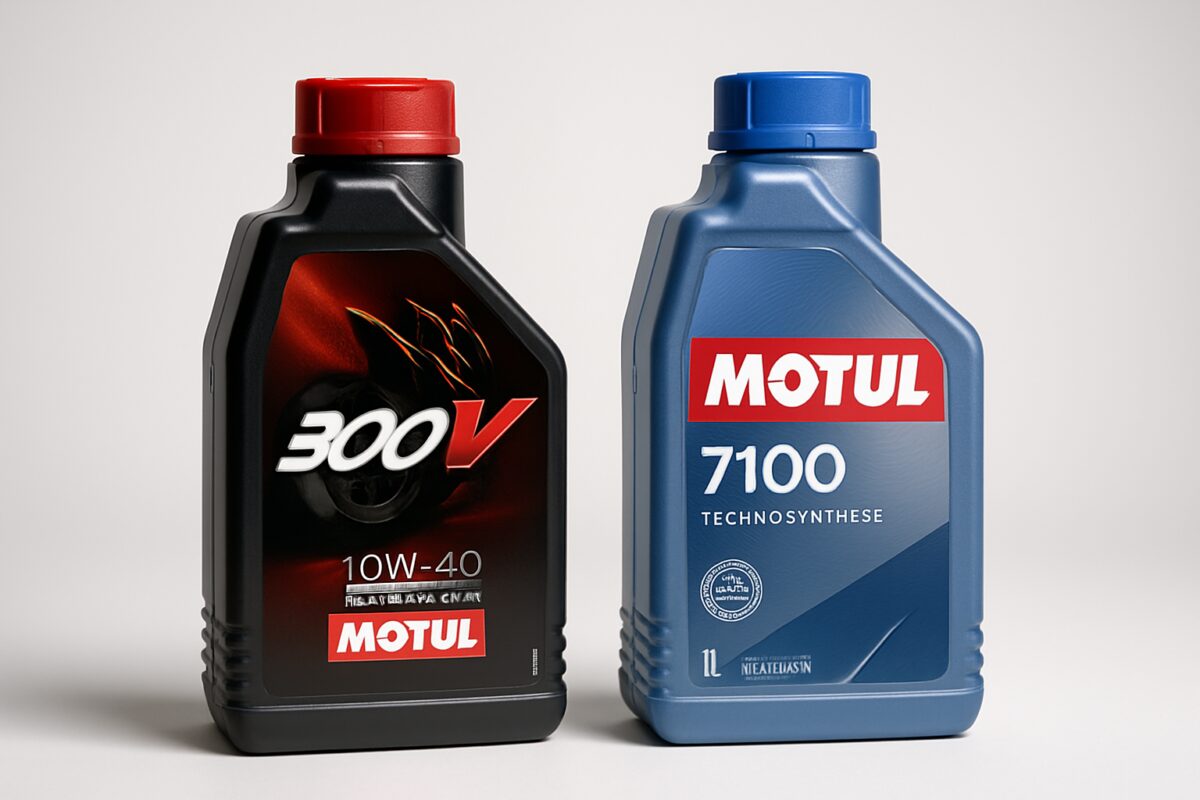
Motul 300V vs Motul 7100: Motul 300V is a fully synthetic racing oil designed for high-performance engines, whilst Motul 7100 is a semi-synthetic oil ideal for everyday riding. The 300V offers superior protection at extreme temperatures and loads, making it perfect for track use, whereas the 7100 provides excellent value and performance for daily commuting and moderate riding conditions.
Quick comparison table
| Feature | Motul 300V | Motul 7100 |
|---|---|---|
| Price range | £60-80 per 4L | £25-35 per 4L |
| Durability | Excellent | Very good |
| Performance | Racing grade | High performance |
| Temperature range | -40°C to +150°C | -35°C to +140°C |
| Maintenance interval | 3,000-5,000 miles | 5,000-7,500 miles |
| Best use case | Racing/track days | Daily driving |
Motul 300V overview
Motul 300V represents the pinnacle of engine oil technology. This fully synthetic ester-based formula was developed directly from motorsport applications, incorporating advanced additives and base oils that deliver exceptional performance under extreme conditions.
The oil utilises a unique double-ester technology that provides outstanding film strength and thermal stability. Its molecular structure creates stronger adhesion to metal surfaces, reducing friction and wear significantly. The viscosity index remains stable even at temperatures exceeding 150°C, making it ideal for high-revving engines and track applications.
Typical retail prices range from £60-80 for a 4-litre container, reflecting its premium positioning and sophisticated formulation. The oil meets various international specifications including API SN/CF and ACEA A3/B4 standards.
Pros:
- Exceptional high-temperature performance
- Superior film strength and wear protection
- Excellent shear stability
- Proven motorsport heritage
- Outstanding engine cleanliness
Cons:
- Premium pricing
- Shorter service intervals required
- May be unnecessary for standard driving conditions
- Limited availability at some retailers
This oil suits performance enthusiasts, track day participants, and owners of high-performance vehicles who demand maximum protection and performance from their engines.
Motul 7100 overview
Motul 7100 offers a balanced approach to engine protection, combining synthetic and mineral base oils in a semi-synthetic formulation. This technosynthese blend provides enhanced performance over conventional oils whilst remaining accessible for everyday use.
The 7100 incorporates Motul’s expertise in additive chemistry, featuring anti-wear packages and detergent dispersants that keep engines clean and protected. Its formulation provides good thermal stability and oxidation resistance, making it suitable for modern engines with extended service intervals.
At £25-35 for 4 litres, the 7100 represents excellent value for money. It meets stringent specifications including API SN and ACEA A3/B4, ensuring compatibility with most petrol and diesel engines.
Pros:
- Competitive pricing
- Good all-round performance
- Extended service intervals possible
- Wide temperature operating range
- Excellent cold-start protection
Cons:
- Lower performance ceiling than fully synthetic oils
- Less suitable for extreme conditions
- Moderate high-temperature stability
- Basic additive package compared to premium alternatives
The 7100 appeals to drivers seeking reliable protection for daily commuting, motorway cruising, and general automotive use without the premium cost of racing-grade lubricants.
Compatibility considerations
Both oils demonstrate broad compatibility across vehicle manufacturers and engine types. The 300V works exceptionally well in high-performance applications, particularly turbocharged and supercharged engines that operate under severe stress.
For older vehicles, particularly those manufactured before 2010, the 7100 may prove more suitable due to its seal conditioning properties and moderate additive levels. The semi-synthetic formulation provides adequate protection without over-treating older engine designs.
Modern engines with variable valve timing, direct injection, or hybrid powertrains benefit from either oil, though the 300V offers superior protection margins for intensive use. Both oils contain appropriate levels of zinc and phosphorus to protect against wear whilst maintaining catalytic converter compatibility.
Installation requirements remain identical – both oils flow readily at ambient temperatures and require no special handling procedures. Standard oil filters work effectively with either formulation.
Our mechanics at Autopartspro recommend checking your vehicle’s handbook before switching oil grades, as some manufacturers specify particular viscosity requirements for warranty compliance.
Final verdict
Choose Motul 300V for track days, racing applications, or high-performance driving where maximum protection justifies the premium cost. Its advanced formulation delivers measurable benefits in demanding conditions.
Select Motul 7100 for daily driving, commuting, and general use where reliable protection and value take precedence over ultimate performance. Its semi-synthetic formula provides excellent protection for most driving scenarios.
Consider your driving habits, vehicle specifications, and budget when making this decision. Both oils represent quality choices within their respective categories, backed by Motul’s extensive experience in lubricant technology.
Professional mechanics suggest that matching oil choice to actual usage patterns delivers better results than automatically selecting the most expensive option available.
For vehicles requiring regular maintenance, the 7100’s extended service capability and competitive pricing make it particularly attractive. Performance enthusiasts will appreciate the 300V’s superior protection margins during spirited driving.
Frequently asked questions
Can I mix Motul 300V with Motul 7100?
Whilst both oils are compatible, mixing different formulations reduces the performance benefits of the premium 300V. Complete oil changes provide optimal results.
How often should I change each oil?
300V requires changes every 3,000-5,000 miles due to its intensive additive package, whilst 7100 can extend to 7,500 miles under normal conditions.
Which oil works better in cold weather?
Both oils provide excellent cold-start protection, though the 7100’s semi-synthetic base offers slightly better flow characteristics in extreme cold conditions.
Do these oils work with turbochargers?
Yes, both oils suit turbocharged engines. The 300V provides superior protection for high-boost applications and track use scenarios.
Are these oils suitable for diesel engines?
Both formulations work with modern diesel engines meeting ACEA B4 specifications, though checking manufacturer recommendations remains essential for DPF compatibility.

 Loading...