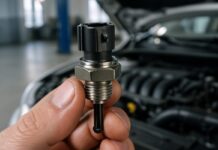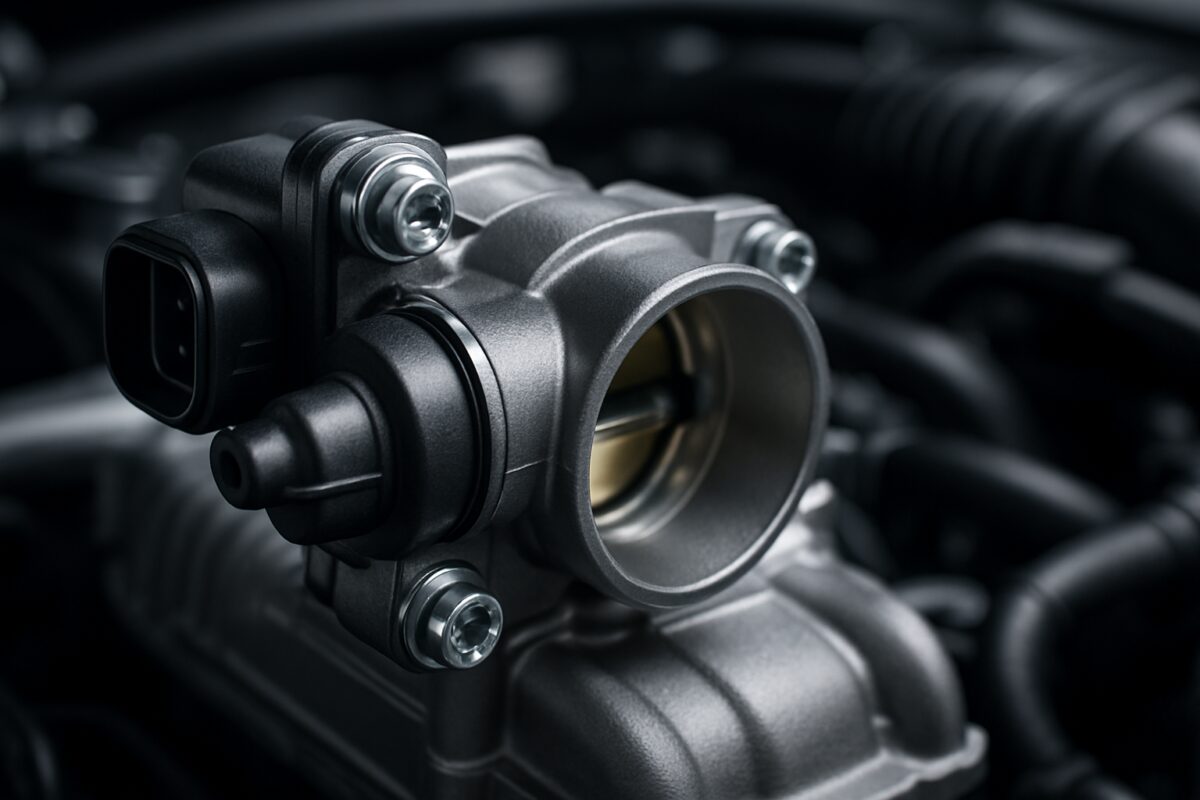
The idle control valve plays a crucial role in maintaining your car’s engine stability when idling. This essential component regulates airflow to ensure smooth engine operation at low speeds, preventing stalling and maintaining optimal performance during traffic stops and warm-up periods.
Problem #1: Erratic idling and engine stalling
When your idle air control valve begins to fail, the most noticeable symptom is irregular engine behaviour at idle speed. Your engine might race to high RPMs or drop so low it stalls completely. This occurs because the valve cannot properly regulate the air-fuel mixture needed for stable combustion.
The IAC valve works by controlling bypass air around the throttle body when it’s closed. A malfunctioning valve disrupts this delicate balance, causing the engine management system to struggle with maintaining consistent idle speeds. You’ll often notice this problem is worse when the engine is cold, as modern vehicles rely heavily on precise air control during warm-up cycles.
Carbon deposits frequently accumulate on the valve’s moving parts, preventing smooth operation. These deposits form from fuel vapours and exhaust gas recirculation, creating a sticky residue that interferes with the valve’s ability to open and close properly. Professional mechanics at AutoPartsPro often find that cleaning the valve thoroughly can resolve many idle control issues without requiring complete replacement.
Problem #2: Poor fuel economy and rough acceleration
A faulty idle control valve significantly impacts your vehicle’s fuel efficiency and acceleration characteristics. When the valve cannot maintain proper airflow, the engine block receives incorrect air-fuel ratios, forcing the fuel injection system to compensate with additional fuel delivery.
This compensation mechanism leads to increased fuel consumption, particularly noticeable during city driving with frequent stops and starts. The engine control unit (ECU) attempts to maintain smooth operation by adjusting fuel injection timing and duration, but these corrections cannot fully compensate for airflow irregularities caused by valve malfunction.
Rough acceleration often accompanies poor fuel economy when the IAC valve fails. The engine hesitates during throttle application because the transition from idle to acceleration requires precise air control. A sticky or completely seized valve prevents this smooth transition, resulting in jerky acceleration and potential backfiring through the intake manifold gasket area.
Problem #3: Engine surging and hunting
Engine surging represents another common symptom of idle control valve failure, characterised by RPMs that continuously rise and fall without driver input. This hunting behaviour occurs when the valve intermittently sticks in various positions, creating unpredictable airflow patterns that confuse the engine management system.
The surging typically becomes more pronounced when electrical loads increase, such as when activating air conditioning, headlights, or heated rear windows. These additional loads place extra demands on the alternator, requiring the engine to work harder to maintain charging system voltage. A properly functioning IAC valve compensates by increasing idle speed, but a faulty valve cannot make these adjustments smoothly.
Cold weather exacerbates surging problems because the valve components contract and expand differently than when warm. Metal components may seize temporarily in cold conditions, whilst rubber seals become less flexible, creating air leaks around the valve body. Regular maintenance of related components like the air filter can prevent additional stress on the IAC valve system.
Warning signs your car has a problem
Recognising early warning signs of idle control valve failure helps prevent more serious engine damage and costly repairs. Pay attention to these key indicators that suggest your IAC valve requires attention:
- Engine stalling at traffic lights or when coming to a stop
- Fluctuating idle speed, particularly noticeable on the tachometer
- Difficulty starting the engine, especially when cold
- Check engine light illumination with diagnostic codes P0505, P0506, or P0507
- Unusual engine noises during idle, such as whistling or hissing sounds
Modern diagnostic equipment can detect IAC valve problems through specific error codes stored in the vehicle’s computer system. Professional mechanics use these codes alongside physical symptoms to pinpoint valve-related issues accurately.
How to fix the problems
Addressing idle control valve issues requires a systematic approach, starting with the least invasive solutions before considering complete replacement. Here’s a comprehensive guide to IAC valve repair options:
| Repair Method | Difficulty Level | Cost Range (£) | Success Rate |
|---|---|---|---|
| Valve cleaning with carb cleaner | Easy | 15-30 | 70% |
| Professional valve service | N/A | 80-150 | 85% |
| Complete valve replacement | Moderate | 120-300 | 95% |
| Throttle body cleaning service | Moderate | 60-120 | 60% |
Professional Tip: Before attempting any repairs, disconnect the battery for 15 minutes to reset the ECU’s adaptive memory. This allows the engine management system to relearn proper idle parameters after valve servicing.
For DIY enthusiasts, cleaning the IAC valve often resolves minor issues caused by carbon buildup. Remove the valve carefully, noting its orientation for proper reinstallation. Use dedicated throttle body cleaner rather than general-purpose solvents, as these products are formulated specifically for sensitive engine components.
| Vehicle Type | Labour Time (Hours) | Part Cost (£) | Total Cost (£) |
|---|---|---|---|
| Small hatchback | 1.5-2.0 | 45-85 | 120-185 |
| Mid-size saloon | 2.0-2.5 | 65-120 | 165-270 |
| Large SUV/4×4 | 2.5-3.5 | 80-150 | 200-350 |
When to see a mechanic
While some IAC valve maintenance can be performed by experienced DIY mechanics, certain situations require professional intervention. Seek immediate professional help if you experience engine stalling in traffic, as this presents a serious safety hazard that could lead to accidents.
Complex diagnostic procedures often accompany IAC valve problems, particularly when multiple error codes appear simultaneously. Professional mechanics possess specialised scan tools capable of monitoring real-time valve operation and airflow readings. These tools help distinguish between valve failure and related issues affecting the mass air flow sensor or throttle position sensor.
AutoPartsPro Expert Advice: If cleaning doesn’t resolve the issue within 100 miles of driving, replacement is typically necessary. Continuing to drive with a faulty IAC valve can damage other engine components, including the catalytic converter and oxygen sensors.
Consider professional service when dealing with vehicles under warranty, as DIY repairs might void coverage. Additionally, some modern vehicles require computer programming after IAC valve replacement to ensure proper operation with the engine management system.
How long does an idle control valve typically last?
Most idle control valves last 80,000-120,000 miles under normal driving conditions, though city driving and stop-start traffic can reduce this lifespan significantly.
Can I drive with a faulty IAC valve?
Driving with a completely failed IAC valve is possible but dangerous, as sudden stalling can occur without warning, particularly at junctions and roundabouts.
What causes premature IAC valve failure?
Poor quality fuel, neglected air filter maintenance, and excessive short-distance driving contribute to early valve failure through increased carbon deposit formation.
How do I know if cleaning will fix my IAC valve?
If symptoms are intermittent and the valve moves freely when manually operated, cleaning often resolves the issue rather than requiring complete replacement.
Does IAC valve replacement require engine tuning?
Most modern vehicles automatically adapt to new IAC valves, though some may require professional calibration using diagnostic equipment for optimal performance.
Final recommendation
The idle control valve remains a critical component for smooth engine operation, and addressing problems early prevents more expensive repairs down the road. Regular maintenance, including periodic cleaning every 30,000 miles, significantly extends valve life and maintains optimal fuel economy.
When replacement becomes necessary, always choose quality parts from reputable suppliers like AutoPartsPro to ensure compatibility and longevity. Professional installation guarantees proper calibration and prevents the installation errors that can cause additional engine problems. Remember that a properly functioning IAC valve not only improves driving comfort but also helps maintain emissions compliance and protects other expensive engine components from damage caused by irregular combustion patterns.

 Loading...