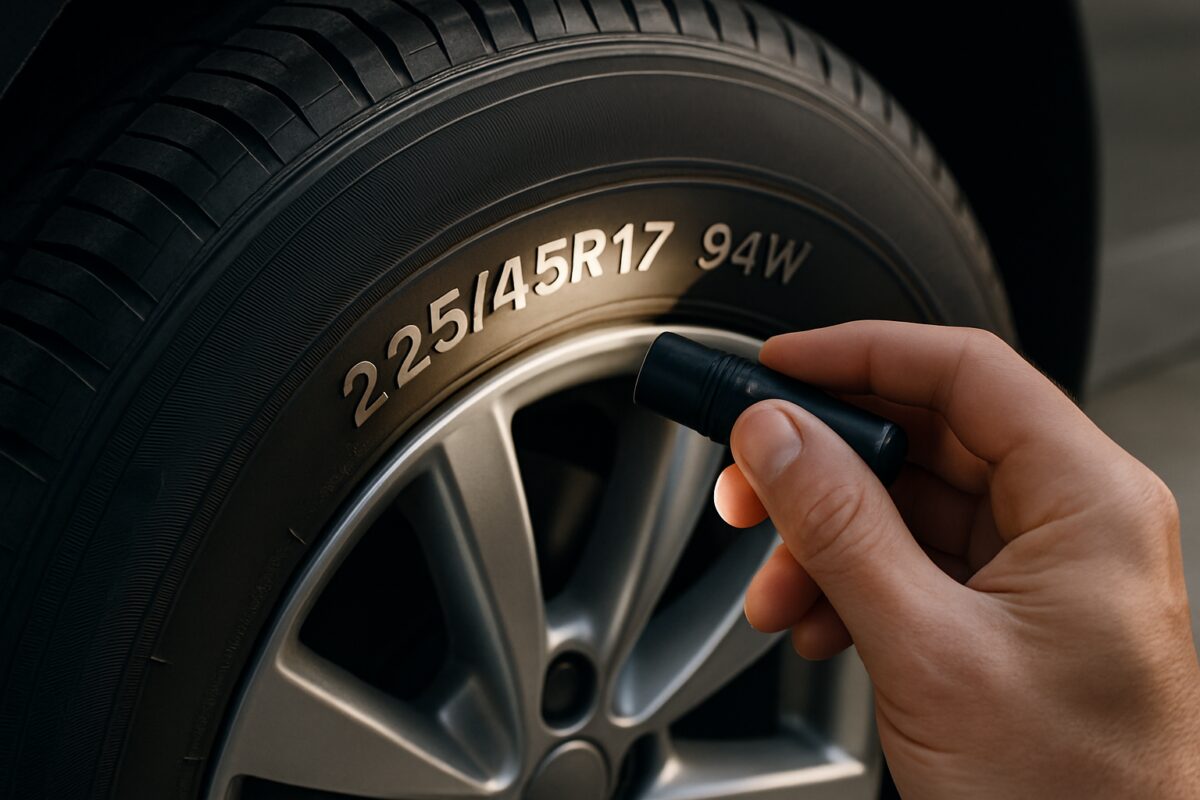
To check tyre size, look for a series of numbers and letters printed on the tyre sidewall, typically formatted as 225/45R17 94W. This alphanumeric code contains width in millimetres, aspect ratio, construction type, rim diameter, load index, and speed rating. You’ll find this information embossed on both sidewalls of every tyre.
Understanding your tyre size is essential for safety, performance, and legal compliance. The wrong size can affect handling, fuel economy, and speedometer accuracy. Many drivers overlook this crucial information until they need replacements.
Tools & parts required
Checking your tyre size requires minimal equipment, making it one of the simplest maintenance tasks you can perform.
Tools required:
- Torch or mobile phone light
- Clean cloth or brush
- Paper and pen for recording
- Magnifying glass (for worn markings)
Parts needed:
- No parts required for inspection
- Replacement tyres (if sizing for purchase)
Safety precautions
Park on level ground with the handbrake engaged. Ensure the vehicle is stable before inspecting tyres. Check tyres when cold for accurate readings, as heat from driving can alter pressure and make sidewalls difficult to read.
Wear appropriate clothing and avoid loose items that could catch on wheel components. Never inspect tyres on busy roads without proper safety measures.
Step-by-step instructions
Step 1: Locate the tyre size marking
Find the sidewall markings on your tyre. The size information appears on both inner and outer sidewalls, typically in raised white or yellow lettering. Look for the largest, most prominent number sequence.
On some tyres, multiple size markings exist. Use the primary marking, which follows the format like 205/55R16. Secondary markings might include load ratings or alternative sizing systems.
Step 2: Clean the sidewall area
Use a clean cloth to remove dirt, mud, or debris from the sidewall. Road grime can obscure important digits, leading to incorrect size identification. Focus on the area where numbers and letters are embossed.
If markings appear faded, try different lighting angles. Sometimes shadows help highlight worn impressions in the rubber.
Step 3: Read the size code
The tyre size follows a standard format: Width/Aspect Ratio Construction Rim Diameter. For example, in 225/45R17:
- 225 = Width in millimetres
- 45 = Aspect ratio (sidewall height as percentage of width)
- R = Radial construction
- 17 = Rim diameter in inches
Additional codes follow, showing load index and speed rating. The load index indicates maximum weight capacity, whilst the speed rating shows maximum safe operating speed.
Step 4: Record all markings
Write down the complete tyre marking, including any additional codes. DOT codes indicate manufacturing date, whilst other markings show compliance standards and performance ratings.
Check all four tyres, as some vehicles use different sizes front and rear. Sports cars and performance vehicles often have staggered fitments with wider rear tyres.
Step 5: Verify information
Cross-reference your findings with vehicle documentation or the tyre placard, usually located on the driver’s door jamb or fuel filler cap. This confirms the correct size for your specific vehicle.
If sizes don’t match, investigate whether previous owners fitted alternative specifications. Consult your vehicle handbook for approved size variations.
Common mistakes to avoid
Many drivers confuse rim diameter with tyre width, leading to incorrect purchases. The rim diameter appears after the construction letter, not at the beginning of the code.
Don’t assume all four tyres are identical. Check each wheel individually, as mixed sizes can cause handling problems and differential damage.
Avoid reading secondary markings or old size information. Some tyres display multiple codes from different markets or previous standards.
Professional tip: Our specialists recommend photographing tyre sidewalls with your mobile phone. This creates a permanent record and allows zoom functionality for detailed examination of worn markings.
Never guess at partially visible numbers. If you cannot read the complete code clearly, seek professional assistance rather than risk incorrect sizing.
When should you check tyre size?
Check tyre sizes before purchasing replacements, seasonal changes, or when buying second-hand vehicles. Regular inspection helps identify size mismatches that could affect safety.
Verify sizes after suspension modifications or wheel changes. Altered ride height can affect clearances and require different tyre specifications.
Commercial vehicle operators should check sizes during routine inspections. Incorrect sizing can affect payload calculations and legal compliance.
Expert advice: AutoPartsPro mechanics suggest checking sizes annually, even if not replacing tyres. Size verification prevents emergency purchase mistakes and helps plan future replacements.
Understanding tyre size variations
Some vehicles accept multiple tyre sizes, known as plus sizing. This allows fitting larger diameter wheels with lower profile tyres whilst maintaining overall diameter.
Plus sizing affects ride quality, performance, and cost. Larger wheels often improve handling but reduce comfort and increase replacement costs.
Winter tyres sometimes use different sizes from summer fitments. Check seasonal requirements and ensure proper wheel bolt compatibility.
Related maintenance you can do at the same time
While inspecting tyre sizes, check tread depth and wear patterns. Uneven wear indicates alignment issues or component problems requiring attention.
Examine wheel hub condition and check for damage. Look for cracks, corrosion, or signs of impact that could affect wheel mounting.
Inspect valve stems and caps for damage or deterioration. Replace damaged valves to prevent pressure loss and maintain proper inflation.
Consider checking brake components visible through wheel spokes. Look for excessive wear or damage whilst wheels remain fitted.
Review suspension components for wear or damage. Many suspension issues become apparent during tyre inspections.
Generally no, unless your vehicle handbook specifies approved size variations. Mixed sizes affect handling, stability, and differential components.
Wrong sizes can cause speedometer errors, poor handling, increased wear, and potential legal issues. Always verify correct specifications.
Check the vehicle handbook, door jamb placard, fuel cap, or manufacturer specifications. These sources confirm original equipment sizing.
Usually yes, unless your vehicle has staggered fitments. Sports cars often use wider rear tyres as standard equipment.
Yes, if the image is clear and well-lit. Digital zoom helps read worn markings, making photography useful for reference.
Knowing how to check tyre size empowers you to make informed decisions about replacements and maintenance. This fundamental skill helps avoid costly mistakes and ensures your vehicle maintains optimal performance and safety standards. Regular size verification, combined with quality components, keeps your vehicle running safely and efficiently on British roads.

 Loading...