

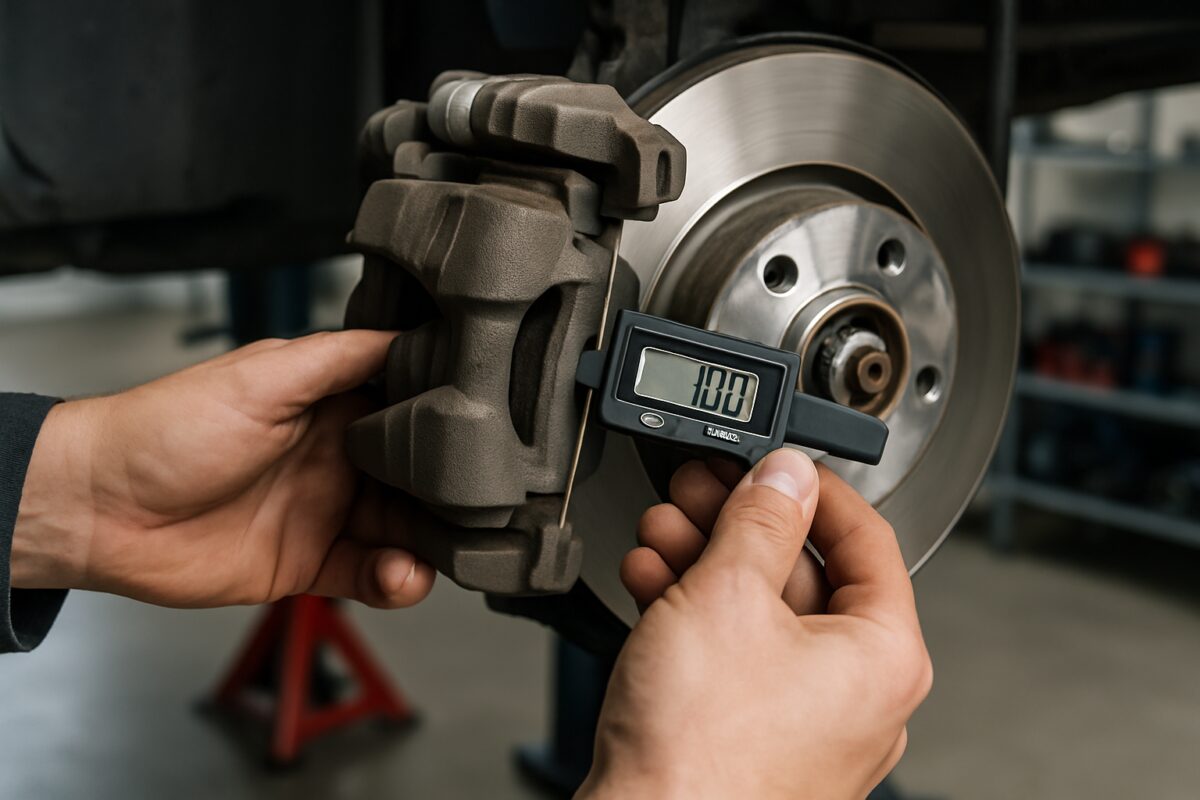
To check brake pad thickness, you’ll need a torch, measuring tool, and basic safety equipment. Most pads should measure at least 3mm of friction material remaining, though replacement is recommended at 2-3mm. The process involves visual inspection through the wheel spokes or removing wheels for detailed measurement.
Regular brake pad inspection prevents dangerous brake failure and costly damage to brake discs. Worn pads can reduce stopping power dramatically and create expensive repair bills when metal backing plates score the brake rotors.
Tools and parts required
Before starting your brake pad inspection, gather the necessary equipment for both visual and detailed measurements.
Tools needed:
- Powerful torch or mobile phone light
- Brake pad thickness gauge or ruler
- Car jack and axle stands
- Wheel brace or impact gun
- Safety gloves
- Notepad for recording measurements
Optional equipment:
- Digital callipers for precise measurement
- Mirror on a stick for awkward angles
- Knee pads for comfort
Safety precautions
Park on level ground and engage the handbrake firmly. Never work under a vehicle supported only by a jack. Always use proper axle stands when removing wheels. Wear safety glasses to protect from brake dust, which can contain harmful particles.
Allow brakes to cool completely before inspection if you’ve driven recently. Hot brake components can cause burns and give inaccurate measurements due to thermal expansion.
Step-by-step instructions
Step 1: Initial visual inspection
Start with a quick visual check through the wheel spokes. Use your torch to illuminate the brake caliper area. Look for the brake pad visible between the caliper and disc.
The friction material should appear thick and even. If you can see the metal backing plate or notice deep grooves in the pad surface, immediate replacement is needed.
Step 2: Measure through the wheel
For a rough measurement without wheel removal, position your ruler against the brake pad through the wheel spokes. Measure from the metal backing plate to the outer surface of the friction material.
This method works best on vehicles with open wheel designs. Some alloy wheels provide better access than others for this technique.
Step 3: Remove wheels for detailed inspection
For accurate measurement, raise the vehicle using your jack and secure with axle stands. Remove the wheel completely using your wheel brace.
This approach gives you full access to both inner and outer brake pads and allows proper measurement of all pad surfaces.
Step 4: Measure pad thickness accurately
Use your brake pad gauge or ruler to measure the friction material thickness. Take measurements at multiple points across each pad, as wear can be uneven.
Record measurements for both inner and outer pads on each wheel. The inner pad often wears faster due to caliper piston pressure.
Step 5: Check for wear indicators
Many modern brake pads include built-in wear indicators – small metal tabs that contact the disc when replacement is due. Listen for squealing noises during braking, which indicates these sensors are working.
Examine the pad surface for grooves, cracks, or glazing. These conditions require immediate attention regardless of remaining thickness.
Professional tip: Always measure brake pad thickness when the vehicle is cold. Hot pads can expand slightly, giving false readings that might delay necessary replacement.
Understanding brake pad measurements
New brake pads typically measure 10-12mm of friction material thickness. Different vehicles and pad types vary, but these general guidelines apply to most cars.
Premium pads often start thicker than budget alternatives, providing longer service life. However, all pads follow similar wear patterns and safety thresholds.
| Pad Thickness | Action Required | Urgency |
|---|---|---|
| Above 6mm | Continue monitoring | Good condition |
| 3-6mm | Plan replacement soon | Monitor closely |
| 2-3mm | Replace immediately | Safety risk |
| Below 2mm | Stop driving | Dangerous |
Common mistakes to avoid
Many drivers make the error of measuring only the outer pad, missing dangerous inner pad wear. Always check both pads on each caliper for complete assessment.
Don’t ignore warning signs like squealing, grinding, or vibration during braking. These symptoms often indicate problems beyond simple pad wear, requiring professional attention.
Avoid measuring hot brake components. Recent driving can cause thermal expansion, leading to inaccurate readings that might delay critical maintenance.
Never continue driving with pads below 2mm thickness. The metal backing plate will contact your brake rotors, causing expensive damage and dangerous brake failure.
Expert advice: Check brake pad thickness every 6 months or during routine maintenance. Catching wear early prevents costly repairs and ensures optimal stopping power when you need it most.
When should you replace brake pads?
Replace brake pads when friction material reaches 2-3mm thickness or shows signs of damage like cracking, glazing, or uneven wear. Don’t wait for squealing sounds, as this indicates you’re already at the minimum safe thickness.
High-performance driving, frequent city stop-and-go traffic, and mountainous terrain accelerate pad wear. Monitor thickness more frequently under these conditions.
Some vehicles have electronic wear sensors that illuminate dashboard warning lights. However, don’t rely solely on these systems – regular visual inspection remains essential for safe motoring.
Consider replacing pads in axle sets (both front or both rear) to maintain balanced braking performance. Mismatched pad thickness can cause pulling during braking and uneven wear patterns.
Related maintenance you can do at the same time
While checking brake pads, inspect your brake discs for scoring, warping, or excessive wear. Damaged discs require replacement and can accelerate new pad wear.
Check brake fluid levels and condition. Dark, contaminated fluid reduces braking efficiency and should be replaced every two years.
Examine brake lines and hoses for cracks, leaks, or swelling. These components are critical for brake system integrity and safety.
Consider inspecting your brake calipers for proper operation. Sticking pistons cause uneven pad wear and reduced braking performance.
Frequently asked questions
How often should I check brake pad thickness?
Check brake pad thickness every 6 months or during routine servicing. High-mileage drivers should inspect more frequently.
Can I drive with thin brake pads?
Never drive with pads below 2mm thickness. This risks brake failure and expensive rotor damage from metal-to-metal contact.
Do front and rear pads wear at the same rate?
Front pads typically wear faster as they handle most braking force. Rear pads usually last longer but still require regular inspection.
What causes uneven brake pad wear?
Sticking calipers, warped rotors, or contaminated pads cause uneven wear. Professional diagnosis is recommended for these conditions.
Should I replace brake pads myself?
Brake pad replacement requires mechanical knowledge and proper tools. Consider professional installation if you’re unsure about any aspect of the job.
Regular brake pad thickness checks are a vital safety practice that every driver should master. With the right tools and knowledge, you can monitor your brake system’s condition and avoid dangerous failures. Remember that brake components work as a system – worn pads affect overall performance and can damage other expensive parts if neglected. When measurements show 2-3mm remaining thickness, source quality replacement brake pads promptly to maintain your vehicle’s stopping power and protect your investment.

 Loading...


