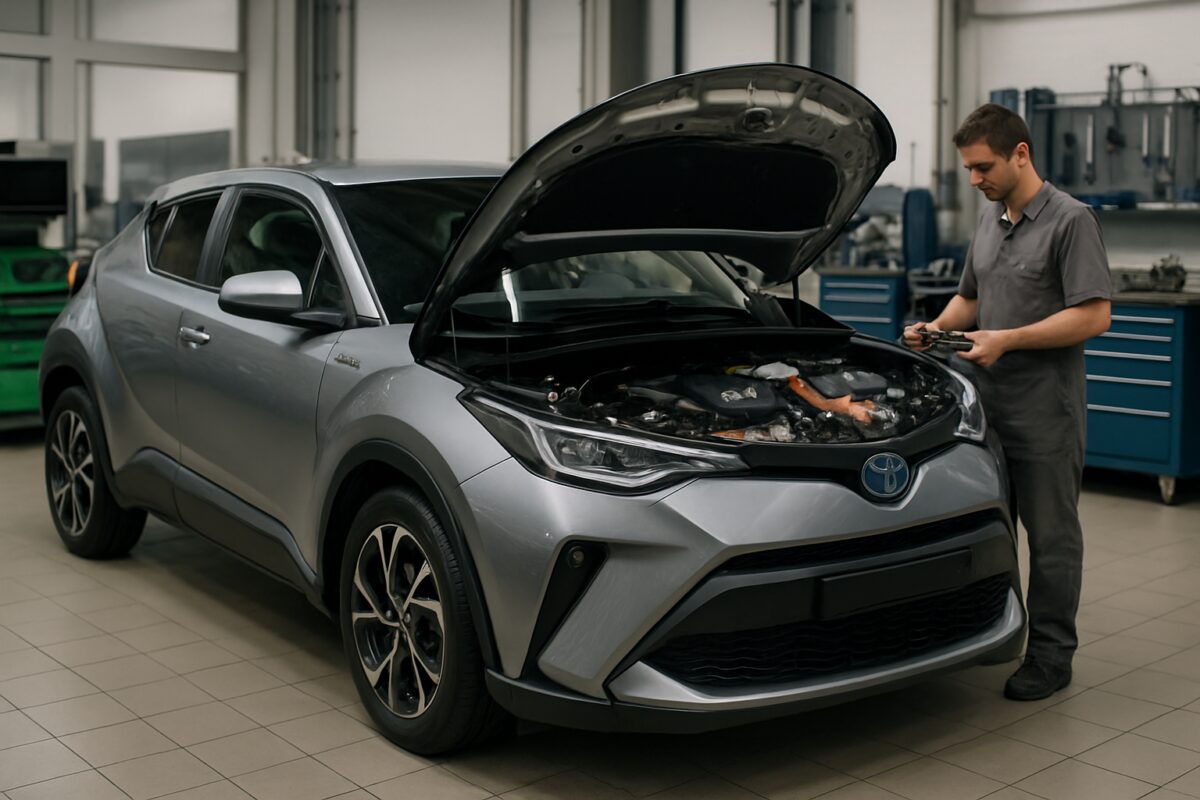
The Toyota C-HR has gained popularity as a stylish crossover since its launch, but like any vehicle, it comes with its share of common issues. Understanding these problems can help owners identify potential faults early and avoid costly repairs down the line.
Hybrid battery deterioration
One of the most significant issues affecting Toyota C-HR hybrid models is battery degradation over time. The hybrid system relies on a complex arrangement of nickel-metal hydride cells that gradually lose capacity.
Symptoms include reduced fuel efficiency, warning lights on the dashboard, and the petrol engine running more frequently than usual. The hybrid battery typically shows signs of weakness after 8-10 years or 100,000-150,000 miles, though some units fail earlier due to extreme temperatures or poor maintenance.
Replacement costs can range from £2,000 to £4,000 for a new unit, making this one of the most expensive repairs. However, refurbished batteries offer a more affordable alternative at around £1,200-£1,800.
AutoPartsPro mechanics recommend having the hybrid battery tested annually after the sixth year to monitor its health and plan for eventual replacement.
CVT transmission problems
The continuously variable transmission (CVT) in C-HR models has proven problematic for many owners. This system uses belts and pulleys instead of traditional gears, creating a smooth but sometimes unreliable driving experience.
Common symptoms include jerky acceleration, unusual whining noises during driving, and complete transmission failure in severe cases. The CVT fluid requires regular changes every 40,000-60,000 miles, but many owners neglect this maintenance.
When CVT units fail, replacement costs typically exceed £3,000-£5,000. Early intervention through proper fluid changes and gentle driving habits can extend transmission life significantly. Using the correct transmission fluid specification is crucial for longevity.
Suspension component wear
The C-HR’s sport-tuned suspension provides excellent handling but suffers from premature wear of key components. Shock absorbers and struts often fail between 60,000-80,000 miles, particularly on vehicles driven on rough roads.
Owners report clunking noises over bumps, uneven tyre wear, and reduced ride comfort. The rear shock absorbers are particularly vulnerable due to the vehicle’s weight distribution and suspension geometry.
Individual shock absorber replacement costs around £150-£300 per unit, whilst complete suspension overhauls can reach £1,500-£2,000. Regular inspection of suspension components helps identify problems before they affect handling safety.
Engine carbon buildup
The 1.8-litre hybrid engine in C-HR models suffers from carbon deposits on intake valves, a common issue with direct injection systems. This buildup restricts airflow and affects engine performance over time.
Symptoms include rough idling, reduced power output, poor fuel economy, and eventual misfiring. The problem typically manifests after 60,000-80,000 miles, particularly in vehicles used mainly for short journeys.
Professional carbon cleaning services cost £200-£400, whilst severe cases may require valve replacement at £800-£1,200. Regular use of quality petrol additives and occasional high-speed driving can help prevent excessive buildup.
Warning signs your car has a problem
Recognising early warning signs can prevent minor issues from becoming major repairs. Pay attention to these common indicators that suggest your C-HR needs attention.
- Dashboard warning lights, particularly hybrid system alerts
- Unusual noises during acceleration or braking
- Changes in fuel consumption patterns
- Vibrations through the steering wheel or seat
- Difficulty starting or irregular engine operation
Our experienced technicians at AutoPartsPro always recommend addressing warning signs promptly rather than waiting for complete component failure.
How to fix the problems
Addressing C-HR problems requires a systematic approach depending on the specific issue and its severity. Here’s a comprehensive breakdown of repair options and associated costs.
| Problem | DIY Possible | Professional Cost | Parts Required |
|---|---|---|---|
| Hybrid Battery | No | £2,000-£4,000 | Complete battery pack |
| CVT Transmission | Fluid only | £3,000-£5,000 | Transmission unit/fluid |
| Suspension | Basic level | £150-£300 per unit | Shock absorbers/struts |
| Carbon Buildup | No | £200-£400 | Cleaning chemicals |
For hybrid battery issues, replacement remains the most effective long-term solution. Refurbished units offer cost savings but may have shorter warranties. CVT problems often require professional diagnosis to determine whether fluid changes or complete replacement are necessary.
When to see a mechanic
Certain C-HR problems require immediate professional attention to prevent safety risks or expensive damage. Don’t delay seeking help if you experience complete hybrid system failure, transmission slipping, or severe suspension problems affecting vehicle control.
For routine maintenance, schedule inspections every 12 months or 10,000 miles. Hybrid system checks should occur more frequently after the fifth year. Early intervention through proper servicing can extend component life and reduce long-term ownership costs.
Choose mechanics familiar with hybrid technology, as conventional automotive knowledge may not suffice for complex electrical systems. Specialist diagnostic equipment is essential for accurate fault identification.
Frequently asked questions
How long do Toyota C-HR hybrid batteries typically last?
Most hybrid batteries last 8-12 years or 100,000-150,000 miles under normal conditions, though some fail earlier.
Can I drive my C-HR with a failing CVT transmission?
Limited driving is possible, but continued use may cause complete transmission failure and higher repair costs.
What causes premature suspension wear in the C-HR?
Sport-tuned suspension components experience higher stress, particularly on rough roads and with aggressive driving styles.
Is carbon buildup preventable in C-HR engines?
Regular high-speed driving and quality fuel additives can reduce buildup, but some accumulation is inevitable.
Are C-HR problems covered under Toyota warranty?
Most issues are covered for three years or 60,000 miles, with hybrid components having extended eight-year coverage.
Final recommendation
Despite these common problems, the Toyota C-HR remains a reliable crossover when properly maintained. Focus on preventive care rather than reactive repairs to minimise ownership costs. Regular hybrid system checks, proper engine oil changes, and timely component replacement will extend your vehicle’s lifespan significantly.
Budget approximately £800-£1,200 annually for maintenance beyond basic servicing. This investment pays dividends through improved reliability and higher resale values. Remember that hybrid technology requires specialist knowledge, so choose service providers accordingly. For replacement parts and components, ensure you select quality alternatives that meet Toyota’s specifications. Proper maintenance today prevents expensive failures tomorrow, making the C-HR ownership experience more enjoyable and cost-effective.

 Loading...