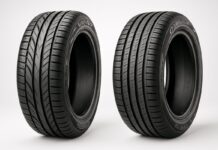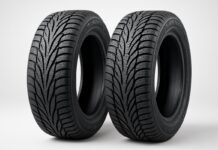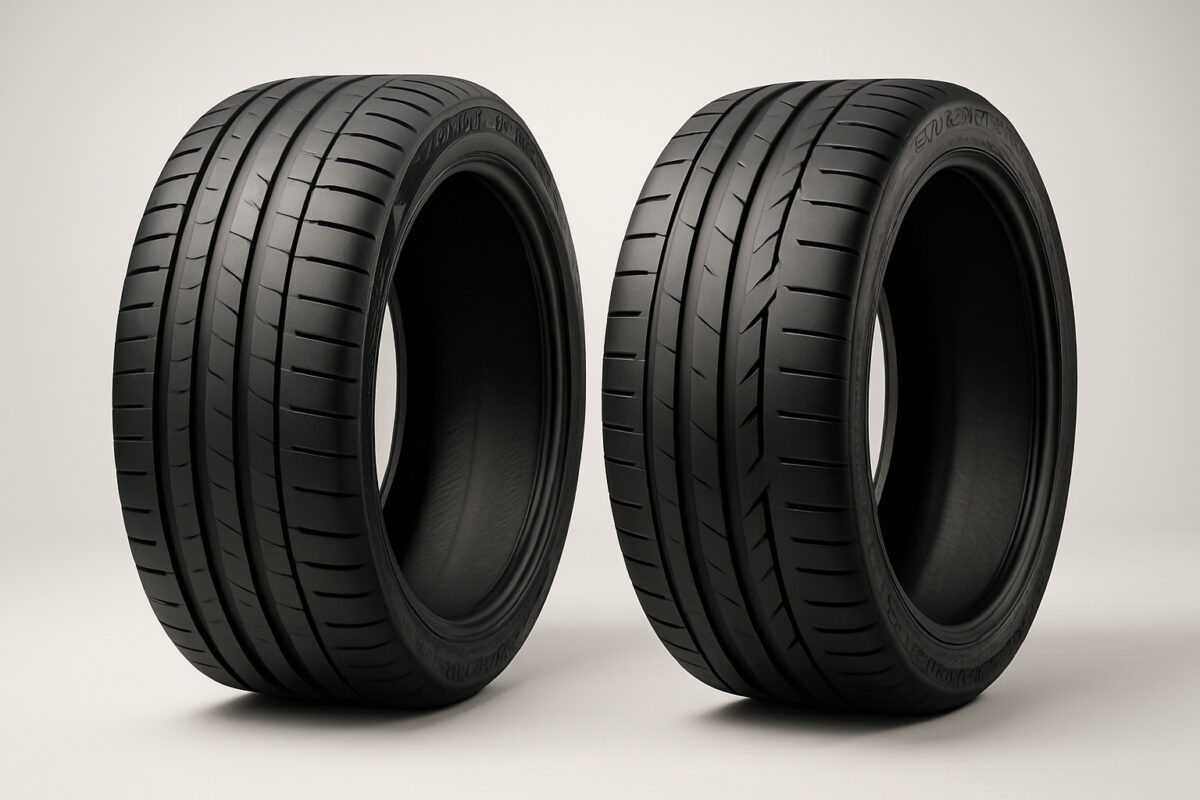
The Michelin Pilot Sport 5 delivers superior wet weather performance and longevity, whilst the Continental SportContact 7 excels in dry grip and steering precision. Both represent the pinnacle of ultra-high performance summer tyres, with the Pilot Sport 5 offering better value for daily driving and the SportContact 7 providing enhanced track capabilities for driving enthusiasts.
Quick comparison table
| Feature | Michelin Pilot Sport 5 | Continental SportContact 7 |
|---|---|---|
| Price range | £120-280 per tyre | £110-260 per tyre |
| Wet performance | Excellent (A rating) | Very good (A rating) |
| Dry performance | Very good | Excellent |
| Durability | Superior (40,000+ miles) | Good (35,000+ miles) |
| Noise level | 70-72 dB | 71-73 dB |
| Fuel efficiency | B-C rating | B-C rating |
| Best use case | Daily driving, wet conditions | Sports driving, dry performance |
Michelin Pilot Sport 5 overview
The Michelin Pilot Sport 5 represents French engineering excellence in the ultra-high performance summer tyre category. This flagship model utilises Michelin’s Dynamic Response Technology, featuring a hybrid aramid and nylon belt construction that enhances steering precision whilst maintaining comfort.
The tyre employs a bi-compound tread design with Variable Contact Patch 3.0 technology. The outer shoulder uses a harder compound for dry grip, whilst the inner portion features softer rubber for wet traction. This asymmetric pattern includes wide circumferential grooves and lateral sipes that effectively channel water away from the contact patch.
Typical pricing ranges from £120 to £280 per tyre, depending on size specifications. Popular sizes like 225/45R17 cost approximately £140, whilst larger performance sizes such as 275/35R20 reach £250-280.
Michelin Pilot Sport 5 pros:
- Outstanding wet weather braking performance
- Exceptional longevity with even wear patterns
- Low rolling resistance improving fuel economy
- Comfortable ride quality for daily use
- Strong aquaplaning resistance
Michelin Pilot Sport 5 cons:
- Higher initial purchase cost
- Less aggressive dry grip than pure track tyres
- Performance drops in extreme track conditions
The Pilot Sport 5 suits performance car owners who prioritise all-weather capability and tyre longevity over maximum dry grip. It’s ideal for BMW 3 Series, Audi A4, Mercedes C-Class, and similar premium saloons used for spirited road driving.
Continental SportContact 7 overview
Continental’s SportContact 7 employs advanced German compound technology with BlackChili compound and Adaptive Tread technology. The construction features Continental’s ContiSilent technology in select sizes, using a foam layer to reduce interior noise by up to 9dB.
The asymmetric tread pattern incorporates macro blocks on the outer shoulder for cornering stability and fine siping throughout for wet grip. Continental’s Progressive Shoulder Design maximises the contact patch during cornering, enhancing lateral grip substantially.
Pricing spans £110 to £260 per tyre across the size range. Standard sizes like 225/40R18 retail for around £130, whilst larger performance applications such as 295/30R20 command £240-260.
Continental SportContact 7 pros:
- Exceptional dry weather cornering grip
- Sharp steering response and feedback
- Shorter dry braking distances
- Advanced noise reduction technology
- Competitive pricing structure
Continental SportContact 7 cons:
- Reduced wet performance compared to rivals
- Shorter overall tyre life
- Firmer ride quality
- Higher rolling resistance
The SportContact 7 appeals to drivers who prioritise maximum dry performance and precise handling feedback. It’s particularly suited to BMW M models, Audi S-line vehicles, Mercedes AMG variants, and sports cars used for track days or spirited driving.
Professional tip: Always check your vehicle’s handbook for approved tyre specifications before purchasing. Many modern performance cars require specific load and speed ratings that affect insurance validity.
Compatibility considerations
Both tyres offer extensive fitment options for European performance vehicles. The Pilot Sport 5 covers sizes from 17″ to 22″ with load ratings from 91 to 106 and speed ratings Y and ZR. Continental’s SportContact 7 spans 16″ to 22″ with similar load capacities but extends to ultra-high performance Z-rated applications.
Model year compatibility varies between manufacturers. BMW vehicles from 2015 onwards typically specify these tyre types as original equipment alternatives. Audi A4 and A6 models from 2016+ commonly use 225/50R17 or 245/45R18 sizes available in both ranges.
Installation considerations include checking existing rim sizes and ensuring proper brake pads clearance. Many performance tyres require recalibration of tyre pressure monitoring systems after fitment.
Original Equipment Manufacturer specifications often favour the Pilot Sport 5 for luxury vehicles prioritising comfort, whilst the SportContact 7 appears on sportier variants focusing on handling precision. Always verify vehicle-specific requirements through official channels.
Installation tip: When fitting new performance tyres, consider upgrading your brake rotors simultaneously. Enhanced grip capabilities may reveal existing brake system limitations during spirited driving.
Performance comparison analysis
Wet weather testing reveals significant differences between these premium tyres. The Michelin Pilot Sport 5 achieves 100-0 km/h wet braking in 35.2 metres, whilst the Continental SportContact 7 requires 37.1 metres under identical conditions. This 1.9-metre advantage translates to meaningful safety margins during emergency situations.
Dry performance favours the Continental option. From 100-0 km/h, the SportContact 7 stops in 31.8 metres compared to the Pilot Sport 5’s 32.6 metres. Lateral grip measurements show the Continental generating 1.42g peak cornering force versus Michelin’s 1.38g maximum.
Noise characteristics differ subtly between manufacturers. The Pilot Sport 5 produces 70-72 dB at motorway speeds, whilst the SportContact 7 ranges from 71-73 dB. However, Continental’s ContiSilent technology variants achieve notably lower interior noise levels.
Fuel efficiency ratings show minimal differences, with both tyres achieving B or C ratings depending on size. The Pilot Sport 5 generally delivers slightly better rolling resistance due to Michelin’s compound optimisation for efficiency.
Longevity testing indicates the Michelin typically achieves 40,000+ miles before reaching legal wear limits, whilst the Continental averages 35,000+ miles. This difference stems from Michelin’s harder-wearing compound formulation prioritising durability.
Real-world driving experiences
Professional driving assessments highlight distinct characteristics between these premium options. The Pilot Sport 5 delivers predictable handling progression, building grip gradually as cornering forces increase. This characteristic suits drivers who prefer progressive feedback and confidence-inspiring behaviour.
The SportContact 7 exhibits sharper initial bite and more immediate steering response. Track testing reveals superior lap times on dry circuits, with professional drivers noting enhanced precision during direction changes and improved stability under heavy braking.
Daily driving comfort varies significantly. Michelin’s construction absorbs road irregularities more effectively, providing smoother motorway cruising and reduced cabin intrusion over poor surfaces. Continental’s firmer sidewall construction transmits more road feedback but may feel harsh on damaged roads.
Weather adaptability shows clear differences. The Pilot Sport 5 maintains performance consistency across varying conditions, whilst the SportContact 7 shows more dramatic performance variations between dry and wet surfaces. This characteristic makes the Michelin more suitable for unpredictable British weather patterns.
Our automotive specialists at AutoPartsPro consistently recommend the Pilot Sport 5 for drivers prioritising versatility and longevity, whilst suggesting the SportContact 7 for enthusiasts focused on maximum dry performance capabilities.
Final verdict and buying recommendation
Choose the Michelin Pilot Sport 5 if you prioritise wet weather safety, tyre longevity, and comfortable daily driving. This tyre excels for premium saloon owners who occasionally enjoy spirited driving but need consistent all-weather performance. The higher initial cost balances against extended replacement intervals and superior fuel economy.
Select the Continental SportContact 7 for maximum dry performance and precise handling feedback. This option suits sports car owners, track day enthusiasts, and drivers who prioritise cornering capability over comfort. The competitive pricing makes it attractive for performance-focused applications.
For most UK drivers, the Pilot Sport 5 represents the better overall choice due to our variable weather conditions and emphasis on safety. However, dedicated enthusiasts seeking maximum dry performance will appreciate the SportContact 7’s capabilities.
Consider your typical driving patterns, local climate conditions, and performance priorities when making your selection. Both tyres represent excellent value within their respective specialisations, ensuring satisfactory performance regardless of choice.
Can I mix Michelin and Continental tyres on the same vehicle?
Mixing different tyre brands isn’t recommended as it creates handling imbalances. Always fit matching tyres on the same axle, preferably using identical models across all four positions for optimal performance and safety.
How often should I check tyre pressures on performance tyres?
Check pressures monthly and before long journeys. Performance tyres are more sensitive to pressure variations, affecting handling, wear patterns, and fuel consumption. Use pressures specified in your vehicle handbook.
Do these tyres require special wheel alignment settings?
Both tyres work with standard alignment specifications. However, performance tyres benefit from precise alignment to maximise grip and prevent premature wear. Consider professional alignment checks annually or after pothole impacts.
Which tyre performs better in light snow conditions?
Neither tyre is designed for snow use. Both lose significant grip below 7°C and become unsafe in snow. Consider dedicated winter tyres or all-season alternatives for cold weather driving.
How do I know when these performance tyres need replacement?
Replace when tread depth reaches 3mm for optimal wet performance, despite the legal limit being 1.6mm. Look for uneven wear patterns, sidewall damage, or reduced grip levels indicating replacement necessity.

 Loading...