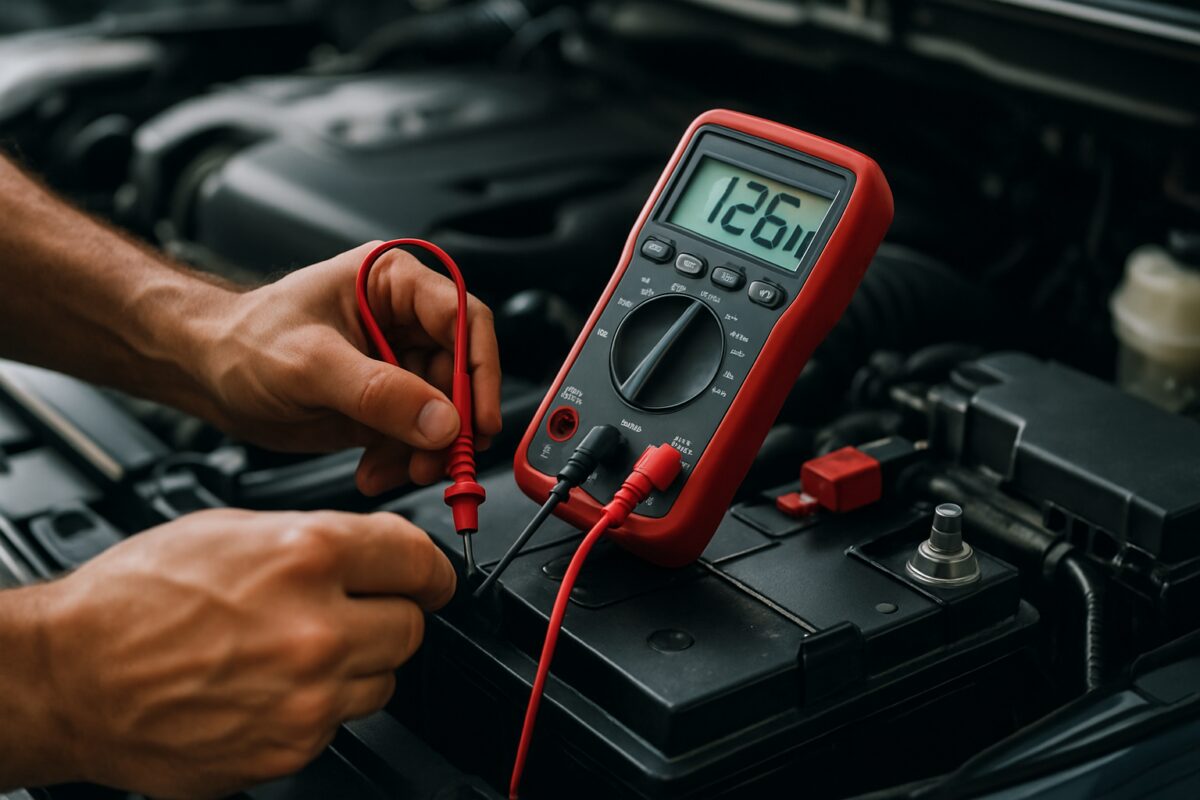
A standard car battery operates at 12 volts when the engine is off, though the actual reading should be between 12.4V and 12.8V for a fully charged battery. When the engine runs, the alternator boosts voltage to 13.8V-14.4V to charge the battery and power electrical systems. Understanding car battery voltage is crucial for maintaining your vehicle’s electrical health and preventing unexpected breakdowns.
Car battery voltage serves as a vital indicator of your vehicle’s electrical system health. Whether you’re troubleshooting starting problems or performing routine maintenance, knowing proper voltage readings helps identify issues before they leave you stranded.
Understanding car battery voltage basics
Modern vehicles predominantly use 12-volt electrical systems, though this nominal voltage fluctuates based on the battery’s state of charge and operating conditions. The 12V designation refers to the system’s standard operating voltage, but actual readings vary considerably.
A fully charged battery typically measures 12.6V to 12.8V when the engine is off. This voltage drops gradually as the battery discharges through normal use of electrical components like lights, radio, and security systems.
During engine operation, the alternator takes over electrical duties whilst simultaneously charging the battery. This process requires higher voltage – typically 13.8V to 14.4V – to overcome the battery’s internal resistance and restore its charge.
Normal voltage ranges for different conditions
Battery voltage readings change dramatically depending on your vehicle’s operating state. Understanding these variations helps distinguish between normal fluctuations and potential problems.
Engine off voltage readings
When your engine isn’t running, battery voltage depends entirely on the state of charge. A healthy battery should maintain specific voltage levels that indicate its condition:
| Battery Condition | Voltage Reading | Charge Level |
|---|---|---|
| Excellent | 12.7V – 12.8V | 100% charged |
| Good | 12.5V – 12.6V | 75-90% charged |
| Fair | 12.3V – 12.4V | 50-75% charged |
| Poor | 12.0V – 12.2V | 25-50% charged |
| Critical | Below 12.0V | Under 25% charged |
Readings below 12.0V typically indicate a battery requiring immediate attention. At this level, you may experience difficulty starting the engine, particularly in cold weather when battery performance naturally decreases.
Engine running voltage measurements
Once your engine starts, the alternator begins generating electricity to power vehicle systems and recharge the battery. Proper charging voltage is crucial for battery longevity and electrical system function.
Normal charging voltage ranges from 13.8V to 14.4V at idle speed. Some vehicles may show slightly higher readings – up to 14.7V – immediately after starting, but this should stabilise within a few minutes.
According to our mechanics at AutopartsPro, checking voltage at different engine speeds provides valuable diagnostic information. Rev the engine to 2000 RPM and observe voltage – it should remain steady within the charging range, indicating proper alternator function.
How to check car battery voltage properly
Accurate voltage testing requires proper technique and suitable equipment. Digital multimeters provide the most reliable readings for automotive electrical diagnostics.
Before testing, ensure your vehicle has been parked with the engine off for at least 30 minutes. This allows surface charge to dissipate, providing true resting voltage readings.
Equipment needed for testing
Essential tools for voltage testing include:
- Digital multimeter with DC voltage capability
- Safety gloves and eye protection
- Wire brush for cleaning terminals if necessary
- Notebook for recording readings
Step-by-step voltage testing procedure
Follow this systematic approach for accurate battery voltage measurement:
- Ensure the engine has been off for at least 30 minutes
- Set your multimeter to DC voltage mode (20V range works well)
- Connect the red probe to the positive terminal
- Connect the black probe to the negative terminal
- Record the reading displayed on your multimeter
For engine-running tests, repeat this process with the engine idling. The voltage should immediately increase to the charging range once the alternator engages.
Factors affecting battery voltage readings
Several environmental and operational factors influence battery voltage, potentially masking or exaggerating actual battery condition. Understanding these variables ensures accurate interpretation of test results.
Temperature effects on voltage
Cold weather significantly impacts battery performance and voltage readings. For every 10°C drop in temperature, battery capacity decreases by approximately 10-20%. Winter voltage readings may appear lower even with a healthy battery.
Hot weather also affects battery performance, though less dramatically than cold. Excessive heat can cause voltage readings to fluctuate and may accelerate battery degradation over time.
Age and battery condition
Battery age directly correlates with voltage stability and capacity. Older batteries – typically those over three years – may show normal voltage readings when resting but struggle to maintain voltage under load.
Internal resistance increases as batteries age, reducing their ability to deliver consistent power. This phenomenon becomes particularly noticeable during high-demand situations like engine starting or running multiple electrical accessories.
Common voltage-related problems and solutions
Voltage irregularities often signal underlying electrical system issues. Recognising these patterns helps identify problems before they result in complete failure.
Low voltage scenarios
Consistently low voltage readings typically indicate battery deterioration, parasitic drain, or charging system problems. If resting voltage measures below 12.4V regularly, investigate potential causes:
- Battery age and internal degradation
- Parasitic electrical drain from faulty components
- Corroded or loose terminal connections
- Alternator undercharging due to component wear
Addressing low voltage promptly prevents secondary damage to expensive electrical components. Our automotive specialists recommend testing battery health annually to catch deterioration early.
High voltage problems
Excessive charging voltage – readings above 14.7V consistently – can damage battery and electrical components. This condition, known as overcharging, typically stems from alternator regulator failure.
Overcharging symptoms include:
- Excessive battery water loss
- Strong acid smell from the battery area
- Premature bulb failure in lights
- Electrical component malfunctions
Different vehicle types and voltage specifications
Whilst most passenger vehicles use 12V systems, various vehicle categories employ different electrical architectures. Understanding these differences prevents confusion during testing and maintenance.
| Vehicle Type | System Voltage | Typical Applications |
|---|---|---|
| Passenger Cars | 12V | Standard petrol/diesel vehicles |
| Hybrid Vehicles | 12V + High Voltage | Dual voltage systems |
| Electric Vehicles | 12V + 400-800V | Auxiliary + traction systems |
| Commercial Vehicles | 24V | Large lorries and buses |
| Motorcycles | 12V/6V | Varies by engine size |
When to replace your car battery
Voltage testing provides valuable information about battery condition, but several indicators collectively determine replacement timing. Our technicians at AutopartsPro evaluate multiple factors when assessing battery health.
Replace your battery when voltage consistently reads below 12.4V after charging, or when the battery cannot maintain voltage under load. Additional warning signs include slow engine cranking, dim headlights, and electrical system malfunctions.
Modern batteries typically last 3-5 years under normal conditions. However, extreme weather, frequent short journeys, and electrical system demands can significantly reduce lifespan. Regular voltage monitoring helps optimise replacement timing.
Load testing importance
Static voltage readings provide limited information about battery condition. Load testing – applying controlled electrical demand whilst monitoring voltage – reveals true battery capability.
Professional load testing applies approximately half the battery’s cold cranking amp rating for 15 seconds. Healthy batteries maintain voltage above 9.6V during this test, whilst failing batteries show dramatic voltage drops.
Maintaining optimal battery voltage
Proper maintenance extends battery life and ensures consistent voltage performance. Simple preventive measures protect your investment and reduce unexpected failures.
Regular cleaning of battery terminals prevents corrosion that increases electrical resistance. Use a mixture of bicarbonate of soda and water to neutralise acid buildup, followed by thorough rinsing and drying.
Check terminal tightness monthly – loose connections cause voltage drops and poor electrical performance. However, avoid overtightening, which can damage terminals or internal battery connections.
Consider investing in a maintenance routine that includes regular voltage checks alongside other essential services like air filter replacement and brake pad inspection.
Advanced voltage diagnostics
Professional automotive diagnostics extend beyond basic voltage measurement. Advanced testing reveals subtle electrical system problems that standard multimeter readings might miss.
Voltage drop testing identifies resistance problems in charging circuits, starter circuits, and ground connections. These tests measure voltage loss across individual components under actual operating conditions.
Ripple voltage testing evaluates alternator output quality. Excessive AC voltage in the charging system indicates failing alternator diodes, which can damage sensitive electronic components over time.
Understanding car battery voltage empowers you to maintain your vehicle’s electrical system effectively. Regular monitoring prevents costly breakdowns and extends component life. When voltage readings indicate problems, addressing issues promptly saves money and ensures reliable transportation. Remember that whilst DIY testing provides valuable information, complex electrical problems require professional diagnosis to avoid expensive mistakes.
Frequently Asked Questions (FAQ)
What should my car battery voltage be when the engine is off?
A healthy car battery should read 12.4V to 12.8V when the engine is off. Readings below 12.4V indicate the battery needs charging or potential replacement.
Is 11.9V too low for a car battery?
Yes, 11.9V is critically low and indicates a severely discharged battery. The vehicle may not start reliably, and the battery requires immediate charging or replacement.
What voltage should my alternator produce while driving?
A properly functioning alternator should produce 13.8V to 14.4V while the engine runs. This voltage range ensures adequate battery charging and electrical system operation.
Can I drive my car with low battery voltage?
Driving with very low battery voltage risks stalling and electrical system failure. If voltage reads below 12.0V, charge the battery before driving or seek immediate assistance.
How often should I check my car battery voltage?
Check battery voltage monthly during routine maintenance or whenever you notice starting difficulties. Regular monitoring helps identify problems before they cause complete battery failure.

 Loading...