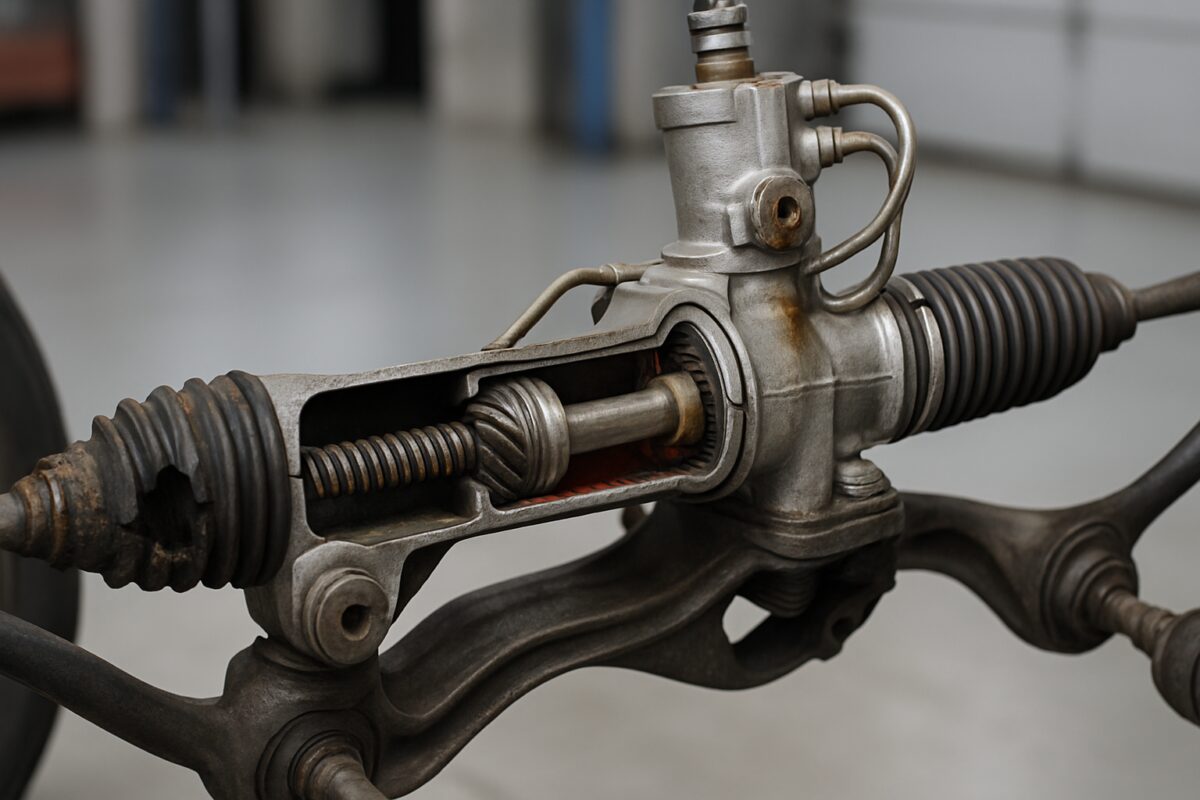
The steering rack is a critical component in modern rack and pinion steering systems that converts the rotational movement of your steering wheel into the linear motion needed to turn the wheels. When the steering rack fails, it typically manifests through symptoms such as power steering fluid leaks, unusual noises whilst steering, excessive play in the steering wheel, and difficulty turning the vehicle. Recognising these warning signs early can prevent more expensive repairs and maintain vehicle safety.
How the steering rack works in your vehicle
The steering rack operates as part of the rack and pinion system, which has become the standard in most passenger cars and light commercial vehicles. This mechanism consists of a circular gear (the pinion) that engages with a linear gear rack to provide precise steering control.
When you turn the steering wheel, the rotational force travels down the steering column to the pinion gear. This pinion then moves along the rack, which is connected to the front wheels through tie rods and steering knuckles. The beauty of this system lies in its simplicity and efficiency compared to older recirculating ball steering systems.
Modern vehicles typically feature power-assisted steering racks, which use either hydraulic fluid or electric motors to reduce the effort required to turn the wheel. Steering racks must withstand enormous forces whilst maintaining precise control, making them one of the most stressed components in your vehicle’s steering system.
Types of steering rack systems
Understanding the different types of steering systems helps identify potential problems more effectively. Each system has unique characteristics and failure patterns that every motorist should recognise.
Hydraulic power steering racks
Hydraulic power steering remains common in many vehicles, particularly older models and heavy-duty applications. These systems use pressurised fluid pumped by the engine to assist steering movement. The hydraulic fluid circulates through the system, providing the force multiplication needed for easy steering.
The hydraulic system includes several key components working together. The power steering pump, driven by the engine, creates pressure in the system. This pressure acts on pistons within the steering rack to provide assistance when turning. A power steering pump failure often leads to complete loss of power assistance.
Electric power steering racks
Electric Power Steering (EPS) systems have become increasingly popular in modern vehicles due to their efficiency and reduced maintenance requirements. Instead of hydraulic fluid, these systems use electric motors to provide steering assistance.
EPS systems offer several advantages over hydraulic alternatives. They consume less fuel because they only operate when steering input is detected, unlike hydraulic pumps that run continuously. Additionally, EPS systems can be programmed to provide variable assistance based on vehicle speed, offering lighter steering at low speeds and firmer feel at higher speeds.
Common steering rack failure symptoms
Recognising steering rack problems early prevents safety hazards and reduces repair costs. These symptoms often develop gradually, making regular monitoring essential for vehicle safety.
Experienced mechanics at AutoPartsPro emphasise that steering rack issues rarely happen suddenly. Instead, they develop over time through normal wear and tear, contamination, or damage from road conditions. Understanding these warning signs helps drivers maintain their vehicles properly.
Power steering fluid leaks
Fluid leaks represent one of the most common steering rack problems in hydraulic systems. These leaks typically occur at the rack ends where seals deteriorate over time, allowing pressurised fluid to escape.
Look for reddish or amber-coloured fluid puddles under your vehicle, particularly after parking. Power steering fluid has a distinctive smell and consistency that differs from engine oil or coolant. Small leaks may only appear as dampness around the rack boots, whilst major leaks create obvious puddles.
Our technicians recommend checking steering rack boots regularly for signs of fluid contamination. Split or damaged boots allow dirt and moisture to enter the rack assembly, accelerating wear and causing premature failure.
Unusual noises during steering
Strange sounds whilst steering often indicate internal rack damage or insufficient lubrication. These noises vary depending on the specific problem but generally become more pronounced during parking manoeuvres or slow-speed turns.
- Grinding noises suggest internal gear wear or contamination
- Whining sounds often indicate pump problems or low fluid levels
- Clunking noises may signal worn rack bushings or mounting points
- Squealing typically points to belt problems or pump bearing wear
These sounds shouldn’t be ignored, as they often precede complete steering failure. Regular inspection and maintenance prevent minor issues from becoming major safety hazards.
Excessive steering wheel play
Steering wheel play refers to the amount of movement possible before the wheels respond. Normal play is minimal, typically less than two inches of wheel movement. Excessive play makes the vehicle feel loose and unpredictable, particularly at motorway speeds.
This condition develops gradually as internal components wear. The rack and pinion gears develop clearances that allow movement without corresponding wheel response. Worn tie rod ends also contribute to excessive play, making proper diagnosis essential.
Difficulty turning the steering wheel
Heavy or stiff steering indicates loss of power assistance or increased internal friction. This symptom can appear suddenly if the power steering pump fails, or gradually if seals and internal components deteriorate.
Cold weather often makes steering stiffness more noticeable, as hydraulic fluid becomes thicker and electric motors work harder. However, steering should return to normal operation once the vehicle warms up. Persistent stiffness suggests internal damage requiring professional attention.
Factors that contribute to steering rack failure
Several factors accelerate steering rack wear and failure. Understanding these helps drivers take preventive measures to extend component life and maintain safety.
Age and mileage considerations
Like all mechanical components, steering racks have finite service lives. Most racks provide reliable service for 100,000 to 150,000 miles under normal conditions. However, this lifespan varies significantly based on driving habits, maintenance quality, and environmental factors.
| Mileage Range | Expected Condition | Recommended Action |
|---|---|---|
| 0-50,000 miles | Like new operation | Regular fluid checks |
| 50,000-100,000 miles | Minor wear developing | Monitor for early symptoms |
| 100,000-150,000 miles | Noticeable wear patterns | Consider preventive replacement |
| 150,000+ miles | High failure risk | Plan for replacement soon |
Environmental and driving conditions
Road salt, moisture, and debris significantly impact steering rack longevity. Vehicles operated in harsh climates or on unpaved roads experience accelerated wear due to contamination and corrosion.
Frequent parking manoeuvres and tight turning put maximum stress on rack components. City driving with constant turning creates more wear than motorway cruising. Understanding your driving patterns helps predict when steering components may need attention.
Diagnostic procedures for steering rack problems
Proper diagnosis ensures accurate identification of steering problems before expensive repairs begin. Professional technicians use systematic approaches to isolate steering rack issues from other potential causes.
Visual inspection techniques
A thorough visual inspection reveals many steering problems without special tools. Check the steering rack boots for tears, cracks, or fluid contamination. Examine mounting brackets for looseness or damage. Look for obvious fluid leaks around seals and connections.
Professional mechanics also inspect related components that affect steering performance. Worn suspension arms or damaged steering linkages can mimic rack problems, making comprehensive inspection essential for accurate diagnosis.
Road testing procedures
Road tests reveal steering problems that aren’t apparent during static inspection. Professional evaluation includes checking steering response, effort required for turning, and any unusual vibrations or noises during operation.
- Test steering responsiveness during straight-line driving
- Evaluate turning effort during parking manoeuvres
- Check for vibrations or shimmy through the steering wheel
- Monitor steering return to centre after turns
- Assess overall steering precision and control
These tests help differentiate between rack problems and issues with other steering or suspension components. Accurate diagnosis prevents unnecessary repairs and ensures proper resolution of steering concerns.
Repair versus replacement considerations
When steering rack problems develop, owners face decisions between repair and replacement. Several factors influence this choice, including cost, vehicle age, and problem severity.
When repair makes sense
Minor rack problems sometimes respond to repair rather than complete replacement. Seal replacement can resolve small leaks without major disassembly. However, repair options are limited because most rack components aren’t serviceable separately.
Professional rebuilding services exist for some steering rack models, particularly those from premium manufacturers. These services can provide cost-effective alternatives to new rack replacement whilst maintaining original equipment quality and performance.
Benefits of complete replacement
Complete rack replacement often provides better long-term value than attempting repairs. New or remanufactured racks include all internal components, seals, and often come with warranties covering parts and labour.
Replacement also provides an opportunity to upgrade to improved designs or specifications. Some aftermarket racks offer enhanced durability or performance compared to original equipment, making replacement an attractive option for enthusiast drivers.
Prevention and maintenance tips
Proper maintenance significantly extends steering rack life and prevents premature failure. Regular attention to steering system health saves money and maintains vehicle safety.
“Regular power steering fluid changes are the most cost-effective way to extend rack life. Fresh fluid prevents internal corrosion and maintains proper lubrication of critical components,” advises AutoPartsPro’s lead technician.
Regular fluid maintenance
Power steering fluid requires regular changes just like engine oil. Most manufacturers recommend fluid replacement every 30,000 to 50,000 miles, though severe service conditions may require more frequent changes.
Use only manufacturer-specified fluid types, as different formulations can damage seals and internal components. Check fluid levels monthly and top up as needed with the correct specification fluid to prevent pump damage and rack wear.
Protecting rack components
Several practices help protect steering rack components from premature wear. Avoid holding the steering wheel at full lock for extended periods, as this creates maximum pressure in the system and can damage seals.
Keep rack boots in good condition to prevent contamination. Replace damaged boots immediately to prevent dirt and moisture from entering the rack assembly.
Cost considerations for steering rack work
Steering rack replacement represents a significant expense, making cost planning important for vehicle owners. Understanding the factors that influence pricing helps make informed decisions about repairs.
Factors affecting replacement costs
Several variables influence steering rack replacement costs. Vehicle make and model significantly impact parts pricing, with luxury and imported vehicles typically requiring more expensive components. Labour costs vary by region and shop type, with dealership service typically commanding premium pricing.
| Cost Component | Typical Range | Factors Affecting Price |
|---|---|---|
| Steering Rack Unit | £200-£800 | Vehicle type, OEM vs aftermarket |
| Labour Costs | £200-£500 | Shop rates, complexity, location |
| Additional Parts | £50-£200 | Tie rods, boots, alignment needs |
| Total Project Cost | £450-£1,500 | All factors combined |
OEM versus aftermarket options
Original Equipment Manufacturer (OEM) racks provide guaranteed fitment and performance but command premium pricing. Aftermarket alternatives offer cost savings whilst maintaining acceptable quality levels for most applications.
Remanufactured racks represent a middle ground between new OEM and aftermarket options. These units use original cores rebuilt to factory specifications, providing OEM quality at reduced prices. Many remanufactured units include warranties comparable to new parts.
Professional installation importance
Steering rack replacement requires professional expertise due to safety implications and technical complexity. Proper installation ensures reliable operation and prevents premature failure of new components.
The installation process involves several critical steps that affect long-term performance. Proper torque specifications, alignment procedures, and system bleeding ensure optimal operation. Professional technicians have the tools and experience necessary to complete these procedures correctly.
After installation, wheel alignment becomes essential to prevent premature tyre wear and ensure proper steering geometry. Most steering rack replacements require complete alignment adjustment to restore factory specifications and maintain vehicle handling characteristics.
Understanding steering rack function and failure symptoms helps drivers maintain their vehicles safely and economically. Regular maintenance, prompt attention to warning signs, and professional service when problems develop ensure reliable steering performance throughout your vehicle’s service life. Whether dealing with minor leaks or complete rack failure, early intervention prevents safety hazards and reduces overall repair costs.
Frequently Asked Questions
How long does a steering rack typically last?
Most steering racks last between 100,000 to 150,000 miles under normal driving conditions, though this varies based on maintenance quality and environmental factors.
Can I drive with a leaking steering rack?
Small leaks may allow short-term driving, but severe leaks can cause complete power steering failure, making the vehicle unsafe to operate.
What causes steering rack seals to fail?
Seal failure typically results from age, contaminated fluid, excessive heat, or debris entering through damaged protective boots around the rack assembly.
How much does steering rack replacement cost?
Replacement costs range from £450 to £1,500 depending on vehicle type, parts quality, and labour rates in your area.
Should I replace both tie rod ends with the steering rack?
Yes, replacing tie rod ends during rack replacement is recommended as they often show wear and new racks frequently include updated tie rod specifications.

 Loading...