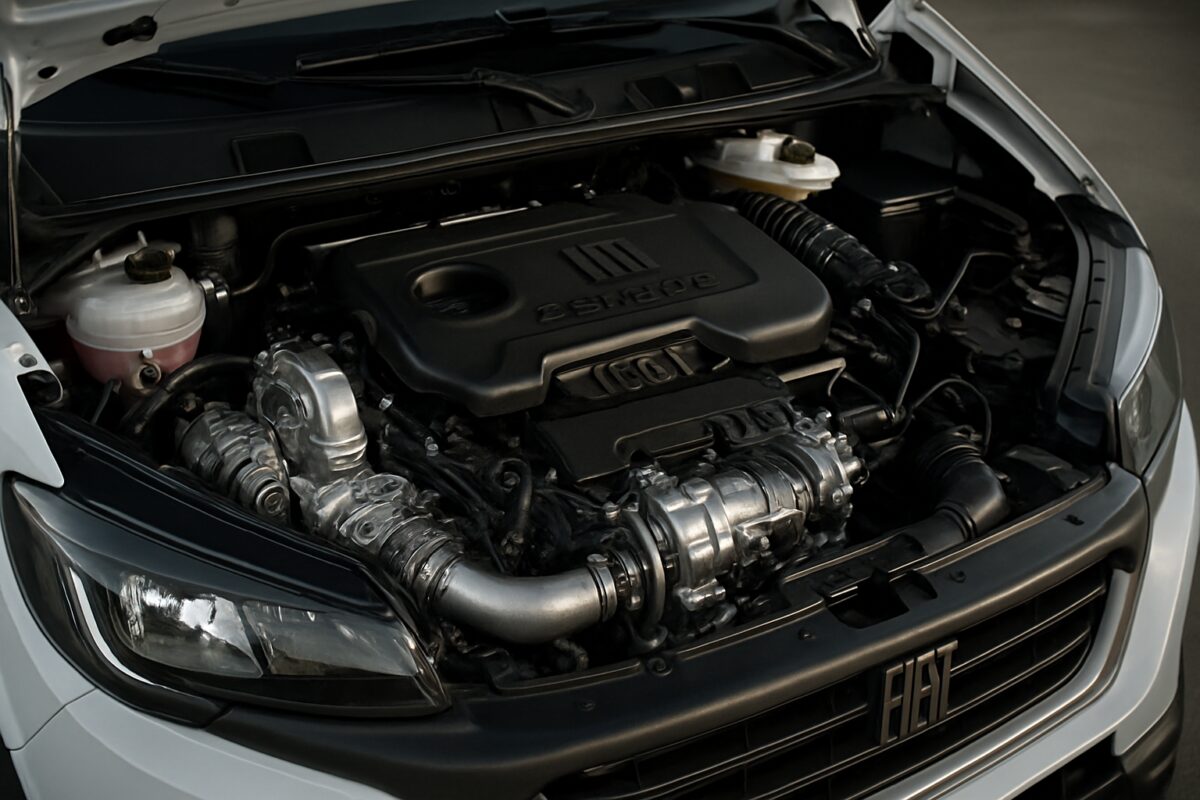
The Fiat Ducato stands as Europe’s most popular large van, dominating the commercial vehicle segment with its versatile design and practical approach to business transport. The heart of this workhorse lies in its carefully selected engine lineup, which determines everything from daily running costs to long-term reliability. With options spanning from economical 2.2-litre diesels producing 120bhp to powerful 3.0-litre units delivering 180bhp, plus torque figures ranging from 320Nm to 450Nm, choosing the right powerplant significantly impacts your Ducato’s performance and ownership experience.
Comparison table of all engines
| Engine | Power Output | Torque | Fuel Consumption | Reliability |
|---|---|---|---|---|
| 2.2 Multijet 120 | 120bhp | 320Nm | 38.2mpg | Good |
| 2.2 Multijet 140 | 140bhp | 350Nm | 36.7mpg | Very Good |
| 2.2 Multijet 150 | 150bhp | 380Nm | 35.8mpg | Very Good |
| 3.0 Multijet 180 | 180bhp | 450Nm | 32.5mpg | Good |
Engine #1 overview
The 2.2 Multijet 120 represents the entry-level diesel option in the Ducato range. This four-cylinder turbocharged unit features a displacement of 2,198cc and utilises common rail direct injection technology. The naturally aspirated base design incorporates a single turbocharger with intercooling to optimise combustion efficiency. Running on standard diesel fuel, the engine employs high-pressure fuel injection at up to 1,600 bar for improved atomisation and cleaner burning.
Pros
- Excellent fuel economy for commercial use
- Lower insurance and tax costs
- Adequate power for light-duty applications
- Proven reliability in urban environments
- Cost-effective maintenance requirements
Cons
- Limited pulling power when fully loaded
- Struggles with motorway overtaking
- Slower acceleration compared to higher-spec variants
- May require frequent gear changes on hills
Engine #2 overview
The 2.2 Multijet 140 strikes an excellent balance between performance and economy. This turbocharged four-cylinder diesel features the same 2,198cc displacement but with revised tuning for enhanced output. The common rail injection system operates at higher pressures, whilst improved turbocharger mapping delivers better mid-range response. This unit maintains diesel fuel compatibility with advanced emission control systems including particulate filter technology.
Pros
- Optimal power-to-economy ratio
- Strong mid-range torque delivery
- Suitable for most commercial applications
- Good motorway cruising ability
- Reasonable maintenance costs
Cons
- Higher initial purchase price than base engine
- Slightly increased fuel consumption over 120bhp variant
- DPF regeneration cycles require attention
- More complex emission systems
Engine #3 overview
The 2.2 Multijet 150 builds upon the proven architecture with further performance enhancements. This turbocharged diesel maintains the 2,198cc capacity whilst incorporating upgraded internals and revised engine management mapping. The high-pressure common rail system delivers precise fuel metering, and the variable geometry turbocharger provides excellent response across the rev range. Advanced fuel filter systems ensure optimal performance and longevity.
Pros
- Strong acceleration and pulling power
- Excellent for heavy-duty commercial use
- Good high-speed stability and performance
- Responsive turbocharger characteristics
- Handles steep gradients effectively
Cons
- Higher fuel consumption than lower-powered variants
- Premium purchase price
- More expensive service requirements
- Increased complexity of emission systems
Engine #4 overview
The flagship 3.0 Multijet 180 represents the pinnacle of Ducato power delivery. This six-cylinder turbocharged diesel offers 2,987cc of displacement with sophisticated common rail injection technology. The larger capacity provides inherently smoother operation and substantial torque output, whilst the advanced turbocharging system ensures strong performance across all operating conditions. This powerplant demands high-quality engine oil for optimal longevity.
Pros
- Maximum power and torque output
- Smooth six-cylinder refinement
- Excellent for maximum payload scenarios
- Strong towing capability
- Premium driving experience
Cons
- Highest fuel consumption in range
- Premium maintenance and repair costs
- More complex engine management systems
- Higher initial purchase price
- Increased insurance premiums
Maintenance cost
| Engine | Recommended Interval | Estimated Cost | Cost per 10,000 miles |
|---|---|---|---|
| 2.2 Multijet 120 | 12,500 miles | £180-220 | £144-176 |
| 2.2 Multijet 140 | 12,500 miles | £190-240 | £152-192 |
| 2.2 Multijet 150 | 12,500 miles | £200-250 | £160-200 |
| 3.0 Multijet 180 | 10,000 miles | £280-350 | £280-350 |
“Regular servicing with quality components significantly extends engine life. Our AutoPartsPro specialists recommend using oil filters meeting or exceeding OEM specifications for optimal protection.”
Engine sound and character
Each Ducato engine delivers a distinct auditory signature that reflects its design philosophy. The 2.2 Multijet 120 produces a typical diesel clatter at idle, settling into a steady thrum under load. This base unit exhibits characteristic turbo whistle during acceleration, though refinement remains adequate for commercial applications.
The 140bhp and 150bhp variants offer improved acoustic refinement through enhanced engine mounts and revised combustion chamber design. These units demonstrate reduced vibration transmission and smoother idle characteristics, making them more suitable for passenger conversions or premium commercial applications.
The 3.0 Multijet 180 stands apart with its six-cylinder smoothness. This powerplant delivers a deeper, more refined note with minimal vibration at idle. Under acceleration, it produces a purposeful growl rather than the harsher characteristics of its four-cylinder siblings, reflecting its premium positioning within the range.
“The sound quality difference between engines becomes apparent during extended driving periods. Six-cylinder variants provide significantly better cabin refinement for driver comfort,” notes our AutoPartsPro technical team.
Who each engine is best for
| Engine | Best For |
|---|---|
| 2.2 Multijet 120 | Urban delivery drivers, light cargo applications |
| 2.2 Multijet 140 | Mixed-use commercial operators, medium payload requirements |
| 2.2 Multijet 150 | Heavy-duty commercial use, frequent motorway driving |
| 3.0 Multijet 180 | Maximum payload operations, towing applications, premium conversions |
Frequently asked questions (FAQ)
Which Fiat Ducato engine offers the best fuel economy?
The 2.2 Multijet 120 delivers the best fuel economy at 38.2mpg, making it ideal for cost-conscious operators prioritising running costs over performance.
What maintenance interval should I follow for Ducato engines?
Most Ducato engines require servicing every 12,500 miles, except the 3.0 Multijet which needs attention every 10,000 miles due to increased complexity.
Are Fiat Ducato engines reliable for high-mileage commercial use?
Yes, particularly the 2.2 Multijet variants demonstrate excellent reliability when maintained properly, with many examples exceeding 200,000 miles in commercial service.
Which engine provides the best towing capacity?
The 3.0 Multijet 180 offers maximum towing capability with 450Nm torque, making it suitable for heavy trailer work and maximum payload scenarios.
Do Ducato engines require premium diesel fuel?
Standard diesel fuel is acceptable, though premium fuels with cleaning additives can benefit injectors and overall engine cleanliness in high-mileage applications.

 Loading...