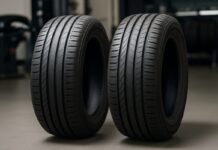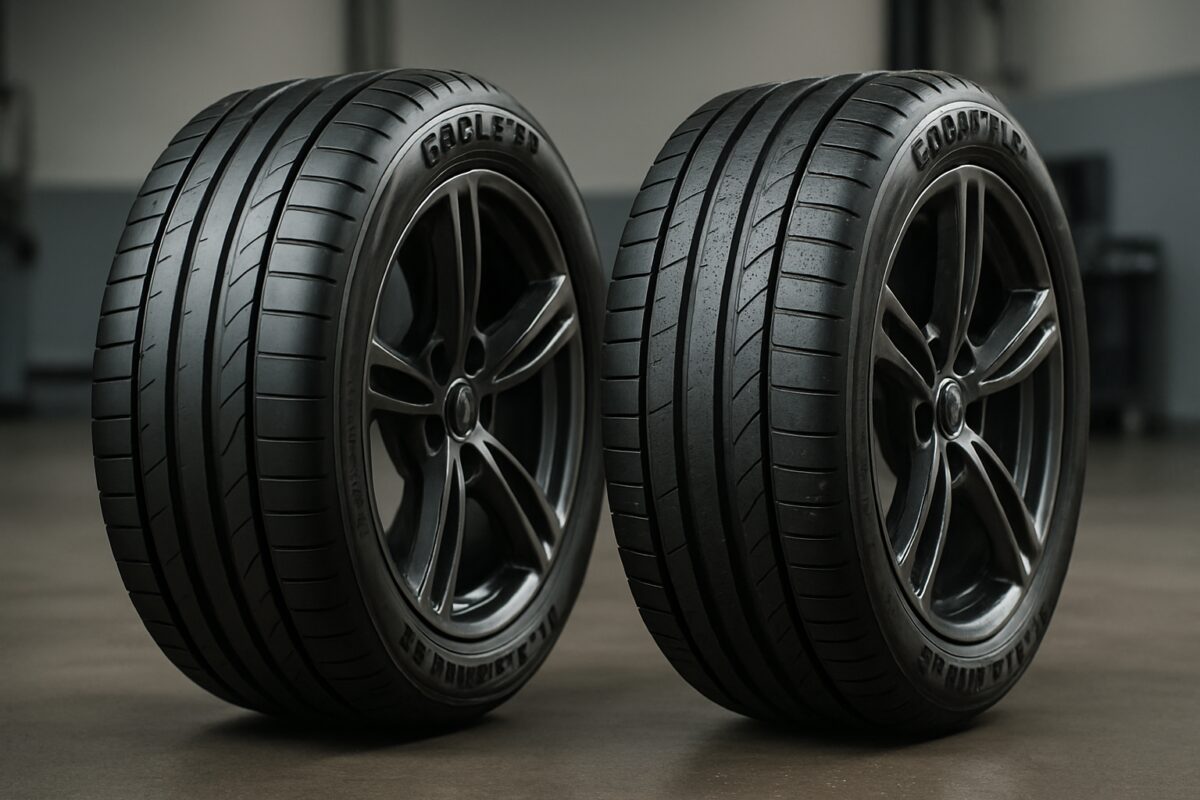
The Goodyear Eagle F1 Asymmetric 6 represents a significant upgrade over its predecessor, the Asymmetric 5, offering improved wet braking performance by up to 3 metres and enhanced fuel efficiency through reduced rolling resistance. Whilst both tyres deliver exceptional dry grip and handling characteristics, the newer Asymmetric 6 features advanced tread compound technology and optimised tyre construction that provides better wear resistance and quieter operation, making it the superior choice for performance-oriented drivers seeking the latest in tyre technology.
Quick comparison table
| Attribute | Eagle F1 Asymmetric 5 | Eagle F1 Asymmetric 6 |
|---|---|---|
| Price range | £90-£200 per tyre | £100-£220 per tyre |
| Wet braking | Excellent | Outstanding (3m shorter) |
| Durability | Good (45,000 miles) | Very good (50,000 miles) |
| Noise level | 68-72 dB | 66-70 dB |
| Fuel efficiency | B-C rating | A-B rating |
| Best use case | Performance cars, wet conditions | Premium sports cars, all-weather performance |
Goodyear Eagle F1 Asymmetric 5 overview
The Eagle F1 Asymmetric 5 established itself as a benchmark in the ultra-high performance tyre segment when launched in 2018. This tyre utilises Goodyear’s ActiveBraking technology, which increases the contact patch under braking to deliver exceptional stopping distances in both wet and dry conditions.
The tyre features a silica-enhanced compound that maintains flexibility across various temperatures, ensuring consistent grip levels. Its asymmetric tread pattern incorporates large shoulder blocks for enhanced cornering stability and circumferential grooves for effective water evacuation.
Typical pricing ranges from £90 to £200 per tyre, depending on size and retailer. The construction includes twin steel belts reinforced with polyamide for enhanced high-speed stability and durability.
Pros: Excellent wet and dry grip, proven track record, competitive pricing, wide size range availability
Cons: Higher road noise compared to newer models, moderate fuel efficiency ratings, limited mileage warranty
Ideal drivers: Performance car owners prioritising grip over comfort, drivers in wet climates, those seeking proven technology at reasonable prices
Goodyear Eagle F1 Asymmetric 6 overview
Launched in 2021, the Eagle F1 Asymmetric 6 represents Goodyear’s latest evolution in performance tyre technology. This model incorporates advanced compound formulations and structural improvements that address the shortcomings of its predecessor whilst enhancing overall performance metrics.
The tyre features Goodyear’s new Dynamic Compound technology, combining silica and resin for improved wet grip without compromising dry performance. The redesigned tread pattern includes optimised groove angles and enhanced sipe density for superior water channelling capabilities.
Pricing typically ranges from £100 to £220 per tyre across various sizes. The construction utilises high-tensile steel belts with improved nylon cap plies for enhanced durability and reduced weight, contributing to better fuel economy.
Pros: Superior wet braking, improved fuel efficiency, reduced noise levels, extended mileage potential, latest compound technology
Cons: Higher initial cost, limited long-term reliability data, potentially firmer ride quality in some sizes
Ideal drivers: Premium vehicle owners seeking cutting-edge performance, eco-conscious drivers prioritising fuel efficiency, those requiring maximum wet weather safety
Compatibility considerations
Both Eagle F1 Asymmetric models are available in extensive size ranges covering most performance and luxury vehicles. The Asymmetric 5 offers sizes from 17 to 22 inches, whilst the newer Asymmetric 6 provides similar coverage with additional run-flat options for BMW and Mercedes applications.
Vehicle compatibility extends to popular models including BMW 3 Series, Audi A4, Mercedes C-Class, and Volkswagen Golf GTI. Both tyres meet original equipment specifications for numerous manufacturers, ensuring proper fitment and performance characteristics.
Installation considerations include proper wheel alignment and brake disc condition, as maximum performance requires optimal vehicle setup. Load and speed ratings must match or exceed vehicle requirements, with both models offering W and Y speed ratings for high-performance applications.
Professional fitting is recommended to ensure proper mounting direction and pressure settings. The asymmetric tread design requires correct inside/outside orientation for optimal performance and wear characteristics.
Professional tip: Always replace tyres in pairs or complete sets to maintain balanced handling characteristics, especially with high-performance tyres like the Eagle F1 series.
Performance comparison
Independent testing reveals significant differences between these two models. The Asymmetric 6 demonstrates superior wet braking performance, stopping up to 3 metres shorter from 100 km/h compared to the Asymmetric 5. This improvement stems from advanced tread compound technology and optimised contact patch design.
Dry grip performance shows marginal differences, with both tyres delivering exceptional cornering capabilities. However, the Asymmetric 6 provides more predictable handling at the limit, offering better feedback to drivers during spirited driving conditions.
Noise levels favour the newer model, with measurements showing 2-3 decibel reductions across most size ranges. This improvement enhances comfort during motorway cruising and urban driving scenarios.
Fuel efficiency improvements in the Asymmetric 6 result from reduced rolling resistance through compound optimisation and structural refinements. Real-world testing indicates potential fuel savings of 3-5% compared to the Asymmetric 5.
Both tyres maintain excellent performance in challenging conditions, with the Asymmetric 6 showing particular strength in varying temperatures and road surfaces. Proper tyre maintenance ensures optimal performance from either model.
Price and value analysis
The £10-£20 price premium for the Asymmetric 6 represents excellent value considering the performance improvements. Enhanced fuel efficiency alone can offset the additional cost over the tyre’s lifespan, particularly for high-mileage drivers.
Extended wear characteristics of the Asymmetric 6 provide additional value through increased replacement intervals. Independent testing suggests 10-15% improved mileage compared to the Asymmetric 5, translating to tangible cost savings over time.
Warranty coverage differs between models, with the Asymmetric 6 offering extended manufacturer guarantees reflecting improved durability expectations. This provides additional peace of mind for buyers investing in the newer technology.
Cost consideration: Factor in fuel savings and extended wear life when comparing prices – the Asymmetric 6’s higher initial cost often proves economical long-term.
Final verdict
Choose the Eagle F1 Asymmetric 5 for proven performance at competitive prices, particularly suitable for drivers prioritising immediate cost savings and proven reliability. This tyre remains an excellent choice for performance cars in temperate climates where wet weather performance is crucial.
Opt for the Eagle F1 Asymmetric 6 for cutting-edge technology, superior wet weather safety, and improved efficiency. The newer model suits drivers of premium vehicles seeking maximum performance, reduced environmental impact, and latest tyre technology developments.
Our mechanics at Autopartspro consistently recommend the Asymmetric 6 for customers prioritising safety and long-term value. The improved wet braking alone justifies the modest price increase, particularly considering Britain’s unpredictable weather conditions.
For fleet applications or budget-conscious buyers, the Asymmetric 5 remains a solid choice offering excellent performance credentials. However, the Asymmetric 6 represents the future of performance tyre technology and provides measurable improvements across key performance metrics.
Which tyre offers better wet weather performance?
The Eagle F1 Asymmetric 6 provides superior wet weather performance with up to 3 metres shorter braking distances compared to the Asymmetric 5.
Is the price difference between these tyres justified?
Yes, the £10-£20 premium for the Asymmetric 6 is justified through improved fuel efficiency, extended wear life, and enhanced safety performance.
Which model offers better fuel economy?
The Asymmetric 6 delivers better fuel economy through reduced rolling resistance, achieving A-B efficiency ratings versus B-C ratings for the Asymmetric 5.
Are both tyres suitable for high-performance vehicles?
Both models are excellent for high-performance applications, though the Asymmetric 6 offers more advanced technology and better overall performance characteristics for modern sports cars.
Which tyre has lower noise levels?
The Asymmetric 6 operates 2-3 decibels quieter than the Asymmetric 5, providing improved cabin comfort during motorway driving and urban conditions.

 Loading...