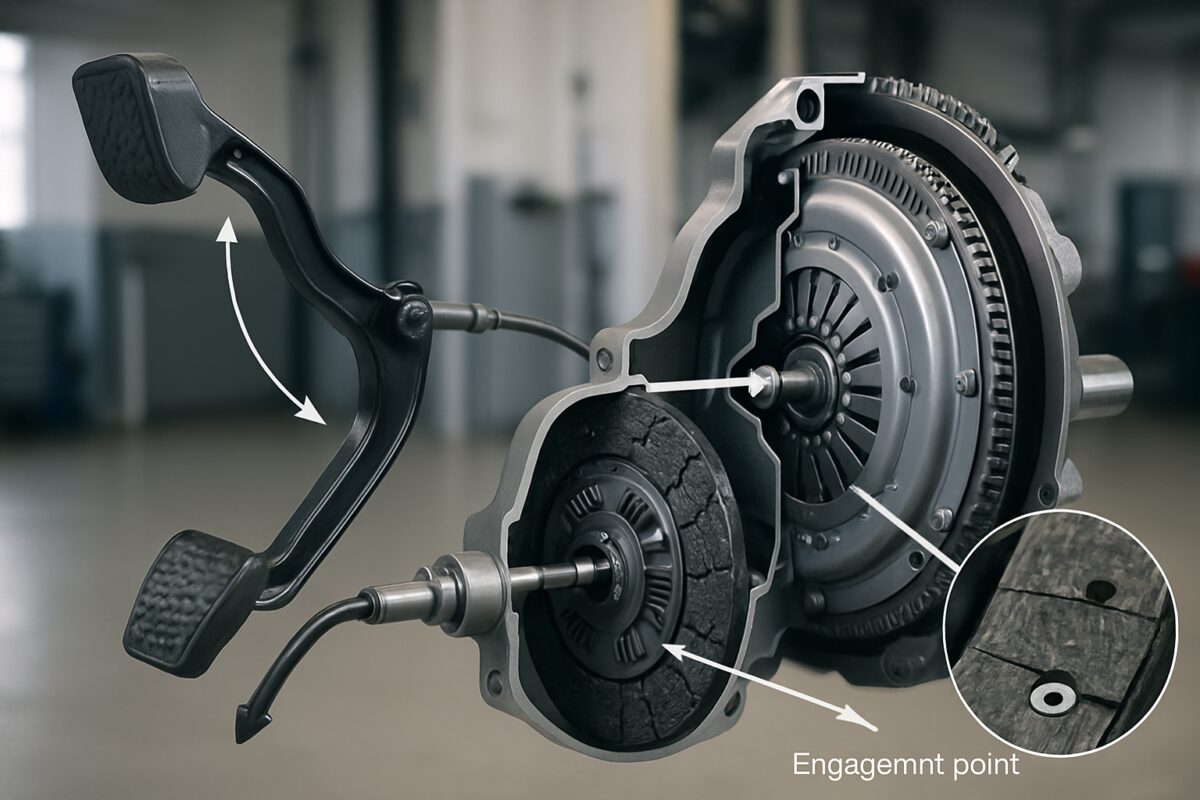
A high clutch biting point means your clutch engages when the pedal is released only a small distance from the top, rather than halfway through its travel. This condition indicates wear in the clutch system, typically requiring adjustment of the clutch cable or hydraulic system to restore proper operation. The biting point should normally occur around the middle of the pedal’s travel range for optimal control and component longevity.
Understanding your vehicle’s clutch operation is essential for maintaining smooth gear changes and preventing costly repairs. When mechanics at AutoPartsPro examine vehicles with clutch concerns, we frequently encounter drivers who’ve adapted to a gradually changing biting point without realising the underlying issues developing.
What does a high clutch biting point mean?
The clutch biting point refers to the specific position where the clutch plates begin to engage as you release the pedal. In a properly functioning system, this engagement should occur roughly halfway through the pedal’s upward travel.
A high biting point indicates that the clutch engages very close to the top of the pedal travel, meaning you have minimal control over the engagement process. This condition makes smooth starts and gear changes significantly more challenging.
Several factors contribute to a high biting point:
- Worn clutch friction material reducing plate thickness
- Stretched or improperly adjusted clutch cable
- Hydraulic system issues affecting fluid pressure
- Pressure plate wear reducing clamping force
- Release bearing problems affecting disengagement
Common symptoms of a high clutch biting point
Recognising the early warning signs allows for timely intervention before complete clutch failure occurs. Our AutoPartsPro technicians have identified several key symptoms that consistently appear in vehicles with high biting points.
The most obvious symptom involves the pedal feel itself. Instead of engaging smoothly partway through the travel, the clutch ‘grabs’ immediately as you begin lifting your foot. This creates a jerky, uncomfortable driving experience.
Additional symptoms include:
- Difficulty controlling vehicle speed during hill starts
- Juddering or shaking when pulling away
- Increased engine revs needed for smooth engagement
- Grinding noises when changing gear
- Burning smell from excessive clutch slip
Causes behind high clutch biting points
Understanding the root causes helps determine whether adjustment or replacement is necessary. The clutch system comprises several interconnected components, each potentially contributing to biting point changes.
Clutch disc wear
The friction material on the clutch plate gradually wears during normal operation. As this material reduces in thickness, the pressure plate moves closer to the flywheel, effectively shortening the engagement distance.
This wear is inevitable but accelerated by poor driving habits such as riding the clutch or aggressive starts. Quality replacement discs from reputable manufacturers typically last 60,000-100,000 miles under normal conditions.
Cable adjustment issues
Mechanical clutch systems rely on cable tension for proper operation. Over time, cables stretch or adjustment mechanisms wear, altering the relationship between pedal position and clutch engagement.
Regular adjustment maintains optimal pedal feel and prevents premature wear of other components. Most vehicles with cable-operated clutches require adjustment every 12-15,000 miles.
Hydraulic system problems
Modern vehicles typically use hydraulic clutch operation for smoother feel and reduced maintenance. However, air in the system, worn seals, or fluid leaks can affect the biting point significantly.
The master cylinder and slave cylinder work together to transfer pedal movement to clutch disengagement. When either component develops internal leaks, the effective stroke reduces, raising the biting point.
Adjustment methods for different clutch types
The adjustment procedure varies considerably between mechanical and hydraulic systems. Each requires specific techniques and tools for proper results.
| System Type | Adjustment Method | Tools Required | Difficulty Level |
|---|---|---|---|
| Cable-operated | Adjust cable tension at pedal or gearbox | Spanners, feeler gauges | Moderate |
| Hydraulic | Bleed air, check fluid level | Bleeding kit, brake fluid | Advanced |
| Self-adjusting | Check mechanism operation | Basic hand tools | Simple |
| Concentric slave | System bleeding, component replacement | Specialist tools | Professional |
Cable clutch adjustment process
Cable-operated systems offer the most straightforward adjustment procedure. The process typically involves locating the adjustment mechanism, either at the pedal end or near the gearbox, and altering cable tension.
Most systems feature a threaded adjuster with a locknut. Loosening the locknut allows rotation of the adjuster to increase or decrease cable tension. The goal is achieving approximately 15-25mm of free play at the pedal before resistance is felt.
Always check your vehicle’s service manual for specific adjustment procedures, as some manufacturers use unique mechanisms or require special tools for proper adjustment.
Hydraulic system maintenance
Hydraulic clutches require different maintenance approaches. The primary adjustment involves ensuring the system contains adequate brake fluid and remains free of air bubbles.
Bleeding the hydraulic system removes air that can cause spongy pedal feel and inconsistent biting points. This process requires methodical approach, starting from the highest point and working downward.
When adjustment isn’t enough
Sometimes, adjustment cannot restore proper clutch operation. Several indicators suggest complete clutch kit replacement is necessary rather than simple adjustment.
These situations typically involve:
- Excessive clutch disc wear beyond serviceable limits
- Pressure plate spring fatigue reducing clamping force
- Release bearing failure causing noise and poor disengagement
- Flywheel surface damage requiring machining or replacement
- Hydraulic component failure with internal seal damage
Our AutoPartsPro specialists recommend comprehensive inspection when adjustment fails to resolve high biting point issues. This examination identifies all worn components and prevents repeat failures.
Impact on vehicle performance and safety
A high clutch biting point affects more than just driving comfort. The condition can significantly impact vehicle safety and performance, particularly in challenging driving conditions.
Hill starts become particularly problematic with insufficient pedal control. The narrow engagement window makes it difficult to balance throttle and clutch inputs, often resulting in stalling or excessive wheel spin.
Traffic situations requiring precise speed control suffer similarly. The abrupt engagement characteristic prevents smooth modulation needed for parking manoeuvres or slow-speed driving.
Effects on other components
Compensating for poor clutch control often leads to increased wear on related components. Drivers may over-rev the engine to prevent stalling, causing additional stress on the drivetrain.
The engine mount system experiences higher loads from jerky starts, potentially leading to premature failure. Similarly, transmission synchronisers work harder when gear changes aren’t properly coordinated.
| Affected Component | Type of Wear | Typical Lifespan Reduction | Replacement Cost Range |
|---|---|---|---|
| Engine mounts | Fatigue from excessive movement | 30-40% | £80-£200 per mount |
| Transmission synchros | Increased friction from poor shifts | 25-35% | £400-£800 repair |
| Driveshaft joints | Shock loading from harsh engagement | 20-30% | £150-£300 per side |
Professional diagnosis and repair options
While basic adjustments can often be performed by competent DIY mechanics, complex issues require professional diagnosis. Modern vehicles incorporate sophisticated clutch systems that demand specialist knowledge and equipment.
Professional diagnostic procedures include comprehensive testing of all system components. This approach identifies the root cause rather than treating symptoms, ensuring lasting repairs.
Technicians use various diagnostic tools:
- Pressure testing equipment for hydraulic systems
- Cable tension measurement devices
- Pedal travel and force measurement tools
- Visual inspection of wear patterns
- Test drives under controlled conditions
Repair cost considerations
Repair costs vary significantly depending on the underlying cause and chosen solution. Simple cable adjustments cost considerably less than complete clutch replacement, but proper diagnosis prevents unnecessary work.
Early intervention typically reduces overall costs. Addressing a high biting point promptly prevents damage to other drivetrain components, avoiding expensive secondary repairs.
Prevention and maintenance strategies
Preventing high biting point development requires understanding proper clutch operation and implementing good driving practices. Regular maintenance intervals help identify developing problems before they become serious.
Effective prevention strategies include:
- Avoiding riding the clutch pedal during normal driving
- Using handbrake for hill starts rather than clutch control
- Regular inspection of cable condition and adjustment
- Hydraulic fluid level checks during routine servicing
- Professional assessment at first sign of changes
Many drivers unknowingly contribute to premature clutch wear through poor technique. Resting the foot on the pedal, even lightly, maintains pressure on the release bearing and reduces component life.
Similarly, using clutch slip to control speed on hills rather than proper throttle and brake coordination accelerates friction material wear. These habits, while seeming minor, significantly impact clutch longevity.
Understanding replacement intervals
Clutch component lifespan varies enormously based on driving conditions and technique. City driving with frequent stops typically reduces clutch life compared to motorway use.
Average replacement intervals provide useful guidance for maintenance planning. However, individual driving patterns and conditions significantly influence actual component life.
Factors affecting clutch longevity include:
- Traffic conditions and stop-start frequency
- Hill climbing requirements
- Vehicle loading patterns
- Driver technique and experience
- Component quality and specification
Quality components from established manufacturers typically offer superior durability and performance. While initial costs may be higher, the extended service life often provides better value over the vehicle’s lifetime.
When you notice your clutch biting point becoming higher, prompt attention prevents more serious problems developing. Whether through simple adjustment or component replacement, addressing the issue maintains your vehicle’s performance, safety, and reliability. Regular maintenance and proper driving technique extend clutch life significantly, reducing long-term ownership costs while ensuring consistent operation.
Frequently Asked Questions (FAQ)
What causes a clutch to have a high biting point?
A high biting point typically results from worn clutch disc friction material, stretched cables, or hydraulic system issues. As components wear, the engagement point moves higher up the pedal travel.
Can you adjust a high clutch biting point yourself?
Cable-operated systems often allow DIY adjustment using basic tools. Hydraulic systems require bleeding procedures that need more experience. Check your vehicle’s manual for specific procedures.
How long can you drive with a high clutch biting point?
While not immediately dangerous, continuing to drive risks complete clutch failure and potential damage to other drivetrain components. Address the issue promptly for safety and cost reasons.
Does a high biting point always mean clutch replacement?
Not necessarily. Simple cable adjustment or hydraulic system bleeding may resolve the issue. However, severely worn friction material requires complete clutch replacement.
What’s the normal position for clutch engagement?
The clutch should typically engage around the middle of the pedal travel, providing good control over the engagement process. This allows smooth starts and precise speed control.

 Loading...