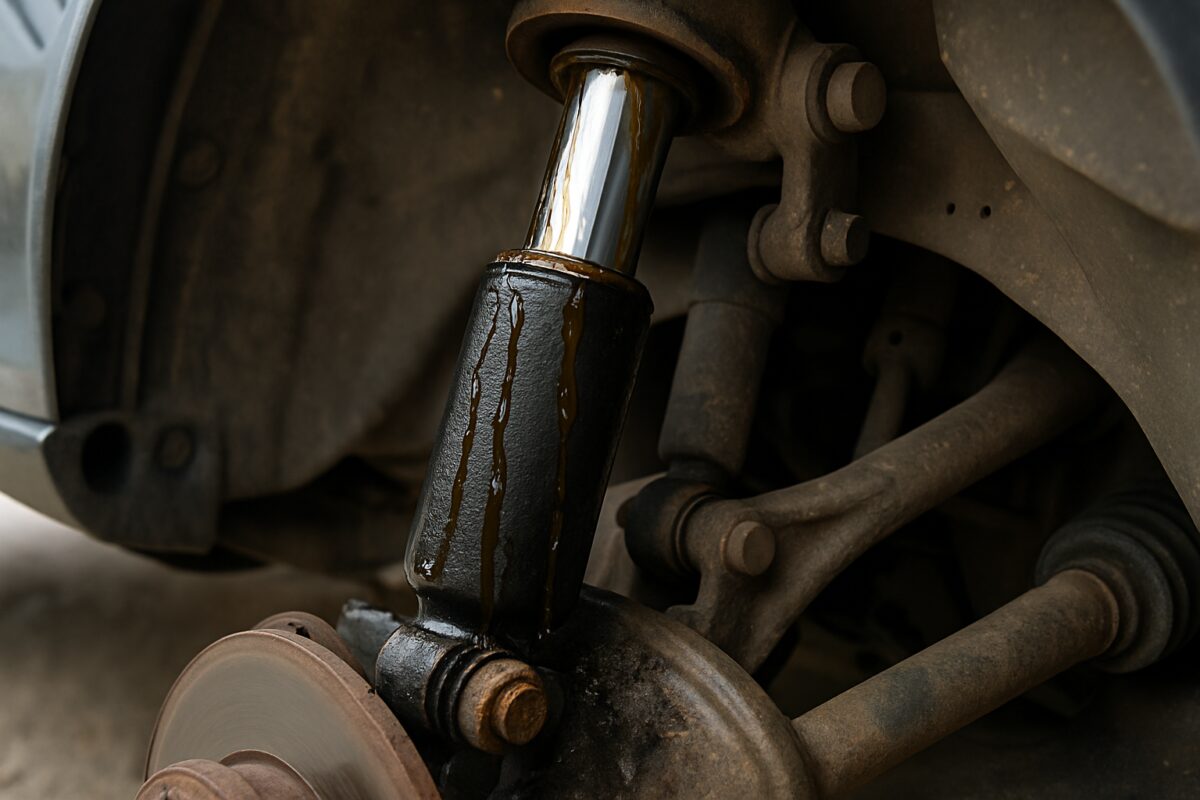
A leaking shock absorber compromises your vehicle’s handling, safety, and ride comfort. This comprehensive guide helps UK drivers identify symptoms, understand causes, and find effective solutions for shock absorber problems. When hydraulic fluid escapes from these critical suspension components, your car’s stability and braking performance deteriorate significantly.
Worn seals and internal components
The primary cause of shock absorber leaks stems from deteriorated rubber seals within the unit. These seals experience constant pressure changes as the piston moves up and down during normal driving conditions.
Over time, temperature fluctuations and continuous movement cause seal materials to harden and crack. High mileage vehicles particularly suffer from this degradation, as seals lose their flexibility after years of service.
Internal wear also contributes to leakage problems. The piston rod develops microscopic scratches that gradually worsen with use. These surface imperfections create pathways for hydraulic fluid to escape past the seals.
Contaminated fluid accelerates internal damage by introducing abrasive particles into the system. These contaminants act like sandpaper against moving components, causing premature seal failure and internal scoring.
Age-related deterioration affects all shock absorber materials simultaneously. Rubber components become brittle whilst metal parts develop corrosion, creating multiple failure points within the same unit.
External damage and corrosion
Road debris poses a significant threat to shock absorber integrity. Stones, gravel, and other projectiles can chip or puncture the outer cylinder, creating direct leak paths.
Corrosion represents another major cause of external damage. Salt from winter road treatments accelerates rust formation on metal surfaces, particularly around mounting points and cylinder walls.
Impact damage from potholes or kerb strikes can bend or crack shock absorber bodies. Even minor impacts may not cause immediate failure but weaken the structure enough to develop leaks later.
Inadequate protection from road spray allows moisture and salt to accumulate around vulnerable areas. This constant exposure creates an ideal environment for corrosion to take hold.
Manufacturing defects occasionally result in weak points that develop into leaks prematurely. Poor welding or substandard materials may fail well before expected service intervals.
Tip: Regular underbody washing during winter months helps remove salt deposits that accelerate corrosion around suspension components.
Warning signs your car has a problem
Several symptoms indicate shock absorber leakage requiring immediate attention. Visual inspection reveals the most obvious signs of failure.
- Oily residue around shock absorber bodies
- Fluid stains on garage floors after parking
- Excessive bouncing after hitting bumps
- Vehicle nose-diving during braking
- Uneven tyre wear patterns
Performance changes become noticeable as leakage progresses. The vehicle feels less stable in corners and exhibits increased body roll during turns.
Braking distances increase significantly when front shock absorbers leak. The reduced damping allows excessive weight transfer, compromising tyre contact with the road surface.
How to fix the problems
| Problem Type | Solution | Cost Range | Time Required |
|---|---|---|---|
| Minor seal leak | Complete shock absorber replacement | £80-150 per unit | 2-3 hours |
| Internal damage | New shock absorber assembly | £100-200 per unit | 2-4 hours |
| External corrosion | Full replacement with protection spray | £120-180 per unit | 3-5 hours |
Shock absorber repair is generally not economically viable compared to replacement. Internal components require specialised equipment and expertise rarely available outside manufacturer facilities.
Replacement involves removing the old unit and installing a new shock absorber assembly. This process requires proper tools and safety procedures to avoid injury.
Professional installation ensures correct torque specifications and alignment. Improper installation can cause premature failure or safety hazards during driving.
| Maintenance Task | Frequency | Benefits | Cost |
|---|---|---|---|
| Visual inspection | Every 6 months | Early problem detection | Free |
| Professional check | Annual service | Comprehensive assessment | £30-50 |
| Protective coating | Every 2 years | Corrosion prevention | £40-80 |
Tip: Replace shock absorbers in pairs to maintain balanced handling characteristics and prevent uneven wear on other suspension components.
When to see a mechanic
Immediate professional attention is required when visible fluid leakage appears around shock absorber assemblies. Continuing to drive with failed dampers compromises vehicle safety and may cause additional damage.
Schedule inspection within one week if you notice changes in ride quality or handling characteristics. Early intervention prevents more expensive repairs to other suspension springs and components.
Emergency service becomes necessary if the vehicle exhibits severe instability or excessive bouncing. These symptoms indicate complete shock absorber failure requiring immediate replacement.
Professional diagnosis helps identify related problems that may have contributed to premature failure. Experienced mechanics can spot worn bushings, damaged springs, or alignment issues during shock absorber replacement.
Regular MOT testing includes suspension system checks, but annual inspections may not catch problems developing between tests. Don’t wait for the next MOT if symptoms appear.
Frequently asked questions
Can I drive with a leaking shock absorber?
Short distances at reduced speeds are possible, but handling and braking performance are severely compromised. Replace immediately for safety.
How much does shock absorber replacement cost in the UK?
Expect £150-300 per pair including labour. Premium brands and complex installations may cost more than budget alternatives.
Do I need to replace shock absorbers in pairs?
Yes, always replace shock absorbers in axle pairs to maintain balanced handling and prevent uneven tyre wear patterns.
What causes shock absorbers to leak prematurely?
Poor road conditions, contaminated fluid, manufacturing defects, and lack of maintenance accelerate seal deterioration and internal component wear.
How long do replacement shock absorbers typically last?
Quality units should provide 50,000-80,000 miles of service under normal conditions. Harsh driving extends replacement intervals significantly.
Final recommendation
Our AutoPartsPro specialists strongly recommend addressing shock absorber leaks promptly to maintain vehicle safety and prevent costly secondary damage. Quality replacement units from established manufacturers provide reliable performance and longevity.
Professional installation ensures proper fitment and optimal performance. Regular inspection and maintenance help identify problems before they become dangerous or expensive.
Investing in premium shock absorbers pays dividends through improved ride quality, enhanced safety, and longer service life. Don’t compromise on suspension components that directly affect your vehicle’s handling and braking performance. Choose quality parts and professional installation for optimal results.

 Loading...