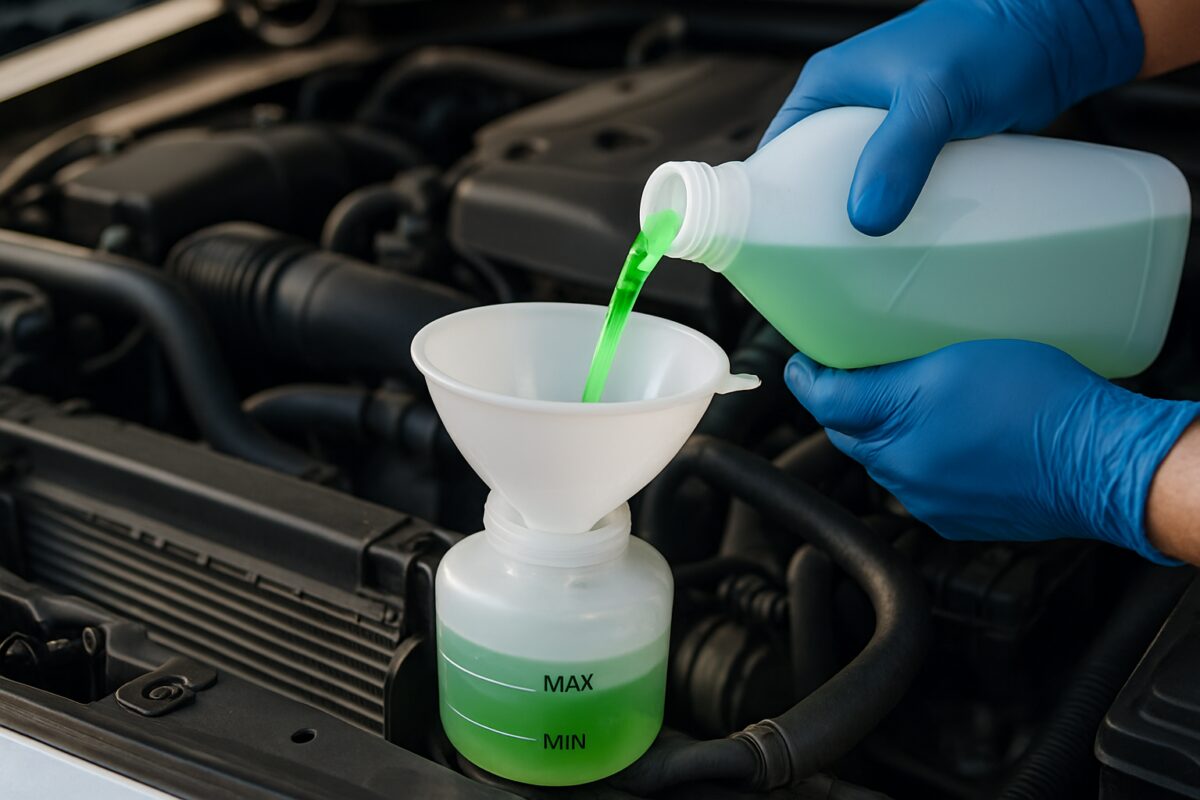
To top up engine coolant, ensure your engine is cool, locate the coolant reservoir (usually a translucent tank marked with minimum and maximum levels), remove the cap, and slowly add the correct coolant mixture until it reaches the maximum line. This simple maintenance task prevents overheating and extends engine life when performed correctly with proper safety precautions.
Tools and parts required
Proper coolant top-up requires specific materials and basic tools. Having everything ready beforehand makes the process smoother and safer.
Parts needed:
- Engine coolant – Pre-mixed or concentrated antifreeze suitable for your vehicle
- Distilled water – If using concentrated coolant
- Funnel – Clean funnel to prevent spills
Tools required:
- Clean cloth or rag – For wiping spills
- Owner’s manual – To verify coolant specifications
- Safety gloves – To protect hands from hot surfaces
- Torch or mobile phone light – For better visibility
Always use the coolant type specified in your owner’s manual. Mixing different coolant types can cause chemical reactions that damage your cooling system.
Safety precautions
Engine coolant systems operate under pressure and reach extremely high temperatures. Following proper safety measures prevents serious injury.
- Never open the coolant cap on a hot engine – Wait at least 30 minutes after driving
- Work in a well-ventilated area – Coolant vapours can be harmful
- Wear safety gloves and eye protection – Coolant is toxic and can cause skin irritation
- Keep pets and children away – Coolant has a sweet taste but is extremely poisonous
- Have a fire extinguisher nearby – As a general workshop safety measure
Check your battery terminals are clean before starting any engine bay work.
Step-by-step instructions
Follow these detailed steps to safely top up your engine coolant. Take your time and don’t rush the process.
Step 1: Prepare your vehicle
Park on level ground and engage the handbrake. Turn off the engine and remove the keys from the ignition. Open the bonnet and locate the coolant reservoir – typically a translucent plastic tank with ‘MIN’ and ‘MAX’ markings.
The expansion tank is usually positioned near the radiator and connected via rubber hoses.
Step 2: Check coolant level and condition
Examine the coolant level against the minimum and maximum markers on the reservoir. The coolant should be between these lines when the engine is cold. Also inspect the coolant colour and clarity – it should be bright and clean, not rusty or murky.
If the coolant appears contaminated, consider a complete system flush rather than simply topping up.
Step 3: Remove the reservoir cap
Carefully remove the expansion tank cap by turning anticlockwise. Some caps require pressing down whilst turning. Place the cap on a clean surface with the seal facing upward to prevent contamination.
Listen for any hissing sounds which indicate residual pressure in the system.
Step 4: Add coolant slowly
Using a clean funnel, slowly pour the coolant mixture into the reservoir. Add small amounts at a time, allowing the coolant to settle between additions. This prevents air bubbles and overfilling.
Fill until the level reaches the maximum marker. Don’t overfill as coolant expands when heated.
Step 5: Replace cap and test
Clean the cap threads and reservoir neck with a damp cloth. Replace the cap and tighten securely but don’t overtighten. Start the engine and let it idle for a few minutes whilst monitoring the temperature gauge.
Check for leaks around the radiator hose connections and reservoir cap.
Professional tip from AutoPartsPro mechanics: Mark the coolant level with a permanent marker after topping up. This helps you monitor consumption and spot potential leaks quickly.
Common mistakes to avoid
Several errors can damage your cooling system or create safety hazards. Understanding these pitfalls helps ensure successful coolant maintenance.
- Opening a hot radiator cap – This can cause severe scalding from pressurised steam
- Using tap water instead of distilled water – Minerals in tap water can cause corrosion and blockages
- Mixing different coolant types – Incompatible coolants can form gel-like substances
- Overfilling the reservoir – Excess coolant will overflow when the engine heats up
- Ignoring coolant colour changes – Discoloured coolant often indicates system problems
- Forgetting to replace the cap properly – Loose caps cause pressure loss and overheating
If you notice frequent coolant loss, inspect your engine radiator for leaks or damage.
When should you top up coolant?
Regular coolant level checks prevent overheating and expensive engine damage. Establishing a routine maintenance schedule keeps your cooling system functioning optimally.
Check coolant levels:
- Monthly during routine maintenance
- Before long journeys
- When the low coolant warning light appears
- If the temperature gauge shows higher than normal readings
- After any cooling system repairs
Warning signs requiring immediate attention:
- Sweet smell from the engine bay
- White smoke from the exhaust
- Coolant puddles under the parked vehicle
- Engine overheating
- Heater producing cold air
Consider checking your radiator thermostat if overheating persists after topping up coolant.
Related maintenance you can do at the same time
While the bonnet is open, perform these complementary checks to maximise your maintenance efficiency and catch potential issues early.
Engine bay inspections:
- Check engine oil level and condition
- Inspect air filter for dirt and debris
- Examine hoses for cracks or bulging
- Test windscreen washer reservoir fluid level
- Look for corrosion on battery terminals
Cooling system maintenance:
- Clean debris from radiator fins
- Check cooling fan operation
- Inspect drive belts for wear
- Test radiator cap pressure (requires special tool)
This comprehensive approach saves time and helps maintain your vehicle’s overall health.
Frequently asked questions
Can I use water instead of coolant in an emergency?
Yes, distilled water can be used temporarily, but proper coolant provides anti-freeze protection and corrosion inhibitors that water lacks.
How often should I completely change the coolant?
Most vehicles require complete coolant changes every 3-5 years or 60,000-100,000 miles, depending on the coolant type used.
What happens if I mix different coolant colours?
Mixing incompatible coolants can create gel-like substances that block cooling passages and damage the system requiring expensive repairs.
Why does my coolant level keep dropping?
Persistent coolant loss indicates leaks in hoses, radiator, water pump, or head gasket requiring professional diagnosis and repair.
Is it normal for coolant levels to fluctuate?
Minor level variations between hot and cold engines are normal, but significant drops indicate leaks or other problems.
Regular coolant maintenance protects your engine from overheating and extends its operational life. Using the correct coolant specifications and following proper procedures ensures optimal cooling system performance. When in doubt about coolant types or system problems, consult your vehicle manual or seek professional advice. Proper maintenance now prevents costly repairs later, making this simple task one of the most valuable investments in your vehicle’s longevity.

 Loading...