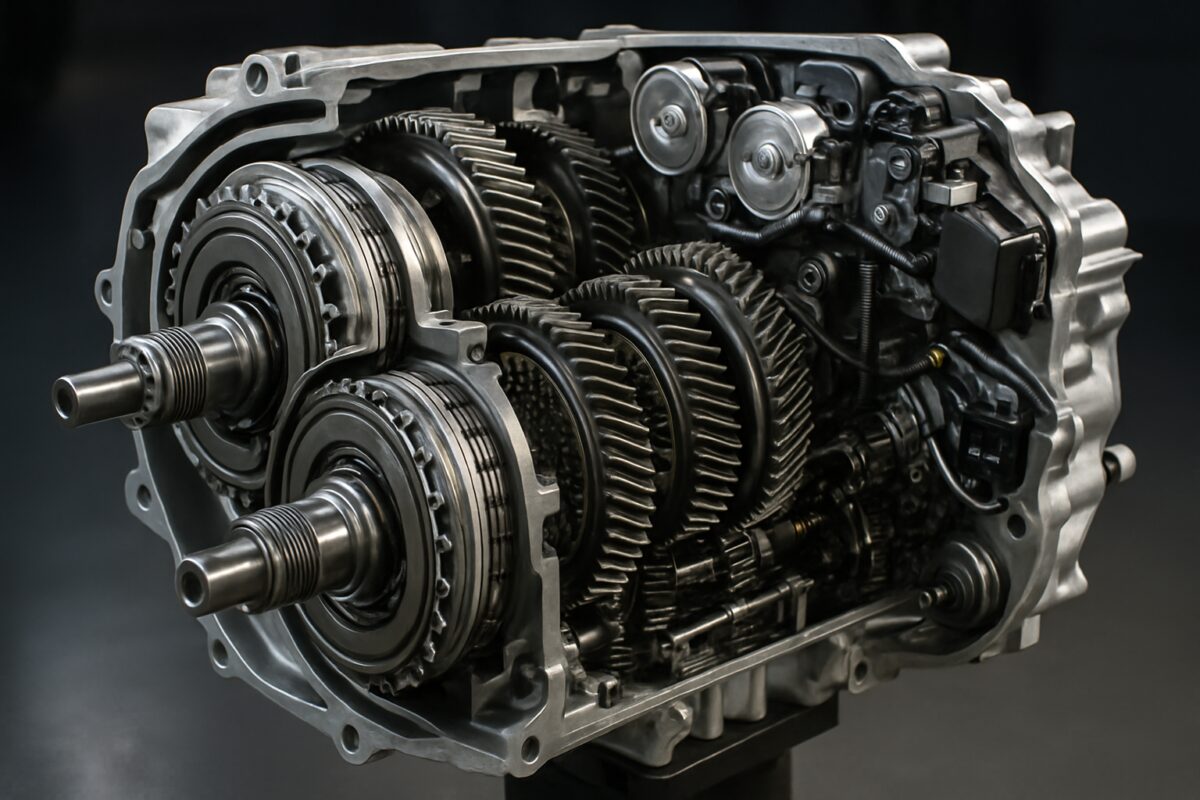
A Double Clutch Transmission (DCT) is an automated manual transmission system that uses two separate clutches for odd and even gear sets, enabling lightning-fast gear changes without power interruption. This dual-clutch technology offers the convenience of an automatic gearbox whilst maintaining the efficiency and performance characteristics of a manual transmission, making it increasingly popular among performance-oriented vehicles and everyday cars alike.
How does a dual-clutch transmission work
The DCT system operates through two independent clutch kits working in perfect harmony. One clutch controls the odd-numbered gears (1st, 3rd, 5th, and reverse), whilst the other manages even-numbered gears (2nd, 4th, and 6th).
When you’re driving in first gear, the second clutch pre-selects second gear. As you accelerate and reach the optimal shift point, the first clutch disengages whilst the second clutch simultaneously engages. This seamless transition happens in milliseconds, creating an uninterrupted power delivery that traditional automatics cannot match.
The control units monitor various parameters including engine speed, throttle position, and vehicle speed to determine the perfect moment for gear changes. Unlike conventional automatics that rely on torque converters, DCTs maintain a direct mechanical connection between engine and wheels.
Major advantages of DCT systems
Double clutch transmissions offer numerous benefits that have made them increasingly attractive to both manufacturers and drivers. These advantages stem from their unique dual-clutch architecture and sophisticated electronic control systems.
The most significant benefit is improved fuel economy. DCTs typically achieve 5-10% better fuel consumption compared to traditional automatics because they eliminate the parasitic losses associated with torque converters. The direct mechanical connection ensures maximum power transfer efficiency.
Performance enthusiasts particularly appreciate the lightning-fast shift times. Premium DCT systems can complete gear changes in as little as 50-100 milliseconds, significantly quicker than any manual driver could achieve. This rapid shifting maintains engine power delivery and provides exhilarating acceleration.
Key performance benefits
- Enhanced acceleration due to uninterrupted power delivery
- Superior fuel efficiency compared to torque converter automatics
- Precise gear selection optimised for driving conditions
- Reduced CO2 emissions through improved combustion efficiency
- Manual override capability for spirited driving
The technology also offers exceptional versatility. Most DCT systems provide multiple driving modes, from eco-friendly settings that prioritise fuel economy to sport modes that deliver aggressive performance. This adaptability makes them suitable for both daily commuting and weekend track sessions.
Operational advantages
- Smooth operation without torque converter shudder
- Consistent performance regardless of driving skill
- Reduced driver fatigue in heavy traffic
- Launch control capabilities in performance applications
- Integration with modern driver assistance systems
Notable disadvantages and limitations
Despite their impressive capabilities, DCT systems aren’t without drawbacks. Understanding these limitations helps drivers make informed decisions about whether this technology suits their needs.
Cost represents the most significant barrier for many consumers. DCT systems are substantially more expensive to manufacture than conventional automatics, and this cost gets passed to buyers. Replacement parts and specialised transmission fluids also command premium prices.
Low-speed behaviour can feel jerky or hesitant, particularly in stop-and-go traffic. The system struggles to provide the smooth creeping ability that torque converter automatics offer when parking or navigating tight spaces. This characteristic requires drivers to adapt their driving style.
Common operational challenges
Many drivers report unusual sensations during operation. The rapid clutch engagement and disengagement can create vibrations or slight jolts that feel unsettling initially. Additionally, the transmission may exhibit delays when transitioning from reverse to drive or vice versa.
Heat management presents another concern. DCT systems generate significant heat during operation, requiring robust cooling systems. Insufficient cooling can lead to reduced performance or even temporary shutdown in extreme conditions. This issue particularly affects vehicles used for towing or frequent stop-and-go driving.
The learning curve for DCT operation shouldn’t be underestimated. Drivers accustomed to traditional automatics often need time to understand the system’s behaviour patterns and optimise their driving technique accordingly.
Common DCT problems and failures
While DCT technology has matured significantly, several recurring issues continue to plague these transmissions. Understanding these problems helps owners recognise early warning signs and take preventive action.
Clutch wear represents the most frequent DCT problem. Unlike traditional manual transmissions where drivers control clutch engagement, DCT systems constantly engage and disengage clutches automatically. This continuous operation accelerates wear, particularly in city driving conditions with frequent stops.
Mechanical failure patterns
Mechatronic unit failures constitute another common issue. This integrated component combines hydraulic and electronic controls, making it both sophisticated and vulnerable. When mechatronic units fail, symptoms include erratic shifting, loss of specific gears, or complete transmission shutdown.
Hydraulic system problems frequently develop due to contaminated fluid or component degradation. The high-pressure hydraulic system requires precise operation, and even minor leaks can compromise performance. Regular fluid changes using manufacturer-specified gear oil help prevent these issues.
Maintenance-related problems
Software calibration issues can create various symptoms including harsh shifting, delayed engagement, or inappropriate gear selection. Manufacturers regularly release updates to address these problems, but many owners remain unaware of available improvements.
Temperature-related failures often occur in high-stress conditions. Inadequate cooling or blocked air passages can cause the transmission to overheat, triggering protective shutdowns or permanent damage. Monitoring coolant levels and ensuring proper airflow helps prevent these problems.
Professional tip from Autopartspro mechanics: Always warm up your DCT-equipped vehicle for 2-3 minutes before driving, especially in cold weather. This allows the hydraulic fluid to reach optimal operating temperature and reduces clutch wear during initial engagement.
DCT vs other transmission types
Understanding how DCTs compare to alternative transmission technologies helps buyers make informed decisions based on their specific needs and preferences.
| Feature | DCT | Traditional Auto | CVT | Manual |
|---|---|---|---|---|
| Fuel Economy | Excellent | Good | Very Good | Excellent |
| Shift Speed | Very Fast | Moderate | Seamless | Driver Dependent |
| Purchase Cost | High | Moderate | Moderate | Low |
| Maintenance Cost | High | Moderate | Low | Low |
| Driver Engagement | Good | Low | Very Low | Excellent |
Traditional automatics with torque converters offer superior low-speed smoothness and proven reliability. However, they sacrifice some fuel economy and performance compared to DCTs. The torque converter’s fluid coupling creates more comfortable operation but introduces efficiency losses.
Continuously Variable Transmissions (CVTs) excel in fuel economy but lack the engaging driving experience that DCTs provide. CVTs maintain optimal engine RPM for efficiency but can feel disconnected and monotonous during spirited driving.
Maintenance requirements and costs
Proper maintenance is crucial for DCT longevity and performance. These sophisticated systems require more attention than traditional automatics but reward diligent care with reliable operation.
Fluid changes represent the most critical maintenance task. DCT systems require specific fluid types that cost significantly more than conventional engine oil or basic transmission fluids. Most manufacturers recommend changes every 40,000-60,000 miles, though severe conditions may require more frequent service.
| Maintenance Item | Interval (Miles) | Estimated Cost (£) | Importance |
|---|---|---|---|
| Fluid Change | 40,000-60,000 | 200-400 | Critical |
| Filter Replacement | 80,000-100,000 | 150-300 | High |
| Software Updates | As Available | 50-150 | Moderate |
| Clutch Replacement | 100,000-150,000 | 2,000-4,000 | Major Service |
Professional diagnostics become increasingly important with DCT systems. Unlike simpler transmissions, DCTs require specialised equipment and training for proper service. Regular diagnostic scans can identify developing problems before they become expensive failures.
Driving habits significantly impact maintenance costs. Gentle acceleration, avoiding excessive heat buildup, and allowing proper warm-up periods extend component life. Aggressive driving or frequent towing accelerates wear and increases service requirements.
Popular DCT implementations
Several manufacturers have developed their own DCT variants, each with unique characteristics and applications. Understanding these different approaches helps buyers identify systems that match their preferences.
Volkswagen Group’s DSG (Direct-Shift Gearbox) technology pioneered mainstream DCT adoption. Available in both dry and wet clutch variants, DSG systems power everything from compact cars to high-performance models. The wet-clutch versions handle higher torque loads but require more maintenance.
Notable manufacturer implementations
- Porsche PDK: Premium dual-clutch system offering exceptional performance and refinement in sports cars
- BMW DCT: High-performance variant used in M-series vehicles with track-focused calibrations
- Ford PowerShift: Mass-market implementation designed for fuel economy and affordability
- Mercedes AMG Speedshift DCT: Racing-derived technology for ultimate performance applications
- Hyundai N DCT: Latest-generation system balancing performance with daily usability
Each implementation reflects different priorities and target markets. Performance-focused systems prioritise shift speed and driver engagement, whilst economy-oriented variants emphasise fuel consumption and cost-effectiveness.
Technology evolution trends
- Hybrid integration: DCTs increasingly pair with electric motors for enhanced efficiency
- Improved low-speed behaviour: Software advances address traditional DCT weaknesses
- Extended maintenance intervals: Better materials and lubricants reduce service frequency
- Enhanced connectivity: Integration with vehicle systems and smartphone apps
- Predictive algorithms: AI-driven shift strategies adapt to driving patterns and conditions
Is DCT technology right for you
Choosing a DCT-equipped vehicle requires careful consideration of personal priorities, driving habits, and budget constraints. This technology suits specific driver profiles better than others.
Performance enthusiasts typically appreciate DCT benefits most. The rapid shifts, direct connection, and manual override capabilities appeal to drivers who enjoy spirited driving. Those who frequently drive on winding roads or track days will find DCTs particularly rewarding.
Urban commuters might struggle with DCT characteristics. The jerky low-speed behaviour and higher maintenance costs may outweigh the performance benefits for city-focused driving. However, highway commuters often enjoy the efficiency and refinement that DCTs provide.
Budget-conscious buyers should carefully evaluate long-term costs. Whilst DCTs offer fuel savings, the higher purchase price and premium maintenance requirements may never be recovered through reduced fuel consumption. Consider your typical ownership duration when making this calculation.
Technology adoption timeline also matters. Early DCT implementations suffered from various teething problems, but current systems demonstrate much greater reliability and refinement. Newer DCT vehicles benefit from years of development and problem resolution.
DCT technology represents a compelling compromise between manual engagement and automatic convenience. When properly maintained and suited to appropriate driving conditions, these transmissions deliver exceptional performance and efficiency. However, they require informed ownership and realistic expectations about their operational characteristics. Consider your driving patterns, maintenance preferences, and performance priorities before committing to this sophisticated but demanding technology. Whether upgrading brake pads or major transmission components, professional installation ensures optimal performance and longevity.
Frequently Asked Questions (FAQ)
How long does a DCT transmission typically last?
With proper maintenance, DCT transmissions typically last 150,000-200,000 miles. However, clutch components may require replacement around 100,000-120,000 miles depending on driving conditions and habits.
Can you drive a DCT like a normal automatic?
Yes, DCTs operate like automatics in drive mode, shifting gears automatically. However, they feel different during low-speed manoeuvres and may exhibit slight hesitation or jerkiness compared to torque converter automatics.
Why does my DCT jerk at low speeds?
DCT systems use clutches instead of torque converters, creating direct mechanical connection. At low speeds, rapid clutch engagement can feel jerky, especially during parking or stop-and-go traffic situations.
Is DCT maintenance more expensive than regular automatic?
Yes, DCT maintenance costs significantly more due to specialised fluids, complex components, and required diagnostic equipment. Expect 50-100% higher maintenance costs compared to conventional automatics throughout ownership.
Can DCT handle heavy towing applications?
Most DCT systems aren’t designed for heavy towing. The constant clutch engagement required for towing generates excessive heat and accelerates wear. Check manufacturer specifications before towing with DCT vehicles.

 Loading...