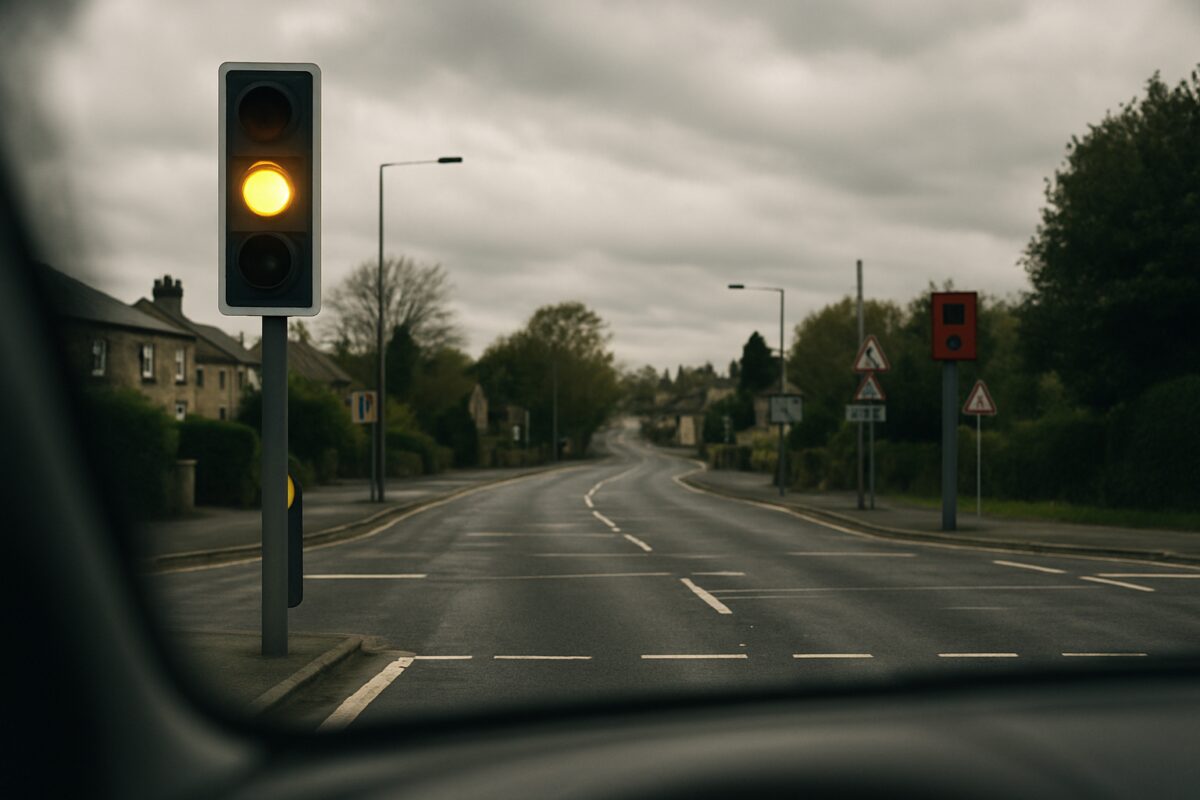
Going through an amber light that turns red whilst you’re in the junction can result in a £100 fine and three penalty points on your licence under the Road Traffic Act. However, if you’ve already committed to crossing when the amber light appeared and couldn’t safely stop, you’re generally not breaking the law. The key factor is whether you could have reasonably stopped before the stop line when the amber signal first appeared.
Traffic light violations are amongst the most common driving offences in the UK, yet many motorists remain unclear about their legal obligations when approaching amber signals. Understanding the precise rules can save you from unnecessary penalties and help maintain road safety for all users.
Legal implications of amber light violations
The amber traffic light serves as a warning that the red signal is imminent. According to the Highway Code Rule 178, you must stop at an amber light unless you’ve already crossed the stop line or stopping would cause an accident. This rule forms the basis of most prosecutions for traffic light offences.
When caught on camera or by police going through a red light, you’ll typically receive a Notice of Intended Prosecution within 14 days. The standard penalty includes:
- Fixed penalty notice of £100
- Three points added to your driving licence
- Possible court appearance for serious cases
- Higher fines up to £1,000 if contested in court
Our experienced mechanics at AutoPartsPro often see vehicles brought in after accidents caused by sudden braking at amber lights. The damage to brake pads and suspension components can be significant when drivers panic-stop.
How traffic light cameras detect violations
Modern traffic enforcement cameras use sophisticated sensor technology to determine violations. These systems typically employ induction loops buried in the road surface that detect when vehicles cross the stop line after the light has turned red.
The camera system works in stages:
- Sensors detect your vehicle approaching the junction
- The system monitors the traffic light status
- If you cross the stop line after the red light activates, cameras capture evidence
- The footage is reviewed before issuing penalties
What many drivers don’t realise is that these systems often have built-in tolerance periods. Most cameras allow a brief grace period after the light changes to red, acknowledging that some vehicles may already be committed to crossing.
The amber light dilemma zone
Traffic engineers recognise the existence of a ‘dilemma zone’ at traffic lights. This is the area where drivers approaching an amber light face difficulty deciding whether to stop or proceed safely. The zone typically exists between 60-150 metres from the stop line, depending on approach speed and road conditions.
Several factors influence your decision-making in this critical zone:
- Vehicle speed and braking capability
- Road surface conditions and weather
- Following distance of vehicles behind
- Junction width and crossing time required
According to our AutoPartsPro specialists, worn brake rotors and degraded brake components significantly increase stopping distances, making the dilemma zone more dangerous for drivers.
Defences against red light charges
Successfully challenging a red light violation requires understanding the legal defences available. The most common successful defences include proving that stopping would have been more dangerous than proceeding, or demonstrating that the traffic light timing was inappropriate.
Valid defences typically fall into these categories:
| Defence Type | Requirements | Success Rate |
|---|---|---|
| Emergency stopping would cause accident | Evidence of following traffic, road conditions | Moderate |
| Defective traffic light timing | Technical evidence of signal malfunction | Low |
| Emergency vehicle passage | Proof of emergency services requirement | High |
| Avoiding pedestrian/cyclist | Witness statements or video evidence | Moderate |
Remember that the burden of proof lies with you to demonstrate why proceeding through the amber/red light was the safer option. Simply claiming you couldn’t stop in time rarely succeeds without supporting evidence.
Impact of penalty points and insurance
Three penalty points for a traffic light violation might seem minor, but the consequences extend beyond the immediate fine. Insurance companies view these points as indicators of risky driving behaviour, often resulting in premium increases at renewal.
The accumulation of points can lead to more serious consequences:
- 6 points within two years for new drivers results in licence revocation
- 12 points within three years triggers a driving ban
- Multiple violations may indicate a pattern of dangerous driving
- Some employers require clean licences, affecting job prospects
Our AutoPartsPro team regularly advises customers that maintaining their vehicle’s braking system isn’t just about safety—it’s about avoiding legal troubles. Properly functioning brake calipers and fresh brake fluid ensure you can stop confidently when required.
Vehicle maintenance and stopping performance
Your ability to stop safely at amber lights depends heavily on your vehicle’s mechanical condition. Worn braking components, degraded tyres, or suspension problems can turn a routine traffic light approach into a legal nightmare.
Critical components affecting stopping performance include:
| Component | Impact on Stopping | Recommended Inspection Frequency |
|---|---|---|
| Brake pads/shoes | Direct braking force application | Every 6 months |
| Brake discs/drums | Heat dissipation and friction surface | Annual inspection |
| Brake fluid | Hydraulic pressure transmission | Every 2 years |
| Tyres | Road grip and stopping traction | Monthly visual check |
Modern vehicles often feature advanced braking systems including ABS, which prevents wheel locking during emergency stops. However, these systems require properly maintained components to function effectively. Faulty ABS sensors can compromise your vehicle’s emergency stopping capabilities.
Best practices for amber light situations
Developing good habits when approaching traffic lights reduces your risk of violations and improves overall road safety. Professional driving instructors recommend adopting a defensive approach that prioritises safety over speed.
As you approach traffic lights, consider these tactical approaches. Maintain appropriate following distances to avoid pressure from vehicles behind. Scan ahead for signal timing patterns—many lights follow predictable sequences. Keep your vehicle properly maintained to ensure reliable stopping performance.
Weather conditions significantly affect your decision-making timeframes. Wet roads increase stopping distances by up to 50%, whilst icy conditions can multiply stopping requirements by several times. Our AutoPartsPro specialists often remind customers that shock absorbers play a crucial role in maintaining tyre contact during braking.
Understanding speed and stopping distances
The relationship between approach speed and stopping distance is exponential, not linear. This means small increases in speed create disproportionately longer stopping requirements, making amber light decisions more critical at higher velocities.
At 30 mph, total stopping distance in good conditions is approximately 75 feet. At 40 mph, this increases to 120 feet. These calculations assume optimal brake performance, dry roads, and alert driver reactions. Poor brake maintenance or adverse weather conditions can double these distances.
Tip: Test your brakes regularly in safe conditions to understand your vehicle’s stopping capabilities. This knowledge proves invaluable when making split-second decisions at amber lights.
Technology and future developments
Advanced driver assistance systems are beginning to address amber light dilemmas through technology. Some modern vehicles feature traffic light recognition systems that alert drivers to changing signals, whilst others incorporate predictive braking that prepares the system for potential stops.
Connected vehicle technology promises further improvements. Future systems may communicate directly with traffic infrastructure, providing drivers with precise timing information and optimal approach speeds for smooth traffic flow.
Meanwhile, ensuring your current vehicle’s safety systems function properly remains essential. Components like the brake light switch ensure following drivers receive adequate warning of your intentions, whilst properly adjusted headlamps help you see traffic signals clearly in all conditions.
Insurance and legal considerations
Beyond immediate penalties, traffic light violations can affect insurance claims and civil liability. If proceeding through an amber/red light results in an accident, insurance companies scrutinise the circumstances carefully. They may reduce payouts or reject claims entirely if they determine the violation contributed to the incident.
Legal liability extends beyond insurance considerations. Victims of accidents caused by red light violations may pursue civil claims for damages, medical expenses, and compensation. These cases often result in significantly higher costs than the original traffic fine.
Some drivers consider dash cameras as protection against false accusations, but these devices can equally provide evidence against you if they capture a clear violation. The key is driving within the law consistently, rather than relying on technology to defend questionable decisions.
Commercial drivers and enhanced penalties
Professional drivers face additional consequences for traffic light violations. Many employers maintain strict policies regarding penalty points, with some requiring immediate dismissal for certain traffic offences. Commercial vehicle operators may also face regulatory scrutiny from transport authorities.
Fleet managers often implement telematics systems that monitor driver behaviour, including harsh braking events that might indicate amber light panic stops. These systems help identify drivers who need additional training whilst potentially providing evidence in legal proceedings.
Regular vehicle maintenance becomes even more critical for commercial operators. Fleet vehicles endure higher usage levels, making components like brake servos and master cylinders more susceptible to failure. Our AutoPartsPro commercial team regularly advises fleet operators on preventive maintenance schedules that reduce breakdown risks and legal exposure.
Understanding your legal obligations when approaching amber traffic lights protects both your licence and your wallet. The key lies in maintaining situational awareness, keeping your vehicle properly serviced, and making safety-focused decisions rather than rushing to save a few seconds. Remember that the amber light exists to provide warning time—use it wisely to make the safest choice for the circumstances you face.
Frequently Asked Questions (FAQ)
Can I be prosecuted if I enter on amber and exit on red?
Generally no, provided you entered the junction legally on amber. The offence occurs when crossing the stop line after red activation.
How long is the amber phase at UK traffic lights?
Typically 3-5 seconds, calculated based on approach speed limits. Higher speed roads have longer amber phases for safe stopping.
Do I get points for amber light violations?
Amber light violations usually result in red light running charges, carrying three penalty points and £100 fine as standard penalty.
Can poor weather conditions affect red light prosecutions?
Weather conditions may provide mitigation if stopping would have been dangerous, but this requires evidence and legal representation to argue successfully.
How accurate are traffic light cameras at detecting violations?
Modern systems are highly accurate, using multiple sensors and cameras. False positives are rare, but technical defects can occasionally occur.

 Loading...