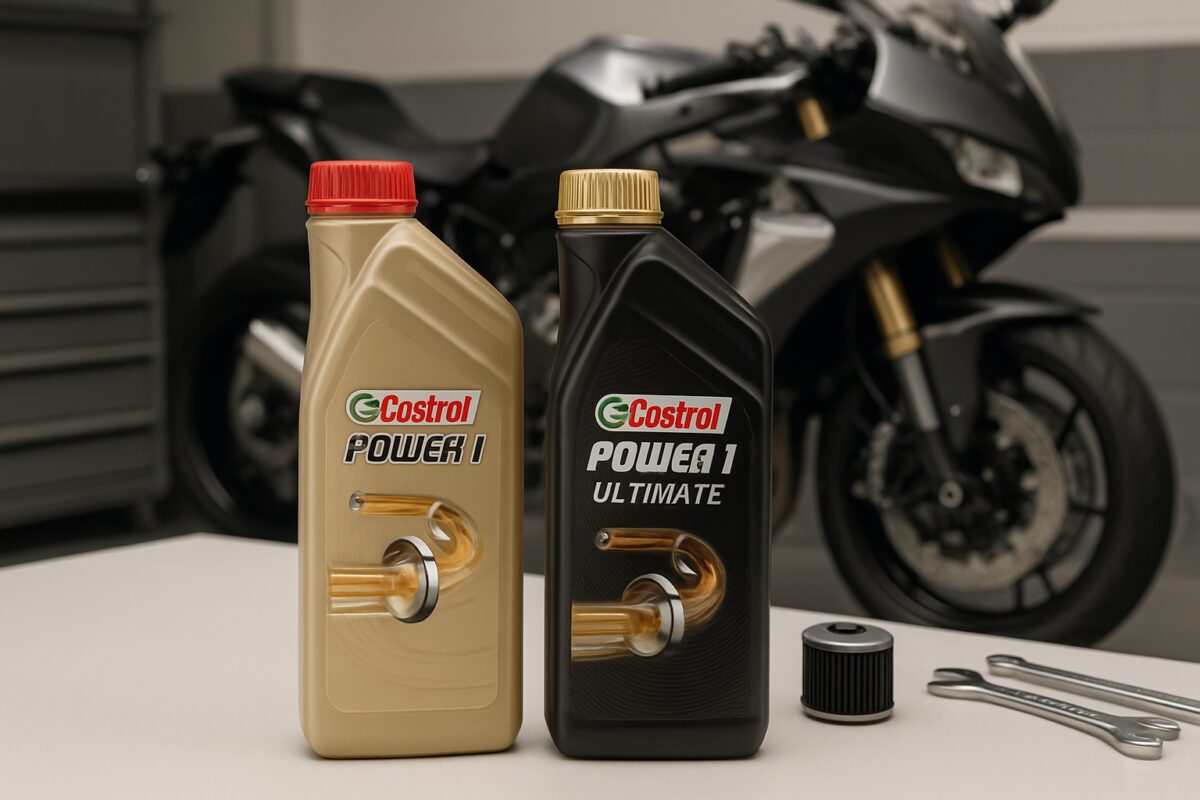
When choosing between Castrol Power 1 vs Castrol Power 1 Ultimate, the main difference lies in performance level and additive technology. Castrol Power 1 is a semi-synthetic motorcycle oil suitable for standard commuting and recreational riding, whilst Power 1 Ultimate is a fully synthetic formula engineered for high-performance bikes and aggressive riding conditions. Power 1 Ultimate offers superior thermal stability, better engine protection at extreme temperatures, and longer oil change intervals. For everyday riders covering moderate miles, Power 1 provides adequate protection at a lower cost. However, if you own a sports bike, ride hard, or want maximum engine longevity, Power 1 Ultimate delivers noticeably better performance despite the higher price tag.
Quick comparison table
To help you make an informed decision quickly, here’s a side-by-side breakdown of both lubricants:
| Feature | Castrol Power 1 | Castrol Power 1 Ultimate |
|---|---|---|
| Base Oil Type | Semi-synthetic | Fully synthetic |
| Price Range | £25-35 per 4 litres | £45-60 per 4 litres |
| Performance Level | JASO MA2, API SL | JASO MA2, API SN Plus |
| Change Interval | 3,000-5,000 miles | 5,000-7,000 miles |
| High-Temp Protection | Good | Excellent |
| Engine Noise | Moderate reduction | Significant reduction |
| Best Use Case | Commuting, touring bikes | Sports bikes, track days |
Product #1 overview: Castrol Power 1
Castrol Power 1 represents the brand’s semi-synthetic offering in their motorcycle lubricant range. This formulation blends mineral base oils with synthetic components to deliver balanced performance for everyday motorcyclists. The oil works by creating a protective film between moving metal surfaces within your engine, reducing friction and wear whilst dissipating heat effectively.
The manufacturing process combines high-quality mineral oils with carefully selected synthetic additives. These include detergents to keep internal components clean, dispersants to suspend contaminants, and anti-wear agents that protect critical engine parts. The viscosity modifiers ensure the oil maintains proper thickness across varying temperature ranges, from cold starts to operating temperature.
Pricing typically sits between £25 and £35 for a four-litre container, making it accessible for budget-conscious riders who still want branded quality. This positions Power 1 as a mid-range option that outperforms basic mineral oils without commanding premium pricing.
Pros of Castrol Power 1
- Affordable pricing for regular maintenance schedules
- Suitable for most standard motorcycle engines
- Meets JASO MA2 specification for wet clutch compatibility
- Available in multiple viscosity grades (10W-40, 15W-50)
- Reduces engine deposits compared to mineral oils
- Readily available at most automotive retailers
Cons of Castrol Power 1
- Shorter service intervals than fully synthetic alternatives
- Less effective under extreme riding conditions
- Thermal breakdown occurs faster at sustained high RPM
- Not ideal for modern high-compression engines
- Shear stability lower than full synthetics
Ideal riders for Power 1
This lubricant suits commuters riding standard motorcycles, tourers covering motorway miles, and recreational weekend riders. If you own a bike with moderate performance requirements and follow recommended service schedules, Power 1 provides reliable protection without unnecessary expense. Mechanics at AutoPartsPro often recommend this grade for bikes over five years old with naturally aspirated engines that don’t see track use or aggressive riding.
Our workshop specialists suggest checking your oil filter condition each time you service with semi-synthetic oils, as contaminant accumulation happens faster than with full synthetics.
Product #2 overview: Castrol Power 1 Ultimate
Castrol Power 1 Ultimate represents the pinnacle of the brand’s motorcycle oil technology. As a fully synthetic formulation, it uses laboratory-engineered base stocks rather than refined petroleum products. This fundamental difference allows for molecular-level customisation, creating a lubricant with precisely controlled characteristics.
The synthetic molecules in Ultimate are uniform in size and structure, unlike the varied molecular chains found in mineral-based oils. This consistency delivers superior performance across multiple parameters. The oil maintains viscosity better under stress, resists thermal breakdown at temperatures exceeding 150°C, and flows more readily during cold starts. Advanced friction modifiers reduce parasitic power losses, potentially freeing up a few extra horsepower.
Material composition includes Group IV PAO (polyalphaolefin) synthetic base oils blended with ester compounds. These esters have polar molecules that actually cling to metal surfaces, providing protection even when the engine isn’t running. The additive package includes premium anti-wear compounds, superior detergents, and oxidation inhibitors that extend oil life significantly.
Expect to pay between £45 and £60 for four litres, positioning Ultimate in the premium segment. Whilst initially more expensive, the extended service intervals and superior protection often justify the cost for performance-oriented riders.
Pros of Castrol Power 1 Ultimate
- Maximum protection for high-performance engines
- Extended drain intervals reduce long-term costs
- Exceptional thermal stability prevents breakdown
- Better cold-start flow protects during warm-up
- Reduces friction for potential power gains
- Maintains viscosity under track conditions
- Exceeds API SN Plus specifications
Cons of Castrol Power 1 Ultimate
- Higher upfront cost per service
- Overkill for basic commuter motorcycles
- Not necessary for low-performance engines
- Premium benefits only apparent under demanding use
Ideal riders for Power 1 Ultimate
Ultimate targets owners of sports bikes, superbikes, and modern high-compression engines. Track day enthusiasts, spirited canyon carvers, and riders who demand maximum performance benefit most from this formulation. According to AutoPartsPro’s technical team, riders covering high annual mileage also appreciate the extended service intervals, as the oil maintains protective properties longer. Modern bikes with tight tolerances and sophisticated valve timing systems particularly benefit from Ultimate’s consistent viscosity and superior wear protection.
When servicing high-performance motorcycles, our experts always pair premium synthetic oil with a quality spark plug replacement to ensure optimal combustion efficiency.
Compatibility considerations
Both Castrol Power 1 variants meet JASO MA2 specifications, ensuring compatibility with wet clutch systems found in most motorcycles. This certification confirms the oils won’t cause clutch slippage, a critical consideration that distinguishes motorcycle lubricants from automotive engine oil formulations.
Vehicle compatibility
Power 1 suits older motorcycles, bikes with larger capacity engines running moderate compression ratios, and machines used primarily for commuting or touring. Most Japanese and European bikes manufactured before 2010 run perfectly on this grade. Ultimate proves ideal for contemporary sports bikes from manufacturers like Yamaha, Honda, Kawasaki, Suzuki, BMW, Ducati, and Triumph built after 2010, especially those with inline-four or V-twin configurations producing over 100 bhp.
Model year considerations
For motorcycles built before 2008, Power 1 provides adequate protection assuming you follow manufacturer-recommended service intervals. Models from 2008-2015 benefit from either grade depending on riding style—Ultimate for aggressive riders, Power 1 for conservative use. Bikes manufactured from 2015 onwards, particularly those with variable valve timing, high-compression pistons, or turbocharging, should use Ultimate exclusively to meet the demands placed on modern lubricants.
OEM specifications
Always verify your motorcycle’s handbook recommendations before selecting oil grade. Some manufacturers specify minimum API ratings or proprietary specifications. Power 1 meets API SL standards, suitable for engines designed up to 2010. Ultimate’s API SN Plus rating covers all modern engines and provides backward compatibility with older specifications. Both oils satisfy common OEM requirements including Honda’s MB/MC, Yamaha’s JASO T903, and most European manufacturer standards.
Installation notes
When changing to either oil, ensure you drain the old lubricant whilst the engine is warm for complete removal. Replace the oil filter during each service to maximise the benefits of fresh oil. Torque the sump plug correctly—typically 20-25 Nm for most bikes—and use a new crush washer to prevent leaks. Allow the fresh oil to circulate for 30 seconds before checking the level. If switching from mineral to synthetic, you might notice slightly higher oil consumption during the first 500 miles as residual deposits clean out—this is normal and temporary.
Some riders switching from mineral to Ultimate report improved gearbox smoothness thanks to better friction characteristics. The clutch kit components typically respond well to quality synthetic lubricants, though always monitor clutch feel after any oil change.
Performance differences in real-world conditions
The performance gap between these lubricants becomes apparent under specific circumstances. During summer motorway riding at sustained speeds, both oils maintain adequate protection. However, Ultimate shows measurably lower oil temperature—typically 5-10°C cooler under identical conditions—thanks to superior thermal management properties.
In stop-start urban traffic where engines repeatedly heat and cool, Ultimate’s synthetic base provides better cold-start protection. The oil flows immediately even in winter temperatures below 0°C, whilst Power 1 takes slightly longer to circulate fully. This difference matters most during the critical first few seconds after starting, when most engine wear occurs.
Track riding or spirited backroad sessions reveal Ultimate’s advantages most dramatically. Sustained high-RPM operation generates tremendous heat and mechanical stress. Power 1 begins showing viscosity loss after 15-20 minutes of hard riding, potentially reducing protection at critical bearing surfaces. Ultimate maintains consistent viscosity throughout extended sessions, as confirmed by oil analysis showing minimal breakdown even after track days.
Noise characteristics differ subtly. Many riders report quieter valve train operation with Ultimate, attributed to the oil’s ability to maintain a more robust protective film under pressure. The difference isn’t dramatic but becomes noticeable on motorcycles with mechanical valve adjusters rather than hydraulic systems.
Cost analysis over ownership period
Initial pricing suggests Power 1 costs 30-40% less than Ultimate, but longer-term economics tell a different story. Assuming a typical 6,000-mile annual riding pattern, Power 1 requires three services (every 2,000 miles for spirited riders) whilst Ultimate manages two services comfortably. Over three years at 18,000 miles, you’d perform nine Power 1 changes versus six Ultimate changes.
Nine Power 1 services at £30 per service totals £270. Six Ultimate services at £50 each costs £300—only £30 more over three years for substantially better protection. Factor in that Ultimate might extend engine mount life and reduce wear on internal components, and the total cost of ownership potentially favours the premium product.
Final verdict
Choose Castrol Power 1 if you ride a standard commuter bike, cover fewer than 5,000 miles annually, or own a motorcycle over ten years old without high-performance aspirations. The semi-synthetic formula provides reliable protection for everyday riding at an accessible price point. It’s perfectly adequate for riders who maintain regular service schedules and don’t push their machines hard.
Select Castrol Power 1 Ultimate if you own a sports bike, frequently ride aggressively, participate in track days, or have invested significantly in your motorcycle and want maximum protection. The fully synthetic formulation justifies its premium pricing through superior performance, extended service intervals, and potential long-term engine preservation. Modern bikes with sophisticated engines genuinely benefit from Ultimate’s advanced chemistry.
For middle-ground scenarios—perhaps a ten-year-old Yamaha FZ6 used for weekend spirited rides—consider your riding intensity more than the bike itself. Gentle riders can stick with Power 1; enthusiastic throttle users should upgrade to Ultimate. AutoPartsPro’s workshop team consistently observes that riders who switch to Ultimate rarely return to semi-synthetic options, citing noticeably smoother operation and confidence in their engine’s protection.
Remember that quality lubricant is just one element of motorcycle maintenance. Regular inspection of critical components including the brake pads, suspension springs, and cam belt ensures your bike remains safe and reliable regardless of which oil you choose.
Frequently asked questions
Can I mix Castrol Power 1 and Power 1 Ultimate?
Mixing these oils won’t damage your engine as both meet JASO MA2 specifications. However, blending semi-synthetic with full synthetic dilutes Ultimate’s performance advantages. You’ll essentially create a mid-grade product whilst paying for premium oil. Best practice involves complete drainage before switching grades.
How often should I change Power 1 Ultimate in a sports bike?
For road use, change Ultimate every 5,000-6,000 miles or annually, whichever comes first. Track day riders should change oil after every two track sessions or 1,000 hard miles. Monitor oil condition by checking colour and consistency—darkening indicates contamination requiring service.
Will Power 1 Ultimate improve my motorcycle’s performance?
Ultimate won’t add horsepower directly but reduces friction losses throughout the engine and gearbox. Riders typically report slightly improved throttle response and smoother power delivery. Dyno testing sometimes shows 1-2 bhp gains, though consistency and protection represent the primary benefits rather than outright power increases.
Does Power 1 work with catalytic converters on modern bikes?
Both Power 1 and Ultimate formulations are safe for motorcycles equipped with catalytic converter systems. The low-phosphorus additive packages prevent catalyst contamination. Always verify your specific bike’s requirements, but modern Castrol motorcycle oils meet emission system compatibility standards across their range.
Which oil is better for winter motorcycle storage?
Power 1 Ultimate provides superior protection during long-term storage thanks to its polar synthetic molecules that cling to engine internals. The oil film remains intact even after months of inactivity. Change to fresh Ultimate before storing your bike, run the engine to circulating temperature, then store with confidence in lasting protection.

 Loading...