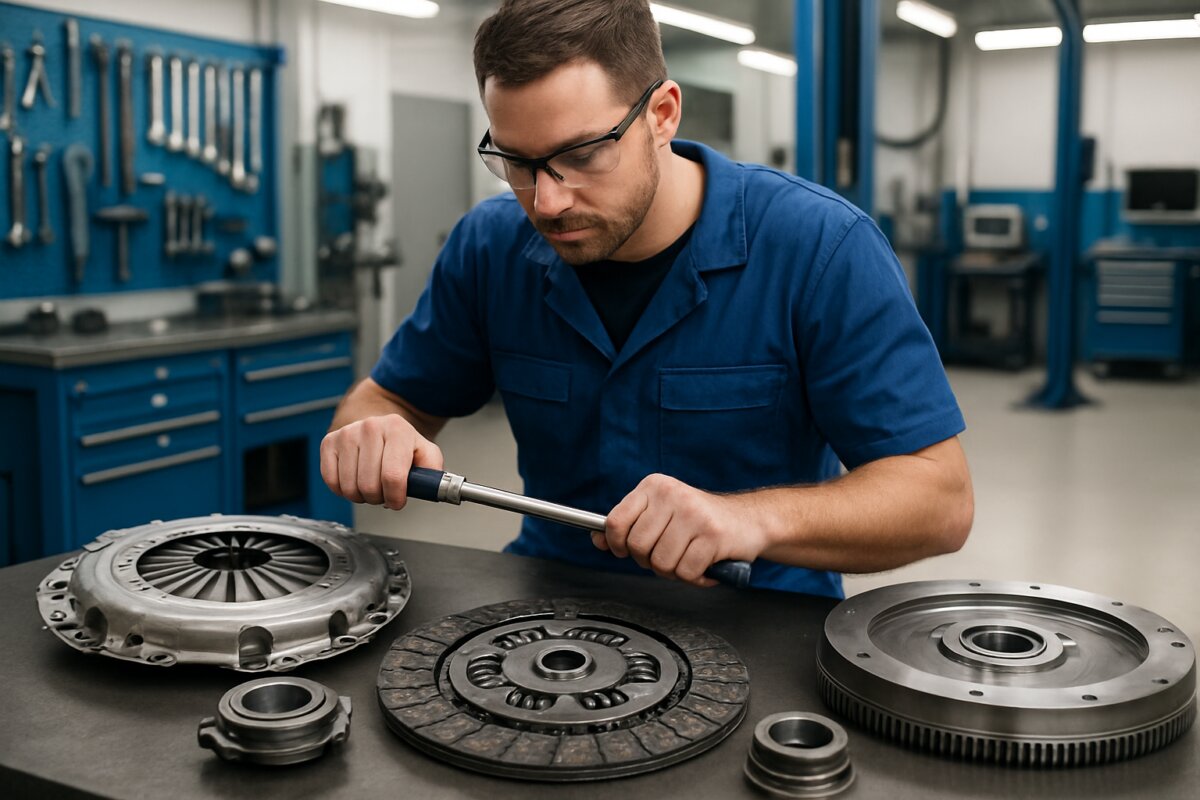
Common problems after clutch replacement include clutch slip, juddering, hard engagement, unusual noises, and hydraulic system issues. Most problems stem from incorrect installation, faulty components, or inadequate bleeding of hydraulic systems. Watch for symptoms like grinding noises, vibrations during engagement, or difficulty shifting gears within the first 500 miles of driving.
Tools & parts required
When experiencing post-replacement clutch issues, you’ll need specific diagnostic tools and replacement parts to identify and resolve problems effectively.
Parts needed:
- Clutch kit (if replacement required)
- Clutch release bearing
- Clutch pressure plate
- Clutch master cylinder
- Brake fluid (DOT 3 or DOT 4)
- Replacement seals and gaskets
Tools required:
- Socket set (8mm-19mm)
- Torque wrench
- Clutch alignment tool
- Bleeding kit
- Jack and axle stands
- Multimeter for electrical testing
Always verify part numbers match your vehicle’s VIN before ordering replacement components to avoid compatibility issues.
Safety precautions
Work in a well-ventilated area and ensure the vehicle is securely supported on level ground. Disconnect the battery negative terminal before beginning any electrical diagnostics.
Wear safety glasses and nitrile gloves when handling hydraulic fluid. Keep a fire extinguisher nearby when working with brake fluid, as it’s highly corrosive and flammable.
Never work under a vehicle supported only by a jack. Always use properly rated axle stands and wheel chocks.
Step-by-step troubleshooting instructions
Follow these systematic steps to diagnose and address common post-replacement clutch problems.
Step 1: Check clutch pedal feel and travel
Press the clutch pedal slowly and note its resistance and travel distance. A spongy feel indicates air in the hydraulic system, whilst excessive travel suggests adjustment issues or worn components.
Measure pedal height from the floor – it should match manufacturer specifications. Use a ruler to check free play at the pedal top, typically 10-15mm before resistance begins.
Step 2: Inspect hydraulic system
Check fluid level in the clutch master cylinder reservoir. Low fluid often indicates leaks in the system or incomplete bleeding after installation.
Examine the slave cylinder for external leaks around the pushrod seal. Internal leakage causes gradual pedal sink and engagement problems.
Step 3: Test clutch engagement
Start the engine with the handbrake applied. Engage first gear slowly whilst holding the clutch pedal fully depressed. The vehicle shouldn’t move or stall.
Gradually release the clutch pedal to find the bite point. This should occur approximately halfway through pedal travel. Early or late engagement indicates adjustment problems.
Step 4: Listen for unusual noises
Run the engine at idle with the clutch pedal released. Grinding or squealing noises often indicate release bearing problems or insufficient lubrication on the input shaft splines.
Press the clutch pedal and listen for changes in noise. Rattling when depressed suggests release bearing issues, whilst noise when released points to pressure plate problems.
Step 5: Check for juddering or slip
Drive at low speeds and monitor for vibrations during clutch engagement. Juddering typically results from contaminated friction surfaces or improper flywheel preparation.
Test for slip by engaging higher gears at low speeds under load. Slipping clutches show rising engine RPM without corresponding acceleration, often accompanied by burning smells.
Common mistakes to avoid
Many post-replacement problems stem from installation errors that could have been prevented with proper procedures and attention to detail.
Insufficient surface preparation: Failing to clean or machine the flywheel surface creates uneven contact patterns, leading to premature wear and juddering. Always inspect flywheel runout with a dial gauge.
Incorrect torque specifications: Over-tightening pressure plate bolts can distort the assembly, whilst under-tightening causes uneven clamping forces. Use a calibrated torque wrench and follow manufacturer specifications exactly.
Contaminated friction surfaces: Oil or grease on the clutch plate causes slip and rapid deterioration. Handle new parts with clean hands and inspect for contamination before installation.
Inadequate hydraulic bleeding: Air trapped in the system creates spongy pedal feel and inconsistent engagement. Bleed the system thoroughly using proper sequence and fresh brake fluid.
Professional tip from AutoPartsPro mechanics: Always replace the release bearing during clutch replacement, regardless of its apparent condition. The labour cost for subsequent replacement far exceeds the component price.
When should you seek professional help?
Whilst many clutch issues can be diagnosed at home, certain symptoms require immediate professional attention to prevent expensive damage.
Contact a qualified technician if you experience complete clutch failure, burning smells that persist after initial bedding-in, or metal grinding noises during operation. These symptoms indicate serious mechanical problems requiring specialist tools and expertise.
Hydraulic system problems beyond simple bleeding procedures also warrant professional diagnosis. Complex leak repairs or master cylinder replacement require specific knowledge of brake fluid safety and system design.
If problems persist after basic troubleshooting attempts, professional diagnostics can identify root causes before minor issues become major repairs. Modern diagnostic equipment can measure clutch pedal position, hydraulic pressures, and engagement timing with precision.
Related maintenance you can do at the same time
When addressing clutch problems, consider performing complementary maintenance tasks to maximise vehicle reliability and value.
Replace the transmission filter and fluid if accessible, as contaminated fluid can affect shift quality and component longevity. Check engine mounts for deterioration, as worn mounts increase stress on drivetrain components.
Inspect the CV joints and drive shafts for wear, particularly if experiencing vibrations. Replace worn components before they fail catastrophically.
Check the clutch cable adjustment on cable-operated systems, ensuring proper free play and smooth operation. Lubricate cable mechanisms to prevent binding and premature wear.
AutoPartsPro technicians recommend checking the entire drivetrain during clutch repairs, as problems often indicate related component wear that should be addressed simultaneously.
Frequently asked questions
How long should a new clutch take to bed in?
A properly installed clutch typically requires 300-500 miles of normal driving to fully bed in. Avoid aggressive starts and heavy loads during this period.
Is it normal for a new clutch to slip initially?
Minor slip during the first few miles is normal as surfaces mate together. Persistent slip after 100 miles indicates installation problems or defective components.
Why does my clutch pedal feel spongy after replacement?
Spongy pedal feel typically indicates air trapped in the hydraulic system. Thorough bleeding using proper sequence usually resolves this issue completely.
Can I drive with a juddering clutch?
Continued driving with clutch judder risks damage to the flywheel and transmission. Address juddering immediately to prevent expensive secondary damage to drivetrain components.
What causes burning smell after clutch replacement?
Light burning smell during initial bedding-in is normal. Persistent or strong burning indicates slip, contamination, or incorrect installation requiring immediate investigation.
Proper diagnosis and prompt attention to post-replacement clutch problems prevents minor issues from developing into expensive repairs. Using quality replacement parts and following correct procedures ensures reliable operation and maximum component lifespan. When in doubt, consult qualified technicians who have the expertise and equipment to resolve complex drivetrain issues effectively.

 Loading...