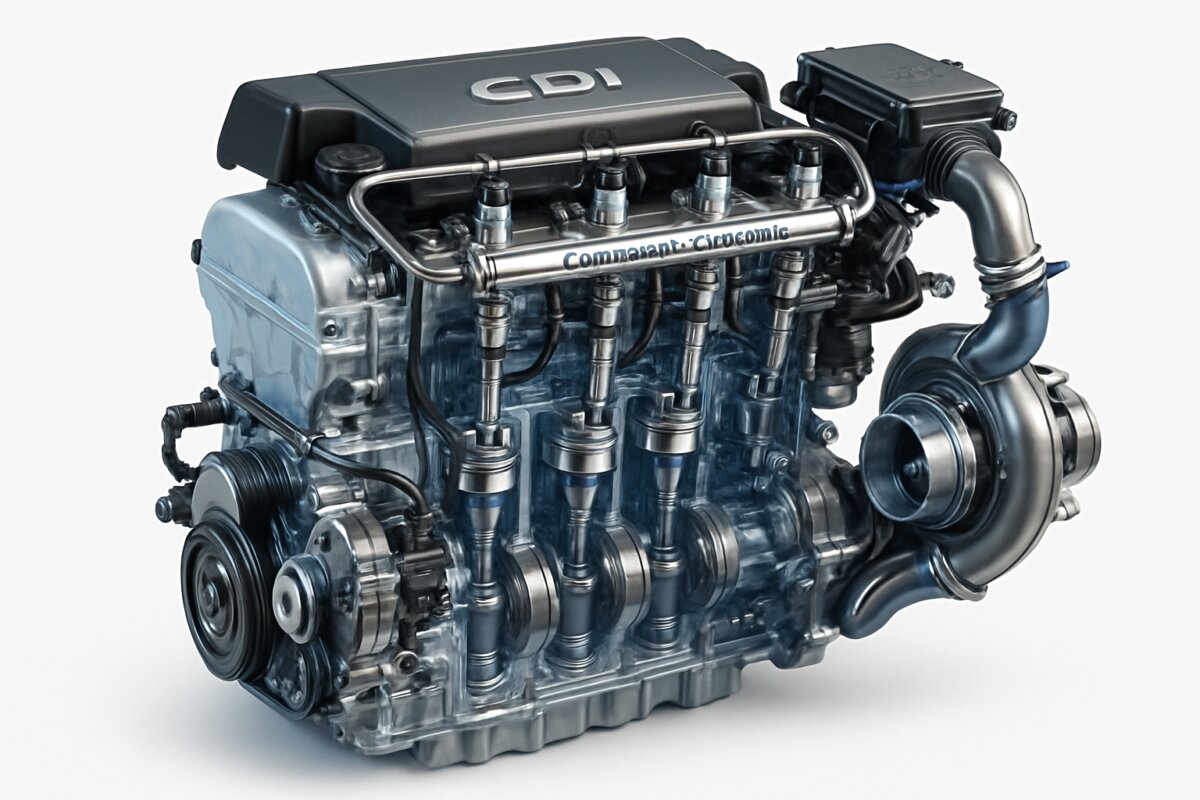
CDI engines, or Common Rail Diesel Injection engines, represent advanced diesel technology that delivers fuel directly into the combustion chamber through electronically controlled injectors at extremely high pressures. This system improves fuel efficiency by up to 25%, reduces emissions significantly, and provides smoother power delivery compared to older diesel systems. The CDI technology revolutionised diesel performance by separating fuel pressure generation from injection timing, allowing precise control over combustion.
What does CDI actually mean in diesel engines
The abbreviation CDI stands for Common Rail Diesel Injection, though Mercedes-Benz popularised the term when introducing their version of this technology in the late 1990s. Unlike traditional diesel systems where each cylinder had its own fuel pump, CDI engines use a shared high-pressure fuel rail that feeds all cylinders simultaneously.
This shared rail maintains constant pressure between 1,350 and 2,700 bar, depending on the engine design. The control units monitor dozens of parameters every millisecond to determine the optimal injection timing and quantity.
Our mechanics at AutoPartsPro have serviced hundreds of CDI engines, and they consistently note that the technology marked a turning point in diesel reliability. Before common rail systems, diesel engines were noisy, smoky, and sluggish. The CDI architecture changed everything by making diesels nearly as refined as petrol engines whilst maintaining superior fuel economy.
The core components that make CDI systems work
Every CDI engine relies on several critical components working together. Understanding these parts helps you appreciate the engineering brilliance behind the system and recognise when maintenance becomes necessary.
High-pressure fuel pump
The high-pressure fuel pump generates the extreme pressures required for efficient combustion. This component typically runs off the engine’s camshaft or timing chain and can produce pressures exceeding 2,000 bar in modern applications.
Common rail accumulator
The rail itself acts as a pressure storage vessel, maintaining consistent fuel pressure regardless of engine speed or load. This separation of pressure generation from injection events enables multiple injections per combustion cycle.
Electronic injectors
Piezoelectric or solenoid-operated injectors open and close in milliseconds, delivering fuel in precisely metered quantities. These injectors can fire up to seven times per combustion cycle in advanced systems.
Engine control module
The ECU processes data from various sensors to calculate optimal injection parameters. It monitors coolant temperature, air mass, throttle position, and rail pressure to adjust fuel delivery continuously.
How CDI engines operate from start to combustion
The operational sequence of a CDI engine demonstrates engineering precision at its finest. The process begins when you turn the ignition key, activating the glow plugs to pre-heat the combustion chambers in cold conditions.
Once the engine cranks, the high-pressure pump immediately begins building pressure in the common rail. Within milliseconds, pressure reaches the required threshold, typically around 300 bar at idle. The ECU then signals the injectors to begin their carefully orchestrated fuel delivery.
Here’s the injection sequence during a single combustion cycle:
- Pilot injection: A tiny amount of fuel enters the chamber to pre-condition the air and reduce combustion noise.
- Main injection: The primary fuel charge enters at peak compression, creating the power stroke.
- Post-injection: One or more small injections follow to reduce emissions and clean the particulate filter.
According to our senior technician with 15 years of diesel experience, this multi-injection strategy makes CDI engines remarkably smooth. He explains that older diesel systems injected fuel once per cycle, creating the characteristic diesel clatter. Modern CDI units spread combustion across several events, producing power delivery that rivals petrol engines.
Key advantages of CDI technology over older diesel systems
The benefits of CDI engines extend far beyond simple performance improvements. This technology fundamentally changed what diesel engines could achieve in passenger vehicles.
- Superior fuel economy: CDI engines extract more energy from every drop of diesel through precise metering and optimised combustion timing.
- Reduced emissions: Lower particulate matter and NOx production help meet stringent Euro 6 standards.
- Quieter operation: Multiple injection events eliminate the harsh diesel knock characteristic of older engines.
- Better cold starting: Electronic control allows easier ignition in freezing conditions without excessive cranking.
- Increased power density: Higher injection pressures enable smaller engines to produce more torque.
Popular CDI engine models from leading manufacturers
Several manufacturers have developed exceptional CDI engines that earned reputations for reliability and performance. These powerplants appear across numerous vehicle platforms and model years.
Mercedes-Benz OM651
The OM651 four-cylinder diesel debuted in 2008 and powers everything from compact C-Class models to larger Sprinter vans. This 2.1-litre engine produces between 136 and 204 horsepower depending on tune. Our workshop regularly services these units, and they demonstrate excellent longevity when maintained properly with quality oil filters and fresh diesel.
BMW N47
BMW’s N47 represents their take on four-cylinder CDI technology. Whilst not badged as CDI, it uses identical common rail principles. This engine earned mixed reviews due to timing chain issues in early versions, but later iterations proved robust. The 2.0-litre displacement produces between 115 and 218 horsepower across various applications.
Volkswagen EA288
Volkswagen’s EA288 engine family employs common rail injection in configurations from 1.6 to 2.0 litres. These engines feature extensively in the Golf, Passat, and Tiguan ranges. They’re known for strong mid-range torque and impressive fuel economy figures.
Renault K9K
The K9K 1.5-litre diesel appears in countless Renault, Nissan, and Dacia models worldwide. This compact engine delivers between 85 and 110 horsepower whilst achieving remarkable fuel efficiency. AutoPartsPro mechanics note that proper fuel filter replacement prevents most common issues with this engine.
Comparison of CDI specifications across manufacturers
| Manufacturer | Engine Code | Displacement | Power Range | Peak Pressure |
|---|---|---|---|---|
| Mercedes-Benz | OM651 | 2.1L | 136-204 hp | 2,000 bar |
| BMW | N47 | 2.0L | 115-218 hp | 2,200 bar |
| Volkswagen | EA288 | 1.6-2.0L | 90-190 hp | 2,000 bar |
| Renault | K9K | 1.5L | 85-110 hp | 1,600 bar |
Common maintenance requirements for CDI engines
Maintaining a CDI engine properly ensures hundreds of thousands of miles of reliable service. These systems tolerate neglect poorly, as precision components operate under extreme conditions.
Regular servicing should follow these intervals:
- Oil changes every 10,000 miles using manufacturer-specified low-ash diesel oil.
- Fuel filter replacement every 20,000 miles to prevent injector contamination.
- Air filter inspection every 12,000 miles, replacement as needed.
- Injector cleaning or replacement between 80,000 and 120,000 miles.
- High-pressure pump inspection at major service intervals.
Our specialists emphasise that fuel quality dramatically affects CDI longevity. Premium diesel with proper cetane ratings and adequate lubricity prevents premature wear of injection components. Poor-quality fuel causes injector coking and pump wear, leading to expensive repairs.
Professional tip: Always use premium diesel from reputable stations, and add a quality diesel additive every third tank to maintain injector cleanliness and prevent carbon buildup in the combustion chambers.
Critical parts that commonly require replacement
Despite their reliability, certain CDI components wear faster than others. Understanding these patterns helps you budget for maintenance and recognise warning signs before catastrophic failure occurs.
| Component | Typical Lifespan | Warning Signs | Replacement Cost |
|---|---|---|---|
| Injectors | 100,000-150,000 miles | Rough idle, black smoke, poor economy | £200-£400 each |
| High-pressure pump | 150,000-200,000 miles | Hard starting, loss of power, metal in fuel | £600-£1,200 |
| Rail pressure sensor | 80,000-120,000 miles | Limp mode, pressure fluctuations | £80-£150 |
| EGR valve | 60,000-100,000 miles | Poor acceleration, increased emissions | £150-£350 |
How CDI engines differ from TDI and other diesel technologies
Confusion often arises between CDI, TDI, and other diesel acronyms. These terms reference essentially identical technology with manufacturer-specific branding differences.
TDI stands for Turbocharged Direct Injection and represents Volkswagen Group’s naming convention. Both CDI and TDI use common rail injection systems, turbochargers, and direct fuel delivery into the cylinders. The fundamental operating principles remain identical regardless of the badge.
Other manufacturers use different terminology:
- dCi (Renault/Nissan): Direct Common Rail Injection
- JTD (Fiat): Jet Turbo Diesel
- HDi (Peugeot/Citroën): High-Pressure Direct Injection
- D (BMW): Simply “Diesel” with common rail understood
The technology underneath these marketing names shares common rail architecture, high-pressure injection, and electronic control. Performance differences stem from specific calibrations, turbocharger sizing, and ancillary systems rather than fundamental injection technology.
Troubleshooting common CDI engine problems
CDI engines typically run flawlessly for years, but certain issues appear repeatedly across different makes and models. Recognising symptoms early prevents minor problems from escalating into expensive repairs.
Black smoke on acceleration
Excessive black smoke indicates incomplete combustion, usually from faulty injectors or a blocked air filter. Carbon buildup in the intake system can also restrict airflow, creating rich combustion conditions.
Rough idle and misfiring
When a CDI engine shakes excessively at idle, suspect injector problems or low rail pressure. Failed glow plugs cause rough cold starts but smooth out when warm.
Loss of power and limp mode
Reduced performance often traces to boost pressure issues, clogged fuel filters, or EGR valve failures. The ECU enters limp mode when sensor readings fall outside acceptable parameters.
Hard starting when cold
Difficult cold starts typically indicate glow plug failures, low compression, or degraded battery condition. Worn injectors can also prevent adequate fuel atomisation in cold conditions.
The environmental impact of CDI technology
CDI engines significantly reduced diesel emissions compared to older indirect injection systems. The precise fuel metering and multiple injection events lower particulate matter production by up to 60% whilst cutting NOx emissions by approximately 40%.
Modern CDI engines incorporate additional emissions equipment to meet strict regulations. Diesel particulate filters trap soot particles, whilst selective catalytic reduction systems neutralise nitrogen oxides. These systems work together to make diesel engines cleaner than ever before.
However, real-world emissions testing revealed that some manufacturers optimised their CDI engines to perform better during laboratory tests than on actual roads. This led to the diesel emissions scandal that damaged consumer confidence in the technology.
Our technical staff note that properly maintained CDI engines with functioning emissions equipment produce remarkably clean exhaust. Regular servicing of the particulate filter and using quality diesel fuel ensures emissions stay within acceptable limits throughout the engine’s life.
Future developments in common rail diesel technology
Despite the automotive industry’s shift towards electrification, CDI technology continues evolving. Next-generation systems will employ even higher injection pressures exceeding 3,000 bar, further improving combustion efficiency and reducing emissions.
Manufacturers are developing advanced combustion strategies that combine CDI with mild hybrid systems. These powertrains use electric motors to assist during acceleration whilst relying on efficient diesel engines for cruising, maximising fuel economy.
Synthetic and bio-diesel fuels represent another frontier for CDI engines. These alternative fuels burn cleaner than petroleum diesel whilst working seamlessly with existing common rail hardware. Some manufacturers already approve hydrotreated vegetable oil for use in their CDI engines without modifications.
Is a CDI engine right for your driving needs
CDI engines excel in specific use cases whilst proving less suitable for others. Understanding your driving patterns helps determine whether diesel technology makes financial and practical sense.
CDI engines shine when:
- You regularly cover high annual mileage, particularly motorway miles.
- Your journeys typically exceed 20 miles, allowing the engine to reach operating temperature.
- You tow trailers or carry heavy loads frequently.
- You prioritise fuel economy over initial purchase price.
However, CDI technology might not suit drivers who primarily make short urban trips. Diesel particulate filters require regular high-speed operation to regenerate properly. Constant short journeys prevent this process, leading to blocked filters and expensive repairs.
Our AutoPartsPro mechanics consistently advise customers that modern CDI engines demand proper use patterns. The technology delivers outstanding reliability and economy when matched to appropriate driving styles, but suffers when forced into unsuitable applications.
When selecting replacement parts for your CDI engine, quality matters tremendously. Genuine or premium aftermarket components ensure proper fit and function, preventing premature failures that compromise performance and reliability. Whether you need routine maintenance items like filters or critical components like injectors, choosing the right parts protects your investment and maintains the sophisticated engineering that makes CDI engines exceptional powerplants for demanding drivers.
Frequently Asked Questions (FAQ)
What is the main difference between CDI and petrol engines?
CDI engines compress air until it becomes hot enough to ignite diesel fuel without spark plugs, whilst petrol engines use spark ignition. Diesel engines produce more torque and achieve better fuel economy through higher compression ratios.
How long do CDI engines typically last with proper maintenance?
Well-maintained CDI engines routinely exceed 250,000 miles before requiring major overhauls. Some commercial applications report over 500,000 miles with regular servicing, quality fuel, and appropriate driving patterns that prevent component stress.
Can I use biodiesel in my CDI engine?
Most CDI engines accept biodiesel blends up to B7 (7% biodiesel) without modifications. Higher concentrations require manufacturer approval and may affect warranty coverage. Always check your owner’s manual for specific fuel recommendations and limitations.
Why does my CDI engine go into limp mode occasionally?
Limp mode activates when the ECU detects problems affecting emissions or drivability. Common triggers include boost pressure issues, faulty sensors, blocked particulate filters, or injector problems. Diagnostic scanning reveals specific fault codes causing the issue.
Do CDI engines require different oil than petrol engines?
Yes, CDI engines need low-ash diesel-specific oil meeting ACEA C specifications. These formulations protect diesel particulate filters whilst handling higher soot loading and combustion pressures that diesel engines generate compared to petrol powerplants.

 Loading...