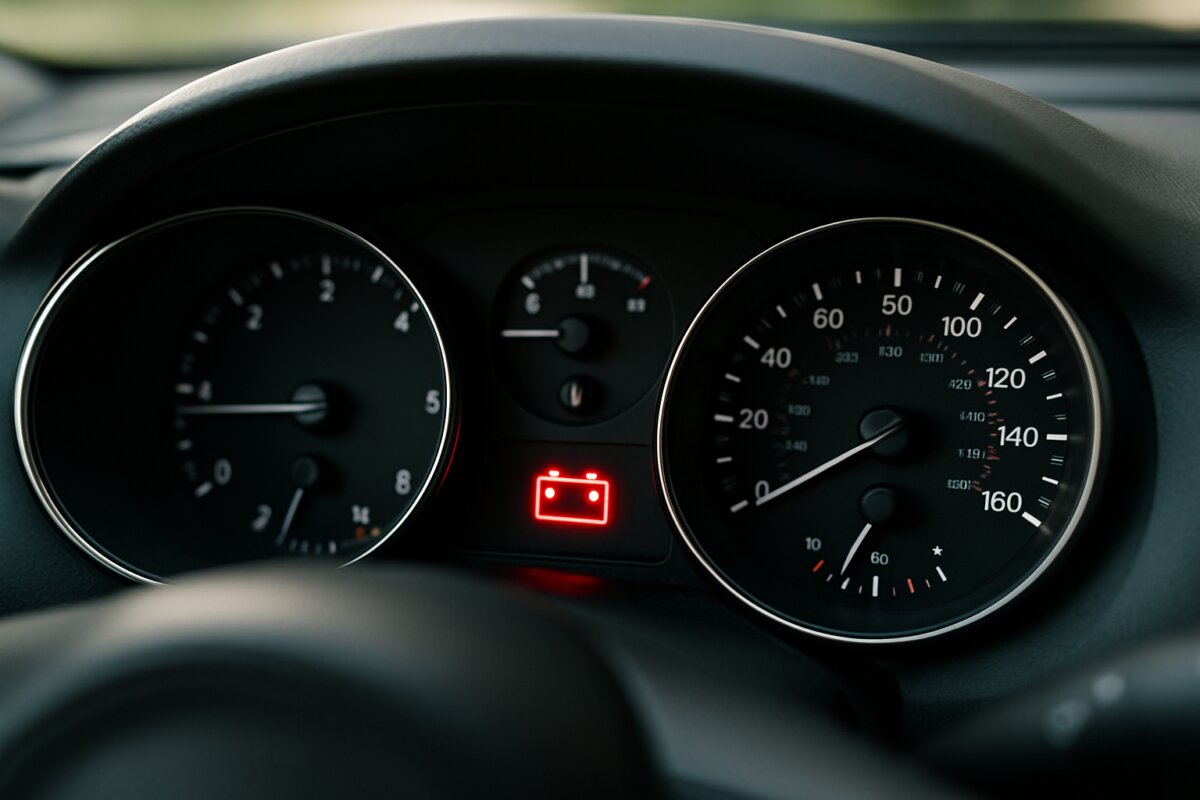
When the battery warning light illuminates on your dashboard, it signals a potential charging system failure that requires immediate attention. This red or amber symbol resembling a battery indicates the vehicle’s electrical system isn’t functioning properly, which could leave you stranded if ignored. Understanding what triggers this warning, how to respond, and whether it’s safe to continue driving can prevent costly breakdowns and protect your vehicle’s electrical components.
Faulty alternator causing charging failure
The alternator serves as the heart of your vehicle’s electrical system, converting mechanical energy into electricity to power everything from headlights to the radio whilst simultaneously recharging the battery. When the generator fails, your battery warning light will trigger because the system detects insufficient voltage production.
Modern vehicles require between 13.5 and 14.5 volts to operate correctly. A failing alternator typically produces less than 13 volts, forcing your car to draw power exclusively from the battery. Our specialists at Autopartspro have observed that alternators commonly fail due to worn carbon brushes, damaged diodes, or a malfunctioning voltage regulator.
Symptoms accompanying alternator failure include dimming headlights, sluggish electrical accessories, and unusual whining noises from under the bonnet. The battery warning light might flicker initially before remaining constantly illuminated. If you notice these signs, continuing to drive will eventually drain your battery completely, leaving you stranded—typically within 30 minutes to two hours depending on electrical load and battery condition.
A worn v-ribbed belt can also prevent the alternator from spinning at the correct speed, creating the same symptoms as a failed alternator. Regular inspection of drive belts prevents this common yet often overlooked issue.
Corroded or loose battery terminals
Battery terminal corrosion represents one of the most frequent yet easily fixable causes of battery warning light activation. The white, green, or blue powdery substance that accumulates around battery posts is actually a by-product of chemical reactions occurring when battery acid vapours meet the metal terminals.
This corrosion creates electrical resistance, disrupting the flow of current between your battery and the vehicle’s electrical system. The charging system sensor interprets this disrupted connection as a charging failure, triggering the warning light. Even a small amount of corrosion can cause significant electrical problems.
Loose battery connections produce similar symptoms. Vibrations from normal driving can gradually loosen terminal clamps, especially on older vehicles or after recent battery replacement. A loose connection prevents the alternator from properly charging the battery and can cause intermittent electrical faults that are frustrating to diagnose.
According to Autopartspro’s technical team, approximately 25% of vehicles brought in for battery warning light issues have simple connection problems rather than component failures. A thorough inspection of battery terminals should always be the first diagnostic step. Cleaning terminals with a wire brush and applying petroleum jelly after tightening prevents future corrosion.
Deteriorated battery unable to hold charge
A worn-out battery can trigger the warning light even when the charging system functions perfectly. Most car batteries last between three and five years, but extreme temperatures, frequent short journeys, and leaving accessories on whilst the engine is off can significantly reduce lifespan.
As batteries age, the lead plates inside deteriorate and the electrolyte solution becomes contaminated. This degradation reduces the battery’s capacity to accept and hold a charge. The vehicle’s electrical control module detects abnormal voltage patterns and illuminates the warning light to alert you of the problem.
Internal battery damage from overcharging or deep discharge cycles can also cause premature failure. A battery with a damaged cell will show normal voltage immediately after charging but drop rapidly under load. This creates a situation where the alternator works perfectly but cannot maintain proper system voltage because the battery acts as an electrical drain rather than a reservoir.
Professional testing with a dedicated battery analyser provides accurate information about the battery’s cold cranking amps and state of health. Visual inspection alone cannot determine battery condition—a battery that looks fine externally might be completely useless internally. Replacing a deteriorated battery is considerably cheaper than dealing with the secondary damage caused by electrical system strain.
Damaged wiring in the charging circuit
The charging system relies on intact wiring to transmit electrical current from the alternator to the battery and throughout the vehicle. Damaged, frayed, or broken wires anywhere in this circuit will prevent proper charging and trigger the battery warning light.
Common locations for wiring damage include areas exposed to heat, moisture, or mechanical stress. The main charging wire connecting the alternator to the battery carries substantial current and can become damaged through vibration or contact with hot engine components. Rodents sometimes chew through insulation, creating short circuits or open connections that disrupt charging.
Ground connections are equally important but often neglected. A corroded or loose earth strap prevents the charging circuit from completing properly. Modern vehicles use the engine block and chassis as part of the electrical circuit, meaning poor ground connections can cause mysterious electrical faults including battery warning light activation.
Our experienced technicians recommend thorough visual inspection of all charging system wiring, paying particular attention to connection points and areas where wires pass through metal panels or near moving parts. Repairing damaged wiring promptly prevents more serious electrical failures and potential fire hazards. Sometimes upgrading to higher-quality hoses and routing wires away from heat sources during repairs prevents recurrence.
Faulty voltage regulator preventing proper charging
The voltage regulator controls the alternator’s output, ensuring it produces the correct voltage regardless of engine speed or electrical load. A malfunctioning alternator regulator can cause overcharging or undercharging, both of which illuminate the battery warning light.
Undercharging occurs when the regulator fails to allow sufficient current flow from the alternator. The battery slowly discharges whilst driving, eventually reaching a critical voltage that triggers the warning system. Overcharging is equally problematic—excessive voltage damages electrical components, boils battery electrolyte, and can cause battery explosion in severe cases.
Many modern vehicles integrate the voltage regulator inside the alternator housing, meaning regulator failure requires complete alternator replacement. Older vehicles often feature external regulators that can be replaced independently at lower cost. Diagnostic testing with a multimeter reveals charging voltage irregularities that pinpoint regulator problems.
Autopartspro specialists note that voltage regulator failure often follows alternator wear, as the two components work in tandem. Replacing both simultaneously when one fails prevents return visits for the same problem. Quality replacement parts with proper voltage specifications for your specific vehicle model ensure reliable long-term performance.
Warning signs your car has a problem
Recognising early warning signs allows you to address charging system issues before complete failure occurs. Your vehicle communicates problems through various symptoms beyond just the battery warning light:
- Dimming or flickering lights: Headlights that brighten with acceleration or dim at idle indicate insufficient alternator output
- Electrical accessory malfunctions: Power windows operating slowly, radio cutting out, or climate control functioning intermittently
- Difficulty starting: Engine cranking sluggishly or requiring multiple attempts, especially in cold weather
- Unusual noises: Grinding, whining, or squealing sounds from the alternator area suggest bearing failure or belt problems
- Burning smell: Overheating electrical components or a slipping drive belt produce distinctive burning rubber or electrical odours
- Warning light behaviour: The battery light flickering, illuminating only at certain engine speeds, or accompanied by other dashboard warnings
- Battery swelling: A bloated battery case indicates overcharging and imminent failure
- Corrosion buildup: Excessive white or blue-green powder around battery terminals or cable connections
The dashboard serves as your vehicle’s communication centre, and ignoring warning signs leads to more extensive and expensive repairs. Modern vehicles with sophisticated electrical systems are particularly vulnerable to charging system failures.
Tip from Autopartspro mechanics: Keep a digital multimeter in your boot. Checking battery voltage before starting (should read 12.4-12.7V) and whilst running (13.5-14.5V) provides instant diagnostic information about charging system health.
How to fix the problems
Addressing battery warning light issues requires systematic diagnosis followed by appropriate repairs. Here’s a comprehensive troubleshooting and repair guide:
| Problem | Diagnostic Method | Repair Solution | Difficulty Level |
|---|---|---|---|
| Corroded terminals | Visual inspection of battery posts | Remove terminals, clean with wire brush and baking soda solution, reconnect and tighten | Easy |
| Loose connections | Physically check terminal tightness | Tighten clamps with appropriate spanner to manufacturer specifications | Easy |
| Worn drive belt | Visual inspection for cracks, glazing, or looseness | Replace belt according to service manual tension specifications | Moderate |
| Failed alternator | Voltage test at battery whilst engine running | Replace alternator assembly with quality replacement unit | Moderate-Hard |
| Dead battery | Load test with battery analyser | Replace battery with correct specification for vehicle | Easy |
| Damaged wiring | Continuity test with multimeter | Repair or replace damaged sections, ensure proper routing | Moderate-Hard |
| Faulty regulator | Monitor charging voltage at various engine speeds | Replace voltage regulator or alternator assembly | Moderate |
For those comfortable with basic maintenance, cleaning battery terminals and checking connections are straightforward tasks. More complex repairs involving the alternator or electrical system diagnostics require proper tools and knowledge.
Step-by-step battery terminal cleaning
- Switch off the engine and remove keys from ignition
- Disconnect the negative (black) terminal first, then positive (red)
- Mix baking soda with water to create a cleaning solution
- Scrub terminals and cable ends with a wire brush
- Rinse with clean water and dry thoroughly
- Reconnect positive terminal first, then negative
- Apply petroleum jelly or terminal protector spray
- Ensure connections are tight but not overtightened
Expert advice from Autopartspro: When replacing your alternator, consider upgrading to a higher-output unit if you’ve added accessories like upgraded audio systems or additional lighting. Stock alternators may struggle with increased electrical demands.
Quality replacement components make a significant difference in repair longevity. Cheap alternators often fail prematurely, whilst premium units provide reliable service for years. Always verify that replacement parts match your vehicle’s specifications for amperage and voltage output.
When to see a mechanic
Whilst basic maintenance like terminal cleaning falls within most drivers’ capabilities, certain situations demand professional attention. Understanding when to seek expert help prevents further damage and ensures safety.
Visit a qualified mechanic immediately if the battery warning light illuminates alongside other dashboard warnings, particularly the engine management light or brake system warning. This combination suggests multiple system failures that require sophisticated diagnostic equipment to identify properly.
Intermittent battery warning light activation proves particularly challenging to diagnose without professional tools. The fault might only occur under specific conditions—particular engine speeds, electrical loads, or temperatures. Mechanics use oscilloscopes and advanced multimeters to capture these transient faults that simple testing misses.
If you’ve already replaced the battery but the warning light persists, the problem lies elsewhere in the charging system. Continued driving risks damaging the new battery and potentially stranding you. Professional diagnostics quickly identify whether the alternator, regulator, or wiring requires attention.
Strange noises accompanying the battery warning light—grinding, squealing, or clicking from the alternator area—indicate mechanical failure requiring immediate professional inspection. Continuing to operate a mechanically failing alternator can cause it to seize, potentially damaging the drive belt and other components driven by the same belt, including the water pump.
| Scenario | Action Required | Urgency Level |
|---|---|---|
| Battery light on with normal vehicle operation | Check terminals and belt, then seek diagnosis within 24 hours | Medium |
| Battery light flickering intermittently | Schedule diagnostic appointment soon | Medium |
| Battery light with dimming lights or electrical issues | Stop driving and arrange recovery or immediate repair | High |
| Battery light with unusual noises | Stop engine immediately, do not continue driving | Critical |
| Multiple warning lights illuminated | Pull over safely and call for professional assistance | Critical |
| Burning smell with battery light | Stop immediately, turn off engine, exit vehicle | Critical |
Modern vehicles with complex electrical systems including control units for various functions are particularly sensitive to voltage irregularities. Low voltage from a failing charging system can cause electronic control modules to store fault codes or even suffer permanent damage. Professional diagnosis prevents expensive electronic repairs.
Frequently Asked Questions
Can I drive with the battery warning light on?
You can drive briefly to reach a safe location or repair facility, but not for extended distances. Once illuminated, you’re operating solely on battery power which will deplete within 30 minutes to two hours depending on electrical load and battery condition.
Why does my battery light come on then go off?
Intermittent battery light activation typically indicates a loose connection, failing alternator bearing, or worn drive belt slipping under load. The problem worsens progressively, so diagnosis shouldn’t be delayed even if the light extinguishes temporarily.
Will a new battery fix the battery warning light?
Not necessarily. The battery warning light indicates charging system problems, not always battery failure. A new battery will fail quickly if the alternator isn’t charging properly. Proper diagnosis identifies the actual faulty component before replacement.
How much does it cost to fix a battery warning light issue?
Costs vary dramatically based on the underlying cause. Terminal cleaning costs nothing if you do it yourself. Battery replacement ranges £60-150. Alternator replacement typically costs £200-500 including parts and labour depending on vehicle accessibility and component quality.
Can cold weather cause the battery warning light to illuminate?
Cold temperatures reduce battery efficiency and increase electrical demands from the starter and heating systems. A marginal charging system functioning adequately in summer may trigger the warning light in winter, revealing an existing weakness requiring attention.
Final recommendation
The battery warning light serves as an early alert system preventing catastrophic electrical failures and roadside breakdowns. Never ignore this warning—even if the vehicle appears to operate normally, underlying charging system problems will worsen rapidly. From our extensive experience at Autopartspro, we’ve seen countless drivers avoid expensive repairs and dangerous situations by addressing battery warning lights promptly.
Start with simple checks: inspect battery terminals for corrosion and tightness, examine the drive belt for wear or damage, and verify charging voltage with a multimeter. These basic diagnostics often reveal easily correctable problems. For persistent warnings or complex symptoms, professional diagnosis with proper equipment saves time and prevents misguided component replacement.
Invest in quality replacement parts from reputable suppliers. Cheap alternators and batteries might seem economical initially but frequently fail prematurely, creating repeat repairs and potential vehicle damage. Proper maintenance including regular oil filter changes and keeping electrical connections clean extends charging system life significantly. Remember that your vehicle’s electrical system powers critical safety features—functioning headlights, brake lights, and ABS sensors all depend on reliable electrical supply. Treating battery warning lights seriously protects both your investment and your safety on the road.

 Loading...