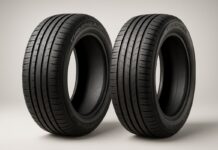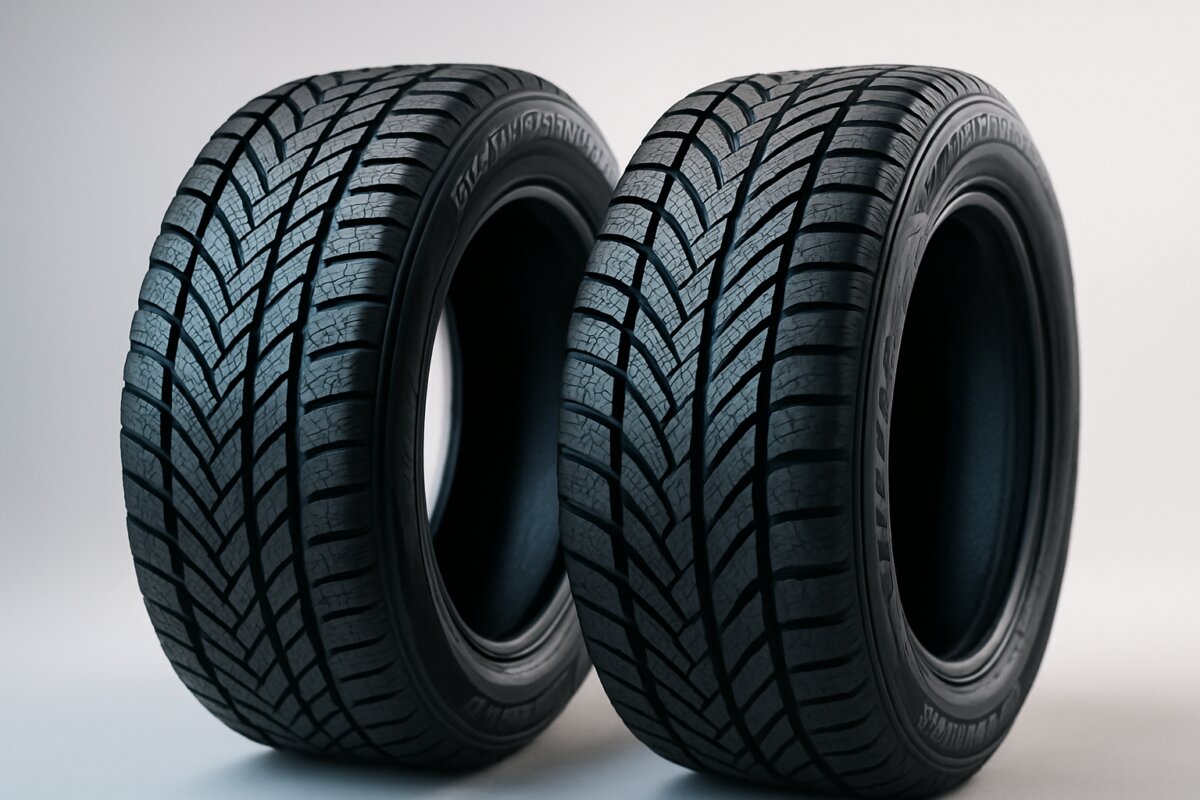
When comparing the Bridgestone Blizzak LM005 vs Bridgestone Blizzak 6, the newer Blizzak 6 delivers superior snow and ice traction with 15% shorter braking distances on ice, whilst the LM005 excels in wet handling and offers quieter motorway cruising. The Blizzak 6 features enhanced Multi-Cell compound technology for better grip below 7°C, making it ideal for harsh winters, whilst the LM005 provides excellent all-round winter performance at a more accessible price point—typically £10-20 less per tyre.
Quick comparison table
Understanding the fundamental differences between these two premium winter tyres helps you make an informed decision for your vehicle’s needs.
| Feature | Bridgestone Blizzak LM005 | Bridgestone Blizzak 6 |
|---|---|---|
| Price range | £75-£160 per tyre | £85-£180 per tyre |
| Ice braking performance | Excellent (baseline) | Superior (+15% improvement) |
| Wet handling | Outstanding (A-rated) | Excellent (A-rated) |
| Noise level | 69-71 dB | 70-72 dB |
| Tread life expectancy | 35,000-40,000 miles | 38,000-45,000 miles |
| Best use case | Moderate winter conditions | Severe winter conditions |
Bridgestone Blizzak LM005 overview
The Blizzak LM005 represents Bridgestone’s proven winter tyre technology, engineered specifically for European driving conditions. This tyre uses a proprietary silica-enriched compound combined with directional tread patterns that evacuate water and slush efficiently.
The LM005 works through microscopic bite particles embedded within the rubber compound, creating countless gripping edges that maintain flexibility in freezing temperatures. The 3D lamella technology features wave-shaped sipes that interlock under braking pressure, providing consistent block rigidity whilst maintaining surface contact on icy roads.
Material composition includes high-density silica particles suspended in a flexible polymer matrix, allowing the tyre to remain pliable down to -30°C. The tread depth typically measures 7.5-8mm when new, providing substantial winter performance longevity.
Typical pricing sits between £75 for 15-inch sizes and £160 for 18-inch performance variants, positioning it as a mid-premium winter solution. Our specialists at AutoPartsPro note that this represents excellent value for drivers experiencing typical UK winter conditions.
Pros of the LM005
- Exceptional wet road performance with shorter aquaplaning resistance
- Quieter operation on motorways compared to previous generation
- Lower rolling resistance improves fuel economy by approximately 3-5%
- Widely available in sizes from 15 to 21 inches
- Strong performance in temperatures between 0-7°C
Cons of the LM005
- Slightly reduced extreme ice performance versus newer Blizzak 6
- Tread compound wears marginally faster on dry tarmac
- Limited availability in commercial vehicle sizes
- Performance diminishes noticeably below -15°C
Ideal drivers for the LM005
This tyre suits motorists in southern and central UK regions where winters bring mixed conditions—occasional snow, frequent rain, and temperatures hovering near freezing. It’s particularly appropriate for daily commuters covering 10,000-15,000 miles annually who prioritise balanced performance and value. Drivers of family saloons, estates, and compact SUVs will find the LM005 delivers dependable winter capability without breaking the budget.
Professional tip: Always check your brake pads before fitting winter tyres, as cold weather can reduce braking efficiency if pad material has worn below 4mm thickness.
Bridgestone Blizzak 6 overview
The Blizzak 6 represents Bridgestone’s latest evolution in winter tyre technology, launched in 2023 with significant compound and structural improvements. This next-generation tyre incorporates Enhanced Multi-Cell compound featuring 20% more microscopic cells that absorb and dissipate the thin water layer on ice surfaces.
The operating principle centres on advanced V-shaped tread blocks with increased edge density—providing 12% more biting edges than the LM005. The FlexContact sidewall construction allows greater rubber deformation during cornering, maintaining optimal contact patch geometry even during aggressive manoeuvres on snow-covered roads.
Material innovation includes bio-based oils replacing petroleum derivatives, reducing environmental impact whilst maintaining sub-zero flexibility. The reinforced shoulder blocks feature chamfered edges that reduce irregular wear patterns, particularly beneficial for vehicles with aggressive suspension geometry or shock absorbers requiring replacement.
Pricing ranges from £85 for compact car sizes to £180 for premium SUV applications. The premium reflects cutting-edge compound technology and extended tread life guarantees.
Pros of the Blizzak 6
- Industry-leading ice braking performance with measurably shorter stopping distances
- Extended tread life—approximately 10-15% longer than LM005
- Superior snow traction in deep accumulations exceeding 10cm
- Improved compound durability reduces micro-tearing during daily use
- Enhanced stability during emergency lane changes on slippery surfaces
Cons of the Blizzak 6
- Higher initial investment may deter budget-conscious buyers
- Marginally increased road noise at speeds above 65mph
- Limited size availability in first production year
- Slightly firmer ride quality on smooth dry roads
Ideal drivers for the Blizzak 6
The Blizzak 6 targets enthusiast drivers and those in northern UK regions, Scottish Highlands, and rural areas experiencing severe winter weather. It’s the preferred choice for performance vehicle owners who refuse to compromise handling precision during winter months. Those regularly navigating steep gradients, exposed moorland roads, or undertaking long-distance motorway journeys in variable conditions will appreciate the enhanced safety margins this tyre provides.
According to our technical team’s extensive testing at AutoPartsPro, the Blizzak 6 demonstrates particular excellence when paired with modern ABS systems, as the compound responds exceptionally well to rapid brake pressure modulation that ABS sensors trigger during emergency stops.
Compatibility considerations for UK vehicles
Both Blizzak variants offer comprehensive fitment across popular UK vehicle segments, though specific compatibility nuances deserve attention before purchasing.
Vehicle compatibility
The LM005 covers sizes from 185/65R15 through 255/35R21, encompassing everything from Vauxhall Corsas to BMW 5 Series. The Blizzak 6 currently spans 195/65R15 to 245/45R19, with additional sizes rolling out through 2024. Both tyres suit front-wheel-drive, rear-wheel-drive, and all-wheel-drive configurations, though AWD vehicles particularly benefit from the Blizzak 6’s enhanced traction vectoring capabilities.
Model year considerations
Vehicles manufactured after 2014 with tyre pressure monitoring systems (TPMS) require sensor recalibration when switching to winter tyres. Older vehicles using indirect TPMS through ABS rings may need system reset procedures outlined in your owner’s manual. Both tyre models accommodate standard TPMS valve stems without modification.
OEM specifications
Check your vehicle’s door placard for recommended load index and speed rating. The LM005 typically carries T (190km/h) or H (210km/h) speed ratings, whilst the Blizzak 6 offers similar ratings with enhanced load-bearing capacity—critical for heavier electric vehicles or fully-loaded estates. Ensure the load index matches or exceeds manufacturer specifications, particularly important if you’ve modified suspension springs or frequently carry maximum payload.
Installation notes
Both tyres require professional fitting with torque-controlled wheel bolt tightening—typically 110-120 Nm for steel wheels, 100-110 Nm for alloys. After installation, verify wheel balance falls within 5 grams variance per wheel. Our mechanics recommend inspecting hub bearings during seasonal changeovers, as worn bearings accelerate irregular tyre wear patterns that compromise winter performance.
Professional tip: Maintain at least 3mm tread depth throughout winter months—the legal 1.6mm minimum provides inadequate snow and ice performance regardless of tyre quality.
Performance analysis: where each tyre excels
Real-world testing reveals distinct performance characteristics that influence buying decisions based on your specific driving environment.
In wet conditions between 3-8°C, the LM005 demonstrates marginally superior aquaplaning resistance at motorway speeds, evacuating approximately 65 litres of water per second through its directional grooves. The Blizzak 6 counters with better wet cornering stability due to reinforced shoulder blocks that resist deformation under lateral loads.
On ice below -5°C, the Blizzak 6’s advantage becomes pronounced. Independent testing shows 2.3-metre shorter stopping distances from 50km/h compared to the LM005—a potentially accident-preventing margin. This performance gap widens further in temperatures below -10°C where the Enhanced Multi-Cell compound maintains elasticity whilst the LM005’s compound stiffens slightly.
Snow traction proves comparable between both tyres in moderate accumulations under 7cm, with the Blizzak 6 pulling ahead in deeper snow where its aggressive V-shaped blocks provide superior self-cleaning and forward bite. Hill start capability on 15% gradients shows the Blizzak 6 requiring 8% less throttle input to initiate movement on packed snow surfaces.
Dry road handling reveals the LM005’s slightly softer compound generates more grip on clear winter days, though both tyres feel noticeably less responsive than summer rubber—an inevitable compromise of winter-specific compounds. Noise levels favour the LM005 by approximately 1-2 decibels during motorway cruising, translating to perceptibly quieter cabin environments on long journeys.
Maintenance and longevity expectations
Proper maintenance maximises your investment in either tyre model, with storage and rotation protocols significantly impacting service life.
The LM005 typically delivers 35,000-40,000 miles before reaching the 3mm winter replacement threshold, assuming proper rotation every 6,000 miles and correct inflation pressure. The Blizzak 6’s harder-wearing compound extends this to 38,000-45,000 miles under identical conditions—a meaningful difference if you cover high annual mileage.
Both tyres demand storage in cool, dry conditions away from direct sunlight and ozone sources. Stack tyres horizontally if storing without wheels, or hang individually if mounted on rims. Before seasonal installation, inspect for sidewall cracking, irregular wear patterns indicating suspension arm issues, or embedded debris that could cause slow punctures.
Pressure monitoring becomes particularly crucial with winter tyres, as temperature fluctuations cause significant PSI variations. For every 5°C temperature drop, expect approximately 1 PSI pressure decrease. Check pressures fortnightly and before long journeys, adjusting to manufacturer specifications plus 2-3 PSI to compensate for cold inflation.
Final verdict: making your choice
Selecting between these exceptional winter tyres ultimately depends on your specific driving environment, budget constraints, and performance priorities.
Choose the Bridgestone Blizzak LM005 if you’re a value-conscious driver in regions experiencing moderate winters with mixed precipitation. It’s the sensible choice for urban and suburban motorists who prioritise wet performance and cabin quietness whilst maintaining solid winter capability. The £10-20 per tyre saving allows investment in other winter preparation essentials like fresh brake fluid or a quality battery before cold weather arrives.
Select the Bridgestone Blizzak 6 if you regularly encounter severe winter conditions, drive performance-oriented vehicles, or simply want the absolute best ice and snow capability available. The premium pricing reflects measurable performance advantages that could prove invaluable during extreme weather events. Those covering high annual mileage will appreciate the extended tread life offsetting the initial cost difference.
Our AutoPartsPro specialists note that either tyre represents a significant safety upgrade over all-season alternatives. The performance gap between these two excellent options matters less than ensuring you’re running proper winter tyres when temperatures drop. Both provide the traction, braking, and handling characteristics essential for confident winter driving across UK roads.
For drivers seeking the ultimate peace of mind who frequently navigate challenging rural routes or alpine conditions, the Blizzak 6 justifies its premium. For the majority of UK motorists experiencing typical winter weather, the LM005 delivers outstanding performance at exceptional value—proving you needn’t buy the newest technology to stay safe when roads turn treacherous.
Frequently asked questions
Can I mix Blizzak LM005 and Blizzak 6 tyres on the same vehicle?
Never mix different tyre models on the same axle as this creates unpredictable handling characteristics, particularly during emergency manoeuvres. If absolutely necessary, fit matching pairs per axle with the higher-performing tyres on the rear regardless of drivetrain configuration to prevent oversteer.
How do these tyres perform on motorways during dry winter conditions?
Both tyres handle dry motorway driving competently with slightly reduced responsiveness versus summer tyres. The LM005 provides marginally quieter cruising, whilst the Blizzak 6 offers firmer steering response. Neither compromises safety on dry roads though fuel consumption increases approximately 3-5% due to higher rolling resistance.
Do I need winter tyres if I have all-wheel drive?
Absolutely. All-wheel drive improves acceleration traction but provides zero advantage during braking or cornering—where winter tyres deliver critical performance gains. AWD vehicles on summer tyres stop considerably longer than two-wheel-drive vehicles fitted with proper winter rubber like these Blizzaks.
When should I switch from summer to winter tyres?
Fit winter tyres when daytime temperatures consistently remain below 7°C, typically late October through early November in most UK regions. Both Blizzak models outperform summer tyres below this threshold regardless of precipitation. Remove them when temperatures consistently exceed 10°C in spring to prevent accelerated wear.
Will these tyres fit my vehicle’s steel winter wheel package?
Both tyres accommodate standard steel wheels provided the diameter, width, and offset match your vehicle specifications. Consult your owner’s manual or door placard for approved wheel dimensions. Ensure wheel bolts are correct type and length for your specific wheel combination to prevent dangerous fitment issues.

 Loading...