Alternator replacement typically costs between £200 and £600 in the UK, with labour charges ranging from £100 to £250 and parts costing £100 to £350 depending on your vehicle make and model. The replacement process usually takes 1 to 3 hours for most cars, though some vehicles with difficult-to-access alternators may require up to 5 hours of workshop time. These figures represent the most common scenario for standard family cars, whilst luxury or performance vehicles often sit at the higher end of the cost spectrum.
What affects alternator replacement costs
The price you’ll pay for a new alternator varies considerably based on several factors. Vehicle type plays the biggest role, as a compact hatchback requires a much simpler unit than a high-performance saloon or diesel SUV.
Part quality makes a significant difference too. Original equipment manufacturer (OEM) parts command premium prices but offer guaranteed compatibility. Aftermarket alternatives can save you 30-50% without sacrificing reliability if you choose reputable brands. At Autopartspro, our mechanics recommend sticking with quality aftermarket options that come with solid warranties.
Labour costs fluctuate based on your location and the workshop you choose. London garages typically charge £80-120 per hour, whilst provincial workshops might ask £50-80 per hour. The accessibility of your alternator determines how long the job takes, which directly impacts your final bill.
Key cost factors to consider
- Vehicle make and model (premium brands cost more)
- Alternator output rating (higher amperage units are pricier)
- Labour rates in your area
- Part warranty length and coverage
- Additional components like the v-ribbed belt or battery that might need replacing
How long does alternator replacement actually take
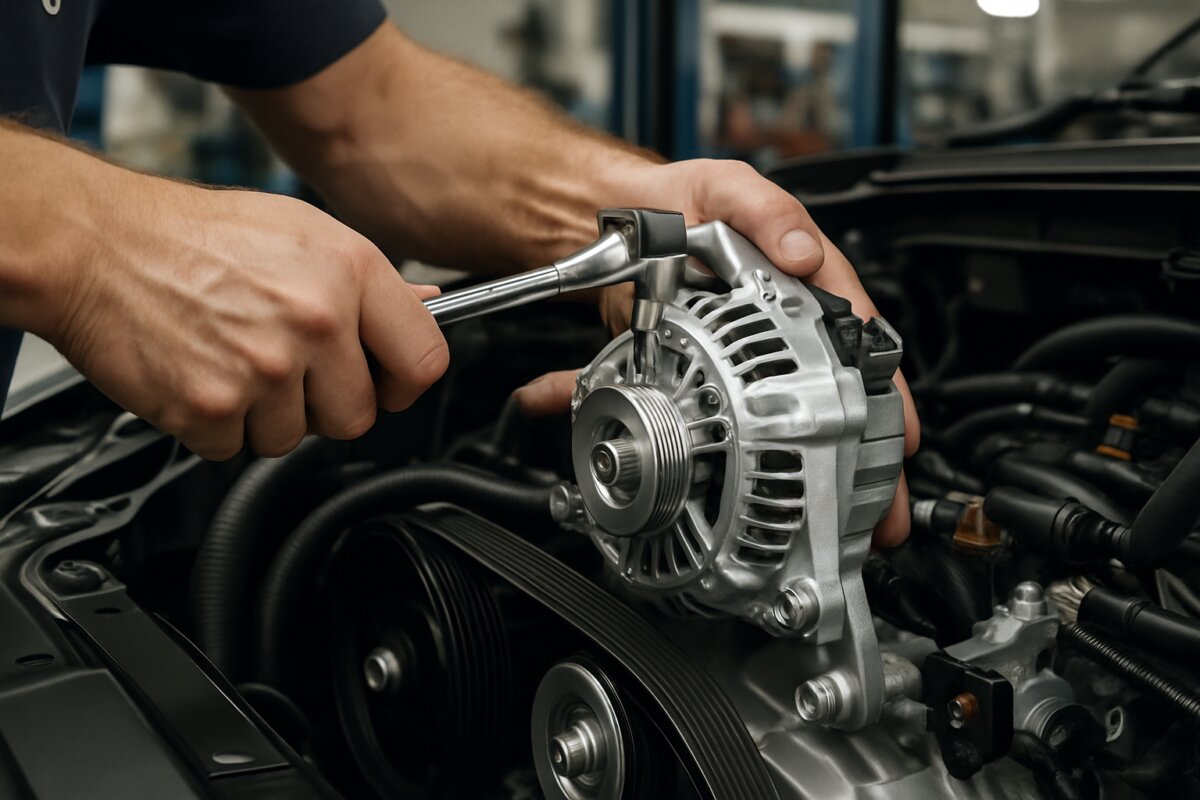
Most alternator swaps take between 1 and 3 hours for experienced technicians working on conventional vehicles. The process involves disconnecting the battery, removing the drive belt, unbolting the old unit, and installing the new one with proper tensioning.
Some cars present real challenges. Vehicles where the alternator sits behind the engine or requires removal of other components can push the job to 4-5 hours. Certain Audi and BMW models are notorious for requiring bumper removal or engine mount adjustments just to access the charging system.
Our specialists at Autopartspro note that proper diagnostics before ordering parts saves time. Many drivers assume they need an alternator when the real culprit is a faulty alternator regulator or damaged wiring harness. Testing the charging system properly prevents unnecessary expense and wasted labour hours.
Breaking down the replacement costs
| Vehicle type | Parts cost | Labour cost | Total estimate |
|---|---|---|---|
| Small hatchback | £100-£180 | £80-£150 | £180-£330 |
| Family saloon | £150-£250 | £100-£180 | £250-£430 |
| Premium/luxury | £250-£450 | £150-£300 | £400-£750 |
| Diesel SUV | £200-£350 | £120-£250 | £320-£600 |
These figures represent typical scenarios in 2024. Specialist vehicles or those requiring significant disassembly work will exceed these ranges. Always request a detailed quote before authorising work.
Signs you need alternator replacement
Catching alternator failure early prevents getting stranded and potentially damaging other electrical components. The charging system works harder than most people realise, constantly replenishing the battery whilst powering everything from your headlamps to your heated seats.
Dashboard warning lights provide the first clue. The battery light doesn’t actually indicate battery trouble in most cases – it signals charging system problems. Dimming lights when idling or flickering interior illumination suggest the alternator can’t maintain proper voltage.
Strange noises deserve attention too. Grinding, whining, or squealing from the engine bay often points to failing alternator bearings. That distinctive smell of burning rubber might be a slipping drive belt, but it could also indicate an overheating alternator about to fail.
Common warning signs
- Battery warning light illuminated on dashboard
- Dimming or flickering interior and exterior lights
- Difficulty starting the engine, especially after short journeys
- Electrical accessories behaving erratically
- Unusual grinding or whining noises from the engine compartment
- Burning smell from the alternator area
- Dead battery despite recent replacement
Professional opinion from Autopartspro mechanics
Our workshop team sees dozens of alternator replacements monthly, and they’ve noticed some interesting patterns. Modern vehicles with extensive electrical systems place enormous demands on charging components. Cars equipped with stop-start technology, multiple screens, and advanced driver assistance systems need robust alternators that previous generations simply didn’t require.
The specialists emphasise that alternator failure rarely happens suddenly. Most units show declining performance over weeks or months. Drivers who ignore early symptoms often end up with secondary damage to the battery, starter motor, or even sensitive control units that don’t tolerate voltage fluctuations.
One critical point our technicians stress: always replace the drive belt during alternator installation. A worn belt on a new alternator causes premature bearing failure and wastes your investment. The incremental cost of a new belt is negligible compared to repeating the entire job six months later.
Useful tip: Before replacing your alternator, have a professional test both the charging output and the battery condition. Many batteries fail to hold a charge after extended periods of undercharging, meaning you’ll need both components replaced to avoid returning to the workshop within weeks.
DIY versus professional installation
Competent home mechanics can tackle alternator replacement on many vehicles. The job requires basic tools: socket set, spanners, and a belt tension gauge. Simple engine layouts with top-mounted alternators present no special challenges for someone comfortable with mechanical work.
However, certain scenarios demand professional attention. Vehicles requiring special diagnostic equipment to reset fault codes or calibrate the new unit aren’t suitable for driveway repairs. Cars where you must remove significant components to reach the alternator make DIY impractical unless you have proper lifting equipment and plenty of time.
Insurance considerations matter too. Professional installations come with warranties covering both parts and labour. If your DIY attempt goes wrong or you damage surrounding components, you’re covering those costs yourself. For vehicles still under warranty or service plans, amateur repairs might void coverage.
How to extend alternator lifespan
Proper maintenance significantly extends alternator service life. Regular inspections of the drive belt prevent slippage that damages bearings. Checking belt tension takes minutes but prevents expensive failures down the road.
Electrical system health matters enormously. Loose battery terminals create resistance that forces the alternator to work harder. Corroded connections do the same. Our mechanics recommend cleaning battery terminals and checking charging system performance during every service interval.
Driving habits influence alternator longevity too. Constant short journeys where the engine barely warms up prevent the battery from fully charging. The alternator compensates by running at maximum output continuously, which accelerates wear. Regular longer drives help maintain system balance.
What happens during professional replacement
Understanding the replacement process helps you evaluate quotes and timelines. Technicians begin with comprehensive testing to confirm the alternator actually needs replacing. They’ll check output voltage, ripple patterns, and load performance before condemning the unit.
Once diagnosis confirms failure, the replacement follows a specific sequence. Disconnecting the battery prevents electrical shorts and protects sensitive electronics. The drive belt comes off next, requiring careful documentation of routing on complex systems with multiple belts.
Removing the old alternator involves disconnecting electrical connectors and unbolting mounting brackets. Some vehicles require removing the radiator cooling fan, air conditioning pipes, or other components. Installation reverses this process, with careful attention to proper belt tension and secure electrical connections.
Replacement process steps
- Complete diagnostic testing of charging system
- Disconnect battery negative terminal
- Remove drive belt and document routing
- Disconnect alternator wiring harness
- Unbolt and remove old alternator
- Install new unit with proper torque specifications
- Reconnect electrical connections
- Install new drive belt with correct tension
- Reconnect battery and test charging output
- Clear fault codes and verify system operation
Additional costs to anticipate
Alternator replacement often reveals related issues needing attention. The drive belt might show cracks or glazing. Replacement costs £15-40 for the part plus minimal additional labour since it’s already off the vehicle.
Battery condition frequently becomes apparent during alternator diagnosis. A battery that’s been repeatedly discharged due to charging system failure may have suffered permanent damage. Testing reveals whether it can still hold proper charge or needs replacement alongside the alternator.
Wiring harness damage sometimes occurs where connectors attach to the old alternator. Corrosion, heat damage, or physical wear might require repair or replacement. Similarly, the tensioner pulley and idler pulleys deserve inspection whilst the belt is removed.
| Additional component | Typical cost | When to replace |
|---|---|---|
| Drive belt | £15-£40 | Always recommended |
| Battery | £60-£150 | If over 4 years old or damaged |
| Tensioner assembly | £30-£80 | If showing wear or noise |
| Wiring repair | £20-£100 | If connectors corroded |
Choosing between OEM and aftermarket parts
Original equipment parts guarantee perfect fit and specification match. They’re manufactured to the same standards as your vehicle’s factory components. The premium price reflects this quality assurance and typically comes with comprehensive warranties.
Aftermarket alternatives offer excellent value without compromising reliability. Reputable manufacturers produce units that meet or exceed OEM specifications at lower prices. The key lies in selecting established brands with proven track records rather than cheapest options from unknown suppliers.
Our parts specialists recommend mid-range aftermarket alternators for most applications. They deliver reliable performance at sensible prices whilst providing adequate warranty coverage. Reserve OEM parts for specialist vehicles or where insurance requirements dictate original specification components.
Regional price variations across the UK
Location significantly impacts what you’ll pay for alternator replacement. Metropolitan areas command higher labour rates reflecting increased overheads and wage expectations. A job costing £300 in Newcastle might reach £450 in central London for identical work.
Rural areas sometimes present challenges too. Smaller workshops may lack experience with specialist vehicles, potentially extending labour times. Parts availability can be limited, adding delivery costs or requiring longer wait times that increase vehicle downtime.
Mobile mechanics offer interesting alternatives in some regions. They eliminate workshop overhead costs and travel to your location. For straightforward replacements on accessible vehicles, mobile services can save 20-30% compared with traditional garages whilst delivering equivalent quality work.
Warranty considerations and guarantees
Always clarify warranty terms before authorising alternator replacement. Parts warranties typically range from 12 months to lifetime depending on manufacturer and supplier. Labour warranties should cover at least the initial fitting period to protect against installation errors.
Read warranty fine print carefully. Some exclude consequential damage or require professional installation to remain valid. Others mandate specific service intervals or usage patterns. Understanding these terms prevents nasty surprises if problems develop months after installation.
Keep all documentation relating to the replacement. Invoices, warranty cards, and service records prove the work was completed professionally using quality components. This paperwork proves invaluable for warranty claims or when selling your vehicle.
Impact on other vehicle systems
A failing alternator affects more than just starting reliability. Modern vehicles rely on stable electrical supply for numerous critical systems. The engine control unit requires consistent voltage to maintain proper fuel delivery and ignition timing. Fluctuating power supply can trigger fault codes and reduce performance.
Safety systems suffer too. Anti-lock brakes depend on electrical signals from ABS sensors to function correctly. Erratic voltage confuses these systems, potentially compromising braking effectiveness. Similarly, stability control and traction management systems need reliable power to operate properly.
Comfort and convenience features take a hit as well. Climate control systems, entertainment units, and navigation equipment all demand steady electrical supply. An ailing alternator causes these systems to behave unpredictably, diminishing your driving experience long before complete failure occurs.
Environmental and efficiency factors
Modern alternators incorporate efficiency improvements that benefit fuel economy. Newer units use advanced voltage regulation that reduces parasitic drag on the engine. This means the engine expends less energy driving the alternator, translating to modest fuel savings over time.
Regenerative charging systems on hybrid and start-stop vehicles require specific alternator types. These units handle higher current demands and more frequent cycling than conventional designs. Using incorrect replacements compromises system efficiency and may trigger management system faults.
Proper disposal of old alternators matters environmentally. The units contain copper windings, aluminium housings, and electronic components that should be recycled. Reputable workshops include disposal in their service, ensuring materials enter proper recycling streams rather than landfill.
Making the right choice for your vehicle
When facing alternator replacement, gathering multiple quotes provides leverage for negotiation and highlights any outliers. Ensure quotes compare like-for-like specifications and include all necessary components beyond just the alternator itself.
Consider your vehicle’s age and value when deciding between repair options. An older car with high mileage might suit a quality aftermarket alternator perfectly, whilst a nearly-new premium vehicle deserves OEM components to maintain resale value and manufacturer relationships.
Don’t delay replacement once problems surface. The inconvenience and cost of breakdown recovery, plus potential damage to expensive electrical components, far exceeds the expense of planned replacement. Addressing charging system issues promptly protects your investment and maintains reliable transportation.
Working with suppliers like Autopartspro ensures access to quality components at competitive prices. Our range covers everything from budget-friendly options for older vehicles to premium units for performance applications. Combined with expert advice from experienced mechanics, you’ll find the right balance between cost, quality, and longevity for your specific needs. Whether you’re tackling the job yourself or seeking professional installation, understanding the true costs and timescales involved helps you make informed decisions that keep your vehicle running reliably for years ahead.
Frequently Asked Questions (FAQ)
Can I drive with a failing alternator?
You can drive briefly on battery power alone, but this risks complete electrical failure and stranding you. Modern vehicles drain batteries quickly without alternator support, typically lasting 30-60 minutes before shutdown.
How long should an alternator last?
Most alternators survive 80,000-150,000 miles or 7-10 years under normal conditions. Vehicles with extensive electrical accessories or frequent short journeys may experience shorter lifespans due to increased charging demands.
Will a bad alternator damage my battery?
Yes, a failing alternator causes repeated deep discharge cycles that permanently damage battery plates. Undercharging or overcharging both reduce battery capacity and lifespan, often requiring simultaneous replacement of both components.
Why do some alternators cost so much more?
Higher-amperage units for vehicles with extensive electrical systems require more robust construction. Premium brands offer superior bearings, better voltage regulation, and longer warranties. Vehicle-specific designs also command premium prices.
Should I replace the battery when changing the alternator?
If your battery is over four years old or has endured extended undercharging, replacement is wise. Testing reveals actual condition, but preventive replacement often proves more economical than returning for battery work later.

 Loading...