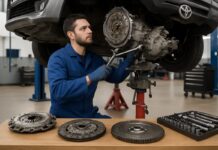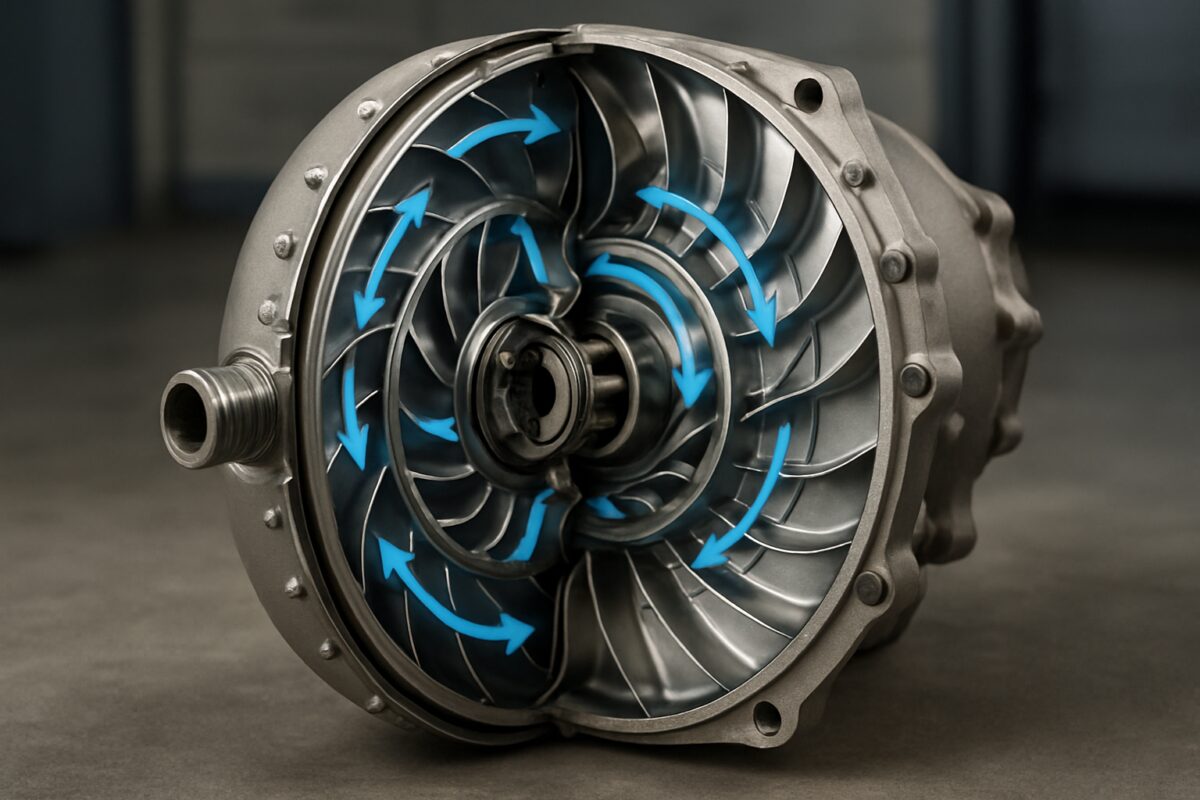
A torque converter serves as the vital link between your engine and automatic transmission, functioning as a fluid coupling that transfers power whilst allowing the engine to idle whilst the car remains stationary. This hydraulical component uses transmission fluid to multiply engine torque and provides the smooth operation that defines automatic transmissions, eliminating the need for a manual clutch mechanism.
Understanding how your torque converter operates can save you thousands in unnecessary repairs and help you spot problems before they escalate into catastrophic transmission failures.
How does a torque converter work
The torque converter operates through three main components working in perfect harmony. These sophisticated parts create a fluid coupling system that’s both elegant and effective.
The impeller connects directly to the engine’s flywheel and rotates at engine speed. As it spins, it creates a circular flow of transmission fluid that carries energy from the engine. This fluid flow drives the turbine, which connects to the transmission input shaft.
Between these components sits the stator, a clever device that redirects fluid flow to increase efficiency. The stator remains stationary during certain operating conditions, redirecting fluid back to the impeller at an angle that multiplies torque output.
| Component | Function | Connection Point |
|---|---|---|
| Impeller | Creates fluid flow | Engine flywheel |
| Turbine | Receives fluid energy | Transmission input shaft |
| Stator | Redirects fluid flow | One-way clutch |
During low-speed operation, the torque converter multiplies engine torque by up to three times. As vehicle speed increases and the turbine catches up to the impeller, torque multiplication decreases. Modern converters include a lock-up clutch that mechanically connects the impeller and turbine at cruising speeds, improving fuel efficiency.
Common torque converter problems
According to our specialists at AutoPartsPro, torque converter failures typically manifest through specific symptoms that experienced mechanics can identify quickly. These problems often develop gradually, giving drivers warning signs before complete failure occurs.
The most frequent issues include worn internal seals, damaged lock-up clutch mechanisms, and contaminated transmission fluid. Each problem creates distinct symptoms that affect vehicle performance differently.
Lock-up clutch failure
The lock-up clutch mechanism frequently fails in high-mileage vehicles. This component physically connects the impeller and turbine at highway speeds, reducing slippage and improving fuel economy. When it fails, you’ll notice increased fuel consumption and transmission overheating.
Symptoms include shuddering during acceleration, particularly noticeable when climbing hills or merging onto motorways. The transmission control module often detects these issues and may limit lock-up engagement to protect the system.
Internal seal degradation
Rubber seals within the torque converter deteriorate over time, causing internal fluid leaks. These leaks reduce hydraulic pressure and affect torque multiplication efficiency. You might notice sluggish acceleration and delayed engagement when shifting from park to drive.
Internal seal problems often coincide with external transmission leaks, as the same fluid circulates throughout the entire system. Regular fluid changes help prevent premature seal failure.
Recognising torque converter failure symptoms
Early detection of torque converter problems can prevent costly transmission rebuilds. Our experienced technicians have compiled a comprehensive list of warning signs that indicate developing issues.
These symptoms often appear gradually, making them easy to dismiss as normal wear. However, ignoring early warning signs typically leads to complete transmission failure requiring expensive repairs or replacement.
Performance-related symptoms
Vehicle performance changes provide the clearest indication of torque converter problems. These symptoms affect daily driving and become more pronounced over time.
- Slipping sensation during acceleration
- Delayed engagement when shifting into drive or reverse
- Shuddering or vibration during acceleration
- Reduced fuel economy despite normal driving habits
- Loss of power when climbing hills
Slipping occurs when the torque converter cannot maintain proper hydraulic coupling between engine and transmission. This creates a disconnect feeling where engine speed increases without corresponding vehicle acceleration.
Fluid-related indicators
Transmission fluid condition often reveals torque converter health. Healthy fluid appears bright red with a slightly sweet smell, whilst contaminated fluid indicates internal component wear.
- Dark brown or black fluid colour
- Burnt smell from transmission fluid
- Metal particles in fluid
- Foamy or aerated fluid consistency
- External fluid leaks beneath vehicle
Burnt fluid typically indicates overheating caused by excessive slippage within the torque converter. Metal particles suggest internal component wear, requiring immediate attention to prevent further damage.
Professional tip: Check your transmission fluid monthly using the dipstick when the engine is warm and running. Healthy fluid should be bright red and clear, never dark or burnt-smelling.
Diagnostic procedures and testing methods
Professional diagnosis requires specialized equipment and experience to accurately identify torque converter problems. Our technicians use systematic approaches that eliminate guesswork and ensure accurate repairs.
Modern vehicles equipped with transmission control modules provide diagnostic trouble codes that help pinpoint specific problems. However, mechanical issues don’t always trigger codes, requiring additional testing methods.
Electronic diagnostics
OBD-II scanners reveal transmission-related fault codes that indicate torque converter problems. Common codes include P0740 (torque converter clutch circuit malfunction) and P0741 (torque converter clutch performance).
These codes help technicians focus their diagnosis on specific systems. However, intermittent problems may not store permanent codes, requiring live data monitoring during test drives to capture elusive faults.
Physical inspection methods
Visual inspection reveals external evidence of torque converter problems. Technicians examine fluid condition, check for leaks, and assess overall transmission health.
Road testing provides crucial information about torque converter performance under various operating conditions. Experienced technicians can identify subtle symptoms that indicate developing problems before complete failure occurs.
| Test Method | Purpose | Equipment Required |
|---|---|---|
| Stall test | Measures torque converter efficiency | Tachometer, pressure gauges |
| Lock-up test | Verifies clutch operation | Scan tool, test drive |
| Pressure test | Checks hydraulic function | Pressure gauge set |
Replacement costs and considerations
Torque converter replacement represents a significant investment that varies considerably based on vehicle make, labour rates, and component quality. Understanding these factors helps you make informed decisions about repairs.
In the UK, complete torque converter replacement typically costs between £800 and £2,500, including labour. Premium vehicles and specialized transmissions command higher prices due to component complexity and limited availability.
Cost breakdown factors
Several variables influence total replacement costs. Parts prices vary significantly between aftermarket and OEM components, whilst labour costs depend on transmission accessibility and regional rates.
- Torque converter cost: £200-£800
- Labour charges: £400-£1,200
- Fluid and filter replacement: £80-£150
- Additional repairs if needed: £200-£600
Labour represents the largest cost component because accessing the torque converter requires transmission removal. This complex procedure typically takes 6-12 hours depending on vehicle design and shop efficiency.
Quality considerations
Choosing between OEM, aftermarket, and remanufactured torque converters affects both initial cost and long-term reliability. Each option offers distinct advantages depending on your budget and expectations.
OEM components provide guaranteed compatibility and maximum durability but command premium prices. Quality aftermarket units offer excellent value whilst remanufactured converters provide cost-effective solutions for high-mileage vehicles.
- OEM torque converters: Highest quality, maximum warranty
- Aftermarket units: Good value, wide selection
- Remanufactured converters: Budget-friendly, environmentally conscious
- Performance upgrades: Enhanced durability, improved efficiency
Prevention and maintenance strategies
Proper maintenance significantly extends torque converter life and prevents premature failures. Our specialists recommend specific practices that keep your transmission running smoothly for years.
Regular fluid changes represent the most effective preventive measure. Fresh fluid lubricates internal components, removes contaminants, and maintains proper hydraulic pressures throughout the system.
Fluid maintenance schedule
Transmission fluid deteriorates over time, losing its ability to lubricate and cool internal components effectively. Following manufacturer service intervals prevents fluid-related problems that damage torque converters.
Most manufacturers recommend fluid changes every 30,000-60,000 miles under normal conditions. Severe service conditions like towing, city driving, or extreme temperatures require more frequent changes.
Remember: Dark, burnt-smelling transmission fluid indicates immediate attention is needed. Don’t wait for scheduled service intervals if fluid condition deteriorates.
Driving habits that extend life
Considerate driving practices reduce stress on torque converter components. Avoiding aggressive acceleration and allowing proper warm-up time helps maintain optimal operating conditions.
When starting your vehicle, allow the transmission to warm up before demanding full performance. Cold fluid doesn’t flow properly, creating additional wear on internal components during initial operation.
When to seek professional help
Certain symptoms require immediate professional attention to prevent catastrophic transmission damage. Understanding when to stop driving and seek help protects your investment and ensures safety.
Complete loss of drive, severe slipping, or loud grinding noises indicate serious problems requiring immediate diagnosis. Continuing to drive with these symptoms often causes irreparable damage to expensive transmission components.
Our qualified technicians possess the expertise and equipment necessary for accurate diagnosis and professional repairs. Early intervention typically results in less expensive repairs and better long-term outcomes for your vehicle.
Don’t ignore transmission problems hoping they’ll resolve themselves. Modern torque converters are sophisticated components that require professional service when problems develop. Proper diagnosis ensures you receive appropriate repairs rather than unnecessary transmission rebuilds.
Visit our comprehensive selection of transmission components to find quality replacement parts for your vehicle. Professional installation and quality components ensure reliable operation for years to come.
Frequently Asked Questions (FAQ)
How long does a torque converter typically last?
A well-maintained torque converter usually lasts 100,000-150,000 miles. Regular fluid changes and gentle driving habits significantly extend component life beyond these typical ranges.
Can I drive with a failing torque converter?
Limited driving is possible with mild symptoms, but complete failure requires immediate stopping. Severe slipping or loss of drive indicates potential safety hazards requiring professional attention.
What causes torque converter shuddering?
Shuddering typically results from lock-up clutch problems or contaminated fluid. Internal component wear creates irregular engagement that produces vibration during acceleration or cruising speeds.
Is torque converter replacement worth the cost?
Replacement makes financial sense when the vehicle’s overall condition justifies the investment. Consider vehicle age, mileage, and other maintenance needs before committing to expensive repairs.
Can torque converter problems damage my transmission?
Yes, continued operation with converter problems often causes transmission damage. Contaminated fluid and overheating affect all transmission components, potentially requiring complete rebuilds instead of simple repairs.

 Loading...