A squeaking noise when turning your steering wheel is more than just an annoying sound—it’s often your car’s way of telling you something needs attention. Whether the squeak occurs when turning left, right, or both directions, understanding the root cause can save you from costly repairs down the road. Let’s explore the most common culprits and practical solutions to restore your peaceful driving experience.
Power steering fluid issues
Low or contaminated power steering fluid ranks as the primary cause of steering squeak. The power steering pump relies on hydraulic fluid to operate smoothly, and when levels drop below minimum requirements, metal components begin grinding against each other.
Contaminated fluid presents similar symptoms. Over time, debris, moisture, and worn seal particles accumulate in the system. This contamination reduces the fluid’s lubricating properties, causing internal pump components to squeal during operation.
Check your power steering reservoir monthly. The fluid should appear clean and translucent, ranging from amber to reddish in colour. Dark, cloudy, or metallic-flecked fluid indicates contamination and requires immediate replacement.
Pro tip from our mechanics: Always use manufacturer-specified power steering fluid. Using incorrect fluid types can damage seals and create more problems than you started with.
Worn steering components
Several steering system components can produce squeaking noises when they reach the end of their service life. The tie rod ends connect your steering rack to the wheels, and worn bushings within these components often create squeaking sounds during turns.
Ball joints represent another frequent squeaking source. These spherical bearings allow your wheels to move up and down whilst maintaining steering control. When the protective boot tears or internal lubrication depletes, metal-on-metal contact produces distinctive squeaking noises.
The steering rack itself can develop worn internal seals and components. As these parts deteriorate, they create friction and noise during steering input. This type of wear typically affects vehicles with higher mileage or those subjected to harsh driving conditions.
Regular inspection of these components during routine maintenance helps identify problems before they become safety concerns. Look for torn boots, excessive play, or obvious wear patterns that indicate replacement necessity.
Belt and pulley problems
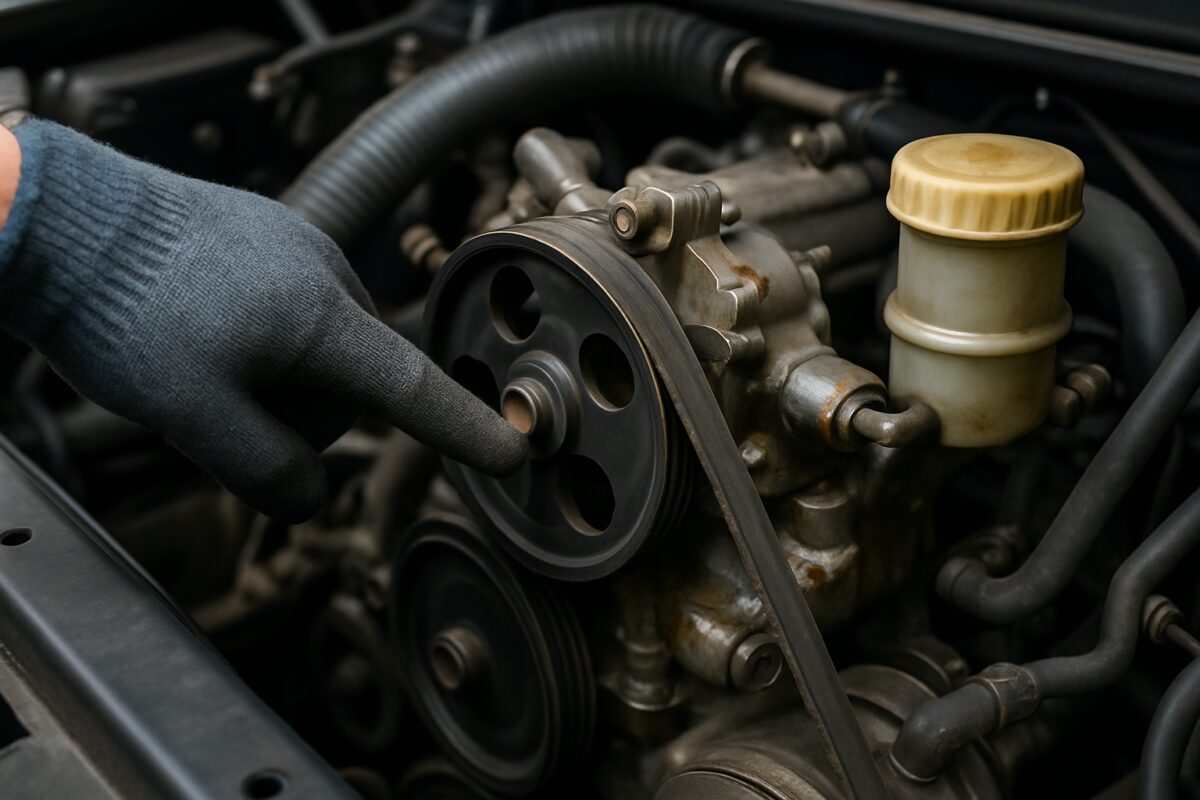
Your power steering system relies on a belt-driven pump to generate hydraulic pressure. A loose, worn, or glazed drive belt often produces squeaking noises, particularly during steering inputs when pump demand increases.
Belt tension plays a crucial role in proper operation. Too loose, and the belt slips on the pulleys, creating noise and reducing pump efficiency. Too tight, and excessive bearing wear accelerates, leading to premature component failure.
Pulley alignment issues can also cause squeaking. Misaligned pulleys force the belt to run at an angle, increasing wear and generating noise. This problem often develops after engine work or component replacement when proper alignment procedures aren’t followed.
Inspect your drive belt regularly for signs of cracking, fraying, or glazing. A properly tensioned belt should deflect approximately 13mm when pressed firmly with moderate finger pressure.
Our specialists recommend replacing drive belts every 60,000-100,000 miles or when visible wear appears, whichever comes first.
Warning signs your car has a problem
Recognising early warning signs helps prevent minor squeaking issues from escalating into major repairs. Pay attention to these symptoms that indicate your steering system needs professional attention:
- Squeaking noise intensity increases with steering angle
- Steering wheel requires more effort to turn
- Groaning or whining sounds accompany the squeaking
- Steering wheel vibration during turns
- Visible fluid leaks under the vehicle
How to fix the problems
Addressing steering squeak requires systematic diagnosis and appropriate repairs. Here’s a comprehensive troubleshooting approach:
| Problem | Symptoms | Solution | Difficulty Level |
|---|---|---|---|
| Low power steering fluid | Squeaking during turns, heavy steering | Top up fluid, check for leaks | Easy |
| Contaminated fluid | Dark fluid, metal particles visible | Complete fluid flush and replacement | Moderate |
| Worn belt | Squeaking on startup, during acceleration | Belt replacement and tension adjustment | Moderate |
| Failed pump | Continuous whining, no power assistance | Power steering pump replacement | Difficult |
| Worn steering components | Squeaking with play in steering wheel | Replace affected components | Difficult |
For simple fluid top-ups, locate your power steering reservoir and slowly add the correct fluid type until reaching the maximum level mark. Always check fluid levels with the engine running and wheels straight ahead.
Belt replacement requires careful attention to proper routing and tension. Follow your vehicle’s service manual specifications for correct tension values. Most modern vehicles use automatic tensioners that maintain proper belt tension without manual adjustment.
When to see a mechanic
Whilst some steering maintenance tasks suit DIY enthusiasts, certain situations demand professional intervention. Seek immediate mechanical attention if you experience sudden steering loss, severe vibration, or grinding noises that indicate imminent component failure.
Professional diagnosis becomes essential when squeaking persists after basic fluid maintenance. Modern vehicles incorporate complex steering systems with electronic components that require specialised diagnostic equipment for proper evaluation.
Safety considerations should guide your decision-making process. Steering system failures can result in loss of vehicle control, making professional inspection worthwhile for any persistent symptoms.
Consider professional service for brake fluid system work or when multiple steering components require simultaneous replacement. These procedures often require special tools and expertise to ensure proper installation and safety.
Frequently asked questions
Why does my steering squeak only when turning left?
Directional squeaking often indicates worn components on one side. Check ball joints, tie rod ends, or CV joints specifically on the left side.
Can I drive with a squeaking steering wheel?
Brief driving is possible, but avoid extended journeys until diagnosis. Squeaking can indicate imminent component failure requiring immediate attention.
How much does steering squeak repair cost?
Costs vary from £20 for fluid top-up to £300+ for component replacement. Professional diagnosis helps determine exact requirements and costs.
Does cold weather cause steering squeak?
Yes, cold temperatures thicken power steering fluid and can cause temporary squeaking. Persistent noise indicates underlying problems requiring investigation.
How often should I check power steering fluid?
Monthly checks prevent most fluid-related problems. Include steering fluid inspection in your regular maintenance routine alongside engine oil checks.
Final recommendation
Steering squeak shouldn’t be ignored or dismissed as normal vehicle aging. Early intervention prevents minor issues from developing into expensive repairs that compromise vehicle safety. Start with basic fluid level checks and visual inspection of obvious wear items.
Our automotive specialists recommend establishing a preventive maintenance schedule that includes regular fluid changes and component inspections. This approach extends component life whilst maintaining optimal steering performance.
Remember that steering systems directly affect vehicle safety and control. When in doubt, professional diagnosis provides peace of mind and ensures proper repair procedures. Quality replacement parts and proper installation techniques ultimately save money through extended component life and reliable operation.
Don’t let steering squeak diminish your driving experience. Address the underlying causes promptly and enjoy smooth, quiet steering operation for years to come.

 Loading...