To stop a leaking radiator, you’ll need to identify the leak source, drain the cooling system, clean the affected area, and apply appropriate repair methods such as radiator sealant, epoxy paste, or replacement parts. Most minor leaks can be sealed temporarily with commercial radiator stop-leak products, whilst major damage requires professional repair or radiator replacement.
A leaking radiator can leave you stranded and cause serious engine damage if left untreated. The cooling system maintains optimal engine temperature, and even small leaks can lead to overheating. This guide covers both temporary fixes for emergency situations and permanent solutions to keep your vehicle running safely.
Tools and parts required
Parts needed:
- Radiator stop-leak sealant
- Coolant/antifreeze (vehicle specific)
- Replacement radiator hose clamps
- Epoxy putty or radiator repair paste
- New radiator cap
Tools required:
- Socket set and spanners
- Drain pan (minimum 5-litre capacity)
- Wire brush or sandpaper
- Clean rags
- Safety gloves and eye protection
- Funnel
- Torch or work light
Safety precautions
Never work on a hot radiator. Allow the engine to cool completely for at least 30 minutes before beginning any repair work. Hot coolant can cause severe burns, and the system operates under pressure.
Always wear safety gloves when handling coolant, as ethylene glycol is toxic. Work in a well-ventilated area and dispose of old coolant at an authorised recycling centre.
Keep a fire extinguisher nearby when working with flammable repair materials like epoxy compounds.
Step-by-step instructions
Step 1: Identify the leak source
Start your diagnosis with the engine cold. Check around the radiator, hoses, and connections for visible coolant traces. Common leak points include the radiator core, inlet and outlet tanks, hose connections, and the drain plug.
Look for white or green stains, which indicate dried coolant residue. Fresh leaks will show wet spots or puddles beneath the vehicle.
Use a torch to inspect hard-to-see areas. Sometimes leaks only appear when the system is under pressure during engine operation.
Step 2: Drain the cooling system
Position your drain pan beneath the radiator drain plug. Slowly remove the radiator cap to release system pressure, then open the drain plug.
Allow the system to drain completely. This typically takes 10-15 minutes depending on system capacity.
If your radiator lacks a drain plug, disconnect the bottom hose instead. Use appropriate clamps to control coolant flow.
Step 3: Clean the leak area
Use a wire brush or sandpaper to clean around the leak thoroughly. Remove any corrosion, dirt, or old sealant that could prevent proper adhesion.
Degrease the area with brake cleaner or similar solvent. The surface must be completely clean and dry for effective repair.
For plastic radiator tanks, use fine sandpaper to create a slightly rough surface for better bonding.
Step 4: Apply the repair method
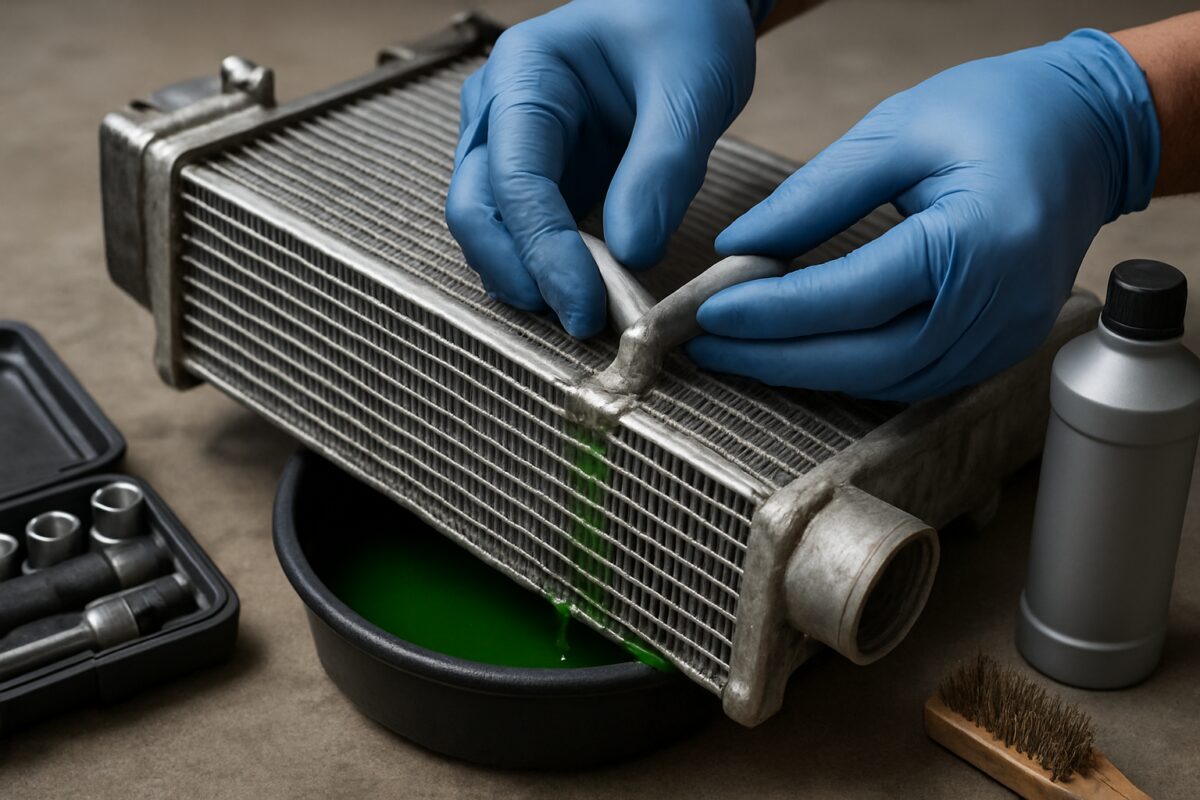
For small pinhole leaks in the radiator core, apply epoxy putty according to manufacturer instructions. Work the putty into the leak and smooth the surface.
For hose connection leaks, replace worn clamps and check hose condition. Cut away any deteriorated hose sections.
For temporary repairs, radiator stop-leak products can seal minor leaks from inside the system. Add the sealant to the radiator when refilling with coolant.
Step 5: Refill and test the system
Allow repair materials to cure completely before refilling. This typically takes 30 minutes to several hours depending on the product used.
Refill the system with the correct coolant mixture through the radiator filler neck. Run the engine with the heater on to remove air pockets.
Monitor coolant levels and check for leaks during the first few days after repair. Top up as needed and inspect your work regularly.
Common mistakes to avoid
Using stop-leak products as permanent solutions is a frequent error. These products work well for emergencies but can clog narrow passages in the cooling system over time.
Attempting repairs on hot systems is dangerous and ineffective. Always allow complete cooling before starting work.
Over-tightening hose clamps can crack plastic radiator tanks. Use appropriate torque settings and replace damaged clamps rather than over-tightening worn ones.
Mixing different coolant types can cause chemical reactions that damage seals and gaskets. Always use the manufacturer-specified coolant type.
Ignoring small leaks often leads to major cooling system failure. Address minor issues promptly to prevent expensive repairs later.
Professional tip: Check your coolant levels weekly, especially during temperature changes. Early detection of small leaks can save hundreds in repair costs.
When should you replace the radiator?
Replace your radiator when repair costs exceed 60% of replacement cost. Multiple leak points, extensive corrosion, or damaged cooling fins typically indicate replacement time.
Age is another factor – radiators over 10 years old are more prone to failure. If your vehicle has covered more than 100,000 miles, consider replacement during major cooling system maintenance.
Physical damage from impacts or severe overheating usually requires replacement. Plastic tank cracks often spread even after repair.
Poor cooling performance despite repairs suggests internal blockages that cleaning cannot resolve. This commonly occurs in older vehicles with neglected maintenance.
Related maintenance you can do at the same time
Replace the radiator thermostat if it’s showing signs of wear. A faulty thermostat can cause overheating even with a perfect radiator.
Check and replace worn radiator hoses while the system is drained. Cracked or soft hoses are common failure points.
Inspect the water pump for leaks or bearing wear. Water pump problems often coincide with radiator issues.
Flush the entire cooling system to remove accumulated debris and corrosion. This improves cooling efficiency and extends component life.
Test the cooling fan operation and replace if necessary. Proper airflow is essential for radiator effectiveness.
Mechanic’s insight: At AutoPartsPro, we’ve found that addressing cooling system maintenance as a complete service prevents future failures and saves money long-term.
Frequently asked questions
Can I drive with a small radiator leak?
Driving with any cooling system leak risks engine damage from overheating. Stop driving immediately if coolant levels drop significantly or temperature rises.
How long does radiator stop-leak last?
Commercial stop-leak products typically last 1-6 months depending on leak size and driving conditions. They’re temporary solutions only.
Will radiator stop-leak damage my engine?
Quality stop-leak products won’t harm your engine when used occasionally. Avoid repeated use as buildup can block narrow coolant passages.
What causes radiator leaks?
Common causes include corrosion from age, physical damage, pressure cycling, and poor maintenance. Contaminated coolant accelerates internal corrosion significantly.
How much does professional radiator repair cost?
Professional repairs range from £50-£150 for minor fixes to £200-£400 for replacement. DIY repairs cost £15-£80 in materials.
Stopping a radiator leak requires proper diagnosis and appropriate repair methods for lasting results. Whether using temporary stop-leak products for emergencies or permanent repairs with quality materials, addressing cooling system issues promptly prevents costly engine damage. Using the correct parts and following proper procedures ensures reliable operation and extends your vehicle’s service life.

 Loading...