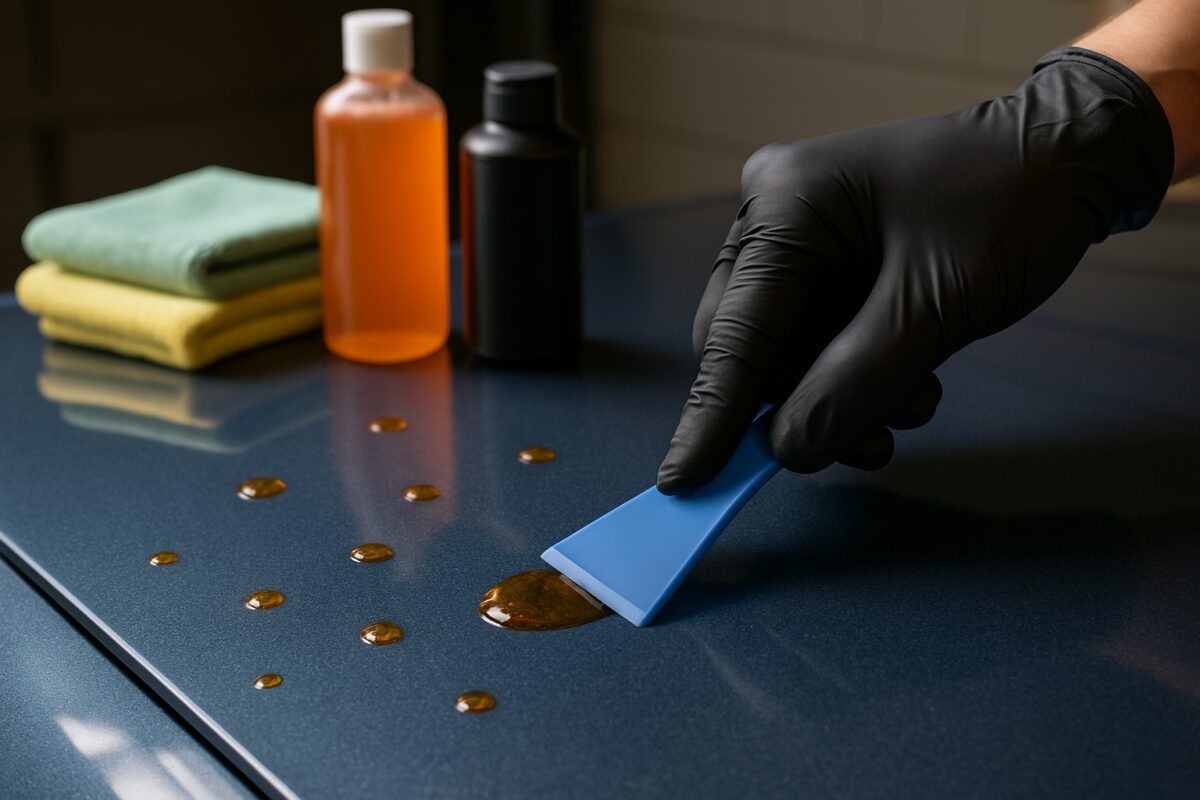
Tree sap removal from car paint requires gentle solvents, proper technique, and patience to avoid paint damage. The key is softening the hardened resin with specialised removers or household alternatives like rubbing alcohol, followed by careful scraping and protective waxing to restore the surface.
Tools and materials required
Success depends on having the right supplies for safe sap removal.
Essential materials needed
- Tree sap remover or rubbing alcohol (70% minimum)
- Microfibre cloths (at least 3-4 pieces)
- Plastic scraper or credit card
- Warm soapy water
- Car wax or polish
- Clay bar (for stubborn residue)
Optional but helpful items
- Hair dryer for heat application
- Peanut butter or cooking oil as alternative solvents
- Detailing spray for final cleaning
- Cotton swabs for precision work
Safety precautions
Work in shaded areas away from direct sunlight to prevent chemicals from drying too quickly. Ensure proper ventilation when using solvents, and test any product on an inconspicuous area first. Wear nitrile gloves to protect your hands from chemicals and avoid skin irritation.
Step-by-step sap removal process
Step 1: Assess and prepare the affected area
Examine the sap deposits to determine their size and hardness. Fresh sap appears sticky and translucent, whilst older deposits become amber-coloured and rock-hard. Clean the surrounding paintwork with soapy water to remove dirt that could scratch during the removal process.
Position your vehicle in a shaded area and allow the surface to cool completely. Hot paint can cause solvents to evaporate too quickly, reducing their effectiveness.
Step 2: Apply solvent to soften the sap
Soak a microfibre cloth with your chosen solvent – commercial tree sap remover works best, but 70% rubbing alcohol serves as an effective alternative. Place the saturated cloth directly over the sap deposit and let it sit for 3-5 minutes.
For particularly stubborn deposits, apply gentle heat using a hair dryer on low setting. Keep the dryer moving and maintain at least 6 inches distance to avoid paint damage.
Step 3: Gently remove the softened sap
Using a plastic scraper or old credit card, carefully work under the sap deposit at a shallow angle. Apply minimal pressure and let the softened resin do the work. If resistance occurs, apply more solvent rather than increasing pressure.
Work from the outside edges toward the centre to prevent spreading the sap over a larger area. Remove smaller bits with cotton swabs dipped in solvent.
Our mechanics at AutoPartsPro recommend using fingernails wrapped in microfibre cloth for delicate areas around badges or trim pieces where plastic scrapers might cause damage.
Step 4: Clean residual adhesive
Apply more solvent to a fresh microfibre cloth and wipe the area in circular motions to remove any remaining sticky residue. Multiple applications may be necessary for complete removal.
For persistent residue, use a clay bar with lubricant to safely lift embedded particles without scratching the paint surface.
Step 5: Wash and protect the treated area
Thoroughly wash the cleaned area with warm soapy water to remove all traces of solvent. Rinse well and dry completely with a clean microfibre towel.
Apply a coat of quality car wax to restore protection and shine to the treated paintwork. This step prevents future sap from bonding as strongly to the surface.
Common mistakes to avoid
Never attempt to scrape hardened sap without first softening it with solvent – this guarantees paint scratches. Avoid using metal tools or aggressive abrasives that can permanently damage the clear coat.
Don’t work in direct sunlight, as this causes solvents to evaporate too quickly and makes the sap harder to remove. Rushing the process often leads to incomplete removal and potential paint damage.
Resist the temptation to use harsh chemicals like acetone or paint thinner, which can strip paint and damage plastic trim. Always test products in an inconspicuous area first.
According to our detailing specialists, the biggest mistake is using insufficient solvent – being generous with product application saves time and prevents damage from excessive scraping.
Alternative removal methods
Household items can serve as effective sap removers when commercial products aren’t available. Peanut butter’s oils help dissolve resin, though it requires thorough cleaning afterwards.
White vinegar heated slightly can soften smaller sap deposits, whilst mayonnaise provides gentle removal for fresh sap. Oil filters during regular maintenance help identify optimal service intervals.
Ice cubes can harden small sap spots enough for careful removal with fingernails, though this method works only on very fresh deposits.
When to replace damaged components
Severe sap contamination on plastic trim pieces may require replacement if cleaning fails to restore appearance. Bumper components are particularly vulnerable to permanent staining.
Windscreen damage from aggressive sap removal attempts often necessitates professional repair or replacement. Consider this when working near glass surfaces.
Rubber seals and gaskets can deteriorate from prolonged solvent exposure, requiring gasket replacement during major services.
Prevention strategies
Regular waxing creates a protective barrier that makes future sap removal easier. Park away from overhanging branches whenever possible, especially during spring when sap flow peaks.
Consider using car covers in heavily wooded areas or when parking for extended periods. Quick removal of fresh sap prevents it from hardening and becoming more difficult to clean.
Inspect your vehicle weekly during high-sap seasons (typically March through June) to catch deposits before they cure completely.
Related maintenance tasks
Combine sap removal with regular washing and waxing for maximum efficiency. This is an ideal time to clean windscreen washer jets and check windscreen wipers for damage from sticky deposits.
Consider applying ceramic coating after successful sap removal for long-term protection. The smooth surface makes future cleaning significantly easier.
Check and clean exterior trim pieces, mirrors, and door handles that may harbour hidden sap deposits.
Frequently asked questions
Can WD-40 remove tree sap safely?
WD-40 can soften tree sap effectively, but requires thorough cleaning afterwards to prevent attracting dirt and affecting paint adhesion.
How long should I wait before removing fresh sap?
Remove fresh sap immediately when possible – within 24-48 hours prevents it from hardening and becoming significantly more difficult to clean.
Will tree sap damage my car’s clear coat permanently?
Properly removed sap rarely causes permanent damage, but neglected deposits can etch into paint and require professional polishing to restore.
Is it safe to use a pressure washer on sap deposits?
Avoid pressure washing hardened sap as it won’t remove it effectively and may force particles into paint pores, causing scratches.
Can I prevent sap from sticking to my car?
Regular waxing every 2-3 months creates a protective layer that makes sap removal easier and reduces bonding strength significantly.
Professional tree sap removal becomes straightforward with proper preparation and patience. Using appropriate solvents combined with gentle techniques preserves your paintwork whilst effectively eliminating stubborn resin deposits. Remember to always test products in inconspicuous areas and follow up with protective waxing for optimal results.

 Loading...