A stuck handbrake can be released through several methods: gentle rocking of the vehicle whilst attempting release, applying penetrating oil to the cable mechanism, warming frozen components with a hair dryer, or manually adjusting the brake cable tension. Success depends on identifying whether the issue stems from seized cables, frozen mechanisms, or worn components.
Tools & parts required
Having the right equipment makes releasing a stuck handbrake much easier and safer. Professional mechanics at AutopartsPro recommend gathering these items before attempting any repair.
Parts needed:
- Hand brake cable (if replacement required)
- Handbrake shoes (for drum brake systems)
- Penetrating oil or lubricant
- Cable grease
- Replacement springs (if damaged)
Tools required:
- Socket set
- Pliers
- Wire brush
- Jack and axle stands
- Hair dryer or heat gun
- Torch or inspection light
Always ensure replacement parts match your specific vehicle model and year. Check your owner’s manual for the correct handbrake cable part number before ordering.
Safety precautions
Working on brake systems requires strict safety measures. Never attempt repairs without proper precautions in place.
Work on level ground with the vehicle properly secured. Disconnect the battery if working near electrical components. Wear safety glasses and protective gloves throughout the process.
Ensure the engine is off and has cooled down before starting work. Keep a fire extinguisher nearby when using penetrating oils. Never work under a vehicle supported only by a jack.
Step-by-Step instructions
Step 1: Try gentle release techniques
Start with the simplest methods before attempting mechanical repairs. Pull the handbrake lever up slightly, then press the release button and gently lower the lever. Sometimes a stuck mechanism just needs gentle persuasion.
Try rocking the vehicle gently whilst attempting to release the handbrake. This movement can help free seized components. Ensure someone else operates the handbrake whilst you rock the car for safety.
Step 2: Apply heat to frozen components
Cold weather often causes handbrake cables and mechanisms to freeze. Use a hair dryer to warm the cable housing and brake mechanism areas. Focus heat on visible cable runs and the rear brake assemblies.
Never use an open flame or excessive heat. Gradual warming prevents damage to rubber components and brake lines. Allow components to warm for several minutes before attempting release.
Step 3: Locate and inspect the handbrake cable
The handbrake cable runs from the lever inside the vehicle to the rear brakes. Inspect the cable for obvious damage, corrosion, or seized sections. Look for frayed cables or damaged housing that might cause binding.
Check where the cable passes through the vehicle floor and around the rear axle. These areas commonly accumulate dirt and moisture, causing seizure. Use your torch to examine hard-to-see sections thoroughly.
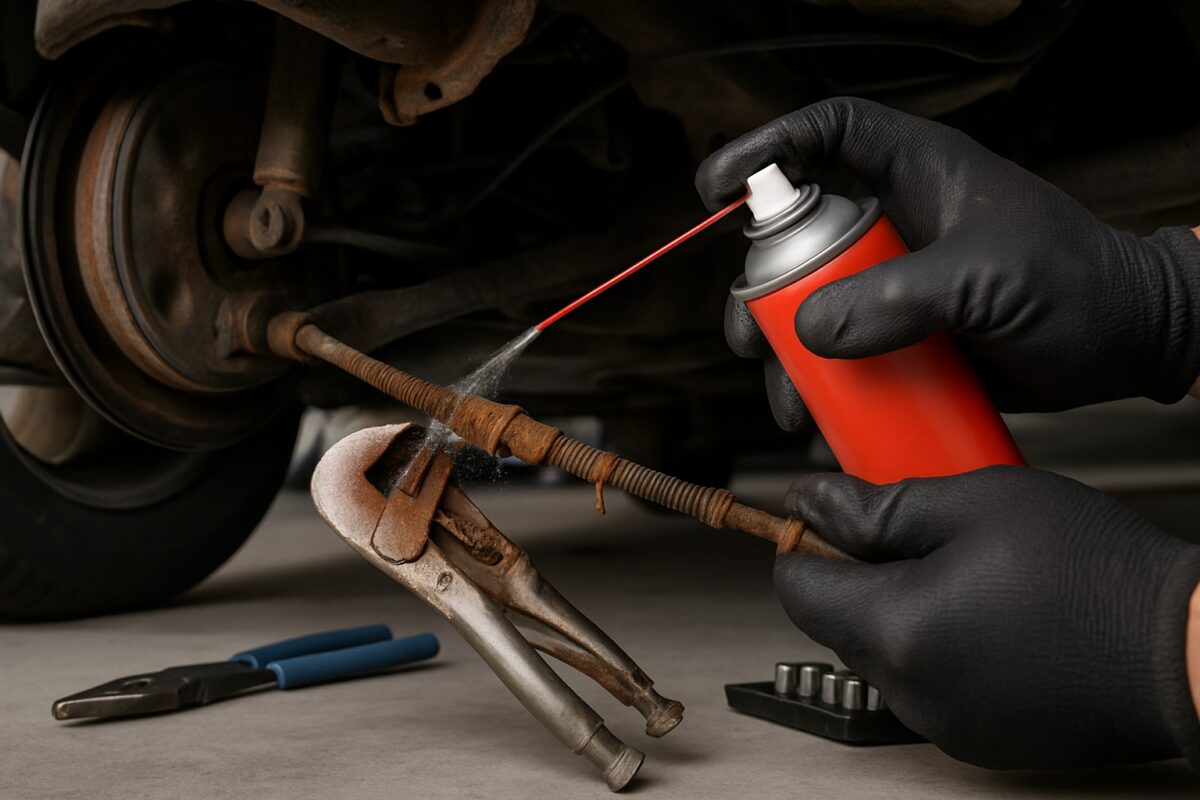
Step 4: Apply penetrating oil
Spray penetrating oil generously along the cable housing and at connection points. Focus on areas where the cable changes direction or passes through guides. Allow the oil to penetrate for at least 15 minutes.
Work the handbrake lever gently whilst the oil penetrates. This helps distribute the lubricant throughout the cable mechanism. Repeat the application if initial attempts don’t free the mechanism.
Step 5: Manually adjust cable tension
Locate the handbrake cable adjustment mechanism, usually found under the vehicle near the rear axle. Use your socket set to carefully loosen the cable tension. This reduces pressure on seized components.
Turn the adjustment nut to create slack in the cable system. Once the handbrake releases, you can readjust the tension properly. Mark the original position before making adjustments for easier reassembly.
Step 6: Test and readjust
After releasing the stuck handbrake, test the mechanism several times. Ensure smooth operation and proper engagement. The handbrake should hold the vehicle securely on a slope but release easily when the button is pressed.
Readjust cable tension if necessary. The handbrake lever should engage within 3-5 clicks for most vehicles. Consult your service manual for specific adjustment procedures for your model.
Common mistakes to avoid
Forcing a stuck handbrake can cause expensive damage to cables and brake components. Never use excessive force with pliers or other tools on the handbrake lever or cables.
Avoid spraying lubricants directly onto brake pads or brake discs. Contaminated braking surfaces create dangerous driving conditions. Always protect braking surfaces when applying penetrating oils.
Don’t ignore warning signs of handbrake problems. Unusual noises, excessive lever travel, or poor holding ability indicate components need attention. Regular maintenance prevents most seizure issues.
Professional tip: Our mechanics recommend lubricating handbrake cables every 12 months, especially in coastal areas where salt corrosion accelerates component wear.
When should you replace handbrake components?
Replace handbrake cables showing signs of fraying, corrosion, or permanent stretching. Most cables last 80,000-100,000 miles under normal conditions, but harsh environments reduce this significantly.
Handbrake shoes require replacement when worn below minimum thickness or showing uneven wear patterns. Seized adjusters, broken springs, or damaged return mechanisms also necessitate replacement.
If your vehicle shows symptoms like poor handbrake holding, excessive lever travel, or grinding noises, inspect components immediately. Early replacement prevents roadside breakdowns and maintains vehicle safety.
Expert insight: AutopartsPro mechanics see most handbrake seizures occur during winter months. Preventive maintenance in autumn significantly reduces cold weather problems.
Related maintenance you can do at the same time
When working on handbrake systems, consider addressing related maintenance tasks. Replace the brake fluid if it appears dark or contaminated. Check brake rotors for wear or damage.
Inspect brake calipers for leaks or seizure. Clean and lubricate suspension arms and bushings whilst the wheels are removed. This comprehensive approach maximises your maintenance efficiency.
Consider upgrading to stainless steel brake lines if originals show signs of deterioration. Modern brake components offer improved durability and performance compared to older specifications.
Frequently asked questions
Why does my handbrake stick in cold weather?
Moisture in cable housings freezes, preventing normal operation. Salt corrosion from winter road treatments also causes cable seizure. Regular lubrication prevents most cold weather problems.
Can I drive with a partially stuck handbrake?
Never drive with binding brakes as this causes dangerous overheating and component damage. Stop immediately and address the problem before continuing your journey.
How often should I lubricate handbrake cables?
Annual lubrication prevents most seizure problems. Vehicles in coastal or harsh environments benefit from more frequent attention, typically every six months during winter.
What causes handbrake cables to snap?
Corrosion weakens cable strands over time. Excessive force when trying to release stuck mechanisms also causes failure. Regular inspection identifies problems before catastrophic failure occurs.
Should I attempt repairs myself or visit a garage?
Simple lubrication and adjustment procedures are suitable for home mechanics. Complex repairs involving brake component replacement require professional expertise for safety reasons.
Regular maintenance and prompt attention to warning signs prevent most handbrake seizure problems. Quality replacement components and proper adjustment procedures ensure reliable operation for years to come. When purchasing replacement parts, always verify compatibility with your specific vehicle to maintain optimal braking performance.

 Loading...