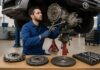
To move a car with seized brakes, you’ll need to identify which wheels are affected, jack up the vehicle safely, and either free the seized components using penetrating lubricant or temporarily disconnect the brake lines. This process requires specific tools and safety precautions to prevent damage to your vehicle’s braking system.
Tools and parts required
Moving a car with seized brakes demands the right equipment for both safety and effectiveness. Having proper tools prevents further damage to your braking system.
Parts needed:
- Fresh brake fluid for system bleeding
- Replacement brake lines if disconnection is necessary
- New brake pads if seizure has caused damage
- Penetrating lubricant for freeing stuck components
Tools required:
- Floor jack and axle stands for safe lifting
- Socket set with various sizes
- Brake line wrenches for proper fitting grip
- Hammer for gentle persuasion of stuck parts
- Safety glasses and gloves for protection
Safety precautions
Working on seized brakes presents unique hazards that require careful attention. Never attempt to force movement without proper preparation.
Ensure the vehicle is on level ground before starting any work. Use wheel chocks on non-affected wheels to prevent rolling. Wear safety equipment throughout the process, as brake components can be sharp and under pressure.
Step-by-step instructions
Step 1: Identify the seized wheels
Start by determining which wheels have seized brakes. Push the vehicle gently by hand or attempt to rock it back and forth. Seized wheels will resist movement noticeably.
Check each wheel by trying to rotate it manually when the handbrake is off. A properly functioning wheel should turn with moderate resistance, whilst a seized wheel won’t budge.
Step 2: Secure and lift the vehicle
Position your jack according to the manufacturer’s guidelines and lift the affected corner. Place axle stands under secure jacking points before working underneath.
Remove the wheel to access the brake components. This gives you clear visibility of the brake caliper and disc assembly.
Professional tip: Our AutoPartsPro mechanics recommend applying penetrating lubricant to caliper bolts 15 minutes before attempting removal. This significantly reduces the risk of bolt shearing.
Step 3: Free the seized caliper
Spray penetrating lubricant around the caliper piston and mounting bolts. Allow it to penetrate for several minutes before attempting any movement.
Gently tap the caliper with a hammer whilst applying steady pressure to push the piston back. Use a flat-blade screwdriver carefully to lever between the brake pad and disc if necessary.
Step 4: Disconnect brake lines (if required)
If the caliper won’t free up, you may need to temporarily disconnect the brake line. Use proper brake line wrenches to avoid damaging the fittings.
Have a container ready to catch escaping brake fluid. Mark the connection point for easier reassembly later.
Expert advice: According to our experienced technicians, seized brake issues often indicate corrosion in the hydraulic system. Consider replacing the entire brake fluid when repairs are complete to prevent recurrence.
Step 5: Test movement and secure
With the seized component freed or disconnected, test wheel rotation by hand. The wheel should now turn freely without resistance.
If you’ve disconnected brake lines, cap them immediately to prevent dirt ingress. Replace the wheel and lower the vehicle carefully for test movement.
Common mistakes to avoid
Several errors can worsen seized brake situations and create safety hazards. Understanding these pitfalls helps ensure successful resolution.
Never force movement without identifying the root cause. Excessive force can damage brake discs, bend caliper mounting brackets, or snap brake lines. Always work systematically from the least invasive solution.
Avoid using excessive heat to free seized components. Heat can damage rubber seals and compromise brake fluid integrity. Penetrating lubricant and patience prove more effective.
Don’t forget to bleed the brake system if you’ve disconnected any lines. Air in the hydraulic system creates dangerous brake fade and potential failure.
When should you replace components?
Seized brakes often indicate underlying wear that requires component replacement rather than temporary fixes. Understanding when to replace parts ensures long-term reliability.
Replace brake calipers if the piston won’t retract smoothly after freeing. Corrosion damage typically prevents proper sealing, leading to fluid leaks and future seizures.
Consider new brake pads if seizure has caused uneven wear patterns. Damaged pads compromise braking efficiency and can damage discs through metal-to-metal contact.
Inspect brake discs for scoring or heat damage. Severely damaged discs require replacement to maintain safe braking performance.
Related maintenance you can do at the same time
With brake components accessible, several complementary maintenance tasks become convenient. These additional services maximise your time investment and ensure comprehensive system health.
Replace the cabin filter whilst working on the braking system. A clogged filter reduces air conditioning efficiency and interior air quality.
Check shock absorbers for leaks or damage whilst the wheels are off. Worn shocks affect braking distance and vehicle stability.
Inspect suspension components for wear, particularly ball joints and track rod ends. These components work closely with the braking system to ensure safe vehicle control.
Consider replacing brake fluid throughout the entire system if it appears dark or contaminated. Fresh fluid prevents internal corrosion and maintains hydraulic efficiency.
Frequently asked questions
Can I drive with one seized brake?
Driving with seized brakes is extremely dangerous and can cause vehicle pulling, brake failure, or fire. Always resolve brake seizures before driving.
What causes brake calipers to seize?
Brake seizure typically results from moisture contamination, old brake fluid, or lack of maintenance allowing corrosion to develop within the hydraulic system.
How much does it cost to fix seized brakes?
Costs vary from £50 for simple cleaning to £300+ for complete caliper replacement, depending on seizure severity and required components.
Can seized brakes cause tire damage?
Yes, seized brakes create excessive heat and drag, causing premature tire wear, potential blowouts, and expensive rim damage from overheating.
How do I prevent brake seizure?
Regular brake fluid changes, proper winter storage procedures, and periodic brake system inspections effectively prevent most seizure problems from developing.
Successfully moving a car with seized brakes requires methodical diagnosis, proper tools, and safety-first approach. Whether freeing stuck components with lubricant or temporarily disconnecting hydraulic lines, the process demands respect for the braking system’s critical safety function. Remember that seized brakes often indicate broader maintenance needs, making this an ideal time to address related components and ensure your vehicle’s continued reliability and safety.

 Loading...