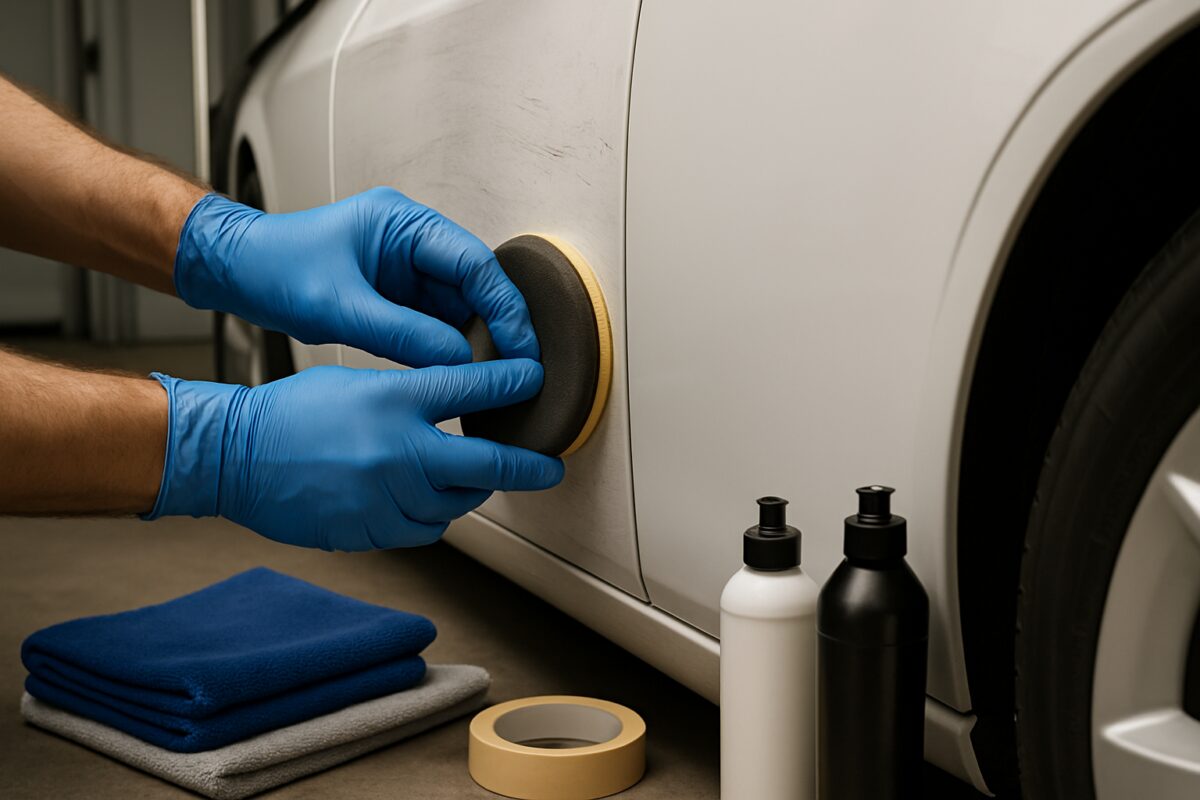
To remove scuff marks from your car, you’ll need car polish, microfibre cloths, and gentle abrasive compound for deeper marks. Start by cleaning the area, apply polish in circular motions, and buff to restore the paintwork’s original shine. Most surface scuffs can be eliminated without professional intervention using proper products and technique.
Tools and parts required
Removing scuff marks effectively requires the right combination of products and equipment. Having quality materials makes the difference between amateur results and professional-looking paintwork restoration.
Parts needed:
- Car polish (medium cut for light marks)
- Rubbing compound (for deeper scuffs)
- Touch-up paint (vehicle-specific colour)
- Primer pen (for exposed metal)
- Clear coat spray
Tools required:
- Microfibre cloths (at least 3)
- Foam applicator pads
- Fine-grade wet sandpaper (2000-3000 grit)
- Spray bottle for water
- Masking tape
- Clean bucket
Safety precautions
Before starting any paintwork repair, ensure you’re working in a shaded area away from direct sunlight. Heat can cause products to dry too quickly, creating uneven results. Wear nitrile gloves to protect your hands from chemicals and avoid working in windy conditions that might introduce dust particles.
Always test any product on an inconspicuous area first, such as the lower door frame or rear bumper edge. This prevents potential damage to visible paintwork if the product reacts unexpectedly with your car’s finish.
Step-by-step instructions
Step 1: assess the damage
Examine the scuff marks carefully under good lighting. Surface-level marks that haven’t penetrated the clear coat will feel smooth when you run your fingernail across them. Deeper scratches that catch your nail require more aggressive treatment.
Clean the affected area thoroughly with soapy water to remove dirt and debris. This prevents particles from causing additional scratches during the repair process. Dry completely with a clean microfibre cloth.
Step 2: prepare the work area
Mask surrounding areas with tape to protect undamaged paintwork. This is particularly important when using abrasive compounds that might affect adjacent panels.
For scuffs near plastic trim or rubber seals, extra care prevents accidental staining of these materials. Use automotive masking tape, which removes cleanly without leaving residue.
Step 3: apply rubbing compound for deep marks
For scratches that catch your fingernail, start with rubbing compound. Apply a small amount to a foam applicator pad and work in circular motions with moderate pressure.
Focus on the damaged area only, avoiding unnecessary contact with good paintwork. Work gradually, checking progress frequently. The compound removes microscopic layers of clear coat to level the surface.
Professional tip: Our mechanics at AutoPartsPro recommend using a back-and-forth motion parallel to the scratch initially, then finishing with circular motions for the best results.
Step 4: wet sand severe scratches
Deep scratches through to the base coat require wet sanding before polishing. Soak 2000-grit sandpaper in water for several minutes until fully saturated.
Sand very gently in straight lines parallel to the scratch, using plenty of water as lubrication. Stop frequently to assess progress. Once the scratch feels smooth to your fingernail, proceed to polishing.
Step 5: polish the treated area
Apply car polish to restore the surface gloss after compound or sanding work. Use circular motions with a clean microfibre cloth, working the polish until it begins to haze.
Remove the haze with a fresh microfibre cloth, revealing the restored shine. Multiple thin applications work better than one thick coat for achieving professional results.
Step 6: touch up paint if needed
Scratches down to bare metal require primer and touch-up paint. Apply primer first, allowing it to dry completely before adding thin layers of colour-matched paint.
Build up the paint gradually with multiple thin coats rather than one thick application. This prevents runs and ensures better colour matching with the surrounding paintwork.
Common mistakes to avoid
Many car owners make critical errors when attempting scuff mark removal. Using household products like toothpaste or baking soda can damage modern car finishes, which have complex multi-layer paint systems.
Applying too much pressure with abrasive compounds removes excessive clear coat, potentially creating larger damaged areas than the original scuff. Work gradually and assess progress regularly.
Another frequent mistake involves using dirty cloths or applicators. Contaminated materials introduce new scratches while attempting to remove existing ones. Always use clean microfibre cloths and replace them when they become soiled.
Attempting repairs in direct sunlight causes products to dry too quickly, creating streaking and uneven results. The ideal working temperature is between 15-25°C in shaded conditions.
Expert insight: According to our paint specialists, the most common error is rushing the process. Quality paintwork restoration requires patience and attention to detail for lasting results.
When should you attempt scuff removal?
Surface-level scuffs that don’t penetrate the clear coat respond well to DIY removal techniques. These typically appear as light marks that disappear when the surface is wet.
Attempt removal immediately after noticing damage, as fresh scuffs are easier to treat than weathered marks. Environmental contaminants can bond with damaged paintwork over time, making removal more challenging.
For scuffs covering large areas or multiple panels, professional treatment might prove more cost-effective than purchasing numerous products for a one-time repair.
Consider professional help for luxury vehicles or rare colour finishes where colour matching proves critical. Some metallic and pearl finishes require specialist techniques beyond typical DIY capabilities.
Related maintenance you can do at the same time
While addressing scuff marks, consider other paintwork maintenance tasks to maximise your effort and achieve consistent results across the vehicle.
Inspect and clean headlamp lenses for clouding or yellowing, which affects both appearance and light output. Many headlight restoration products complement paint polishing compounds.
Check wing mirrors for similar scuff damage, as these components often suffer impacts in car parks and narrow spaces.
Replace worn windscreen wipers if streaking occurs, as clear visibility enhances safety alongside improved appearance.
Consider applying protective wax or ceramic coating after completing paintwork repairs. This creates a barrier against future damage and maintains the restored finish longer.
Address any bumper damage simultaneously, as plastic components often show scuffs more readily than painted metal panels.
Frequently asked questions
Can toothpaste really remove car scratches?
Toothpaste contains mild abrasives that might reduce very light surface marks, but modern car paints require proper automotive products for safe and effective repair without damage.
How deep can a scratch be for DIY removal?
Scratches that don’t catch your fingernail when dragged across them typically respond well to polishing compounds and DIY techniques without professional intervention.
Will insurance cover scuff mark repairs?
Minor scuff repairs usually fall below insurance excess amounts, making DIY repair more economical than claiming and potentially affecting your no-claims bonus.
How long do scuff mark repairs last?
Properly executed repairs using quality products should last the vehicle’s lifetime, provided the area receives regular waxing and protection from environmental damage.
Should I use a machine polisher or hand polish?
Hand polishing offers better control for small areas and prevents accidental damage from machine tools, making it ideal for localised scuff mark removal.
Scuff mark removal requires patience and proper products rather than expensive professional services for most situations. Understanding your vehicle’s paint system and working methodically with quality compounds delivers results that restore both appearance and value. Investing in the right automotive products ensures your paintwork maintains its original lustre for years to come.

 Loading...