A faulty throttle position sensor can turn your driving experience into a nightmare. This crucial component tells your engine’s ECU exactly how much throttle input you’re giving, directly affecting acceleration, fuel economy, and overall performance. Recognising the warning signs early saves money and prevents potential breakdown situations.
Erratic idle speed and engine stalling
Your engine struggles to maintain consistent idle speed when the throttle position sensor fails. This happens because the ECU receives incorrect data about throttle plate position.
The engine management system thinks you’re constantly adjusting the throttle, causing it to hunt for the correct idle speed. You’ll notice the RPM needle jumping between 500-1200 RPM whilst parked.
Stalling becomes frequent, especially when slowing down or coming to a stop. The faulty sensor tells the ECU the wrong throttle position, leading to inappropriate fuel delivery. This creates dangerous situations in traffic or at junctions.
Our mechanics at Autopartspro recommend checking idle speed consistency first – it’s often the earliest indicator of TPS failure and the easiest symptom to spot without diagnostic equipment.
Cold starts become particularly problematic. The sensor’s inconsistent readings confuse the cold start enrichment system, making morning commutes unreliable.
Poor acceleration response and hesitation
A degraded throttle position sensor creates noticeable lag between pressing the accelerator and engine response. Your car feels sluggish, especially during overtaking manoeuvres.
The ECU relies on precise TPS data to calculate fuel injection timing and quantity. When this information becomes corrupted, the engine hesitates or surges unpredictably during acceleration.
Highway merging becomes stressful as your vehicle fails to respond promptly to throttle inputs. This delay stems from the sensor sending conflicting signals about your intended acceleration.
Partial throttle situations suffer most. The sensor’s dead spots or erratic behaviour prevent smooth power delivery during normal driving conditions, creating jerky acceleration patterns.
Manual transmission vehicles experience additional complications. Clutch engagement timing becomes difficult to judge when throttle response varies unpredictably, leading to rough gear changes.
Increased fuel consumption and emissions
Faulty TPS data forces your engine to run rich or lean, significantly impacting fuel economy. The ECU cannot optimise the air-fuel mixture without accurate throttle position information.
Rich running conditions waste fuel whilst producing black exhaust smoke. This occurs when the sensor indicates more throttle opening than actual, causing excessive fuel delivery.
Lean conditions damage engine components over time. The sensor’s false low readings reduce fuel delivery, creating high combustion temperatures that stress pistons and valves.
MOT emissions tests become problematic. Inconsistent TPS readings prevent proper catalyst operation, leading to elevated HC, CO, and NOx levels that exceed legal limits.
Autopartspro’s diagnostic experience shows that customers often notice 20-30% fuel economy reduction before other symptoms become apparent, making it a key early warning sign.
Modern vehicles with adaptive ECU programming attempt compensation, but this temporary fix masks the underlying problem whilst reducing overall efficiency.
Check engine light activation
The ECU monitors throttle position sensor voltage continuously. When readings fall outside expected parameters, diagnostic trouble codes trigger the check engine light.
Common fault codes include P0120-P0124, indicating TPS circuit problems. These codes help technicians pinpoint whether the issue involves wiring, sensor failure, or calibration problems.
Intermittent faults prove most frustrating. The sensor works normally when cold but fails as operating temperature increases, causing sporadic warning light activation.
Multiple related codes often appear simultaneously. Mass air flow sensor and oxygen sensor codes frequently accompany TPS failures due to incorrect air-fuel mixture calculations.
Professional diagnostic scanning reveals live data streams showing erratic voltage patterns. This information confirms TPS failure even when static tests appear normal.
Transmission shifting problems
Automatic transmissions rely on throttle position sensors for optimal shift timing. Faulty sensors cause harsh shifting, delayed engagement, or inappropriate gear selection.
The transmission control module uses TPS data to determine driver intent. Incorrect signals result in premature upshifts during acceleration or delayed downshifts when slowing.
Kickdown functions become unreliable. The sensor’s failure to register full throttle inputs prevents automatic downshifts for overtaking, compromising safety and performance.
Limp mode activation protects transmission components when TPS readings become completely unreliable. This safety feature limits vehicle speed and locks the transmission in specific gears.
Manual transmissions experience related issues through engine management problems. Poor throttle response makes smooth gear changes difficult, especially during hill starts or traffic manoeuvres.
Warning signs your car has a problem
Beyond the five main problems, additional symptoms indicate developing TPS issues:
- Engine surging at constant speeds
- Difficulty maintaining cruise control settings
- Unusual engine noises during acceleration
- Intermittent power loss
- Dashboard warning lights
Temperature-related symptoms often indicate internal sensor degradation. Performance issues appearing only when hot suggest component failure rather than wiring problems.
- Throttle sticking or binding
- Reduced maximum engine speed
- Poor cold start performance
- Inconsistent idle quality
- Failed emissions testing
Electronic symptoms include voltage fluctuations visible on diagnostic equipment. These readings help distinguish between sensor failure and wiring issues.
How to fix the problems
| Diagnostic Step | Required Tools | Expected Results |
|---|---|---|
| Visual inspection | Basic hand tools | Check wiring and connector condition |
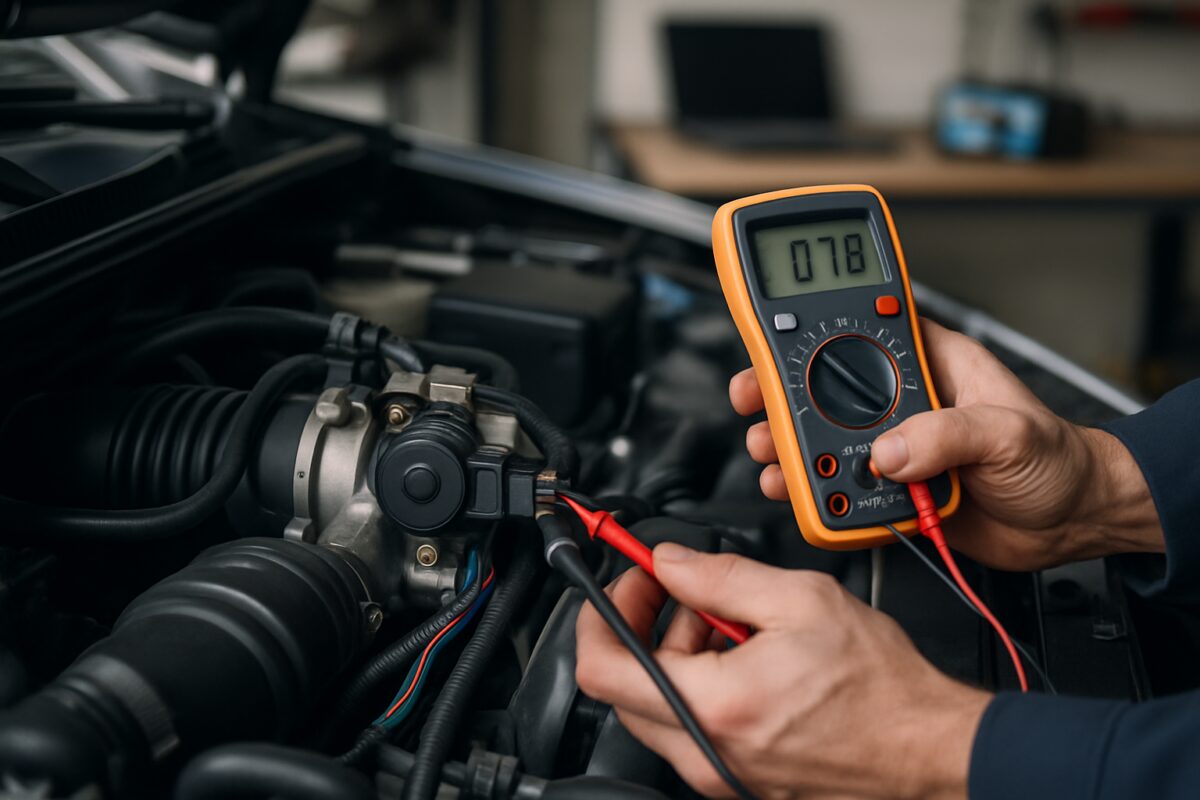
| Voltage testing | Digital multimeter | 0.5-4.5V range with throttle movement |
| Resistance checking | Multimeter, wiring diagram | Smooth resistance change across range |
| Live data scanning | OBD scanner | Proportional voltage to throttle opening |
Replacement procedures vary by vehicle design. Some sensors integrate with the throttle body, requiring complete assembly replacement rather than individual sensor changes.
| Repair Option | Typical Cost | Labour Time |
|---|---|---|
| Sensor cleaning | £15-25 | 30 minutes |
| Wiring repair | £50-100 | 1-2 hours |
| Sensor replacement | £80-200 | 1-3 hours |
| Throttle body replacement | £200-500 | 2-4 hours |
ECU adaptation procedures follow sensor installation. This process teaches the engine management system the new sensor’s voltage characteristics for optimal performance.
When to see a mechanic
Professional diagnosis becomes essential when multiple symptoms appear simultaneously. Complex engine management interactions require specialised equipment and expertise beyond basic DIY capabilities.
Immediate mechanic consultation is necessary if you experience complete throttle failure or stuck throttle conditions. These situations create serious safety hazards requiring urgent professional attention.
Intermittent faults benefit from professional diagnostic procedures. Mechanics possess equipment capable of capturing sporadic problems that home diagnostics might miss.
Modern vehicles with drive-by-wire systems require dealer-level programming for throttle body replacements. Attempting DIY repairs on these systems risks permanent ECU damage costing thousands to rectify.
Consider our guide on garage visits versus DIY repair when deciding whether to tackle TPS replacement yourself or seek professional help.
Frequently asked questions
Can I drive with a bad throttle position sensor?
Limited driving is possible but unsafe. The vehicle may enter limp mode, reducing power and speed capabilities significantly.
How long does a throttle position sensor typically last?
Most TPS units function reliably for 80,000-120,000 miles before requiring replacement due to normal wear patterns.
Can cleaning fix a faulty throttle position sensor?
Cleaning helps with contamination issues but cannot repair internal electrical component failure or worn sensor elements.
What causes premature throttle position sensor failure?
Common causes include electrical surges, contamination, vibration damage, and normal wear from constant movement cycles.
Will a bad TPS sensor cause my car to fail MOT?
Yes, faulty TPS sensors typically cause emissions failures and may trigger engine management warning lights during testing.
Final recommendation
Throttle position sensor problems require prompt attention to maintain vehicle safety and performance. Early diagnosis prevents secondary damage to transmission and engine components whilst ensuring reliable operation.
Quality replacement parts prove essential for lasting repairs. Choose reputable suppliers offering genuine or OEM-equivalent sensors designed for your specific vehicle application.
Professional installation guarantees proper calibration and adaptation procedures. This investment ensures optimal performance whilst protecting your vehicle’s warranty coverage. For complex sensor issues, consult qualified technicians equipped with manufacturer-specific diagnostic equipment.
Regular maintenance prevents many TPS failures. Include throttle body cleaning in your service schedule and address check engine lights promptly to avoid expensive secondary damage.

 Loading...