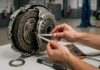
To bleed a clutch master cylinder, you’ll need brake fluid, a clear plastic tube, and a spanner. The process involves removing air bubbles from the hydraulic system by opening the bleed nipple, pumping the clutch pedal, and ensuring fresh fluid flows through until no air bubbles remain.
Tools and parts required
Parts needed:
- DOT 4 brake fluid (hydraulic clutch systems use the same fluid as brakes)
- Clean rags for spill cleanup
- Funnel for topping up reservoir
Tools required:
- 8mm or 10mm spanner (depends on bleed nipple size)
- Clear plastic tube (6mm internal diameter)
- Glass jar for collecting old fluid
- Jack and axle stands (if bleed nipple access requires lifting)
- Torch or work light for better visibility
Safety precautions
Brake fluid is highly corrosive and will damage paintwork on contact. Wear safety glasses and nitrile gloves throughout the procedure. Work in a well-ventilated area as brake fluid vapours can be harmful. Keep the fluid away from hot engine components and never reuse old brake fluid.
Ensure the vehicle is on level ground with the handbrake applied. If you need to raise the car, use proper axle stands rather than relying solely on a jack.
Step-by-step instructions
Step 1: Locate the clutch master cylinder
Open the bonnet and find the clutch master cylinder reservoir, typically mounted on the firewall near the brake master cylinder. It’s usually a smaller plastic container with “clutch” or a clutch pedal symbol marked on the cap.
Check the current fluid level against the minimum and maximum marks. If the level is below minimum, this confirms air has entered the system.
Step 2: Prepare the bleeding setup
Locate the clutch slave cylinder, usually mounted on the gearbox bell housing. The bleed nipple will be on top or side of the cylinder. Clean around the bleed nipple to prevent contamination entering the system.
Attach your clear plastic tube to the bleed nipple and place the other end in your collection jar. This prevents air from being drawn back into the system during bleeding.
Step 3: Top up the master cylinder
Remove the master cylinder cap and top up with fresh DOT 4 brake fluid to the maximum mark. Keep the reservoir topped up throughout the bleeding process to prevent air entering from the top.
Professional tip: According to our AutoPartsPro mechanics, always use brake fluid from a freshly opened container. Brake fluid absorbs moisture from the atmosphere, which reduces its effectiveness and can cause internal corrosion.
Step 4: Begin the bleeding process
Have an assistant press the clutch pedal slowly to the floor and hold it down. With the pedal depressed, crack open the bleed nipple approximately quarter-turn using your spanner.
You’ll see fluid and air bubbles flow through the tube. Close the bleed nipple before your assistant releases the clutch pedal. This prevents air being drawn back into the system.
Step 5: Repeat the bleeding cycle
Continue the pump-and-bleed cycle, checking the master cylinder level every few pumps. The process is complete when you see only clear fluid without air bubbles flowing through the tube.
Typically, this takes 8-12 pumps, but severely contaminated systems may require more cycles. Monitor the fluid colour – fresh fluid should be clear or slightly amber.
Step 6: Final checks and testing
Tighten the bleed nipple to specification (typically 6-8 Nm) and remove the bleeding tube. Top up the master cylinder to the maximum level and replace the cap securely.
Test the clutch pedal feel – it should have firm resistance and engage the clutch properly at the correct bite point. A spongy pedal indicates remaining air in the system.
Common mistakes to avoid
Never let the master cylinder run dry during bleeding. This introduces more air and extends the bleeding process significantly. Always keep the fluid level above the minimum mark.
Avoid opening the bleed nipple while the clutch pedal is released. This draws air into the system instead of expelling it. The sequence must be: pedal down, open nipple, close nipple, pedal up.
Don’t reuse old brake fluid or mix different DOT specifications. Contaminated fluid can damage seals in the slave cylinder and master cylinder.
Ensure proper spanner fit on the bleed nipple. Rounded nipples are expensive to replace and may require specialist tools for removal.
Expert insight: Our technicians recommend bleeding the clutch system whenever you notice pedal travel increasing or engagement becoming inconsistent. Early intervention prevents more serious hydraulic component failure.
When should you bleed the clutch system?
Bleed the clutch hydraulics every two years during routine maintenance, or immediately if you notice symptoms like spongy pedal feel, increased pedal travel, or difficulty engaging gears.
Emergency bleeding is necessary after any hydraulic component replacement, including clutch kit installation or brake fluid changes. Air naturally enters the system during these procedures.
If the clutch pedal suddenly drops to the floor without resistance, this indicates a complete hydraulic failure requiring immediate attention before driving.
Related maintenance you can do at the same time
While bleeding the clutch, consider replacing the brake fluid in the main braking system, as both systems use the same fluid type and degradation rate.
Inspect the clutch cable (if fitted) for fraying or stretching. Some vehicles use a dual cable-and-hydraulic system requiring both adjustments.
Check the condition of brake lines and hydraulic hoses for signs of cracking, bulging, or corrosion. Replace any questionable hoses before they fail completely.
Clean and lubricate the clutch pedal pivot points and adjust pedal height if your vehicle has this facility.
Frequently asked questions
How often should I bleed my clutch master cylinder?
Bleed the clutch system every two years or when you notice spongy pedal feel, increased travel, or gear engagement problems.
Can I use DOT 3 brake fluid instead of DOT 4?
While DOT 3 is compatible, DOT 4 offers superior performance with higher boiling point and better moisture resistance for clutch systems.
Why does my clutch pedal feel spongy after bleeding?
Spongy feel indicates remaining air bubbles. Continue bleeding until only clear fluid flows from the nipple without any bubbles visible.
How much brake fluid do I need for bleeding?
Typically 250-500ml depending on system capacity. Always have extra fluid available and never let the master cylinder reservoir run empty.
Can I bleed the clutch system alone without an assistant?
Yes, using a one-person bleeding kit with a non-return valve, though the two-person method generally produces more reliable results.
Proper clutch bleeding ensures optimal pedal feel and reliable gear engagement. Using quality brake fluid and following the correct sequence prevents air contamination and extends component life. Regular maintenance of your hydraulic clutch system maintains smooth operation and prevents unexpected failures during critical driving situations.

 Loading...