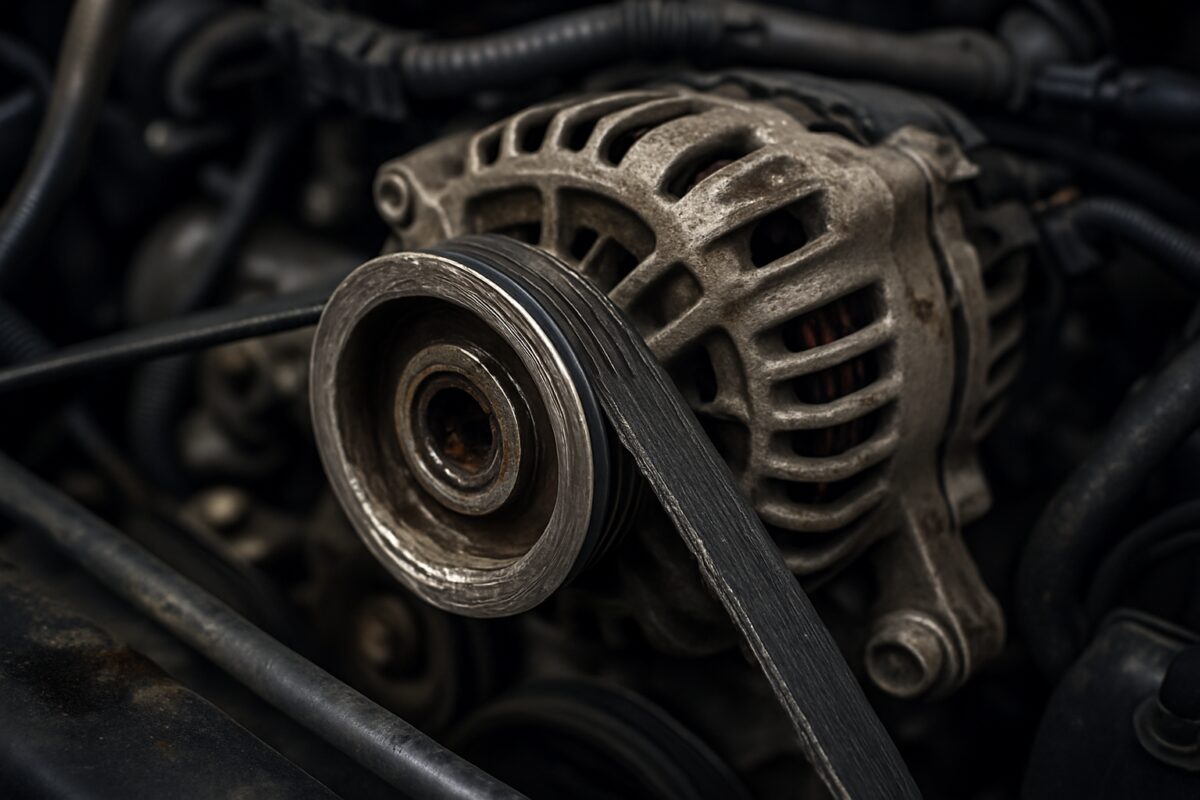
A faulty alternator pulley can leave you stranded on the roadside with a completely dead battery. This crucial component connects your engine’s crankshaft to the alternator, ensuring your vehicle’s electrical systems receive proper power whilst driving. When it fails, you’ll face serious electrical problems that affect everything from your headlights to your ignition system.
Excessive noise from the alternator area
A worn alternator pulley creates distinctive sounds that alert experienced mechanics to potential problems. The most common noise is a high-pitched squealing or screeching, particularly during engine startup or when electrical demand increases.
This squealing typically results from belt slippage caused by a wobbly or misaligned pulley. As the pulley bearing deteriorates, it fails to maintain proper belt tension, causing the serpentine belt to slip against the pulley surface.
In our AutoPartsPro workshop, we’ve observed that these noises often worsen during cold starts when belts and pulleys are at their most rigid. The sound may disappear as the engine warms up, but this temporary relief doesn’t indicate the problem has resolved.
“Never ignore squealing noises from your alternator area – they’re your engine’s way of warning you about impending electrical system failure.”
Additional sounds include grinding, clicking, or rattling noises when the pulley bearing completely fails. These sounds indicate internal damage that requires immediate attention to prevent complete alternator failure.
Electrical system malfunctions
A failing alternator pulley directly impacts your vehicle’s charging system performance. When the pulley doesn’t rotate smoothly, the alternator cannot maintain consistent electrical output, leading to various electrical problems.
Dashboard warning lights frequently illuminate when the alternator pulley begins failing. The battery warning light is typically the first indicator, followed by dimming headlights and interior lighting. Modern vehicles may display specific alternator-related error codes through the control units.
Power steering systems, particularly electric power steering units, become noticeably heavier when alternator output drops. Air conditioning systems may cycle on and off irregularly, and electric windows operate more slowly than usual.
Radio and infotainment systems often experience static interference or complete shutdown during electrical fluctuations. These symptoms typically worsen as engine RPM increases, contrary to normal alternator behaviour where higher RPMs should improve electrical output.
Belt wear and slippage issues
A defective alternator pulley accelerates serpentine belt deterioration significantly. When pulleys wobble or fail to maintain proper alignment, they create uneven wear patterns across the belt surface.
Premature belt stretching occurs when a failing pulley cannot maintain consistent tension. This stretching leads to reduced grip between the belt and other pulleys in the system, affecting multiple engine accessories simultaneously.
Our technical specialists at AutoPartsPro regularly encounter vehicles where belt replacement becomes necessary every 20,000-30,000 miles instead of the typical 60,000-80,000 miles due to faulty pulleys. This premature wear costs drivers unnecessary money and creates reliability concerns.
Belt tracking problems manifest as visible misalignment where the belt doesn’t run centrally on pulley grooves. This misalignment creates edge wear and can cause the belt to slip off pulleys entirely, resulting in complete loss of alternator function and potential engine damage from overheating.
Warning Signs Your Car Has a Problem
Recognising early warning signs prevents complete electrical system failure and expensive repairs. Key indicators include:
- Squealing or grinding noises from the engine bay
- Battery warning light illumination
- Dimming headlights during engine operation
- Electrical accessories operating irregularly
- Visible belt wear or fraying
- Engine stalling during idle or low RPM
- Burning rubber smell from the engine compartment
- Difficulty starting the engine
- Dashboard lights flickering whilst driving
How to fix the problems
| Problem | Solution | Difficulty Level | Time Required |
|---|---|---|---|
| Noisy pulley bearing | Replace complete pulley assembly | Moderate | 2-3 hours |
| Belt slippage | Replace belt and inspect pulley alignment | Easy | 1 hour |
| Electrical fluctuations | Test alternator output and replace pulley if worn | Moderate | 3-4 hours |
| Complete pulley failure | Replace pulley and serpentine belt | Moderate | 2-4 hours |
“When replacing an alternator pulley, always inspect the serpentine belt simultaneously – these components wear together and should be serviced as a system.”
When to See a Mechanic
Professional diagnosis becomes essential when electrical problems persist despite basic maintenance. Alternator pulley issues require proper testing equipment to distinguish between pulley failure and alternator problems.
Seek immediate professional help if your vehicle experiences intermittent stalling, complete electrical failure, or if the alternator belt breaks whilst driving. These situations can leave you stranded and may cause additional engine damage if the cooling system loses power.
Modern vehicles with complex electrical systems benefit from professional diagnosis using specialised testing equipment. Professional mechanics can differentiate between pulley wear, alternator failure, and wiring problems that produce similar symptoms.
Consider professional service when noise levels become excessive or when multiple electrical systems malfunction simultaneously. Early intervention prevents more expensive repairs and ensures your safety on the road.
Frequently Asked Questions (FAQ)
How long does an alternator pulley typically last?
Most alternator pulleys last 80,000-120,000 miles under normal driving conditions, though severe climates and driving habits can reduce this lifespan significantly.
Can I drive with a noisy alternator pulley?
Limited driving is possible, but continued operation risks complete electrical failure and potential engine damage from loss of cooling system power.
What causes premature alternator pulley failure?
Common causes include contamination from oil leaks, excessive belt tension, misalignment during installation, and exposure to extreme temperatures or moisture.
How much does alternator pulley replacement cost?
Replacement costs typically range £80-200 including parts and labour, varying significantly based on vehicle make, accessibility, and local labour rates.
Can a bad alternator pulley damage other components?
Yes, failing pulleys can damage serpentine belts, strain the alternator bearing, affect power steering operation, and cause cooling system problems.
Final Recommendation
Regular inspection of your alternator pulley prevents unexpected breakdowns and expensive repairs. Check for unusual noises, belt wear, and electrical symptoms during routine maintenance intervals.
Our AutoPartsPro specialists recommend professional inspection every 60,000 miles or if any warning signs appear. Quality replacement parts and proper installation ensure reliable operation and prevent premature failure.
Don’t compromise on component quality when replacing alternator pulleys. OEM-specification parts provide superior durability and performance compared to cheaper alternatives, ultimately saving money through extended service life and reduced maintenance requirements.

 Loading...