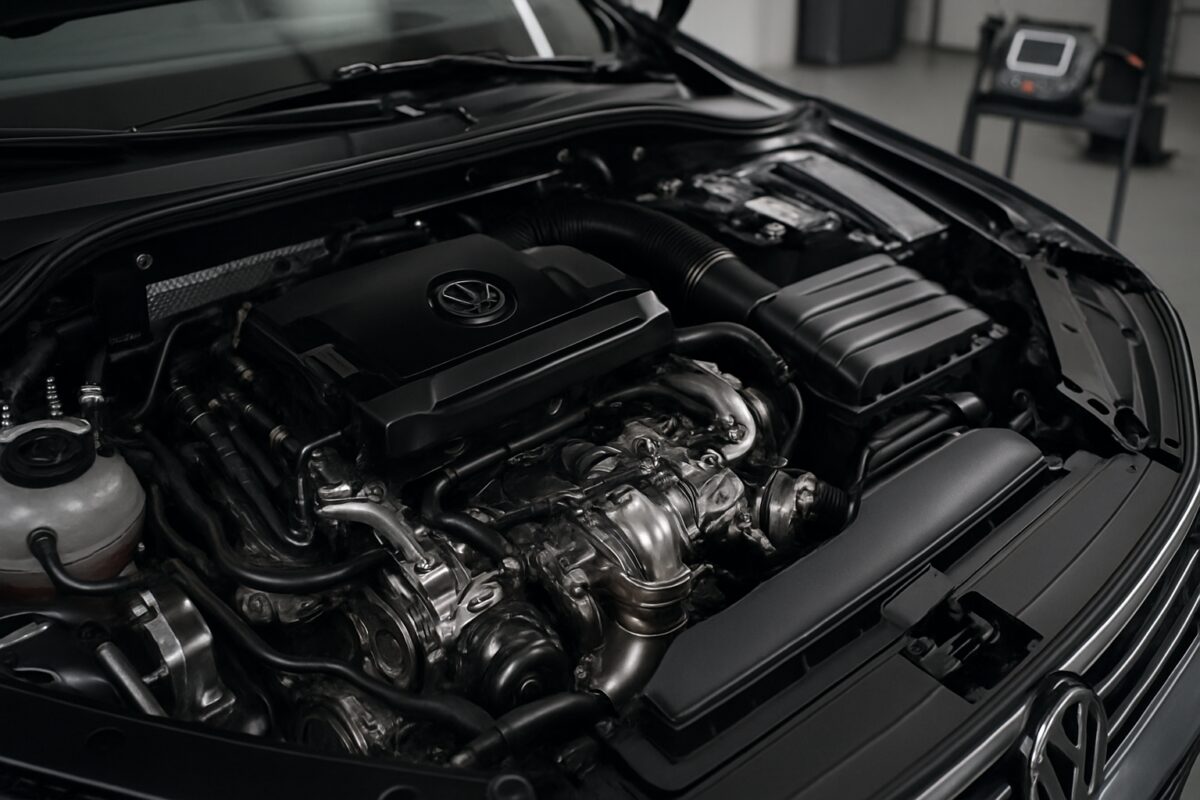
The Volkswagen Passat remains one of Germany’s most versatile mid-size saloons, offering exceptional comfort for families and business drivers alike. The engine selection plays a crucial role in the Passat’s appeal, determining everything from fuel efficiency to performance characteristics. With options ranging from economical turbocharged petrol units to robust diesel powertrains, the Passat delivers 150-300 horsepower and 250-500 Nm of torque across its engine lineup.
Comparison table of all engines
| Engine | Power output | Torque | Fuel consumption | Reliability |
|---|---|---|---|---|
| 1.4 TSI | 150 hp | 250 Nm | 5.8L/100km | Good |
| 2.0 TSI | 190-272 hp | 320-400 Nm | 6.5-7.2L/100km | Very Good |
| 2.0 TDI | 150-190 hp | 340-400 Nm | 4.2-4.8L/100km | Excellent |
| 2.0 TDI BiTurbo | 240 hp | 500 Nm | 5.1L/100km | Good |
Engine #1 overview – 1.4 TSI
The 1.4 TSI represents Volkswagen’s commitment to efficient turbocharged technology. This four-cylinder petrol engine features a 1.4-litre displacement with turbocharging and direct injection. The unit uses premium unleaded petrol and incorporates sophisticated fuel injection systems for optimal combustion efficiency.
Our AutopartsPro specialists particularly appreciate this engine’s cylinder deactivation technology, which automatically shuts down two cylinders during light-load conditions. This innovative approach significantly reduces fuel consumption during motorway cruising.
Pros
- Excellent fuel economy for petrol engine
- Smooth power delivery throughout rev range
- Cylinder deactivation technology reduces consumption
- Lower purchase price compared to diesel variants
- Responsive acceleration in urban driving
Cons
- Higher fuel costs compared to diesel engines
- Carbon build-up issues with direct injection
- Timing chain tensioner problems in early models
- Less torque than diesel alternatives
Engine #2 overview – 2.0 TSI
The 2.0 TSI serves as the performance-oriented petrol option in the Passat range. This turbocharged four-cylinder engine delivers impressive power outputs from 190 to 272 horsepower, depending on the specific variant. The engine utilises premium unleaded petrol with sophisticated direct injection and turbocharging technology.
According to our technical team’s extensive experience, the 2.0 TSI strikes an excellent balance between performance and reliability when properly maintained with quality oil filters and regular servicing.
Pros
- Strong acceleration and high power output
- Refined operation with minimal vibration
- Proven EA888 engine architecture
- Good aftermarket support and tuning potential
- Smooth power delivery across entire rev range
Cons
- Higher fuel consumption than smaller engines
- Premium fuel requirements increase running costs
- Carbon build-up issues require regular cleaning
- Water pump failures in some model years
Engine #3 overview – 2.0 TDI
The 2.0 TDI represents Volkswagen’s most popular diesel solution for the Passat. This turbocharged four-cylinder diesel engine produces between 150-190 horsepower whilst delivering exceptional fuel economy. The common rail direct injection system ensures precise fuel metering and reduced emissions.
Professional mechanics at AutopartsPro consistently recommend this engine for high-mileage drivers due to its outstanding durability and fuel efficiency. Regular maintenance of components like the particulate filter ensures optimal performance.
Pros
- Outstanding fuel economy and range
- High torque output ideal for towing
- Proven reliability with proper maintenance
- Strong resale value retention
- Excellent motorway cruising efficiency
Cons
- DPF regeneration issues in city driving
- Higher initial purchase price
- EGR valve carbon build-up problems
- Turbocharger wear with poor maintenance
Engine #4 overview – 2.0 TDI BiTurbo
The flagship 2.0 TDI BiTurbo employs twin turbochargers to extract maximum performance from the diesel powerplant. This sophisticated engine produces 240 horsepower and an impressive 500 Nm of torque, making it the most powerful diesel option in the Passat lineup.
The sequential turbocharging system uses a smaller turbo for low-end response and a larger unit for high-rpm power. This configuration virtually eliminates turbo lag whilst providing exceptional pulling power throughout the rev range.
Pros
- Exceptional torque output for effortless acceleration
- Twin-turbo system eliminates lag
- Strong performance combined with good economy
- Excellent for towing heavy loads
- Sophisticated engine management systems
Cons
- Complex twin-turbo system increases maintenance costs
- Higher purchase price than single-turbo variants
- Potential intercooler and boost pipe issues
- Requires premium diesel fuel for optimal performance
Maintenance cost
| Engine | Recommended Interval | Estimated Cost | Cost per 10,000 miles |
|---|---|---|---|
| 1.4 TSI | 10,000 miles | £180-220 | £180-220 |
| 2.0 TSI | 10,000 miles | £200-260 | £200-260 |
| 2.0 TDI | 15,000 miles | £220-280 | £147-187 |
| 2.0 TDI BiTurbo | 12,000 miles | £280-350 | £233-292 |
Professional tip: Always use VW-approved engine oil specifications and replace the air filter according to schedule to maintain optimal engine performance and longevity.
Engine sound and character
The 1.4 TSI produces a refined, quiet note that suits the Passat’s executive character perfectly. Under acceleration, the engine delivers a subtle growl without intrusive cabin noise, making it ideal for long-distance comfort.
Both 2.0 TSI variants offer a more spirited soundtrack with a distinctive turbo whistle under boost. The engines provide satisfying acceleration sounds whilst maintaining refinement during normal driving conditions.
The 2.0 TDI engines deliver the characteristic diesel clatter at idle, which largely disappears once moving. Modern sound deadening ensures minimal intrusion into the cabin, with only a gentle rumble audible during acceleration.
The BiTurbo variant produces the most distinctive sound signature, with sequential turbo spooling creating an engaging auditory experience. The twin-turbo setup generates unique whistling sounds that enthusiasts particularly appreciate.
Expert recommendation: Regular replacement of timing chain components prevents costly engine damage and maintains smooth operation across all Passat engines.
Who each engine is best for
| Driver Type | Best Engine Choice | Reason |
|---|---|---|
| Daily commuters | 1.4 TSI | Excellent fuel economy and low running costs |
| Performance enthusiasts | 2.0 TSI (272hp) | Strong acceleration and tuning potential |
| Long-distance drivers | 2.0 TDI | Outstanding fuel range and motorway efficiency |
| Budget-conscious owners | 1.4 TSI | Lower purchase price and maintenance costs |
| Towing enthusiasts | 2.0 TDI BiTurbo | Maximum torque for heavy loads |
Frequently asked questions (FAQ)
Which VW Passat engine is most reliable?
The 2.0 TDI consistently demonstrates exceptional reliability when maintained properly with regular oil changes and DPF regeneration cycles.
What’s the best Passat engine for fuel economy?
The 2.0 TDI achieves the best fuel consumption, typically returning 55-65 mpg in mixed driving conditions with careful driving.
Do VW Passat engines require premium fuel?
TSI petrol engines perform best with premium unleaded fuel, whilst TDI engines work perfectly with standard diesel fuel.
How often should Passat engines be serviced?
Petrol engines require servicing every 10,000 miles, whilst diesel variants can typically go 12,000-15,000 miles between services.
Which Passat engine has the most power?
The 2.0 TSI in its highest specification produces 272 horsepower, making it the most powerful petrol option available.

 Loading...