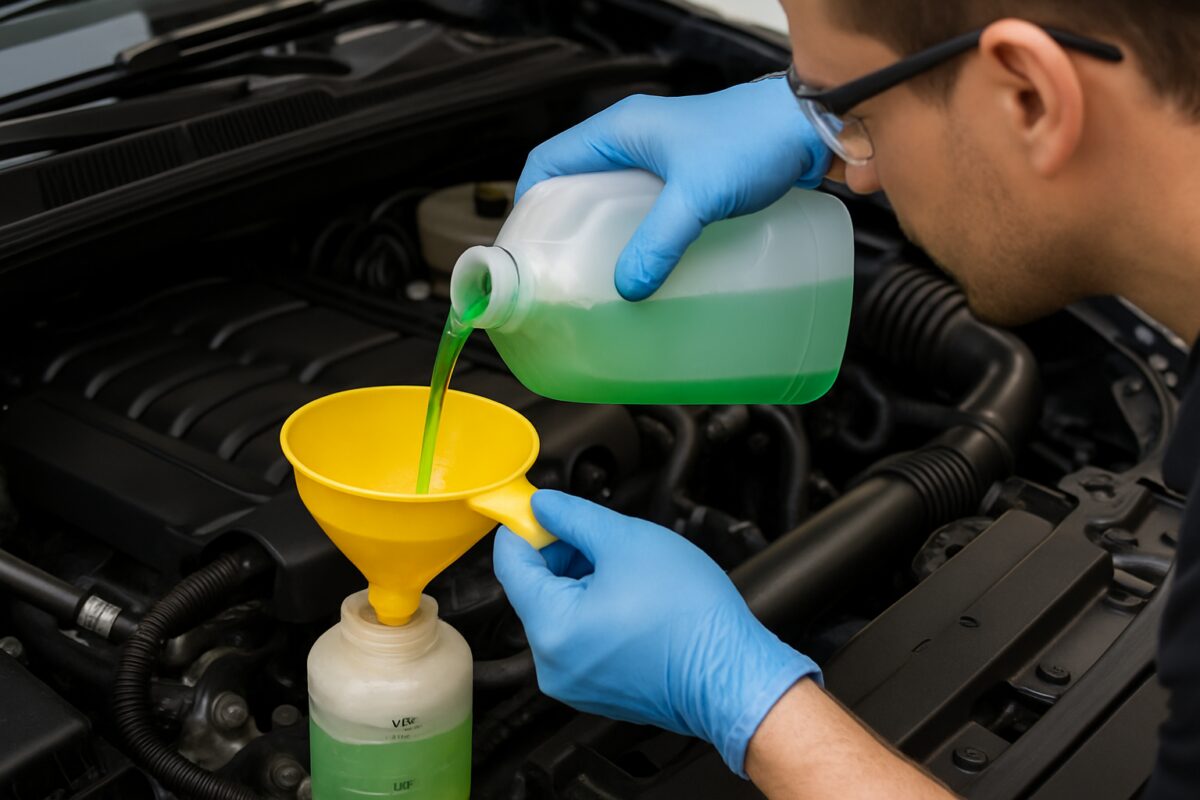
To top up engine coolant, locate the coolant reservoir (a translucent plastic tank with minimum and maximum markings), ensure the engine is cold, remove the cap, and slowly add the correct coolant mixture until it reaches the maximum line. Never open the system when hot, as pressurised coolant can cause severe burns. Always use the manufacturer-specified coolant type to prevent engine damage.
Tools & parts required
Before you begin topping up your engine coolant, gather these essential items to complete the job safely and properly.
Parts needed
- Correct coolant type (50/50 pre-mixed or concentrate)
- Distilled water (if using concentrate)
- Funnel (wide-mouth preferred)
Tools required
- Clean cloth or rag
- Safety gloves
- Safety glasses
- Measuring jug
Always ensure the coolant matches your vehicle’s specifications. Check your owner’s manual or the existing coolant colour to avoid mixing incompatible types that could damage your engine radiator.
Safety precautions
Engine coolant systems operate under pressure and reach extremely high temperatures. Follow these safety measures to prevent injury.
- Only work on a cold engine (wait at least 2 hours after driving)
- Wear safety gloves and glasses to protect against splashes
- Work in a well-ventilated area
- Keep children and pets away from coolant (it’s toxic)
- Disconnect the battery negative terminal if working near electrical components
Professional tip from AutoPartsPro mechanics: Never remove the radiator cap on a hot engine. The pressurised system can spray boiling coolant, causing severe burns. Always wait for complete cooling.
Step-by-step instructions
Follow these detailed steps to safely top up your engine coolant and maintain optimal operating temperature.
Step 1: Locate the coolant reservoir
Open your bonnet and find the coolant expansion tank. This translucent plastic container usually sits near the radiator and has “MIN” and “MAX” markings on the side. Some vehicles have the filler cap directly on the radiator, but most modern cars use a separate reservoir.
Step 2: Check the coolant level
With the engine cold, examine the coolant level against the tank markings. The level should be between the minimum and maximum lines. If it’s below the minimum mark, you need to add coolant. Take note of the existing coolant colour for compatibility.
Step 3: Prepare the coolant mixture
Use either pre-mixed 50/50 coolant or mix concentrate with distilled water. Never use tap water as it contains minerals that can cause corrosion. If mixing concentrate, follow the manufacturer’s ratio recommendations, typically 50% coolant to 50% distilled water for UK climates.
Step 4: Remove the reservoir cap
Slowly turn the cap anticlockwise to release any residual pressure. Some caps require pushing down while turning. Place the cap on a clean surface to avoid contaminating the threads.
Step 5: Add coolant slowly
Using a funnel, pour the coolant mixture slowly into the reservoir. Fill to the maximum line but don’t overfill. Allow the coolant to settle and check for air bubbles. Replace the cap securely, ensuring proper sealing.
Step 6: Start and monitor
Start the engine and let it run for a few minutes while monitoring the coolant temperature. Check for leaks around the reservoir and ensure the cooling fan operates correctly. Switch off and recheck the level when cool.
Common mistakes to avoid
These frequent errors can damage your cooling system or create safety hazards. Avoid these pitfalls when topping up coolant.
- Opening the system when hot – can cause severe burns
- Mixing different coolant types – creates gel-like deposits
- Using tap water instead of distilled water
- Overfilling the reservoir – causes overflow when heated
- Ignoring the correct coolant specification
- Forgetting to replace the cap properly
Expert insight from AutoPartsPro specialists: Many drivers mix different coolant colours without checking compatibility. This can create a gel that blocks the cooling system, leading to expensive radiator replacement.
When should you top up coolant?
Regular coolant level checks prevent overheating and expensive engine damage. Monitor your cooling system using these guidelines.
Check coolant levels monthly during routine maintenance. Top up when the level drops below the minimum mark. However, frequent top-ups indicate a leak in the system that requires immediate attention.
Signs you need to check coolant levels include:
- Temperature gauge reading higher than normal
- Sweet smell from the engine bay
- Visible coolant puddles under the car
- White smoke from the exhaust
- Heater not working effectively
If you notice any of these symptoms, inspect your cooling system components including the radiator hose and water pump for potential issues.
Related maintenance you can do at the same time
While checking coolant levels, perform these additional maintenance tasks to keep your engine running smoothly and efficiently.
- Replace the air filter for better engine breathing
- Check and top up engine oil levels
- Inspect the radiator thermostat operation
- Examine cooling fan operation
- Check for coolant leaks around hose connections
These complementary checks help identify potential problems before they become costly repairs. Consider reading our guide on engine coolant maintenance for comprehensive cooling system care.
Frequently asked questions
How often should I top up engine coolant?
Check coolant levels monthly and top up only when below minimum. Frequent topping indicates a leak requiring professional diagnosis.
Can I use water instead of coolant temporarily?
Distilled water can be used briefly in emergencies, but proper coolant mixture provides essential freeze protection and corrosion prevention.
What happens if I mix different coolant colours?
Mixing incompatible coolants can create gel-like deposits that block the cooling system, potentially causing expensive engine damage.
How long should I wait before checking coolant after driving?
Wait at least 2 hours after driving to ensure complete cooling and accurate level readings in the reservoir.
Where exactly do I put coolant in my car?
Add coolant to the expansion tank reservoir, usually marked with minimum and maximum lines near the radiator area.
Maintaining proper coolant levels protects your engine from overheating and ensures reliable performance. Regular checks combined with quality components from trusted suppliers help prevent costly breakdowns. When selecting replacement parts, choose OEM specifications for optimal compatibility and longevity.

 Loading...