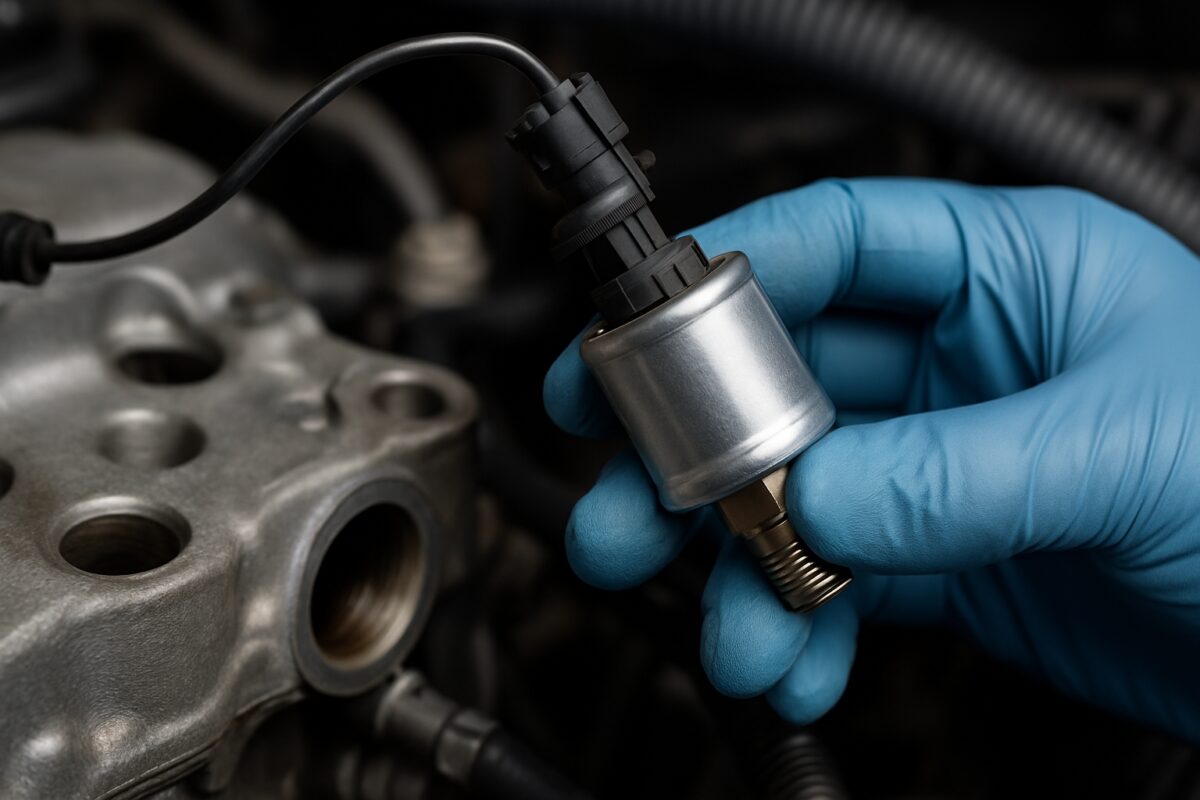
The oil pressure sensor monitors engine oil pressure and alerts drivers to potentially catastrophic engine problems before permanent damage occurs. This critical component typically costs £15-£80 to replace, with labour adding another £50-£150 depending on sensor location and vehicle complexity. When functioning properly, the oil pressure sensor ensures your engine receives adequate lubrication by continuously monitoring oil circulation pressure.
Modern vehicles rely heavily on electronic monitoring systems to protect expensive engine components. The oil pressure sensor serves as an early warning system, detecting when oil pressure drops below safe operating levels. This small but vital component can save you thousands in engine repairs by providing timely warnings about lubrication problems.
How does an oil pressure sensor work?
The oil pressure sensor operates using a pressure-sensitive diaphragm connected to an electrical circuit. When engine oil circulates through the lubrication system, it creates pressure that acts against this diaphragm. The sensor converts this mechanical pressure into an electrical signal that the engine control unit (ECU) can interpret.
Most modern sensors use piezoelectric technology or strain gauge principles. As oil pressure increases, the diaphragm flexes, changing the electrical resistance or voltage output. This variable signal allows the ECU to continuously monitor pressure levels and compare them against predetermined safe operating parameters.
The sensor typically mounts directly into the engine block or oil gallery, positioning it where it can accurately measure actual oil pressure rather than simply detecting oil presence. Some vehicles feature multiple sensors at different locations to provide comprehensive monitoring of the entire lubrication system.
Sensor types and locations
Vehicle manufacturers use several sensor designs depending on engine configuration and monitoring requirements. Single-wire sensors provide simple pressure/no-pressure switching, whilst variable output sensors offer precise pressure readings across the entire operating range.
Common mounting locations include the oil filter housing, main oil gallery, or cylinder head oil passages. Some engines feature the sensor integrated into the oil pump assembly, whilst others mount it separately for easier maintenance access.
Common oil pressure sensor failure symptoms
Recognising sensor failure symptoms helps prevent serious engine damage. Unlike some automotive components that fail gradually, oil pressure sensors often exhibit clear warning signs when malfunctioning. Understanding these symptoms allows drivers to take immediate action before catastrophic engine failure occurs.
The following symptoms indicate potential sensor problems:
- Illuminated oil pressure warning light on dashboard
- Erratic or fluctuating oil pressure readings
- Engine knocking or ticking noises
- Warning light activation at idle but normal operation at higher RPMs
- Complete loss of oil pressure indication
Electrical vs mechanical failures
Sensor failures typically fall into two categories: electrical and mechanical. Electrical failures involve wiring problems, connector corrosion, or internal sensor circuit damage. These issues often cause intermittent readings or complete signal loss without affecting actual oil pressure.
Mechanical failures include diaphragm rupture, internal contamination, or physical damage to sensor housing. These problems can cause false readings that don’t reflect actual engine oil pressure. Professional diagnosis helps distinguish between electrical sensor faults and genuine lubrication system problems.
Our AutoPartsPro mechanics recommend immediate engine shutdown if oil pressure warnings appear, regardless of suspected sensor failure. Continuing to drive with potential lubrication problems risks complete engine seizure and replacement costs exceeding £5,000.
Diagnostic procedures for sensor testing
Proper diagnosis prevents unnecessary sensor replacement when other lubrication system components cause pressure problems. Professional mechanics use specific procedures to isolate sensor faults from genuine oil pressure issues.
Initial diagnostic steps include:
- Verify adequate oil level and condition
- Check engine oil viscosity and contamination
- Inspect sensor wiring and connectors for damage
- Test sensor electrical output using a multimeter
- Compare readings with mechanical pressure gauge
Advanced diagnostics may require removing the sensor and testing it independently. Professional scan tools can monitor real-time sensor data whilst the engine runs, helping identify intermittent problems that don’t trigger permanent fault codes.
| Test Method | Equipment Required | Typical Results |
|---|---|---|
| Voltage Test | Digital Multimeter | 0.5-4.5V Variable |
| Resistance Test | Ohmmeter | Manufacturer Specific |
| Pressure Comparison | Mechanical Gauge | ±10% Tolerance |
Professional vs DIY diagnosis
Whilst basic checks like oil level verification require no special tools, accurate sensor testing needs proper equipment and knowledge. Misdiagnosis can lead to expensive mistakes, such as replacing a functioning sensor when the actual problem lies elsewhere in the lubrication system.
Professional diagnosis typically costs £50-£100 but prevents costly errors. Experienced technicians can quickly distinguish between sensor faults and problems with the oil filter, pump, or internal engine components requiring more extensive repairs.
Sensor replacement costs and procedures
Replacement costs vary significantly based on sensor location, vehicle make, and local labour rates. Simple installations on easily accessible sensors cost considerably less than those requiring extensive disassembly for access.
Cost breakdown for sensor replacement:
- Sensor cost: £15-£80 depending on vehicle specification
- Labour time: 0.5-2.5 hours depending on accessibility
- Additional parts: Thread sealant, gaskets if required
- Total cost range: £65-£230 including parts and labour
Premium vehicles often feature more expensive sensors with additional functionality, whilst basic models use simpler designs. Always verify part compatibility before purchase, as incorrect sensors can provide inaccurate readings or fail to fit properly.
| Vehicle Category | Sensor Cost | Labour Cost | Total Range |
|---|---|---|---|
| Economy Cars | £15-£35 | £50-£100 | £65-£135 |
| Mid-Range Vehicles | £25-£55 | £60-£120 | £85-£175 |
| Premium/Luxury | £40-£80 | £75-£150 | £115-£230 |
DIY replacement considerations
Sensor replacement difficulty varies tremendously between vehicles. Some sensors mount in easily accessible locations requiring only basic tools, whilst others hide beneath intake manifolds or behind engine accessories requiring significant disassembly.
Before attempting DIY replacement, consider accessibility, required tools, and potential complications. Improperly installed sensors can leak oil, provide inaccurate readings, or damage surrounding components. When in doubt, professional installation ensures proper function and prevents costly mistakes.
Preventive maintenance and sensor longevity
Proper maintenance significantly extends sensor lifespan whilst preventing premature failures. Regular oil changes using appropriate viscosity engine oil help keep sensors clean and functioning properly.
Key maintenance practices include:
- Regular oil and filter changes per manufacturer schedule
- Using correct oil viscosity for climate and driving conditions
- Monitoring for oil leaks that could indicate system problems
- Avoiding engine overheating that can damage sensor components
- Replacing contaminated oil immediately after engine problems
Contaminated oil containing metal particles, coolant, or fuel can damage sensor internals. Similarly, using incorrect oil viscosity affects system pressure and can cause false sensor readings. Following manufacturer recommendations helps ensure both sensor accuracy and engine protection.
Our AutoPartsPro mechanics have observed that vehicles receiving regular maintenance experience far fewer sensor failures than those with neglected lubrication systems. Investing in proper maintenance costs significantly less than dealing with sensor replacements and potential engine damage from undetected pressure problems.
Quality replacement parts make a substantial difference in sensor reliability and longevity. Whilst aftermarket sensors may cost less initially, OEM-specification components typically provide better accuracy and longer service life. Consider the total cost of ownership when selecting replacement sensors, as premature failure of cheap components often results in higher overall expenses.
Frequently Asked Questions (FAQ)
Can I drive with a faulty oil pressure sensor?
No, never drive with oil pressure warnings active. Even if the sensor itself is faulty, continuing to drive risks catastrophic engine damage if actual pressure problems exist.
How long do oil pressure sensors typically last?
Quality sensors usually last 100,000-150,000 miles with proper maintenance. However, contaminated oil or overheating can cause premature failure within 50,000 miles or less.
What’s the difference between oil pressure and oil level sensors?
Oil pressure sensors monitor circulation pressure whilst oil level sensors detect quantity. Both are important but serve different functions in engine protection systems.
Can a bad oil pressure sensor damage my engine?
A faulty sensor itself won’t damage the engine, but it may fail to warn of genuine lubrication problems that can cause complete engine failure.
Why does my oil pressure light flicker at idle?
Flickering typically indicates marginal oil pressure, worn engine bearings, or a failing sensor. Professional diagnosis is essential to determine the actual cause.

 Loading...