A start-stop battery is a specialised automotive power unit designed to handle the frequent engine restarts required by modern start-stop technology systems. These enhanced batteries withstand thousands of charge and discharge cycles whilst maintaining reliable performance, making them essential for vehicles equipped with automatic engine shut-off features that improve fuel economy and reduce emissions.
What makes start-stop batteries different
Traditional car batteries operate primarily as starting batteries, providing a high current burst to start the engine and then being recharged by the alternator. Start-stop batteries face a much more demanding role.
Every time your engine stops at traffic lights or in heavy traffic, various electrical systems continue running. The climate control, radio, lights, and electronic control units all draw power from the battery during these standstill periods.
According to our mechanics at AutoPartsPro, a conventional battery would struggle with this constant cycling. “We’ve seen standard batteries fail within months when fitted to start-stop vehicles,” explains our senior technician. “The repeated deep discharge cycles simply aren’t what they’re designed for.”
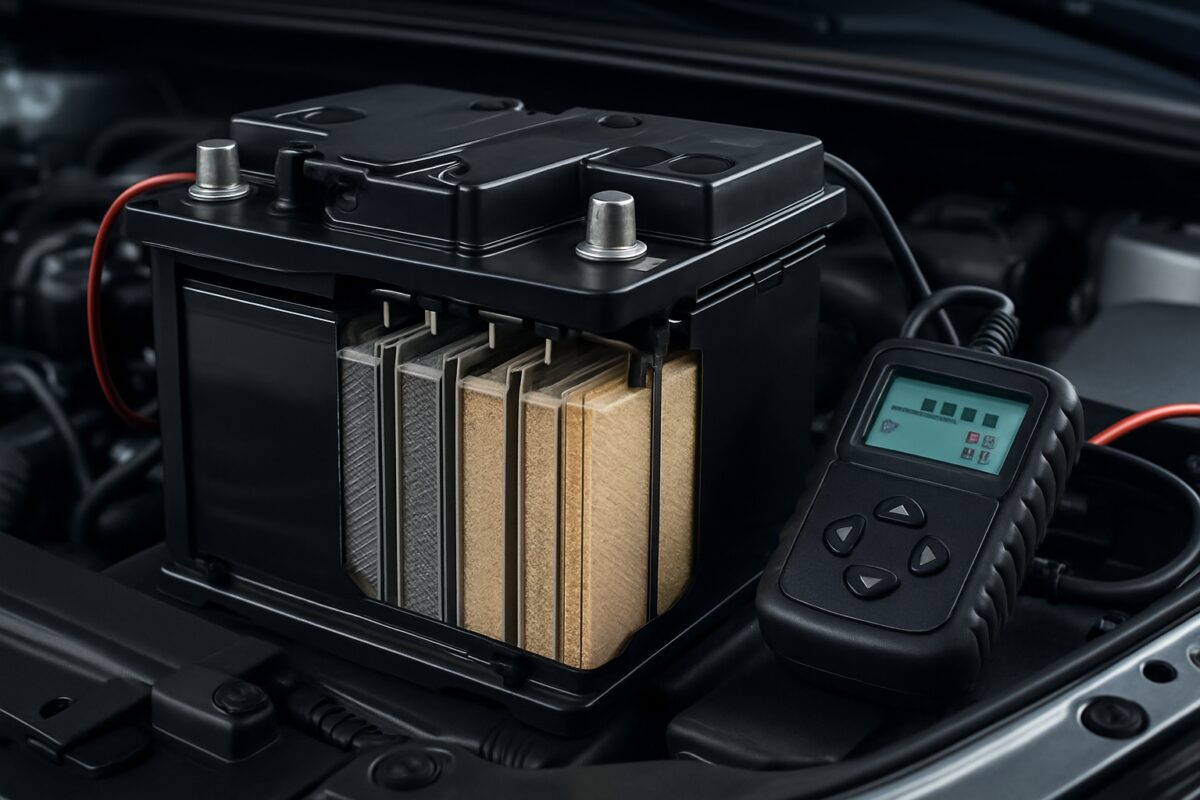
Start-stop batteries use enhanced lead-acid technology or advanced AGM (Absorbent Glass Mat) construction. These designs provide:
- Higher cycle life – up to 3 times more charge cycles than standard batteries
- Better deep discharge recovery
- Reduced acid stratification
- Enhanced charge acceptance for faster recharging
Types of start-stop batteries available
The automotive market offers two main technologies for start-stop applications, each suited to different vehicle requirements and budget considerations.
Enhanced flooded batteries (EFB)
Enhanced Flooded Batteries represent the entry-level option for start-stop systems. These batteries feature improved plate design and enhanced electrolyte formulation compared to conventional units.
EFB technology provides roughly twice the cycle life of standard batteries whilst maintaining a reasonable price point. Most basic start-stop systems in smaller engines work adequately with EFB batteries.
AGM start-stop batteries
AGM (Absorbent Glass Mat) batteries represent the premium choice for demanding start-stop applications. The electrolyte is absorbed into glass mat separators, creating a sealed, maintenance-free design.
These batteries excel in vehicles with extensive electrical systems, including regenerative braking, powerful air conditioning systems, and multiple electronic control units. Our AutoPartsPro specialists recommend AGM batteries for luxury vehicles and those with frequent stop-start cycling.
Testing your start-stop battery
Regular battery testing prevents unexpected failures and ensures your start-stop system operates correctly. Several methods allow you to assess battery condition effectively.
Professional battery testing
Professional workshops use conductance testers that measure the battery’s ability to conduct current. These devices provide accurate readings of:
- Battery capacity percentage
- Cold cranking amps (CCA) rating
- Internal resistance levels
- Overall battery health assessment
Most quality testers also verify the charging system’s performance, ensuring your alternator maintains proper voltage output during engine operation.
DIY testing methods
Simple multimeter testing provides basic battery assessment capabilities. With the engine off and all electrical loads disconnected, a healthy start-stop battery should read 12.6-12.8 volts.
Load testing involves running electrical components whilst measuring voltage drop. If voltage falls below 12.0 volts under moderate load, the battery likely requires replacement.
Professional tip: Always test start-stop batteries after they’ve been stationary for at least 6 hours. Surface charge can give false readings immediately after driving or charging.
Warning signs that indicate battery testing is needed include:
- Slow engine cranking, especially in cold weather
- Dashboard warning lights for battery or charging system
- Start-stop system disabling automatically
- Electrical components operating sluggishly
- Battery age exceeding 3-4 years
| Test Method | Equipment Needed | Accuracy Level | Cost |
|---|---|---|---|
| Professional Conductance Test | Digital battery tester | Very High | £15-25 |
| Multimeter Voltage Test | Digital multimeter | Basic | Free (if you own meter) |
| Load Test | Carbon pile tester | High | £20-30 |
| Hydrometer Test | Battery hydrometer | Medium | £10-15 |
Start-stop battery replacement costs
The investment in a quality start-stop battery varies significantly based on technology choice, vehicle requirements, and installation complexity.
EFB batteries typically range from £80-150 for most passenger cars. These units provide adequate performance for basic start-stop systems without breaking the budget.
AGM start-stop batteries command premium pricing, usually £120-250 depending on capacity and brand reputation. Whilst more expensive initially, their extended lifespan often provides better value long-term.
Installation costs depend on battery location and vehicle complexity. Simple installations in engine bay locations typically cost £20-40 for labour. Vehicles with batteries under seats or in boot areas may require additional labour time.
“We always advise customers to factor in programming costs,” notes our AutoPartsPro technical team. “Modern vehicles often require battery registration through diagnostic equipment, adding £30-50 to the total bill.”
| Battery Type | Price Range | Expected Lifespan | Typical Applications |
|---|---|---|---|
| EFB Start-Stop | £80-150 | 4-5 years | Basic start-stop systems |
| AGM Start-Stop | £120-250 | 5-7 years | Advanced systems with regenerative braking |
| Premium AGM | £200-350 | 6-8 years | Luxury vehicles with extensive electronics |
Money-saving considerations
Several factors influence the total cost of start-stop battery ownership beyond the initial purchase price.
Purchasing batteries during promotional periods can yield significant savings. Many suppliers offer seasonal discounts, particularly during spring and autumn when demand traditionally increases.
Professional installation ensures proper connection and programming, preventing costly electrical issues. However, experienced DIY enthusiasts can often handle straightforward replacements, saving labour costs.
Battery recycling programs often provide core charge credits of £10-20 when returning old units. This environmental initiative helps offset replacement costs whilst supporting sustainable practices.
Expected lifespan and longevity factors
Start-stop battery lifespan depends heavily on usage patterns, environmental conditions, and maintenance practices. Understanding these factors helps maximise your investment.
Typical lifespans vary by technology and application:
- EFB batteries: 4-5 years under normal conditions
- AGM batteries: 5-7 years with proper maintenance
- Premium AGM units: 6-8 years in ideal conditions
- Standard batteries in start-stop vehicles: 2-3 years (not recommended)
Our AutoPartsPro experience shows that driving patterns significantly impact battery life. Urban driving with frequent stops and starts creates more demanding conditions than motorway cruising.
“Customers who primarily drive in city traffic often see reduced battery life,” explains our lead technician. “The constant cycling puts enormous strain on even the best start-stop batteries.”
Factors affecting battery longevity
Temperature extremes pose the biggest threat to start-stop battery lifespan. Cold weather reduces available capacity, whilst excessive heat accelerates chemical degradation within the cells.
Charging system health directly impacts battery life. Faulty alternators or voltage regulators can overcharge or undercharge batteries, leading to premature failure regardless of battery quality.
Electrical system demands also influence longevity. Vehicles with powerful additional lighting, upgraded audio systems, or aftermarket accessories place extra strain on the battery.
Short journey patterns prevent batteries from reaching full charge, causing gradual capacity loss over time. Regular longer drives help maintain optimal battery condition.
Maintenance tips for maximum performance
Proper maintenance significantly extends start-stop battery life whilst ensuring reliable operation throughout its service life.
Terminal cleaning prevents corrosion buildup that increases electrical resistance. Monthly inspection and cleaning with a wire brush maintains optimal connection quality.
Voltage monitoring using a basic multimeter helps identify charging system problems before they damage the battery. Weekly checks during extreme weather periods provide early warning of potential issues.
For vehicles with infrequent use, battery maintainers prevent deep discharge damage. These devices provide gentle charging to keep batteries at optimal levels during storage periods.
Our mechanics recommend several maintenance practices based on years of field experience:
- Avoid leaving lights or accessories on when the engine isn’t running
- Take longer drives occasionally to fully recharge the battery
- Keep battery terminals clean and properly tightened
- Check electrolyte levels in serviceable batteries monthly
- Store vehicles in moderate temperature environments when possible
When to replace your start-stop battery
Recognising replacement timing prevents inconvenient breakdowns whilst avoiding premature battery disposal. Several indicators signal when replacement becomes necessary.
Performance degradation typically appears gradually. Engine cranking becomes noticeably slower, particularly during cold weather when battery capacity naturally decreases.
Start-stop system behaviour provides excellent diagnostic information. Most modern systems disable automatically when battery condition falls below operational thresholds.
Dashboard warning lights offer clear replacement guidance. Battery or charging system warnings require immediate attention to prevent complete electrical system failure.
Age remains a reliable replacement indicator despite varying usage patterns. Batteries approaching 4-5 years require regular testing and should be replaced proactively to avoid unexpected failures.
Professional testing every 6 months after the third year helps time replacements optimally. This approach prevents emergency roadside situations whilst maximising battery life.
Start-stop batteries represent essential technology for modern vehicles, providing reliable power through demanding duty cycles that would quickly destroy conventional units. Understanding their operation, maintenance requirements, and replacement timing ensures your vehicle’s electrical system operates flawlessly. Whether choosing EFB or AGM technology, proper selection based on your vehicle’s specific requirements delivers optimal performance and value. Regular testing and maintenance maximize your investment whilst preventing unexpected failures that could leave you stranded.
Frequently Asked Questions (FAQ)
Can I use a normal battery in a start-stop car?
No, normal batteries aren’t designed for frequent cycling and will fail quickly in start-stop vehicles, typically lasting only 2-3 years instead of 5-7 years.
How much does a start-stop battery cost?
EFB start-stop batteries cost £80-150, whilst AGM units range £120-250. Installation adds £20-50 depending on location and programming requirements.
How long do start-stop batteries last?
EFB batteries typically last 4-5 years, whilst AGM batteries provide 5-7 years of service under normal driving conditions and proper maintenance.
How do I test my start-stop battery?
Professional conductance testing provides the most accurate results. Basic multimeter voltage testing shows 12.6-12.8 volts when healthy, but professional testing is recommended annually.
Why does my start-stop system keep turning off?
Start-stop systems disable automatically when battery voltage drops below operational thresholds, indicating the battery needs testing or replacement to restore full functionality.

 Loading...