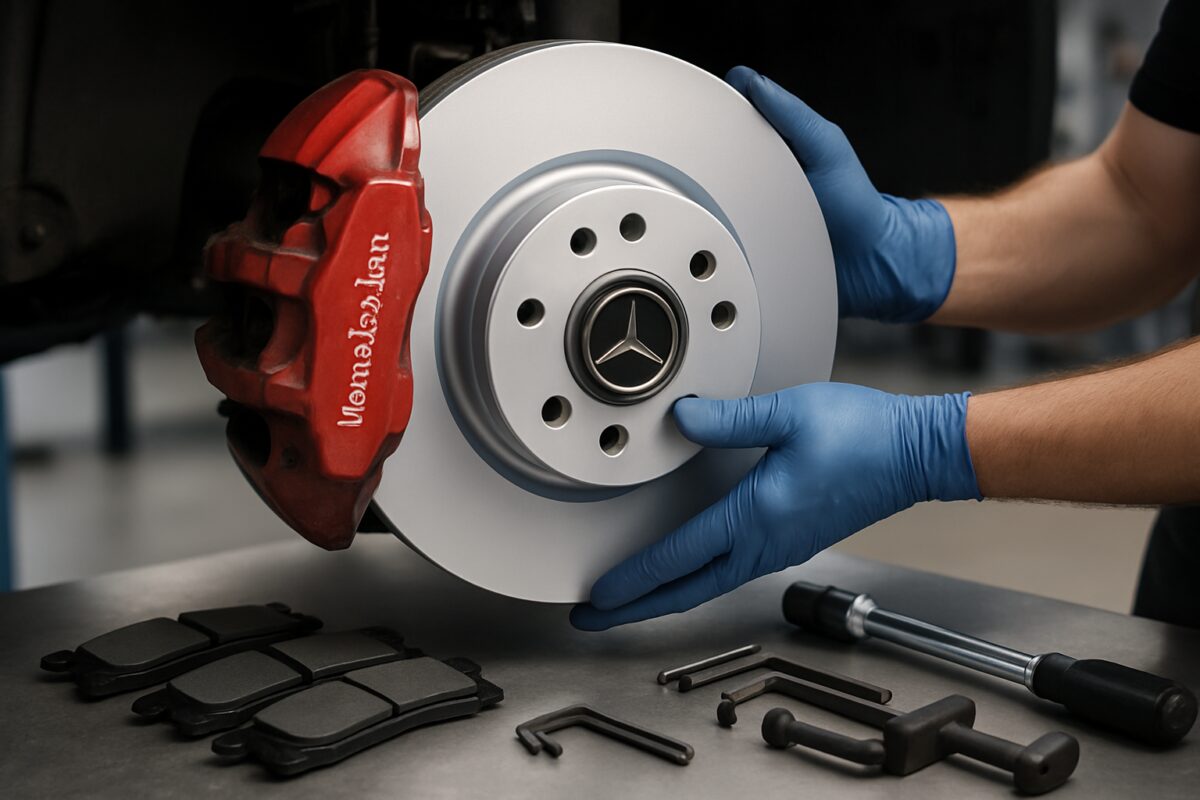
Mercedes-Benz brake pads and discs replacement typically costs between £200-£800 per axle in the UK, with genuine parts ranging from £80-£300 for pads and £150-£500 for discs depending on your model. The complete replacement process requires specific tools, genuine Mercedes-approved components, and proper torque specifications to maintain your vehicle’s premium braking performance and safety standards.
Tools & parts required
Replacing Mercedes-Benz brake pads and discs requires precision tools and model-specific components to ensure optimal performance.
Parts needed:
- Mercedes-approved brake pads (vehicle specific)
- Mercedes-Benz brake discs (genuine or equivalent)
- Brake disc mounting bolts
- Anti-squeal shims
- Brake pad wear sensors
- Copper grease for caliper pins
Tools required:
- Brake caliper piston compressor
- Torque wrench (50-150 Nm range)
- Socket set (17mm, 19mm, 21mm)
- Hex key set (6mm, 8mm)
- Wire brush for cleaning
- Jack stands and trolley jack
- Safety gloves and glasses
Always verify your Mercedes-Benz model’s specific brake specifications using your VIN number to ensure correct part compatibility and avoid costly mistakes.
Safety precautions
Working on Mercedes-Benz braking systems requires strict safety protocols due to the vehicle’s advanced engineering and weight distribution.
Always work on level ground with the handbrake engaged and wheels chocked. Disconnect the battery negative terminal to prevent accidental airbag deployment. Wear safety gloves and eye protection when handling brake components and cleaning solutions.
Never compress brake pistons without first opening the brake fluid reservoir cap to prevent damage to the ABS system. Use proper lifting points specified in your Mercedes-Benz service manual to avoid structural damage.
Step-by-step instructions
Step 1: Prepare the vehicle and remove wheels
Loosen wheel bolts while the car is on the ground, then raise the vehicle using approved jacking points. Remove wheels completely and inspect the brake assembly for obvious wear or damage.
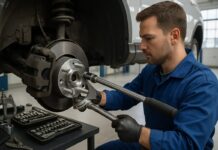
Step 2: Remove brake caliper
Unbolt the brake caliper using the correct hex key size (typically 8mm for Mercedes-Benz). Support the caliper with wire to prevent strain on the brake hose. Remove the old brake pads and note their orientation.
Step 3: Replace brake discs
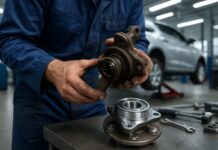
Remove the caliper bracket bolts and slide off the old brake discs. Clean the hub surface thoroughly and apply a thin layer of copper grease. Install new discs ensuring proper seating.
Step 4: Install new brake pads
Compress the brake piston using the appropriate tool, ensuring brake fluid doesn’t overflow. Install new pads with anti-squeal shims and connect new wear sensors if equipped.
Step 5: Reassemble and test
Torque caliper bolts to Mercedes-Benz specification (typically 85-105 Nm). Pump the brake pedal several times before starting the engine. Test brake feel and ensure the brake warning light isn’t illuminated.
Common mistakes to avoid
Many DIY mechanics make costly errors when replacing Mercedes-Benz brake components that can compromise safety and performance.
Never ignore brake pad wear sensors or reuse old sensors with new pads. This will trigger dashboard warnings and potentially cause MOT failures. Always replace brake fluid when changing pads and discs, as contaminated fluid affects braking performance.
Avoid mixing brake pad compounds or using non-approved aftermarket parts that don’t meet Mercedes-Benz specifications. Always torque bolts to exact specifications using a calibrated brake caliper torque wrench to prevent uneven wear or component failure.
Mercedes-Benz vehicles often require specific bedding-in procedures for new brake pads and discs. Follow the manufacturer’s recommendations for optimal performance and longevity.
When should you replace them?
Mercedes-Benz brake components have specific replacement intervals that vary by model and driving conditions. Most Mercedes brake pads last 25,000-40,000 miles under normal driving conditions.
Replace brake pads when thickness reaches 3mm or when wear sensors trigger dashboard warnings. Brake discs typically last 60,000-80,000 miles but require replacement if thickness falls below minimum specifications or if surface scoring exceeds 0.5mm depth.
Signs requiring immediate attention include squealing noises, vibration during braking, longer stopping distances, or brake pedal pulsation. Mercedes vehicles with sport packages or AMG models may require more frequent replacements due to performance driving demands.
Related maintenance you can do at the same time
When replacing Mercedes-Benz brake components, consider performing related maintenance tasks to maximise efficiency and prevent future issues.
Replace brake fluid completely, as Mercedes-Benz recommends fresh DOT 4 fluid every two years. Inspect and clean brake caliper sliding pins, applying fresh copper grease to ensure smooth operation.
Check brake hose condition for cracks, bulging, or corrosion, particularly on older Mercedes models. Consider upgrading to stainless steel braided hoses for improved pedal feel. Inspect wheel bearings and suspension components while wheels are removed, as these affect braking performance and safety.
For enhanced maintenance, read our guide on DIY filter replacement to complement your brake service routine.
Frequently asked questions
How much do Mercedes-Benz brake pads cost in the UK?
Genuine Mercedes brake pads cost £80-£300 per axle, while quality aftermarket options range from £40-£150, depending on your model and performance requirements.
Can I use aftermarket brake discs on my Mercedes-Benz?
Yes, but ensure they meet Mercedes-Benz specifications and carry proper certifications. Quality brands like Brembo, Zimmermann, or Bosch offer suitable alternatives to genuine parts.
How long do Mercedes brake discs typically last?
Mercedes brake discs usually last 60,000-80,000 miles under normal conditions, though AMG and sport models may require replacement sooner due to performance demands.
Do I need special tools for Mercedes brake replacement?
Yes, Mercedes vehicles require specific hex keys, torque wrenches, and brake piston compressors. Using incorrect tools can damage expensive components or compromise safety.
Should I replace brake fluid when changing pads and discs?
Mercedes-Benz recommends fresh brake fluid every two years. When replacing major brake components, it’s wise to flush the entire system for optimal performance.
Professional mechanics at established workshops consistently recommend using genuine or equivalent-quality brake components for Mercedes-Benz vehicles. The sophisticated engineering and precise tolerances of these premium cars demand components that meet exacting specifications. While aftermarket options can provide cost savings, investing in quality parts ensures your Mercedes maintains its exceptional braking performance and safety standards that the brand is renowned for throughout the automotive industry.

 Loading...