A motorcycle catalytic converter is a critical emission control device that reduces harmful exhaust gases by converting toxic pollutants into less harmful substances through chemical reactions. Located in the exhaust system between the engine and silencer, this component is mandatory on all motorcycles manufactured after specific dates and must remain functional to comply with UK environmental regulations and MOT requirements.
Understanding your motorcycle’s catalytic converter becomes essential when dealing with performance issues, emission failures, or legal compliance matters. Our mechanics at AutoPartsPro frequently encounter questions about these vital components during routine servicing and repairs.
How motorcycle catalytic converters work
The catalytic converter operates through a sophisticated process involving precious metals like platinum, palladium, and rhodium. These materials act as catalysts to facilitate chemical reactions that transform harmful emissions.
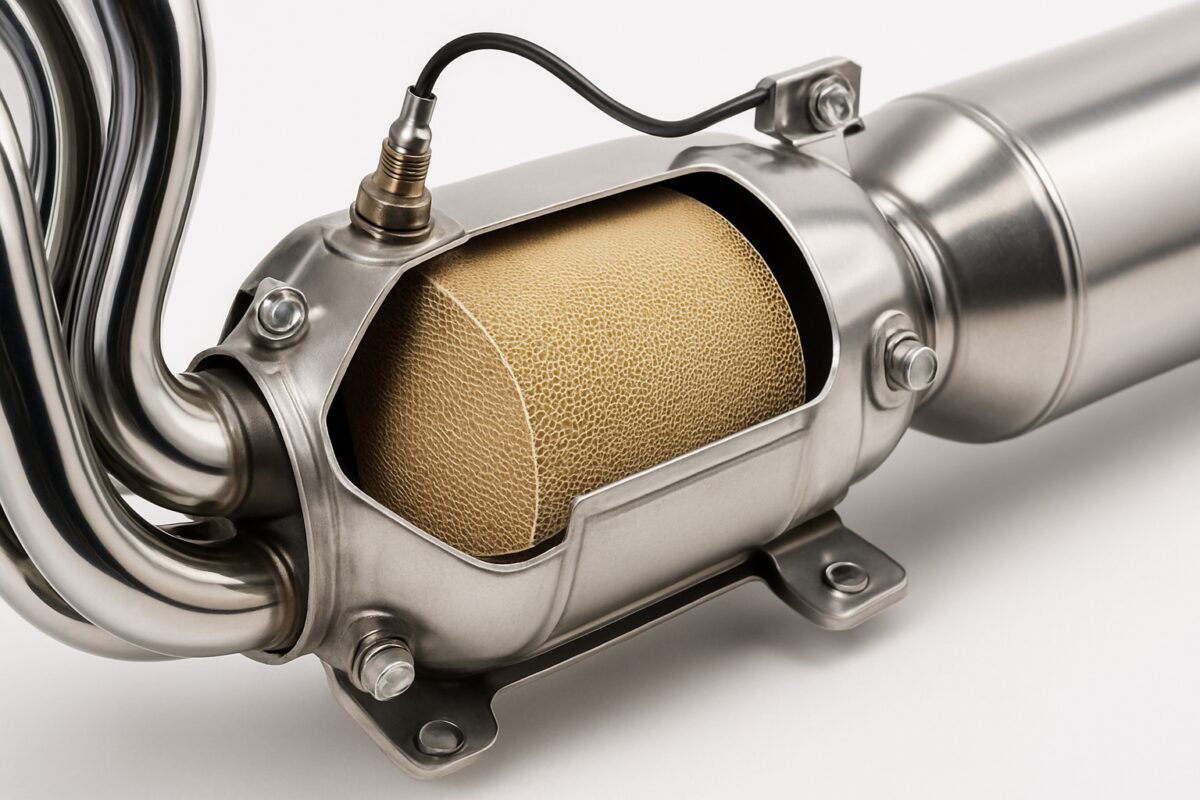
When exhaust gases pass through the honeycomb-structured ceramic core, three main reactions occur simultaneously. Carbon monoxide converts to carbon dioxide, unburned hydrocarbons oxidise into water vapour and carbon dioxide, and nitrogen oxides reduce to harmless nitrogen and oxygen.
Temperature plays a crucial role in this process. The converter requires operating temperatures between 400-800°C to function effectively. Cold starts temporarily reduce efficiency until the unit reaches optimal temperature.
Location and identification on motorcycles
Most motorcycle catalytic converters integrate directly into the exhaust header pipes or mount as separate units between the headers and main silencer. The location varies significantly between manufacturers and models.
On sports bikes, you’ll typically find the converter housed within enlarged sections of the exhaust headers near the engine. Touring motorcycles often feature larger, more visible units mounted further down the exhaust system.
Visual identification involves looking for:
- Enlarged or bulbous sections in the exhaust pipes
- Heat shields or protective covers around specific exhaust areas
- Manufacturer markings indicating emission compliance
- Lambda sensor mounting points on the exhaust system
The catalytic converter housing appears noticeably different from standard exhaust tubing, often featuring a wider diameter or rectangular shape.
Legal requirements and MOT implications
UK law mandates that motorcycles registered after 1 January 2007 must retain their original catalytic converter or equivalent approved replacement. Removing or tampering with this component constitutes an offence under the Road Traffic Act.
MOT testing includes specific checks for emission control equipment. Testers examine the exhaust system for missing or obviously defective catalytic converters, which result in automatic test failure.
The following legal requirements apply to motorcycle catalytic converters:
- Original equipment must remain fitted and functional
- Replacement units must meet or exceed original specifications
- Removal for “off-road use” remains illegal for road-registered vehicles
- Emission limits must comply with Euro standards for the vehicle’s age
Police have powers to issue fixed penalty notices for emission control violations, with fines reaching £1,000 for motorcycles.
| Motorcycle Registration Date | Catalytic Converter Requirement | Emission Standard |
|---|---|---|
| Before 1 January 2007 | Not mandatory | Euro 2 |
| 1 January 2007 onwards | Mandatory | Euro 3 or higher |
| 1 January 2017 onwards | Mandatory with enhanced monitoring | Euro 4 |
Common symptoms of catalytic converter failure
Recognising early warning signs helps prevent complete failure and expensive repairs. Our technicians regularly diagnose these issues during routine maintenance checks.
Performance-related symptoms include reduced power output, poor acceleration, and increased fuel consumption. The engine management light often illuminates when the system detects converter inefficiency through lambda sensor readings.
Physical symptoms manifest as unusual exhaust colours, strong odours, or excessive heat around the converter housing. Rattling noises indicate internal damage to the ceramic honeycomb structure.
Key warning signs include:
- Engine warning lights or fault codes
- Failed emission tests or MOT failures
- Reduced engine performance and throttle response
- Unusual exhaust smoke colours (blue or black)
- Strong sulphur or fuel odours from the exhaust
Temperature-related issues occur when converters overheat due to engine misfires or rich fuel mixtures, potentially causing permanent damage to internal components.
Maintenance and replacement considerations
Proper maintenance extends catalytic converter life significantly. Using correct fuel grades, maintaining proper air-fuel ratios, and addressing engine problems promptly prevents premature failure.
Regular servicing includes checking oxygen sensors and ensuring correct engine timing. These components work together to optimise converter performance and longevity.
When replacement becomes necessary, several options exist. Original equipment manufacturer parts guarantee compatibility but cost more than pattern alternatives. Ensure any replacement meets European type approval standards.
Installation requires proper torque specifications and gasket replacement. Many converters integrate with lambda sensors, requiring careful handling during removal and refitting.
| Maintenance Task | Frequency | Importance |
|---|---|---|
| Engine service and tune-up | Annual or per manual | Critical |
| Fuel system cleaning | Every 2 years | High |
| Lambda sensor inspection | During major service | High |
| Exhaust system check | MOT inspection | Mandatory |
Replacement costs and considerations
Replacement costs vary dramatically between motorcycle types and converter specifications. Sports bikes with integrated units typically cost more due to complex installation requirements.
Labour charges depend on accessibility and whether surrounding components require removal. Some models necessitate fairing or exhaust system disassembly, increasing workshop time significantly.
Consider these factors when planning replacement:
- OEM versus pattern part pricing and warranty terms
- Installation complexity and labour costs
- Additional components requiring replacement (gaskets, sensors)
- Emission testing requirements following installation
- Insurance implications for modified exhaust systems
“Always verify that replacement catalytic converters carry proper certification marks and meet your motorcycle’s specific emission standards. Installing non-compliant units can result in MOT failures and legal issues,” advises our senior technician.
Performance impact and fuel economy
Functioning catalytic converters have minimal impact on performance when properly maintained. Modern designs create negligible back-pressure while effectively reducing emissions.
Fuel economy improvements often occur following converter replacement, particularly when the old unit was restricting exhaust flow. Clean emissions equipment allows engines to operate more efficiently.
Some riders notice improved throttle response and smoother running after addressing converter-related issues. This occurs because faulty units often coincide with other engine management problems.
The relationship between fuel system cleanliness and converter performance remains crucial for optimal operation. Poor fuel quality or contaminated injection systems accelerate converter degradation.
Environmental benefits and regulations
Modern motorcycle catalytic converters reduce harmful emissions by up to 95% compared to uncontrolled engines. This significant reduction helps improve urban air quality and meets stringent environmental regulations.
European emission standards continue tightening, with Euro 5 requirements introducing even stricter limits for new motorcycles. These regulations drive technological improvements in converter design and efficiency.
The environmental impact extends beyond immediate emission reductions. Properly functioning converters help reduce ozone formation and particulate matter, contributing to better public health outcomes.
Troubleshooting common issues
Diagnostic procedures help identify converter problems before complete failure occurs. Professional diagnosis often involves exhaust gas analysis and computer scanning for fault codes.
Temperature testing reveals whether converters reach operating temperature and maintain proper heat levels. Infrared thermometers provide quick assessment without dismantling components.
Back-pressure testing determines if internal blockages restrict exhaust flow. Excessive pressure indicates honeycomb damage or debris accumulation requiring immediate attention.
Regular monitoring of exhaust system components helps identify early warning signs before costly failures occur.
Professional servicing recommendations
Annual inspection during routine servicing helps identify potential issues early. Professional technicians can assess converter condition and recommend preventive measures.
Specialist diagnostic equipment reveals performance parameters invisible to visual inspection. This technology helps determine remaining service life and optimal replacement timing.
Following manufacturer service schedules ensures all related systems receive proper attention. Regular maintenance of air filtration and ignition components directly impacts converter longevity.
Understanding your motorcycle’s catalytic converter requirements helps maintain legal compliance while ensuring optimal performance. Regular maintenance, prompt attention to warning signs, and professional diagnosis when problems arise protect both your investment and the environment. Choose quality replacement parts and professional installation to guarantee continued reliability and emission compliance for years ahead.
Frequently Asked Questions (FAQ)
Can I remove my motorcycle’s catalytic converter for better performance?
No, removing catalytic converters from road-registered motorcycles is illegal in the UK and will result in MOT failure and potential fines.
How long should a motorcycle catalytic converter last?
With proper maintenance, most motorcycle catalytic converters last 60,000-100,000 miles or 10-15 years depending on riding conditions and engine health.
What causes premature catalytic converter failure on motorcycles?
Common causes include engine misfires, contaminated fuel, oil consumption, overheating, and using incorrect fuel grades or additives.
How much does it cost to replace a motorcycle catalytic converter?
Replacement costs range from £150-800 depending on the motorcycle model, with labour charges adding £100-300 for professional installation.
Will a faulty catalytic converter affect my motorcycle’s MOT test?
Yes, missing or obviously defective catalytic converters cause automatic MOT failure, and emission levels must meet legal limits for your motorcycle’s age.

 Loading...